

Grand Trios for Piano, Book 4: 4 Early Intermediate Pieces for One Piano, Six Hands: Piano
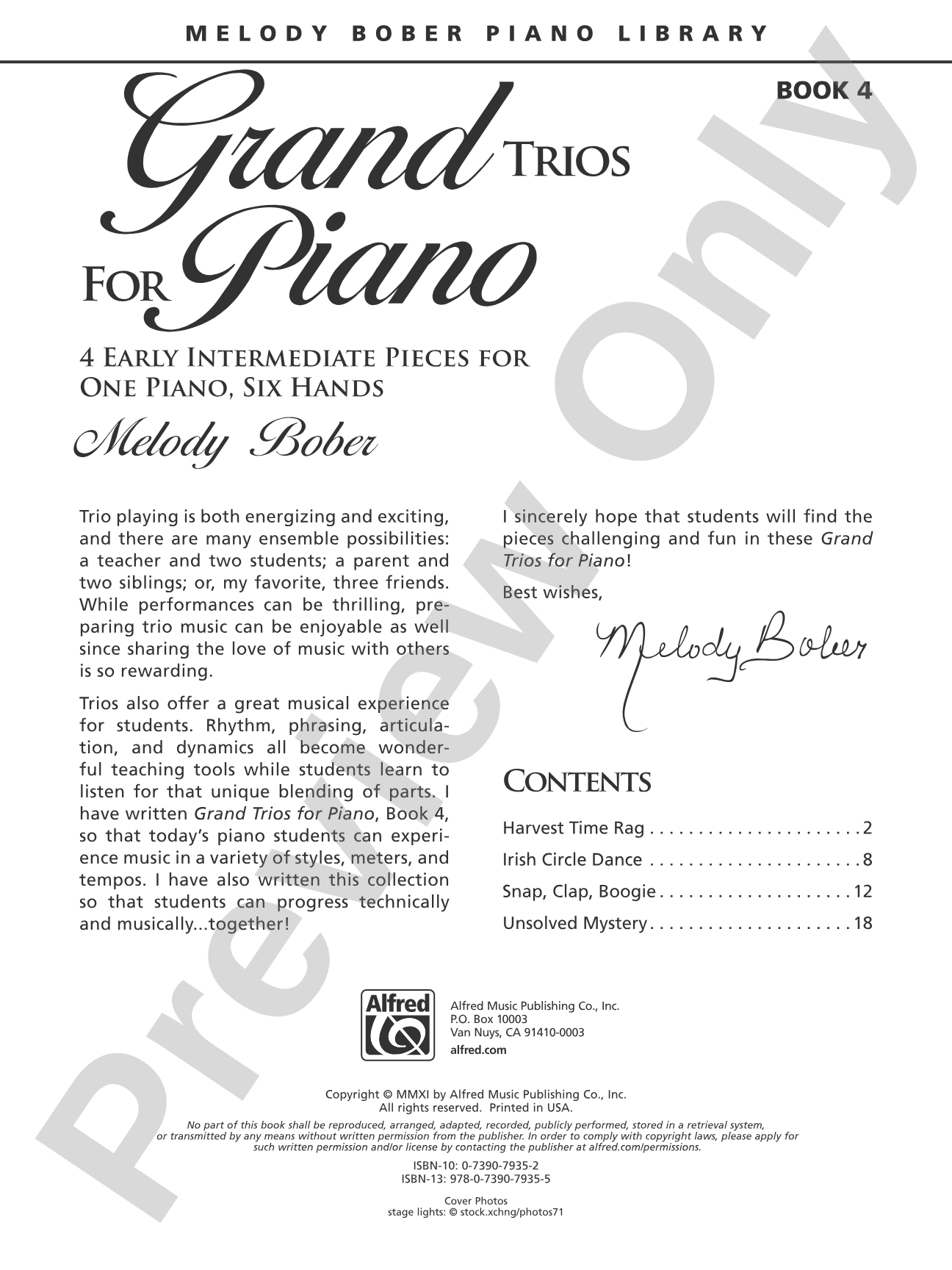
4 Early Intermediate Pieces for One Piano, Six Hands
By Melody Bober
Level: Early Intermediate
Item: 00-PB-0000740

$6.99
Pickup currently not available
Related Items
Grand Trios for Piano, Book 4: Piano Trio (1 Piano, 6 Hands) Book |
$6.99
|
View |
Description
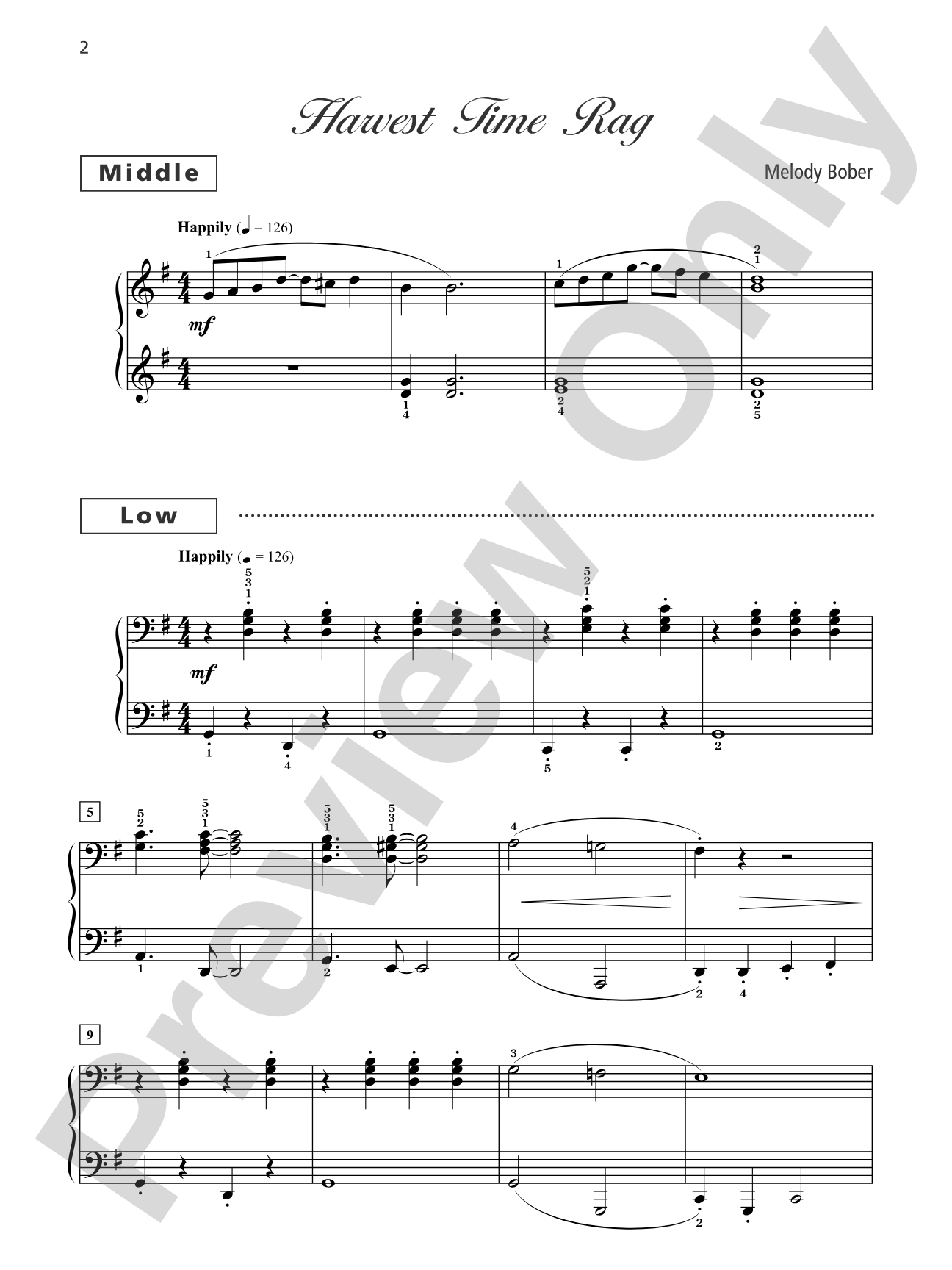
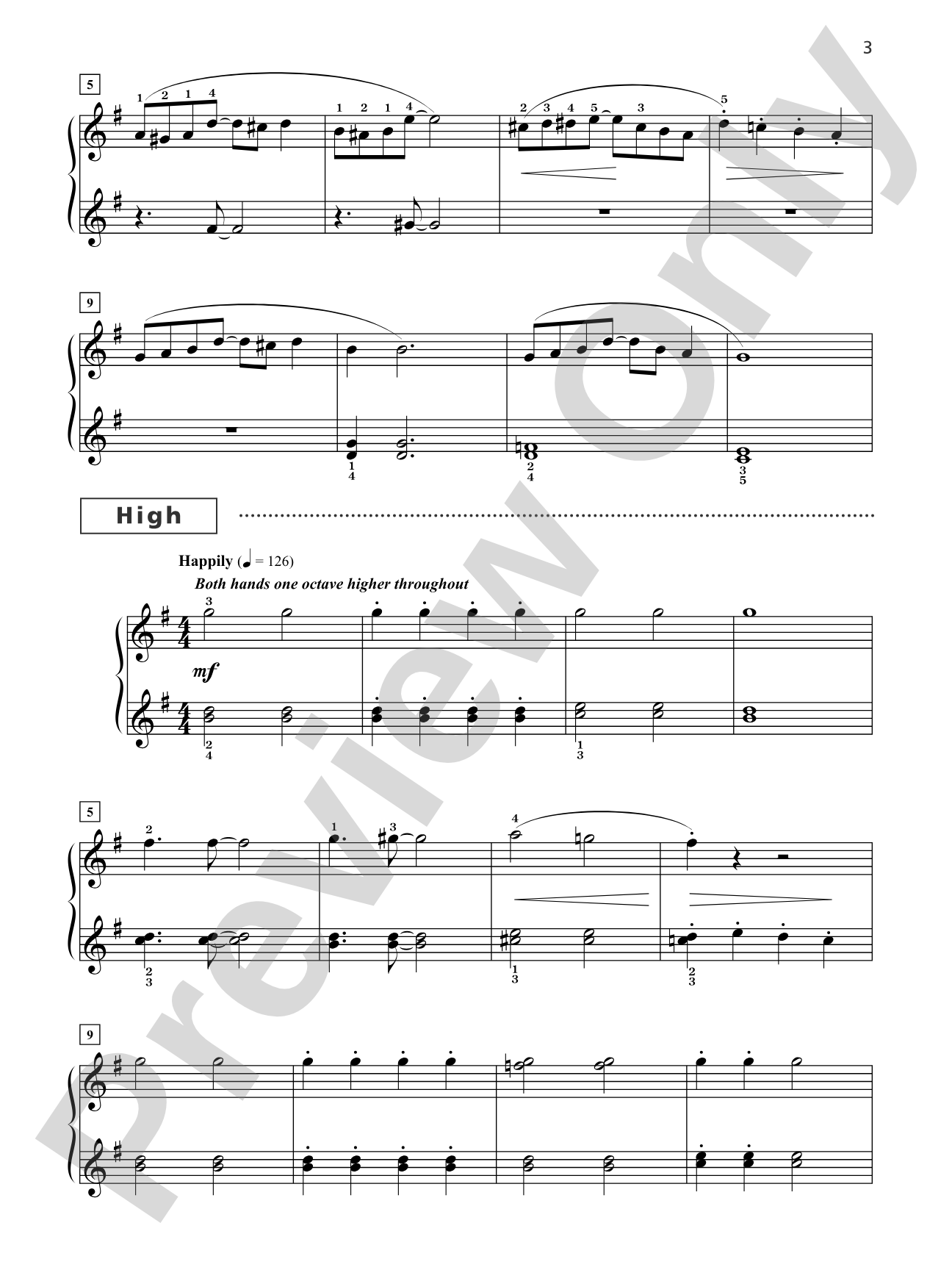
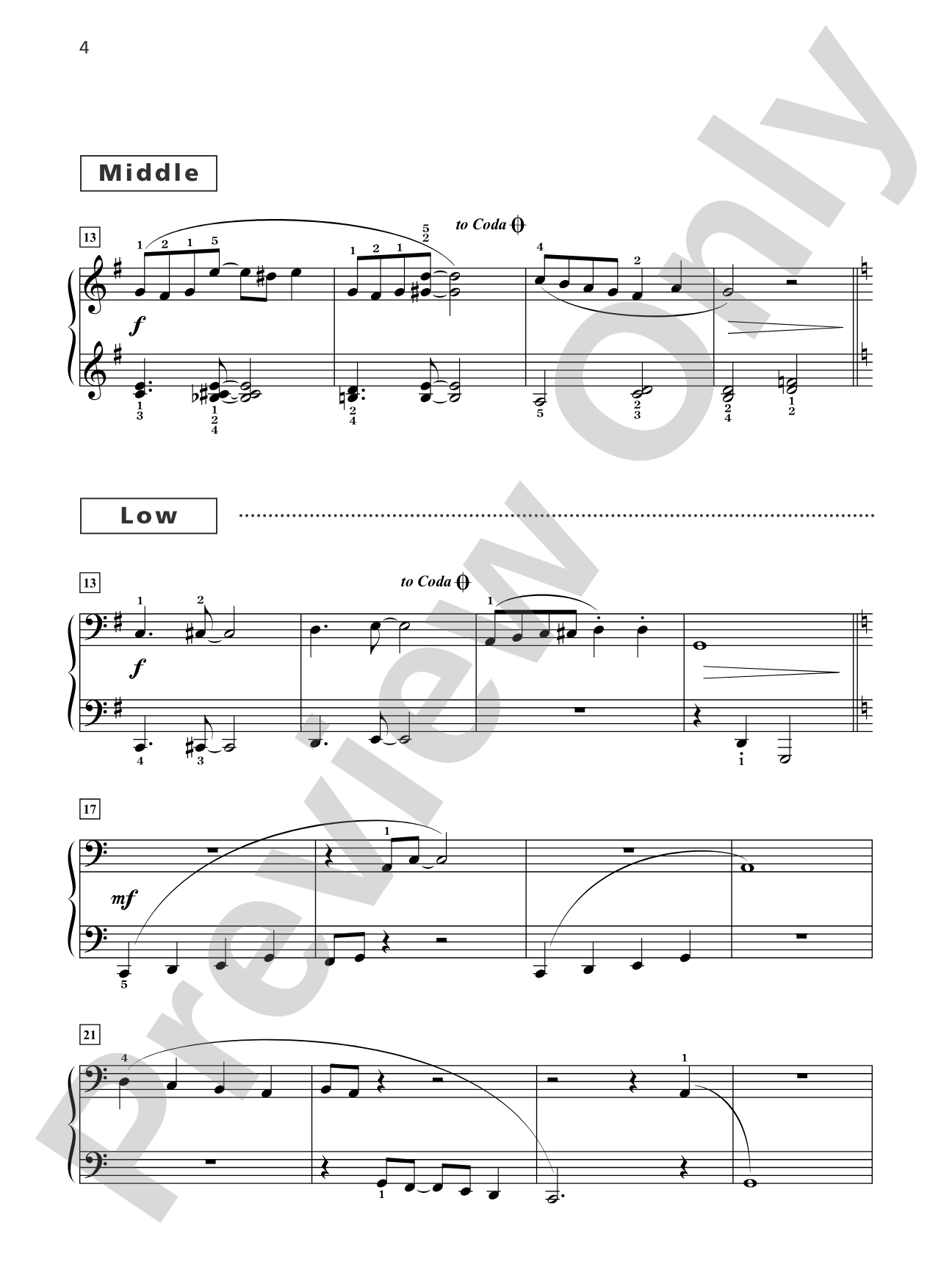
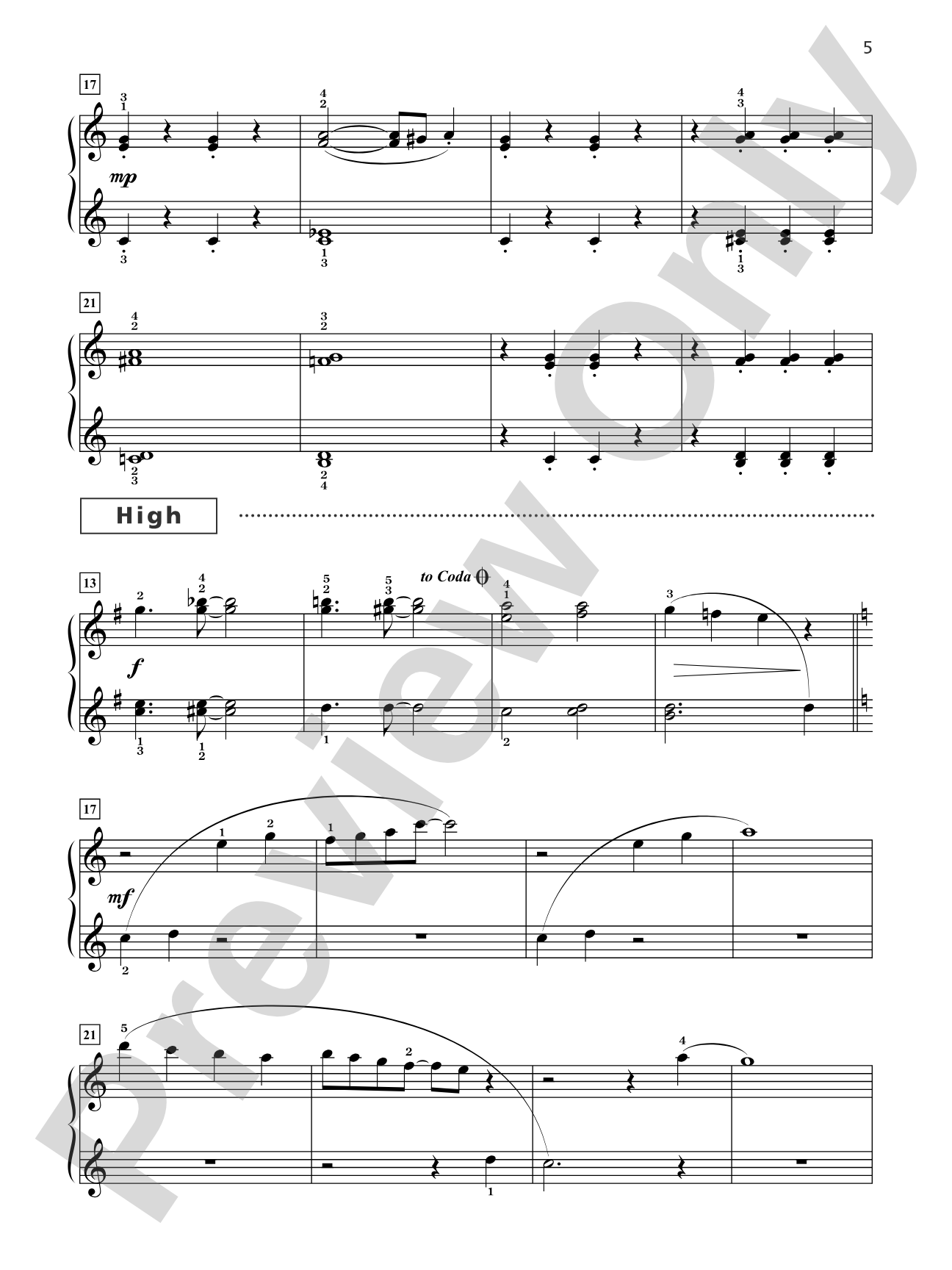
The joy of ensemble playing with six hands at the piano is captured in this series of trios by educational music author Melody Bober. Written for pianists at the early-intermediate level, the pieces in this collection expand the reading range and technical level. All three parts are equal in difficulty. A variety of keys, styles, meters, and tempos are featured. Titles: Harvest Time Rag * Irish Circle Dance * Snap, Clap, Boogie * Unsolved Mystery. A Federation Festivals 2024-2028 selection.


Don't just read it, hear it, play along with it, and watch your students grow with it. In MakeMusic Cloud, Grand Trios for Piano, Book 4: 4 Early Intermediate Pieces for One Piano, Six Hands: Piano comes alive with professional accompaniment, adjustable tempo, and built-in practice tools that turn solo practice into real progress.
Open in the Player
Jump straight in and assign it today.
Start Your Free Trial
Open this title and explore the full library in minutes.
Sample Audio
No sample audio found.
Sample Video
No sample videos found.
Additional Details
Series:
Grand Trios for Piano
Publisher:
Alfred Music
Page Count:
24
SKU:
00-PB-0000740
More about this title
About the Composer: Melody Bober

Melody Bober composes music with a clear mission: to write pieces that deepen students' musical understanding while genuinely exciting them to practice. Her training spans music education and performance, with a bachelor's degree in music education from the University of Illinois at Urbana-Champaign and a master's degree in piano performance from Minnesota State University, Moorhead. Her teachers included the pianists Joel Shapiro and Andrew Froelich, as well as Mary Hoffman in music education and Tony Caramia in jazz, all of whom shaped her pedagogical approach.
With two decades of public school teaching, university instruction, and an active private studio, Bober brings real classroom experience to every piece she writes. She also serves as an accompanist and church musician, and she regularly conducts workshops and clinics for piano teachers throughout North America. Her work has earned recognition in festival selections and is widely used in music education settings.
Why we love this
These trios strike the rare balance of being genuinely fun to play while expanding technical range and rhythmic independence. Each part holds equal weight, so all three pianists feel like soloists rather than supporters, which keeps ensemble motivation high. The stylistic variety (rag, dance, boogie, mystery) makes this book feel fresh compared to typical educational collections.
What to expect
These pieces radiate personality and forward motion. The Rag bristles with ragtime energy, the Irish dance spins with folk character, the Boogie grooves with infectious rhythm, and the Mystery unfolds with cinematic tension. Throughout, the writing showcases three independent voices working together, creating a fullness of sound that delights both players and listeners.
Who it's for
Piano teachers whose early-intermediate students are ready to experience true ensemble playing without needing a separate accompanist. Studio teachers preparing students for recitals or school music fairs benefit from having score-ready repertoire that builds collaboration skills. Homeschool music programs and community piano groups also find these trios accessible and immediately engaging.
How to get the most out of it
- Establish clear hand signals before the first rehearsal. With three pianists sharing one bench, silent communication about tempo and phrase shape prevents the ensemble from drifting apart.
- Assign parts strategically based on hand span and reach, not just reading level. Early-intermediate pianists often have different physical development, and part rotation across rehearsals builds confidence in all three performers.
- Record yourselves during rehearsal. Listening back reveals balance issues and rhythmic inconsistencies that are harder to hear in real time when you're concentrating on your own part.
- Practice the tricky hand-crossing passages separately as a unit. When all three pianists understand the spatial choreography, the final performance looks as polished as it sounds.
How to use it
Feature a trio on your annual student recital, either as a standalone performance or bookending the program with solos from the same three pianists. The stylistic variety makes this book ideal for a "Pianos Around the World" or "Musical Styles" themed recital. You can also present different trios on separate occasions during the school year, rotating which students tackle each piece.
Skills your students will build
- Reading multiple independent melodic lines simultaneously while maintaining ensemble cohesion
- Playing across different keys, meters (including mixed meters), and tempos within a single collection
- Coordinating hand placement and bench sharing in a three-person setting
- Balancing dynamic control across parts so no voice overwhelms the others
- Understanding ragtime, folk, blues, and contemporary compositional styles through performance