
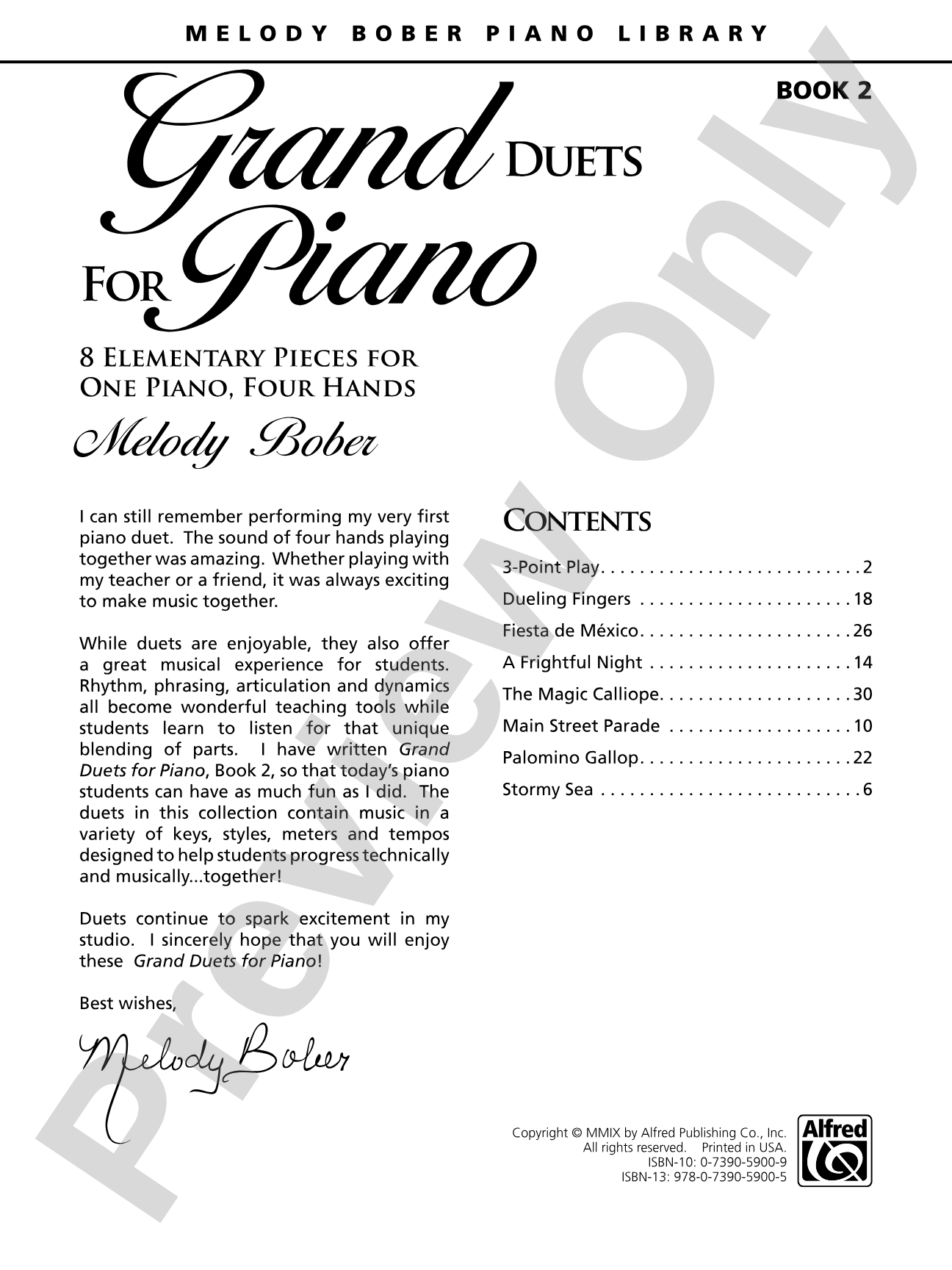

Grand Duets for Piano, Book 2: 8 Elementary Pieces for One Piano, Four Hands: Piano Duets & Four Hands
8 Elementary Pieces for One Piano, Four Hands
By Melody Bober
Level: Elementary
Item: 00-PB-0000573
$9.99
Pickup currently not available
Related Items
Grand Duets for Piano, Book 2: Piano Duet (1 Piano, 4 Hands) Book |
$9.99
|
View |
Description
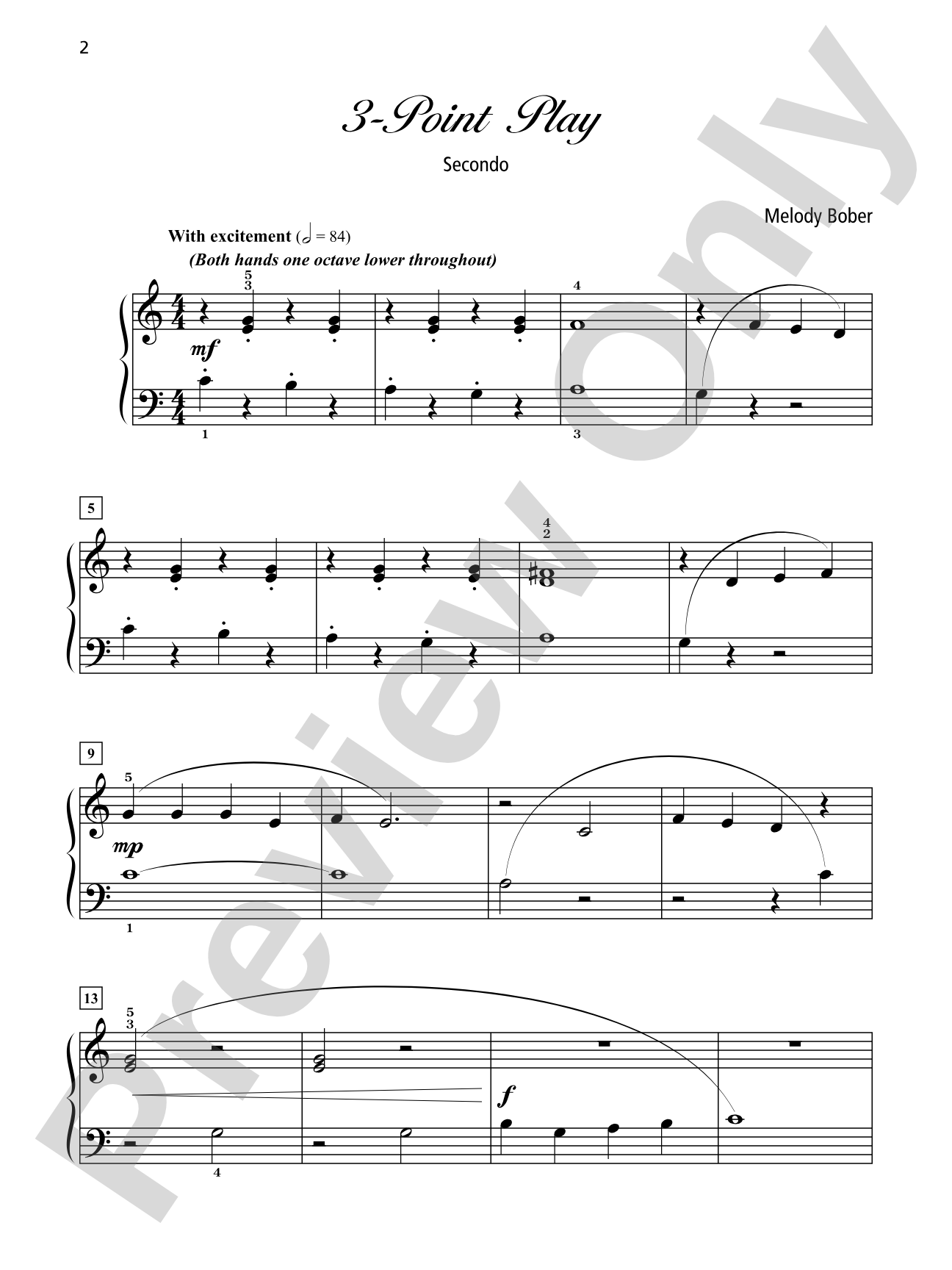
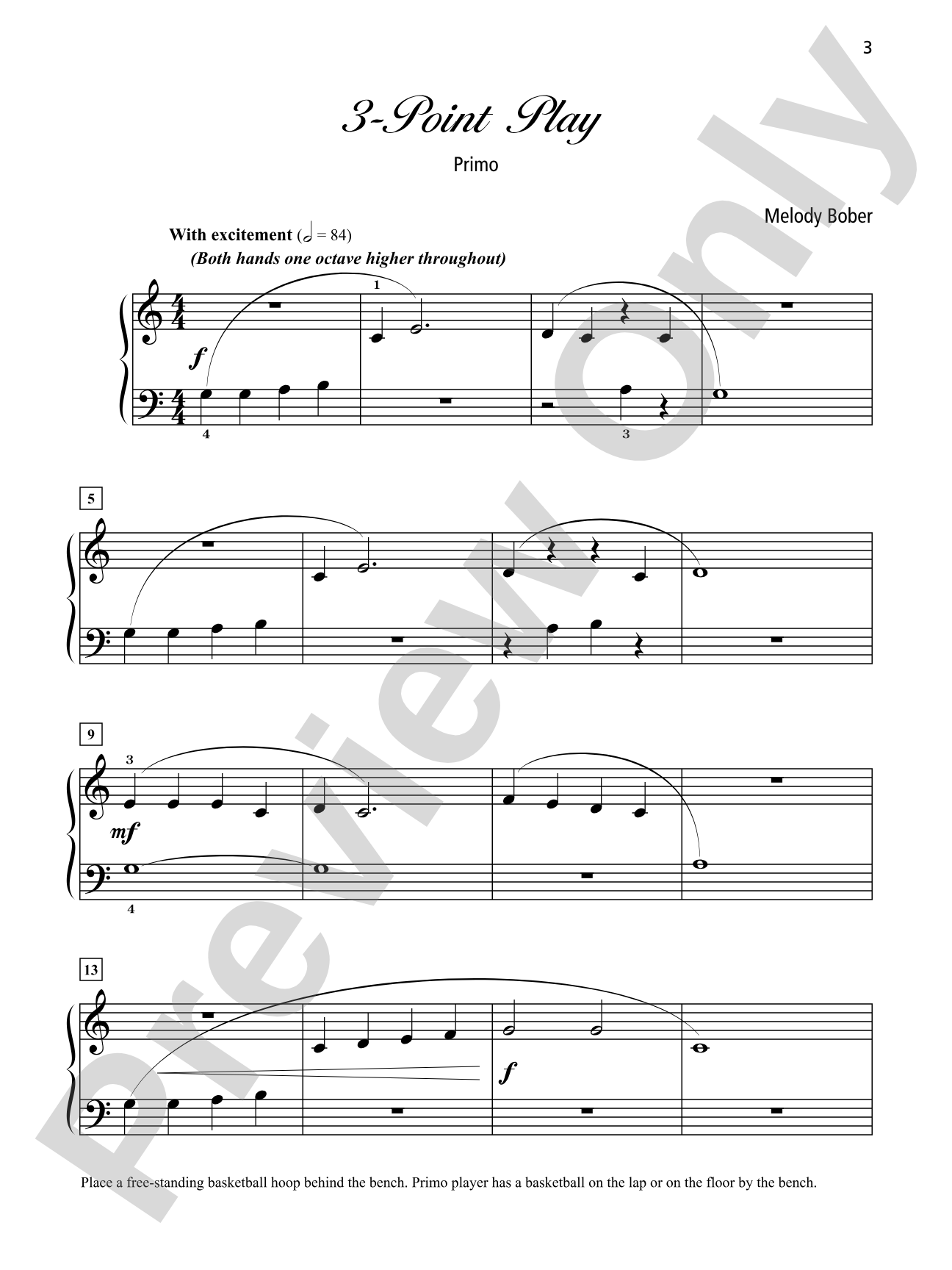
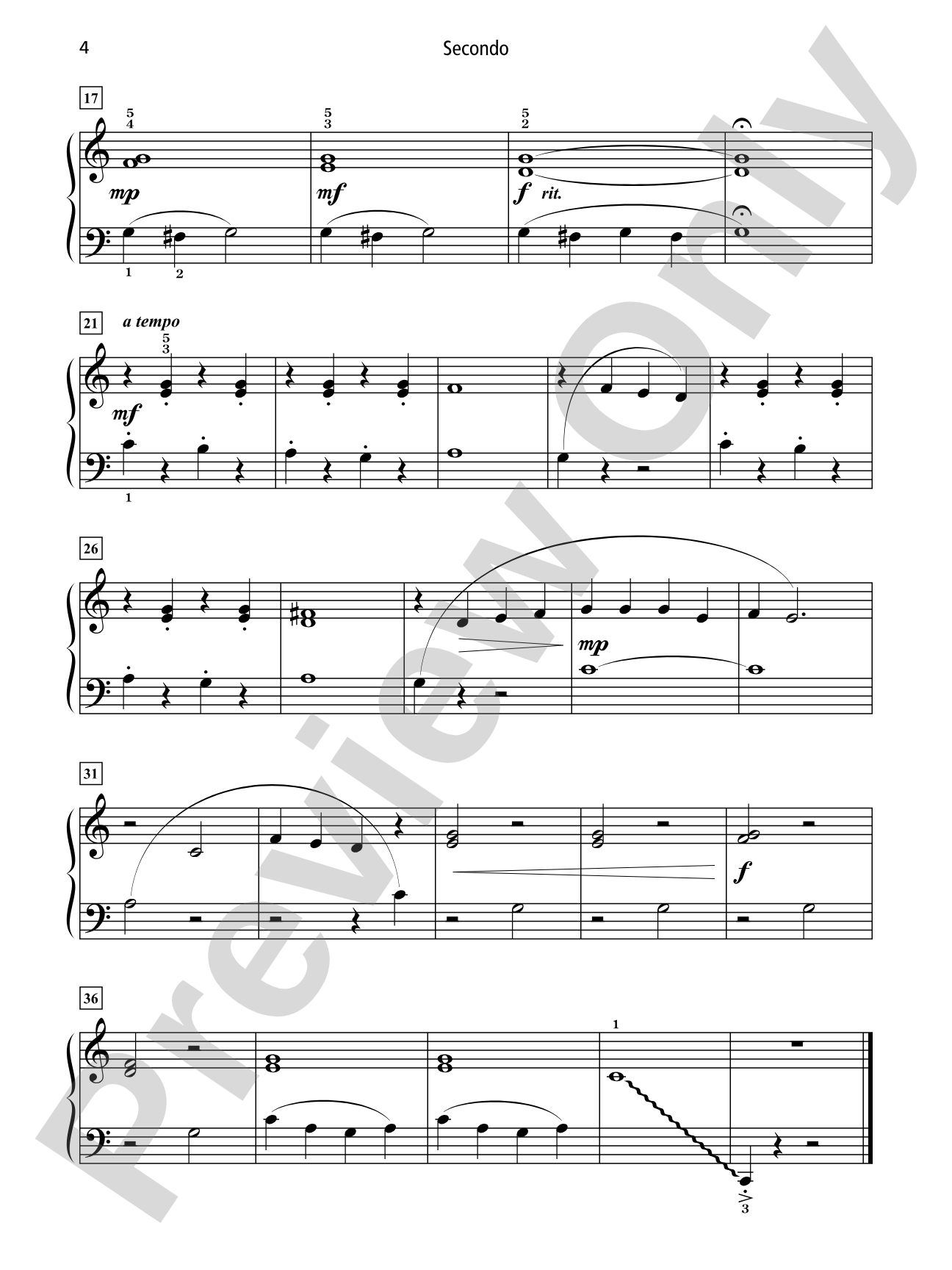
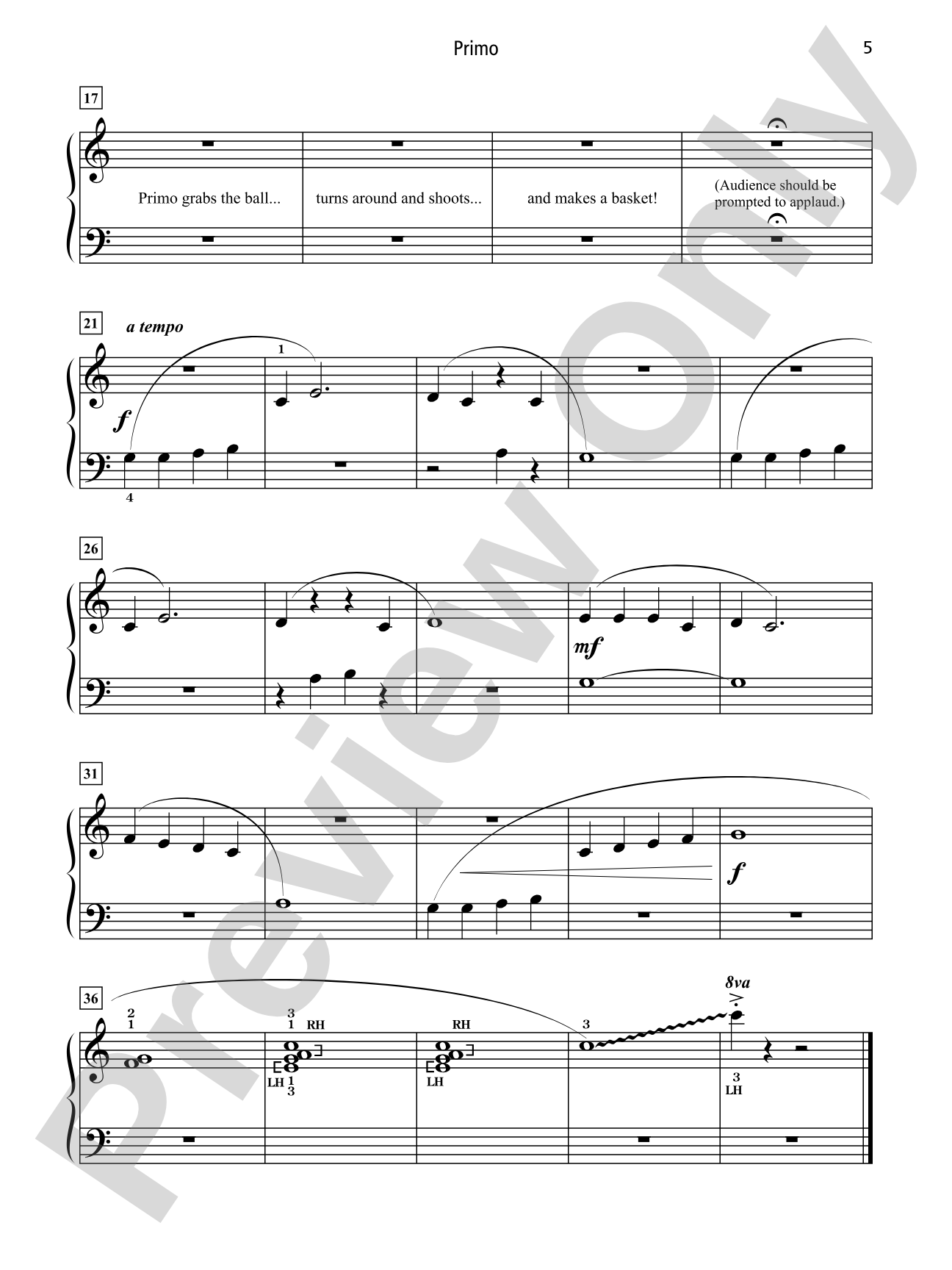
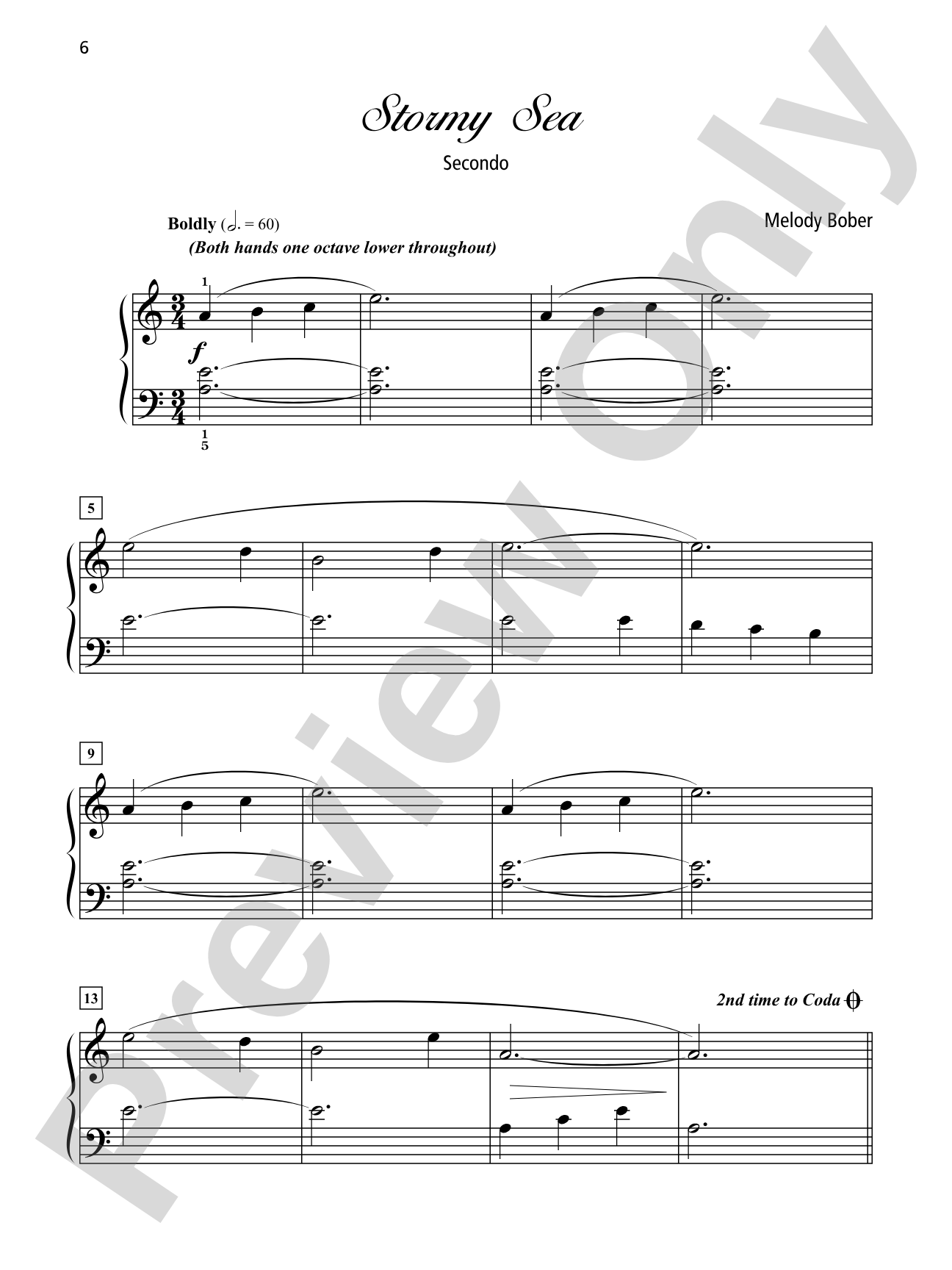
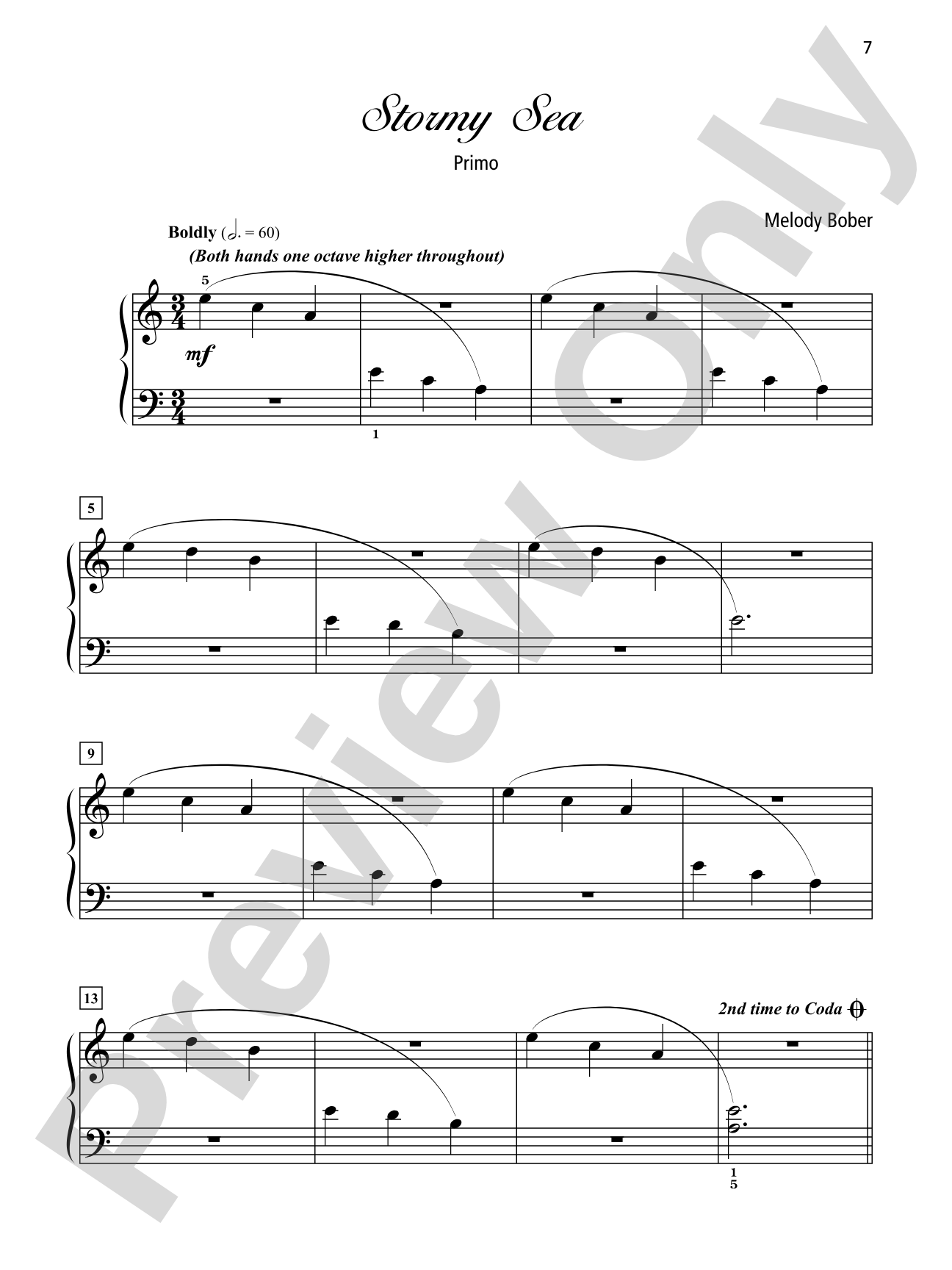
The thrill of making music with a friend or teacher is captured in this new series of duets. Written with the elementary-level piano student in mind, the pieces in this collection have easy movement around the keyboard and simple hands-together coordination. Both primo and secondo parts are equal in difficulty. A variety of keys, styles, meters and tempos are featured. Titles: 3-Point Play * Dueling Fingers * Fiesta de México * A Frightful Night * The Magic Calliope * Main Street Parade * Palomino Gallop * Stormy Sea. A Federation Festivals 2020-2024 selection. A Federation Festivals 2024-2028 selection.


Grand Duets for Piano, Book 2: 8 Elementary Pieces for One Piano, Four Hands: Piano Duets & Four Hands isn't in MakeMusic Cloud just yet...but it could be. Let us know you'd like to see it, and you'll help shape what comes next. In the meantime, start a free trial and dive into thousands of interactive titles your students can play along with today.
Request This Title
Tell us you want it.
Start Your Free Trial
Explore everything that's ready to play right now.
Sample Audio
No sample audio found.
Sample Video
No sample videos found.
Additional Details
Series:
Grand Duets for Piano
Publisher:
Alfred Music
Page Count:
32
SKU:
00-PB-0000573
More about this title
About the Composer: Melody Bober

Melody Bober's compositional approach stems directly from her dual role as educator and performer. With formal training in both music education and piano performance from the University of Illinois and Minnesota State University, she brings pedagogical insight to every piece she writes. Her 20 years teaching in public schools, combined with university instruction and ongoing private studio work, inform her understanding of what elementary students actually need to succeed.
Beyond the studio, Melody maintains an active presence as a church pianist, music director, and clinician at regional and national conferences for piano teachers. Her teachers, Joel Shapiro, Andrew Froelich, Mary Hoffman, and Tony Caramia, instilled in her the values of musicianship and clear communication that shape her output today. Based in Minnesota with her husband Jeff, she continues to compose pieces designed to build confidence and genuine musical understanding.
Why we love this
These duets strike the rare balance of being genuinely playable for early elementary students while remaining musically interesting enough that neither player feels sidelined. Bober's choice to equalize the difficulty between primo and secondo parts means your student and you, or two students of similar ability, get equal measures of engagement and responsibility. The stylistic range, from the march character of Main Street Parade to the evocative Frightful Night, keeps both players invested across the collection.
What to expect
Playful, varied, and energizing. These pieces dance across the keyboard with accessibility that never feels dumbed-down. Styles shift between rhythmic drive, whimsy, and atmospheric color, keeping both players engaged and the listener surprised.
Who it's for
Elementary-level piano students ready to experience the social and musical rewards of ensemble playing, whether with a teacher, older sibling, or peer. The collection works equally well for students preparing for festival competition or simply looking to expand beyond solo repertoire.
How to get the most out of it
- Start rehearsals by having both players play their parts separately at tempo, then gradually bring them together. This prevents the secondo from rushing or dragging while waiting for the primo to catch up.
- Use the variety of keys and styles as an opportunity to discuss musical character before diving into technical details. Ask what the title suggests about tempo, touch, and color.
- Listen specifically to the balance between hands within each part, especially in pieces with simultaneous melodic material. Early duet players often neglect accompanying voices when excited about a melody.
- Record short rehearsal segments on your phone. Hearing themselves back helps students recognize where ensemble clarity breaks down and builds ownership of their part.
How to use it
Feature duet selections in studio recitals to showcase collaborative musicianship and give your students the confidence boost that comes from ensemble success. The Federation Festivals selections (2020-2024 and 2024-2028) make this an obvious choice if your students are competing, and the thematic variety lets you program pieces strategically across a solo repertoire list.
Skills your students will build
- Hand independence and balance between melody and accompaniment within a single part
- Rhythmic synchronization and listening in an ensemble setting
- Reading across a range of keys, meters, and tempo markings
- Navigating elementary-level hand movement and position changes with confidence
- Musical interpretation through character and style variation