
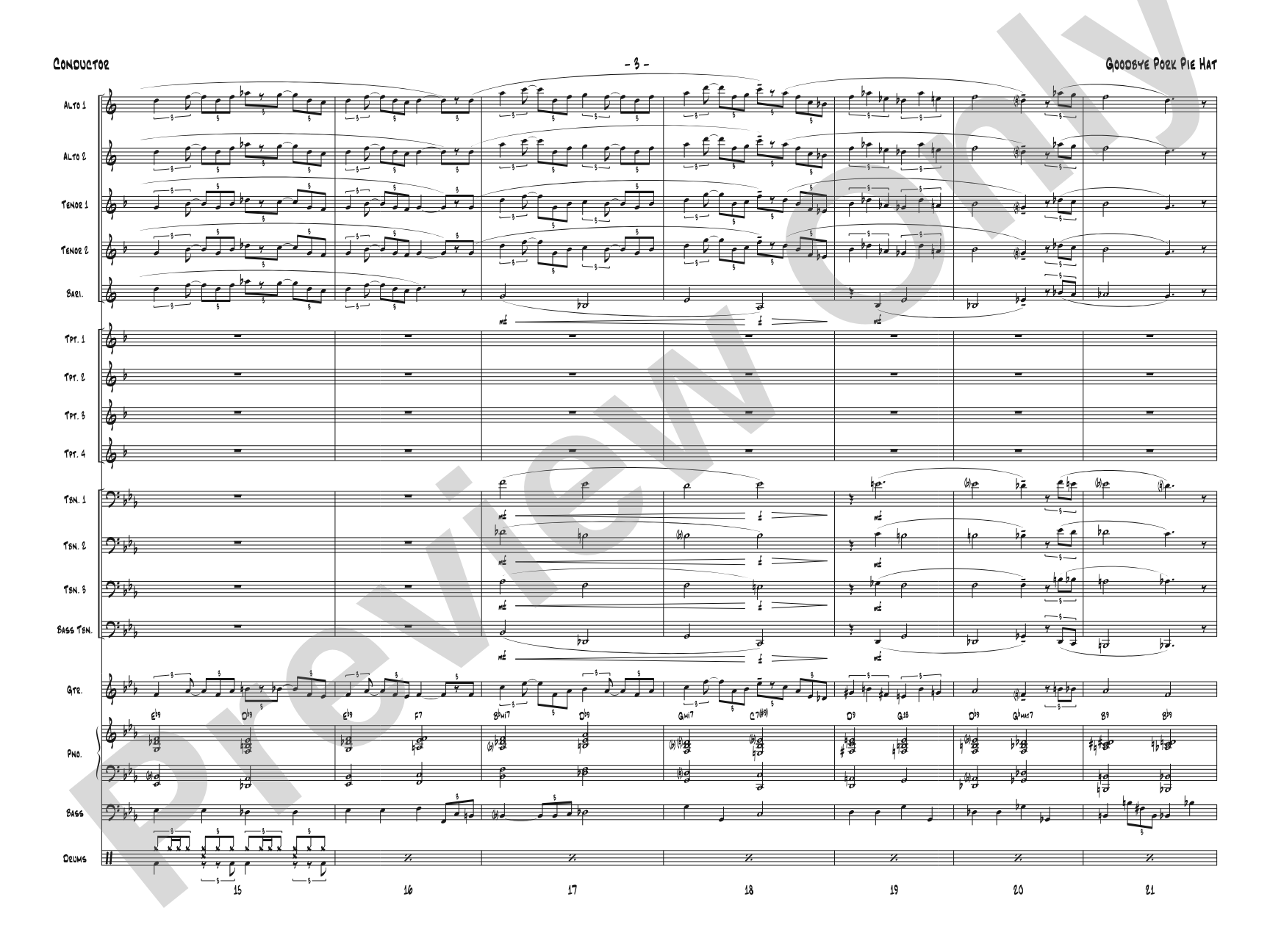
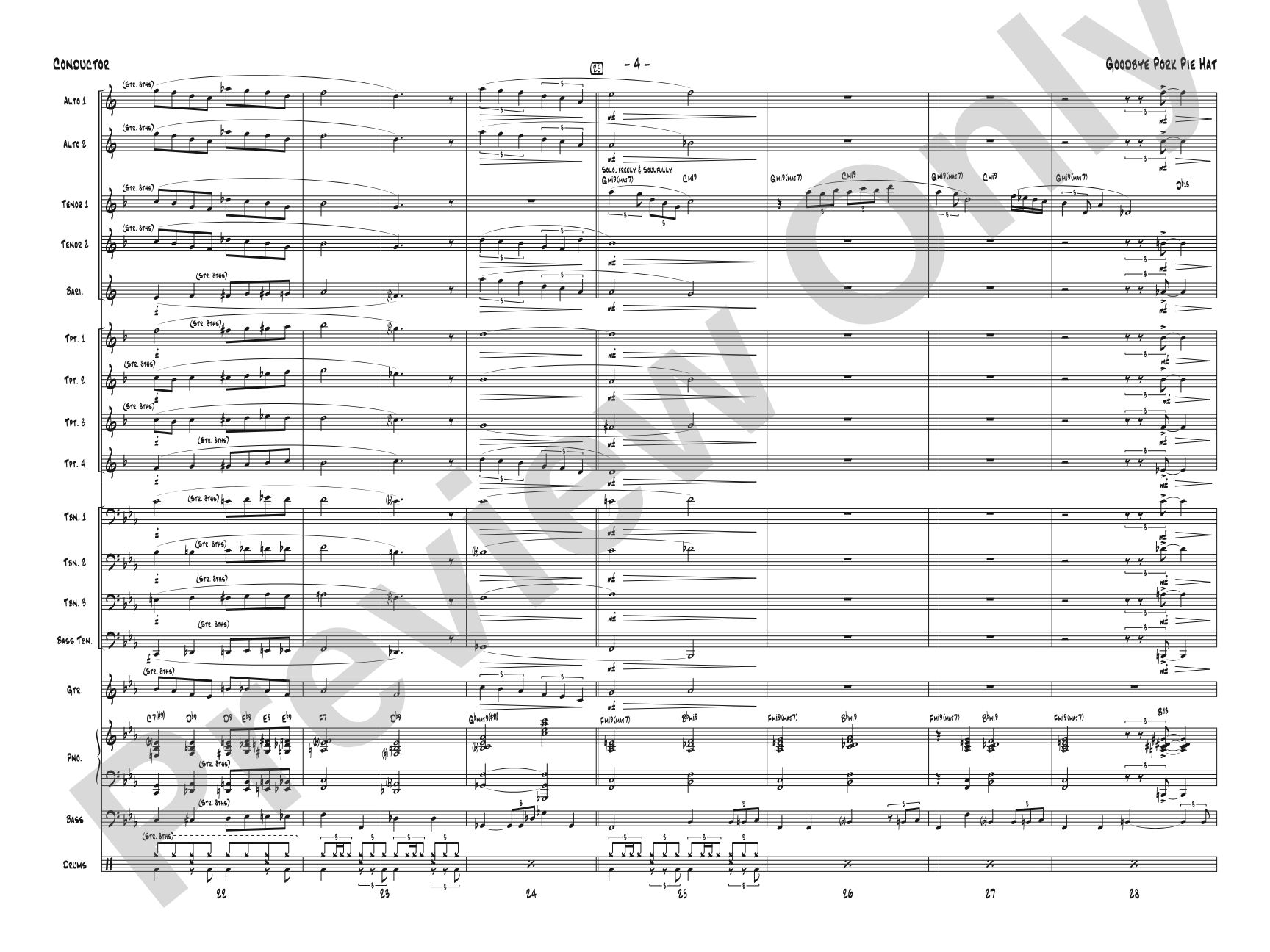
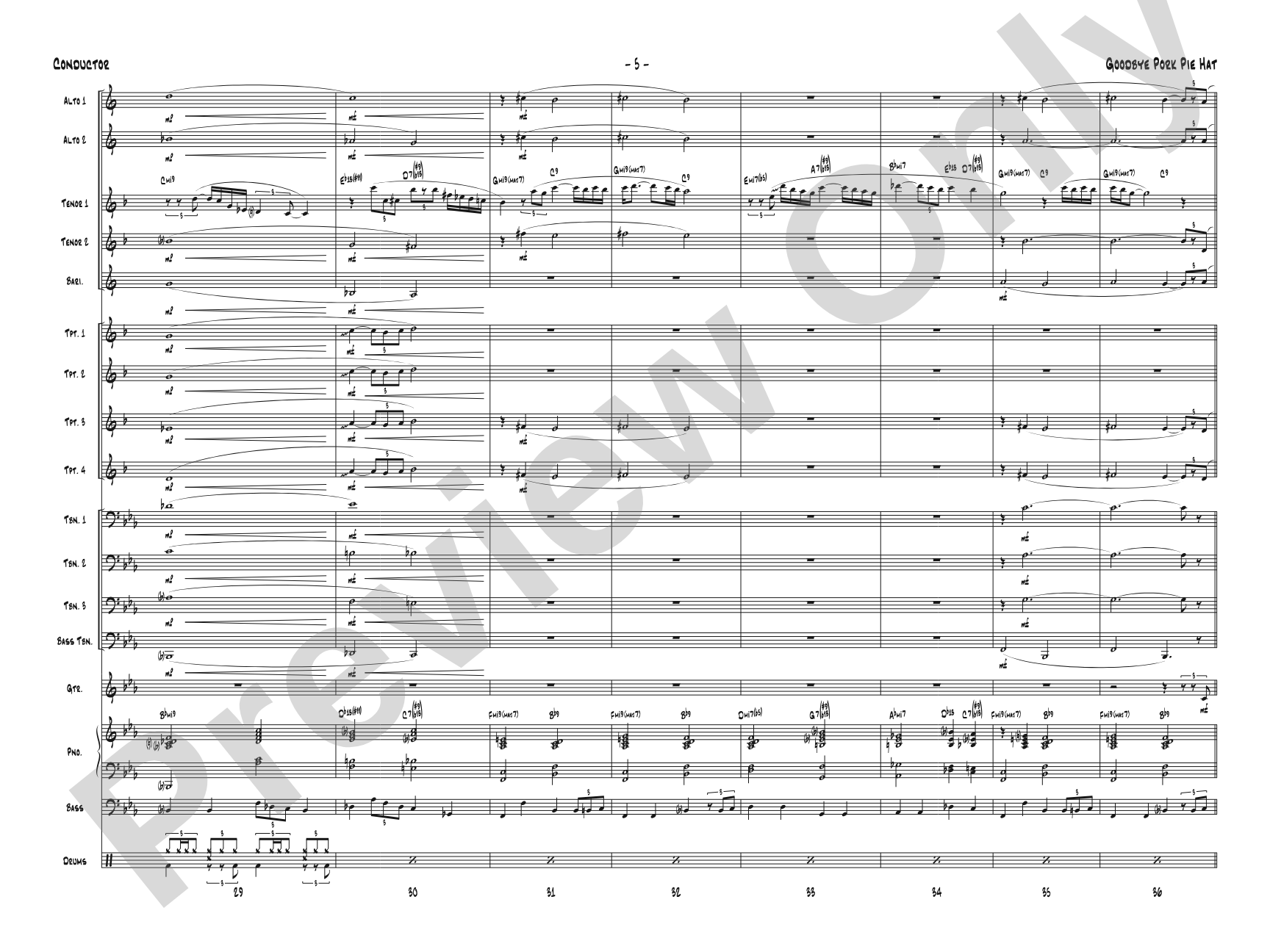
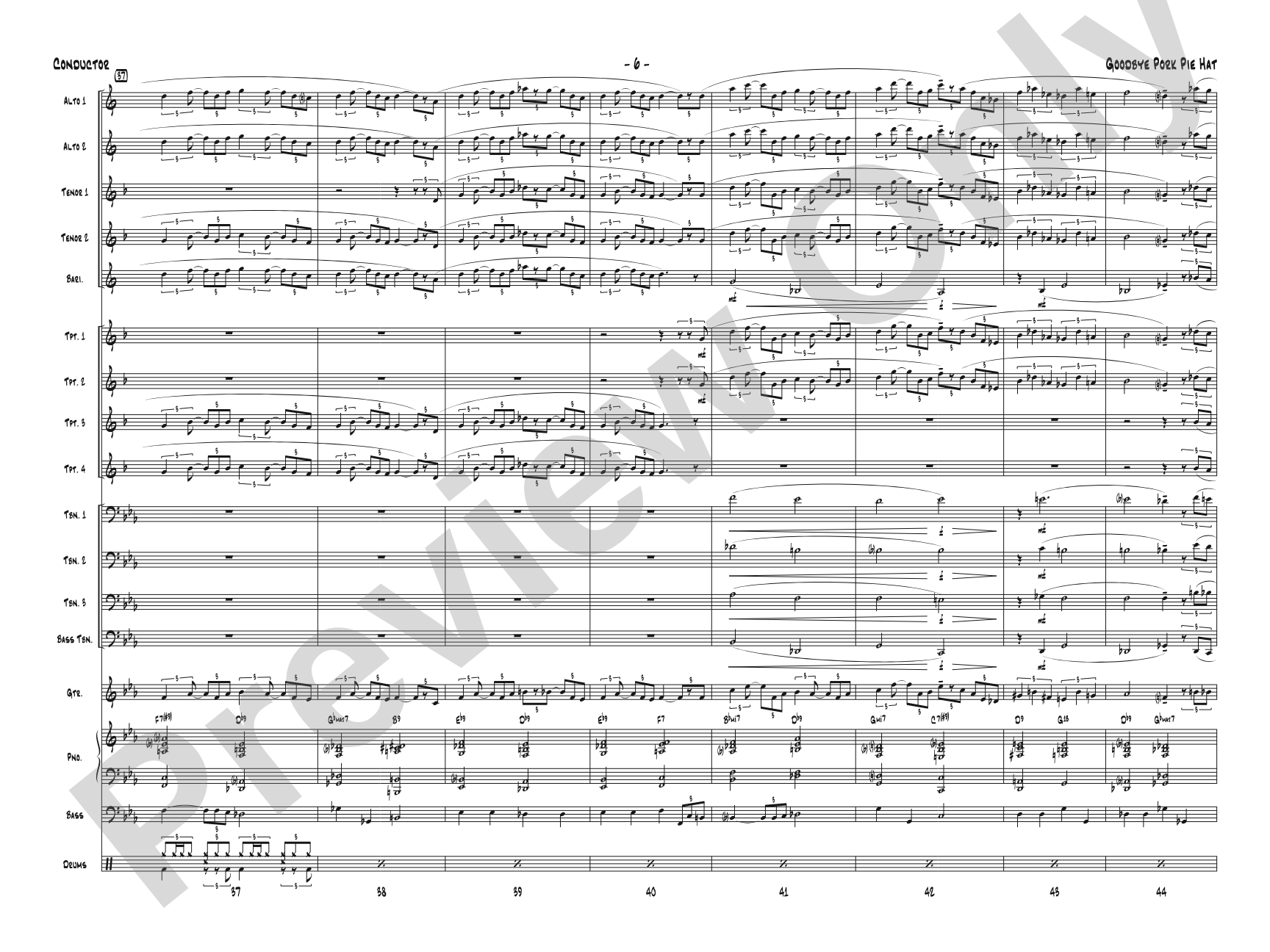
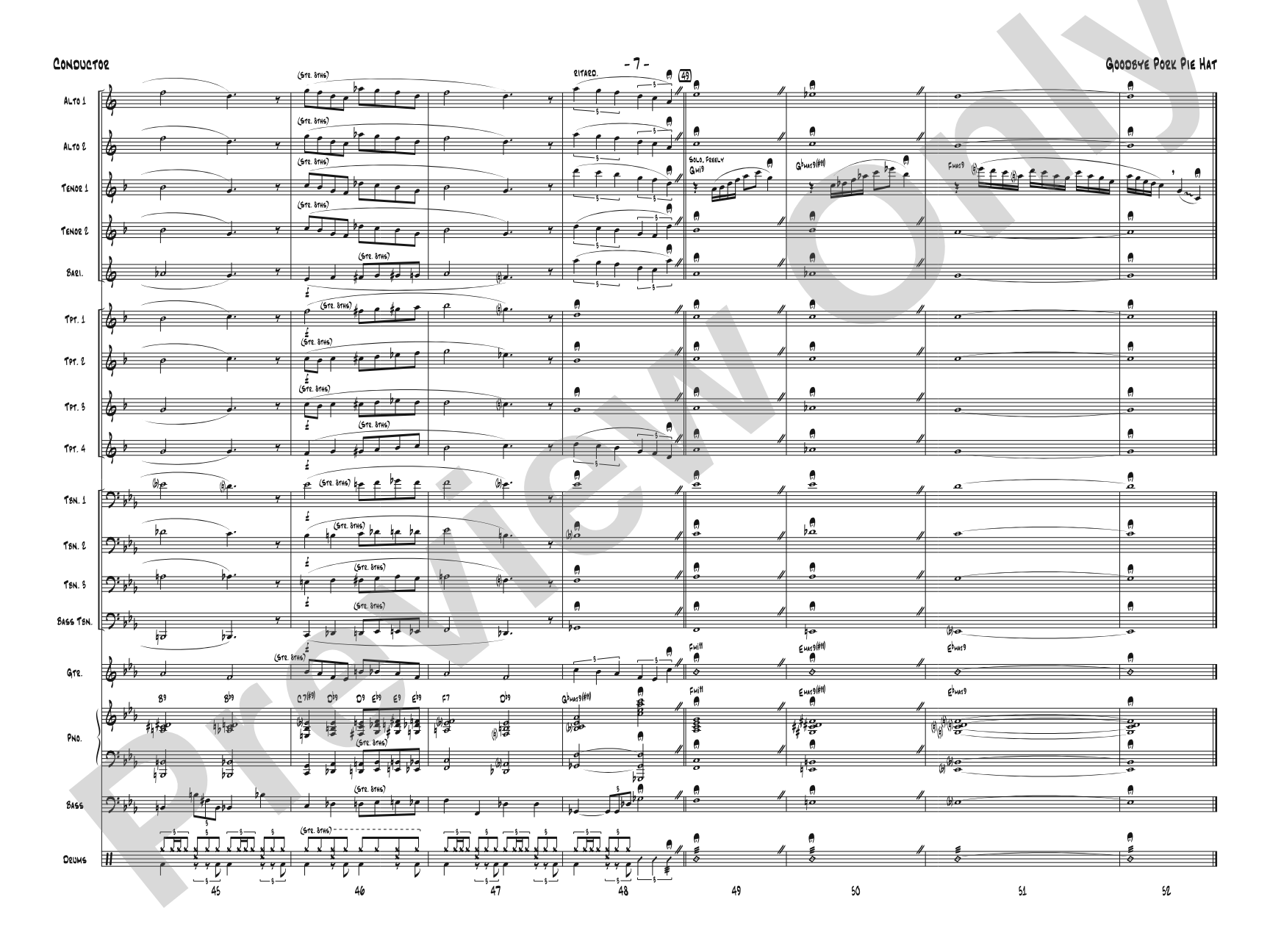

Goodbye Pork Pie Hat: Jazz Ensemble Conductor Score & Parts
By Charles Mingus / arr. Alan Baylock
Grade: 3.5 (Medium)
Item: 00-PK-0007510

$52.00
Pickup currently not available
Buy Extra Parts (Digital PDF Download)
Parts Added to Cart!
Description
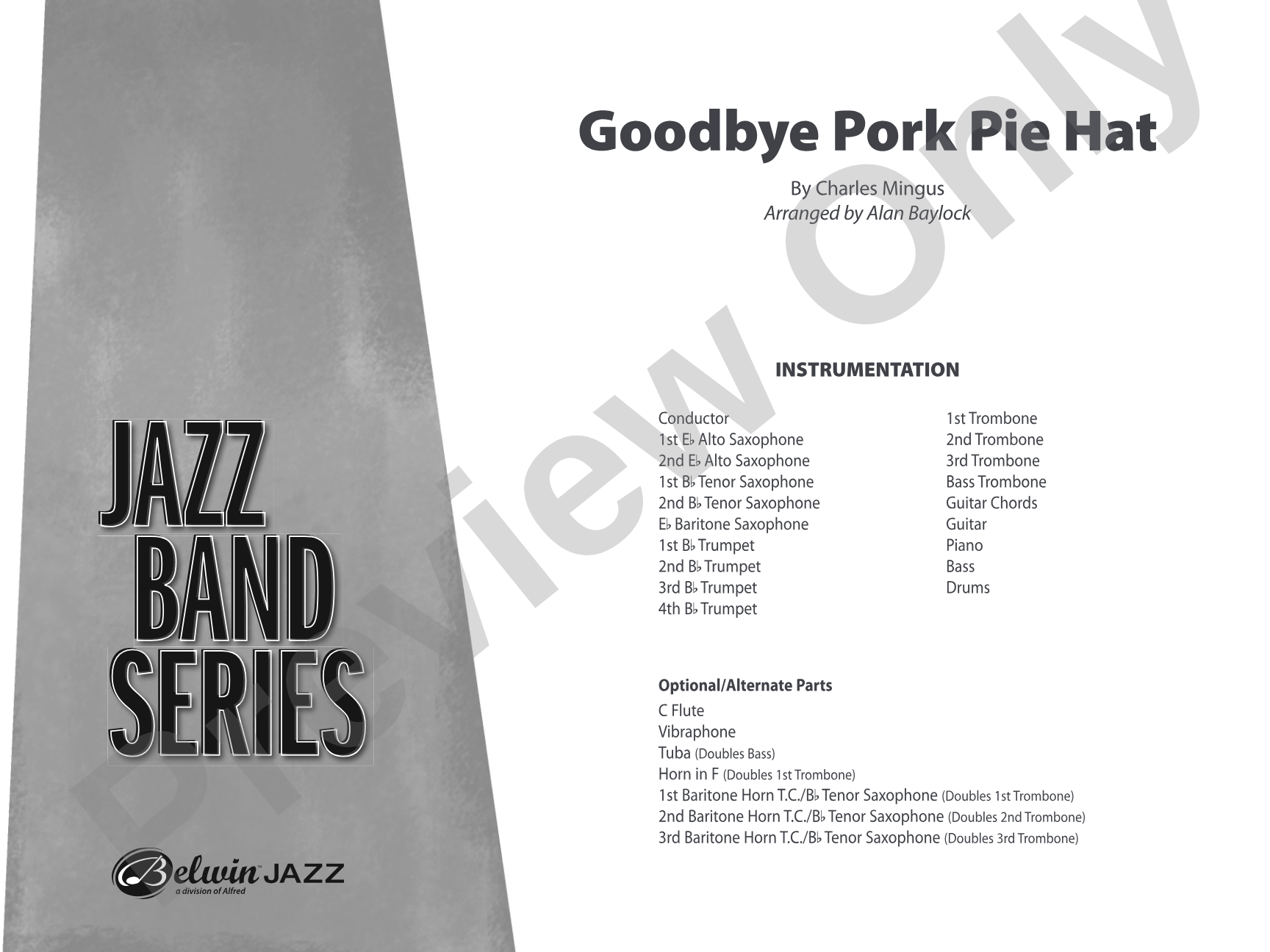
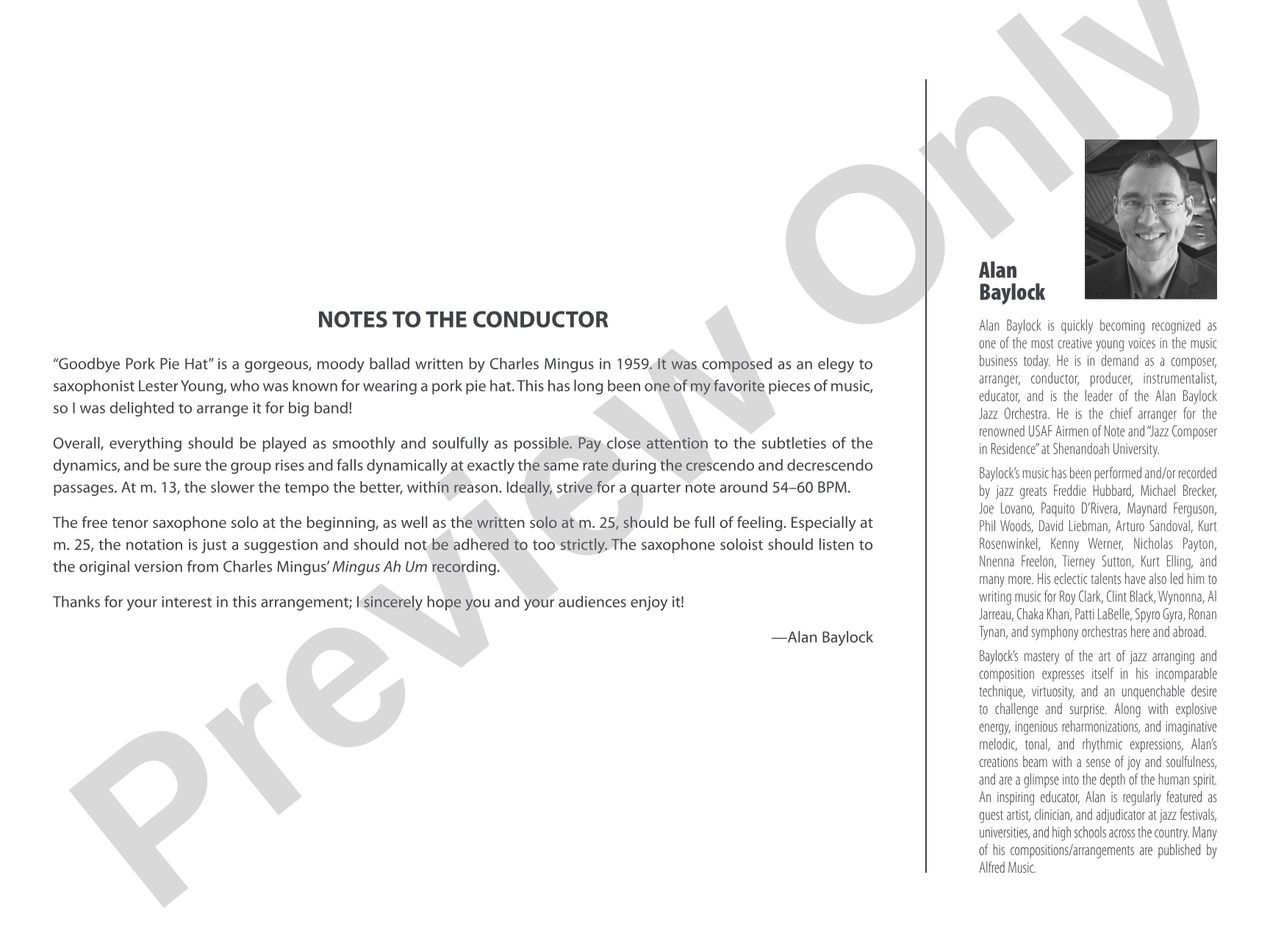
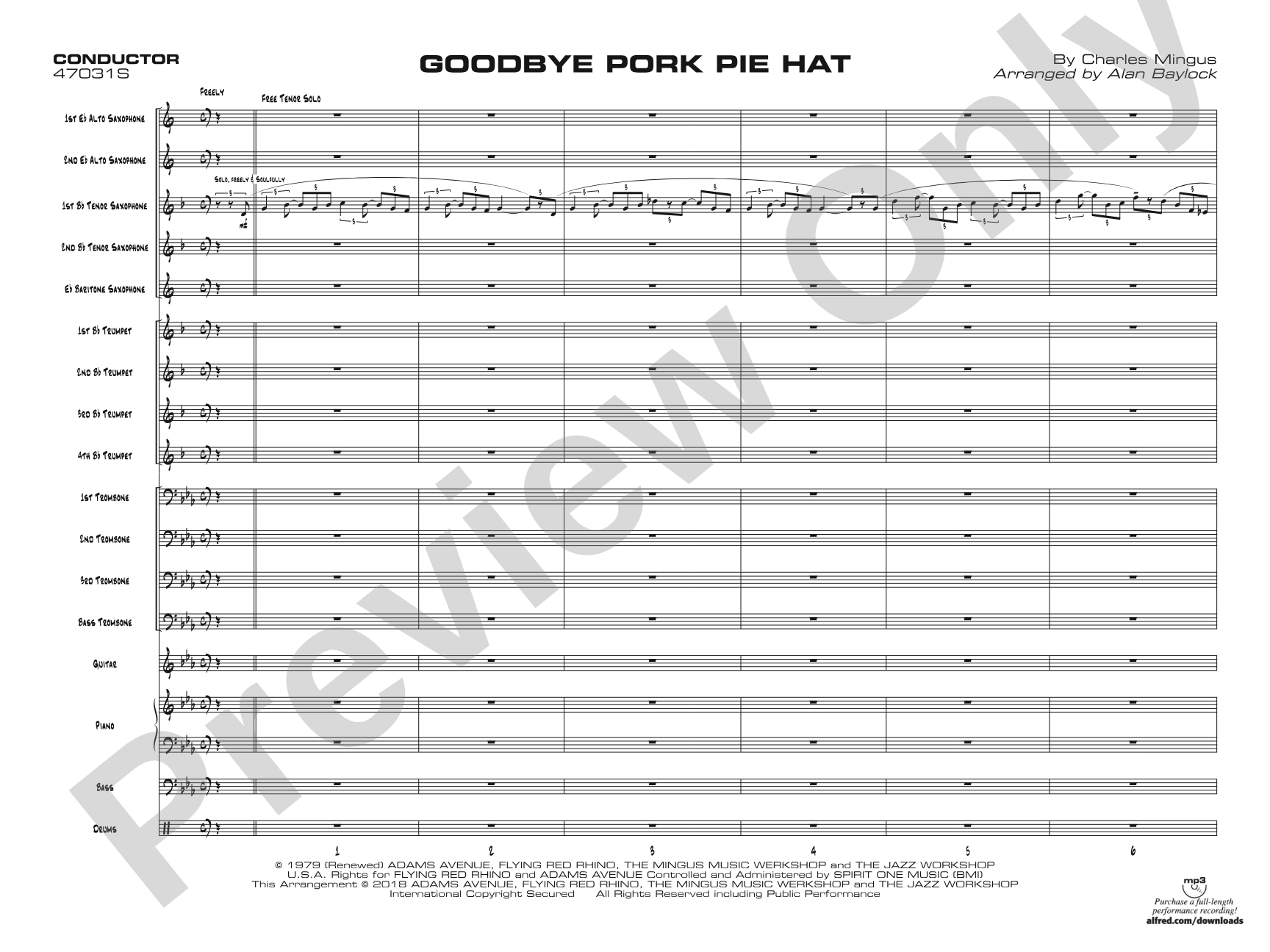
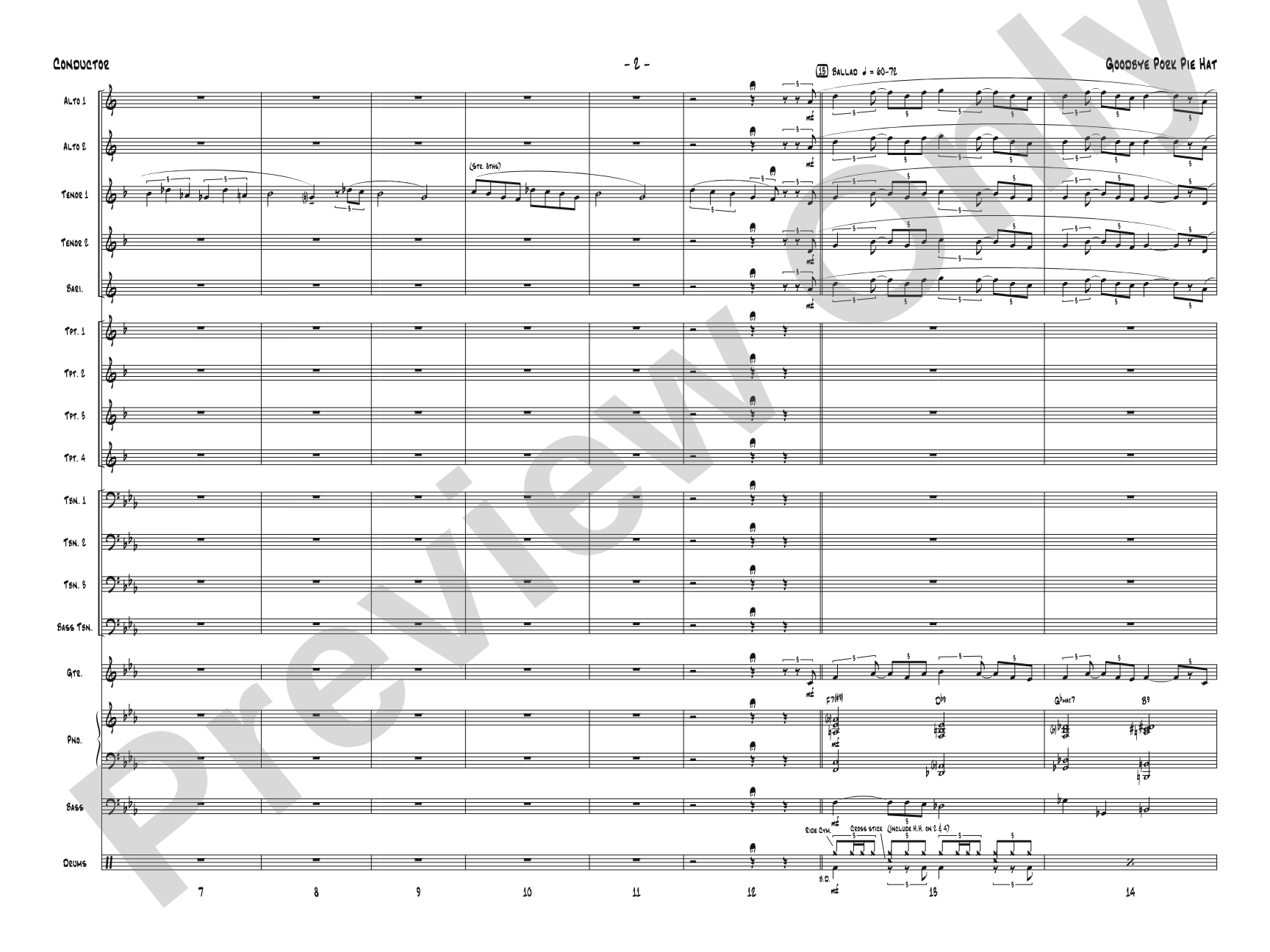
The sonic landscape of this tenor ballad on a classic Mingus tune is free and soulful. The solo tenor provides an introduction, followed by the lush ensemble with a suggested written tenor solo. Lead trumpet range is to written B-flat with optional parts to include flute and vibes. This superb chart belongs in every library.


Don't just read it, hear it, play along with it, and watch your students grow with it. In MakeMusic Cloud, Goodbye Pork Pie Hat: Jazz Ensemble Conductor Score & Parts comes alive with professional accompaniment, adjustable tempo, and built-in practice tools that turn solo practice into real progress.
Open in the Player
Jump straight in and assign it today.
Start Your Free Trial
Open this title and explore the full library in minutes.
Sample Audio
1
Audio File
--:--
0:00
0:00
Sample Video
Additional Details
Series:
Jazz Band Series
Publisher:
Alfred Music
Page Count:
52
SKU:
00-PK-0007510
More about this title
About the Composer: Charles Mingus
Charles Mingus (1922–1979) was a bassist, composer, and bandleader whose harmonically adventurous writing and emotional directness shaped modern jazz. His compositions blend blues, bebop, and classical forms while maintaining an improvisational spirit that challenges and rewards musicians willing to engage deeply with the music.
Mingus's legacy in jazz education runs deep. His works demand precision in ensemble playing while leaving room for individual voice and expression. Teachers and directors value his catalogue because it develops musicianship on multiple levels: harmonic awareness, rhythmic flexibility, and the courage to play with conviction.
Why we love this
Alan Baylock's arrangement captures the spiritual quality of Mingus's original while making it entirely accessible for a Grade 3.5 ensemble. The tenor-focused voicing gives your section a chance to shine, and the optional instrumentation (flute, vibes) lets you shape the piece around what you have. This is a ballad that teaches restraint and phrasing rather than technical flash.
What to expect
Introspective and unhurried. The piece opens with a lone voice, grows into warm ensemble colors, and lets silences matter as much as sound. There's a bluesy soul running underneath the sophisticated harmony, creating the feeling of a late-night conversation between friends who understand each other without many words.
Who it's for
Jazz ensembles at the intermediate level (high school or collegiate beginning jazz bands) who are ready to move beyond functional charts into music with real compositional weight. Your section leaders need some maturity and tone awareness, but the ensemble doesn't need virtuosos to sound beautiful here.
How to get the most out of it
- Build the ensemble sound gradually during the lush section after the tenor solo introduction. This piece breathes best when sections don't rush to full volume.
- Encourage the tenor soloist to use space and silence as actively as notes. Mingus ballads are conversations, not monologues.
- Keep the harmonic foundation (bass and piano) relaxed and grounded. The written chords want to float, not anchor.
- If using optional vibes or flute, integrate them during rehearsal as color choices rather than doublings. Let them find their own register and moment.
How to use it
Program this as a centerpiece for a ballad-focused set or a standalone feature during a jazz showcase where you want to demonstrate your ensemble's maturity and control. It pairs naturally with uptempo Mingus charts if you're building a complete portrait of his compositional voice, or stand it alone to contrast with funkier or more technically demanding pieces.
Skills your students will build
- Listening and responding to solo improvisation in ensemble contexts
- Balancing blend and intonation in lush, close-voiced harmony
- Phrasing without vibrato-dependent security
- Reading and playing sophisticated jazz harmony (altered chords, extended voicings)
- Collective dynamics and ensemble restraint in ballad settings
- Interpreting Mingus-style articulation and time feel