

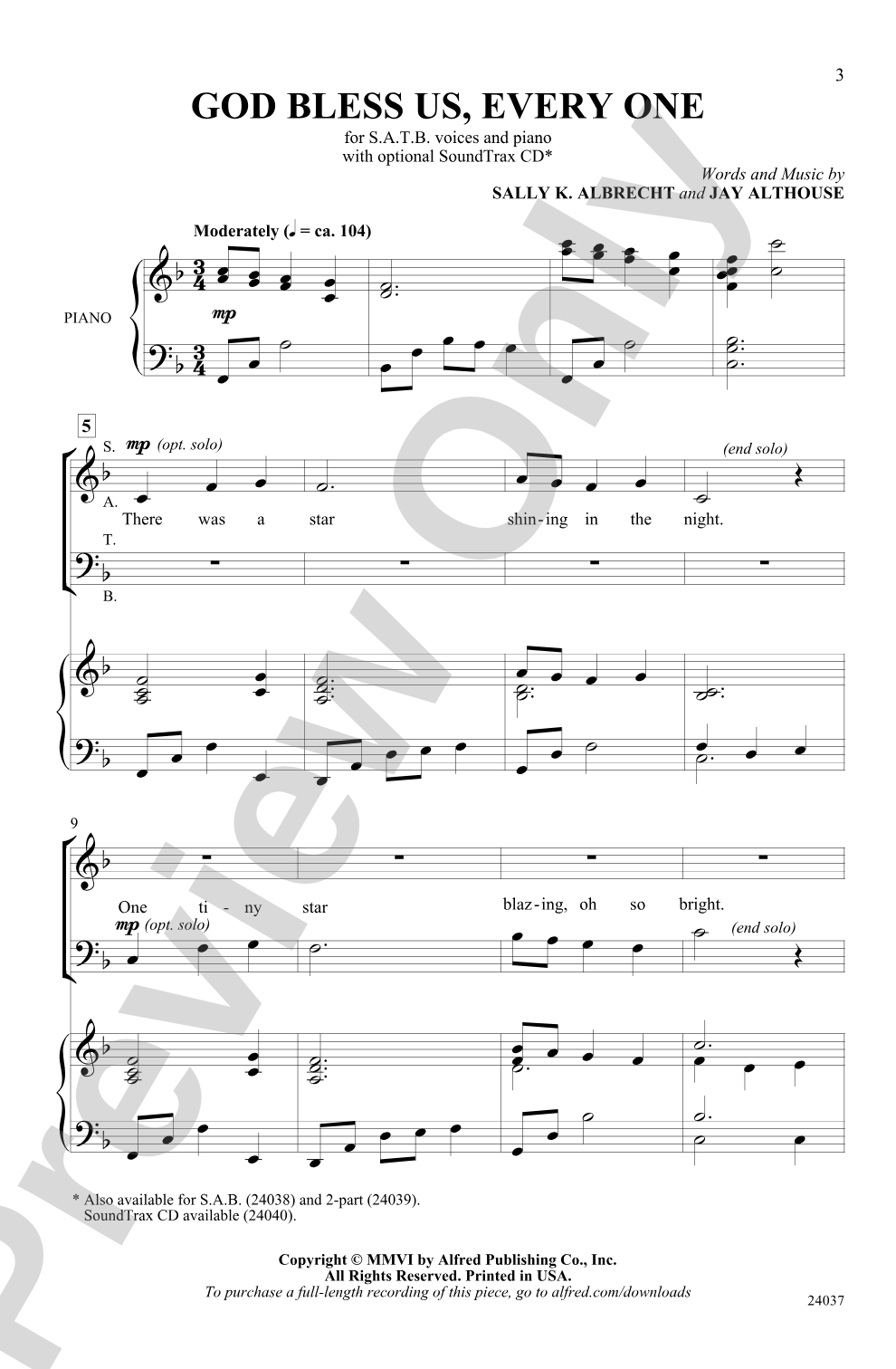

God Bless Us, Every One: SATB Choral Octavo
By Sally K. Albrecht and Jay Althouse
Item: 00-PO-0000078
$1.65
Minimum order quantity: 20 copies
Pickup currently not available
Related Items
God Bless Us, Every One: SoundTrax Digital Audio Download |
$22.95
|
View | |
God Bless Us, Every One: SAB Choral Octavo |
$1.65
|
View | |
God Bless Us, Every One: 2-Part Choral Octavo |
$1.65
|
View | |
God Bless Us, Every One: SATB Choral Octavo |
$1.65
|
View | |
God Bless Us, Every One: 2-Part Choral Octavo |
$1.65
|
View | |
God Bless Us, Every One: Choral Octavo SoundTrax CD |
$22.95
|
View |
Description
The title comes from the line spoken by Tiny Tim in Dickens' A Christmas Carol. The text evokes the images of Christmas: a star shining in the night, angels in the skies, followed by a Christmas blessing: "God bless us, every one, each daughter and each son. May blessings fall on all we hold dear."


God Bless Us, Every One: SATB Choral Octavo isn't in MakeMusic Cloud just yet...but it could be. Let us know you'd like to see it, and you'll help shape what comes next. In the meantime, start a free trial and dive into thousands of interactive titles your students can play along with today.
Request This Title
Tell us you want it.
Start Your Free Trial
Explore everything that's ready to play right now.
Sample Audio
1
Audio File
--:--
0:00
0:00
Sample Video
No sample videos found.
Additional Details
Series:
Alfred Choral Designs
Publisher:
Alfred Music
Page Count:
12
SKU:
00-PO-0000078
More about this title
About the Composer: Sally K. Albrecht
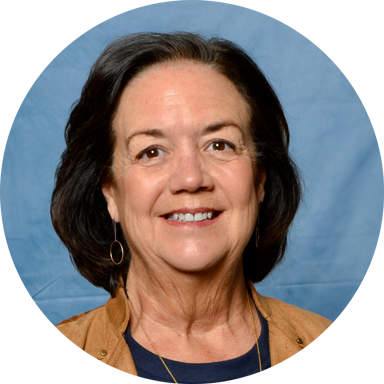
Sally K. Albrecht has shaped choral music education for over thirty years, first as Director of School Choral, Vocal, and Elementary Publications at major educational publishers including Alfred Music, and continuously as a sought-after clinician and conductor at prestigious venues such as Lincoln Center, Carnegie Hall, and The Kennedy Center. Her catalog includes more than 600 published choral works alongside 75 larger musicals and songbooks, work recognized annually through ASCAP Special Music Awards since 1987.
Albrecht holds degrees from Rollins College (B.A. in Music and Theater, 1976), the University of Miami (M.A. in Drama, 1977; M.M. in Accompanying, 1979), and has taught at Oakland University in Michigan, Jersey City State College in New Jersey, and Meredith College in North Carolina. Her contributions to leadership in the arts earned her the Distinguished Alumna Award from both the University of Miami Frost School of Music and Rollins College in 2021, as well as the Pillar of Leadership award from the Omicron Delta Kappa National Leadership Honor Society. She resides in Wake Forest, North Carolina, with her husband, composer and arranger Jay Althouse.
Why we love this
Albrecht and Althouse craft a carol that captures genuine warmth without sentimentality. The text moves purposefully from visual imagery (star, angels) into direct blessing, giving singers meaningful words to deliver, and the music supports that arc with clear harmonic writing that sits naturally in SATB voices.
What to expect
The carol unfolds with quiet sincerity, painting Dickens' beloved imagery before settling into a blessing that feels both personal and communal. Albrecht and Althouse's writing allows the voices to rest comfortably while the text carries the emotional weight, creating space for genuine connection between singers and listeners.
Who it's for
Choirs seeking a carol with lyrical integrity and emotional directness will find this octavo serves well across intermediate to advanced high school and adult ensembles. The text's universality and the composers' sure harmonic hand make it accessible to church choirs, school concert programs, and community vocal groups.
How to get the most out of it
- Shape the opening verses to let the star and angel imagery breathe; resist the urge to rush or press, allowing the quiet reverence to establish the carol's intimate tone.
- Balance the harmony so that inner voices remain audible, especially where Albrecht and Althouse layer the blessing text; this ensures the message lands clearly with your audience.
- Use the recorded accompaniment to lock the tempo and harmonic framework, then gradually move toward independence so singers own the phrasing by performance time.
How to use it
Slot this octavo into the latter half of a Christmas concert where the program can shift from festive energy toward reflection and benediction. It pairs naturally with a cappella or accompanied selections that emphasize the literary and spiritual dimensions of the season.
Skills your students will build
- Sustaining legit vowels and line through tied notes and longer phrases
- Balancing four-part SATB texture so inner voices remain clear and supported
- Interpreting text-driven phrasing that follows words rather than bar lines
- Singing in tune through mild harmonic density and voice-leading shifts