Go Tell It on the Mountain Sheet Music Preview

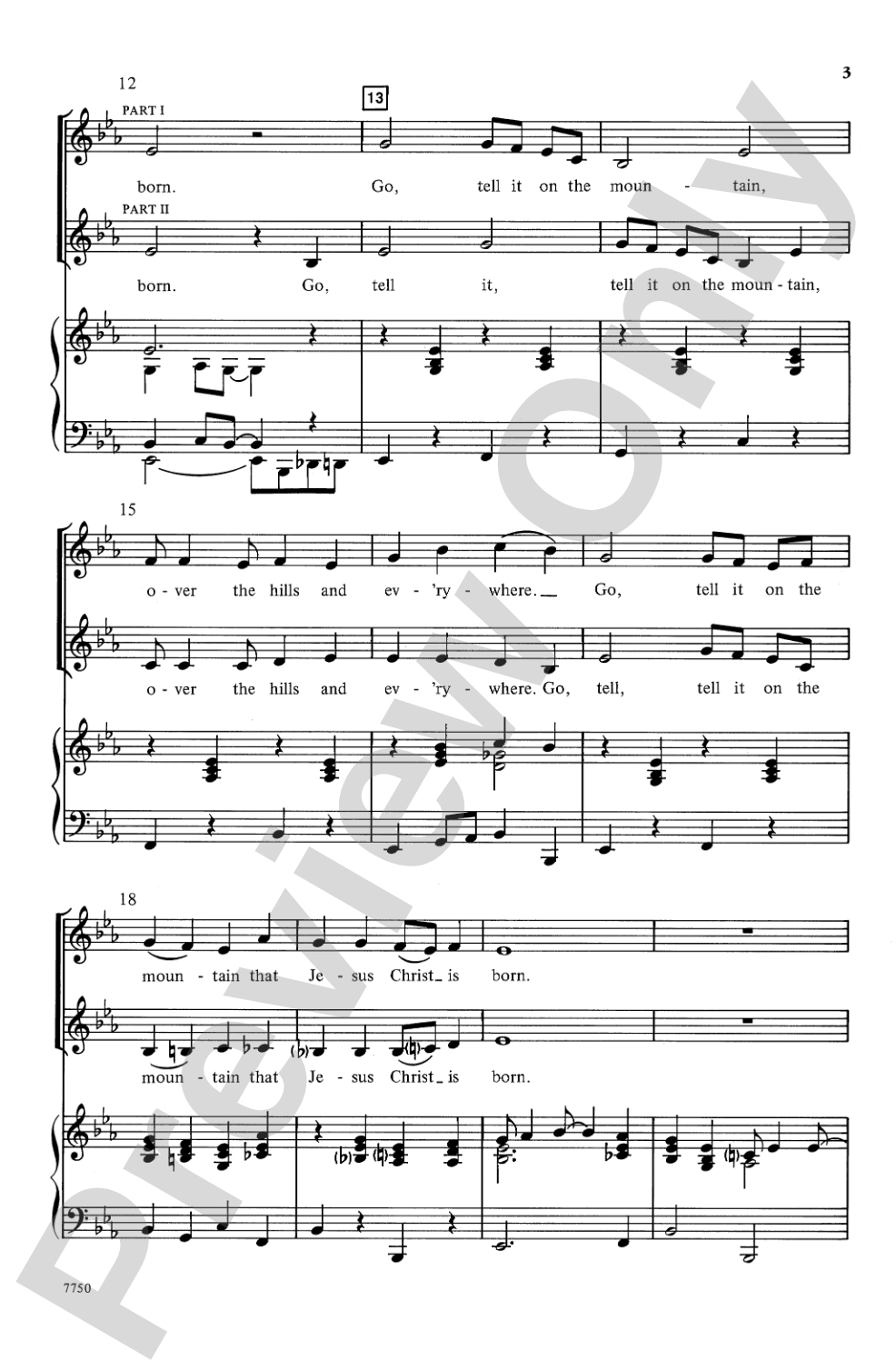
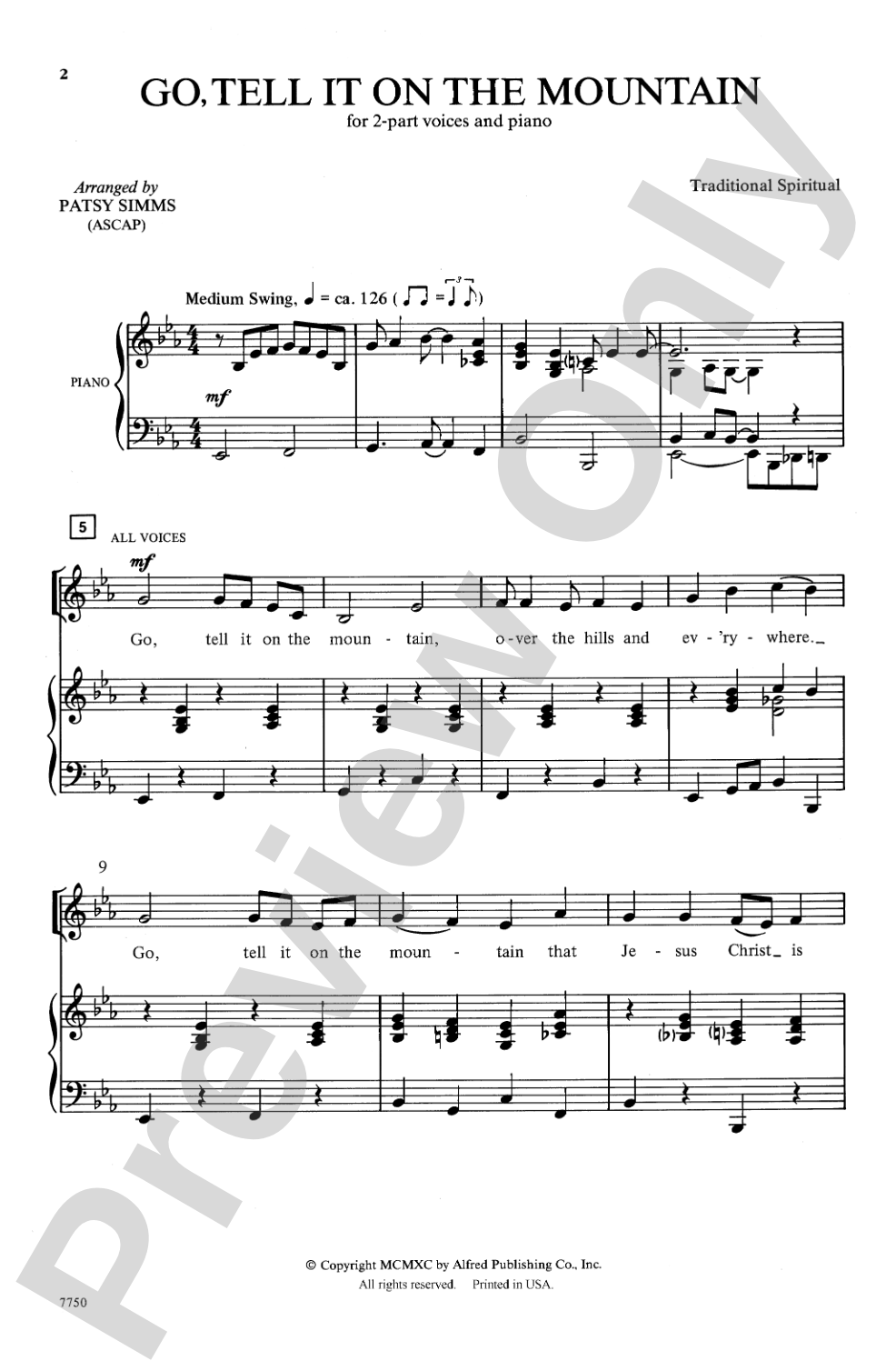
Go Tell It on the Mountain: 2-Part Choral Octavo

Arr. Patsy Ford Simms

Item: 00-PO-0004576

Digital Download
$2.25

Minimum order quantity: 20 copies

Description
This excellent teaching piece features strong, independent counter lines and limited vocal ranges. Excellent for beginning choirs. Add a few special voices on the final descant to turn this 2-part piece into three parts.

Go Tell It on the Mountain: 2-Part Choral Octavo isn't in MakeMusic Cloud just yet...but it could be. Let us know you'd like to see it, and you'll help shape what comes next. In the meantime, start a free trial and dive into thousands of interactive titles your students can play along with today.

Sample Audio
No sample audio found.
Sample Video
Additional Details
Series: Alfred Archive Edition: Alfred Choral Designs
Publisher: Alfred Music
Page Count: 8
SKU: 00-PO-0004576

More about this title

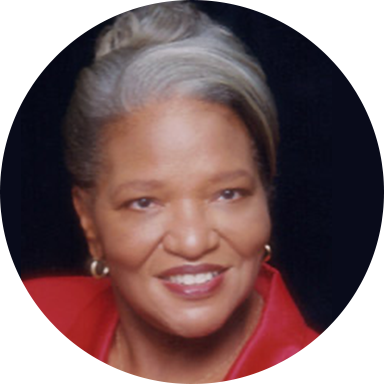
About the Arranger: Patsy Ford Simms

Patsy Ford Simms

Patsy Ford Simms began publishing in 1981 and has since created over 300 songs across educational and church markets, working with major publishers including Shawnee Press. Her prolific output emerged from a direct need: during her early teaching years, she found few quality choral octavos written specifically for junior high and middle school voices, so she began writing and arranging to fill that gap.

She holds a Bachelor of Science in Music Education from Knoxville College, a Master of Education from the University of Louisville, and a doctorate in Music Education from Columbia Pacific University. After 30 years teaching across grades K-12 and at the Youth Performing Arts School, she transitioned to a clinician role while maintaining her work as an arranger and composer. She has presented internationally in Italy and Africa, received multiple ASCAP Special Music Awards, and has had compositions selected for MENC World's Largest Concerts. She has also commissioned original works and composed short musicals focused on African American history.

Why we love this

Simms writes with a deep understanding of what beginning choirs actually need: independent yet singable lines that don't overload younger voices, and enough flexibility built into the arrangement to let directors expand it when they're ready. The option to add a descant for more advanced singers means you can use this piece across multiple years, growing it alongside your ensemble's capabilities.

What to expect

The spiritual carries warmth and directness, grounded in the traditional melody while Simms's counter lines add texture and depth without complexity. Young singers experience the satisfaction of singing in real harmony, not unison, which builds musicianship and ensemble awareness from the inside.

Who it's for

This octavo is designed for beginning and developing choirs with limited vocal ranges and singers still building confidence in part independence. It works equally well for middle school groups, smaller youth choirs, or church ensembles looking for accessible sacred repertoire that doesn't compromise musical substance.

How to get the most out of it

  • Balance the counter lines by rehearsing them separately first, then layer them carefully so neither part overwhelms the other.
  • Shape the two parts as equal partners, not as melody and accompaniment; this strengthens young singers' awareness of harmonic movement.
  • If adding the descant, introduce it only after both 2-part lines are secure, and consider assigning it to only your most confident singers rather than loading it onto the entire section.

How to use it

Program this for a winter or holiday concert as an accessible yet musically meaningful spiritual that demonstrates your choir's ability to handle part work. It also serves well in combined concerts with other choirs at different levels, since the 2-part arrangement accommodates younger singers while the optional descant shows growth for developing singers in the same concert.

Skills your students will build

  • Singing independent melodic lines while maintaining part integrity
  • Reading and balancing harmonic counter-lines
  • Flexibility in vocal range within a limited tessatura
  • Blend and balance between two-part textures

You May Also Like