

Gloria in Excelsis Deo: SSAA Choral Octavo
By Jay Althouse
Item: 00-PO-0006289
$2.05
Minimum order quantity: 20 copies
Pickup currently not available
Description
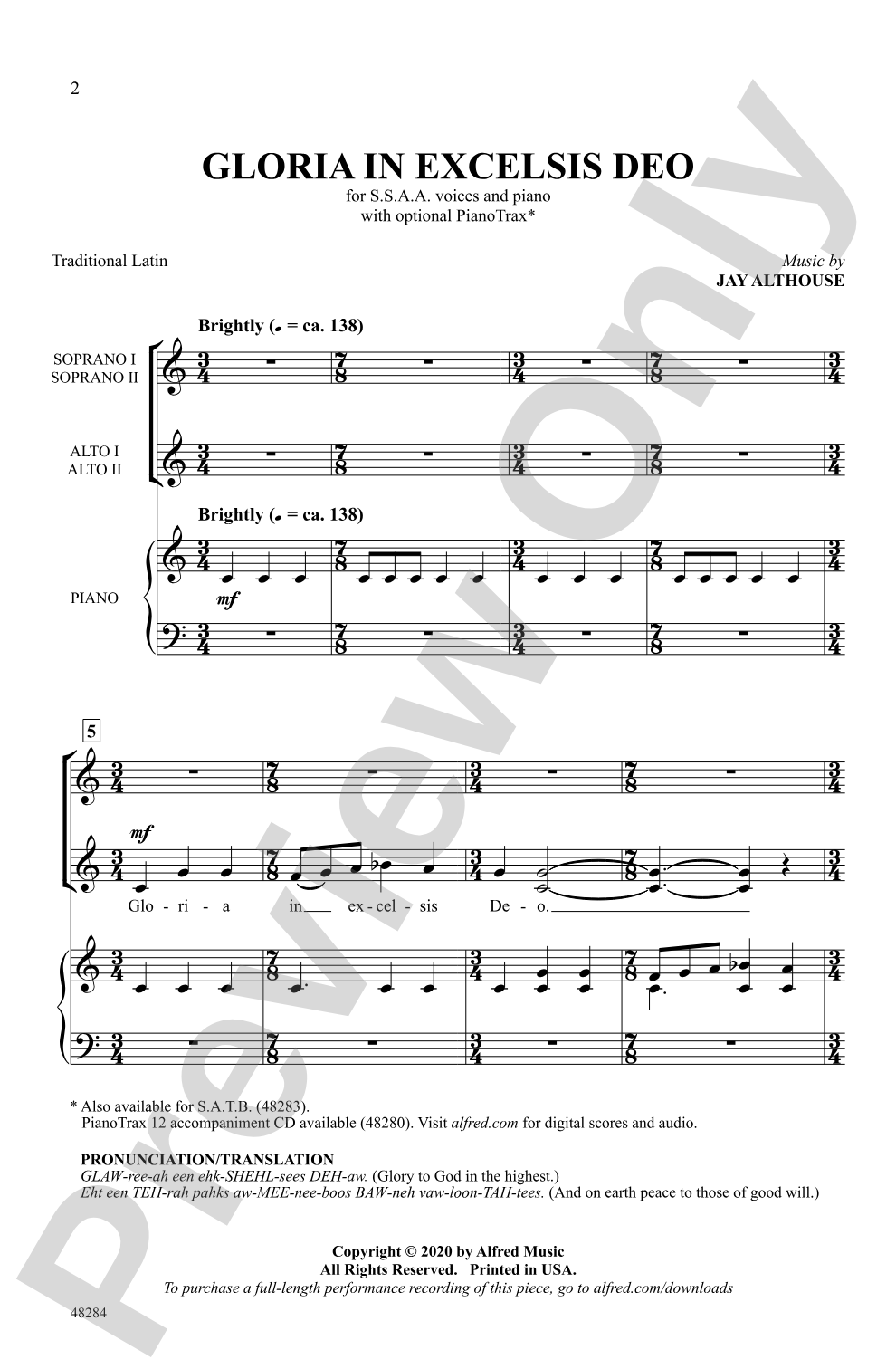
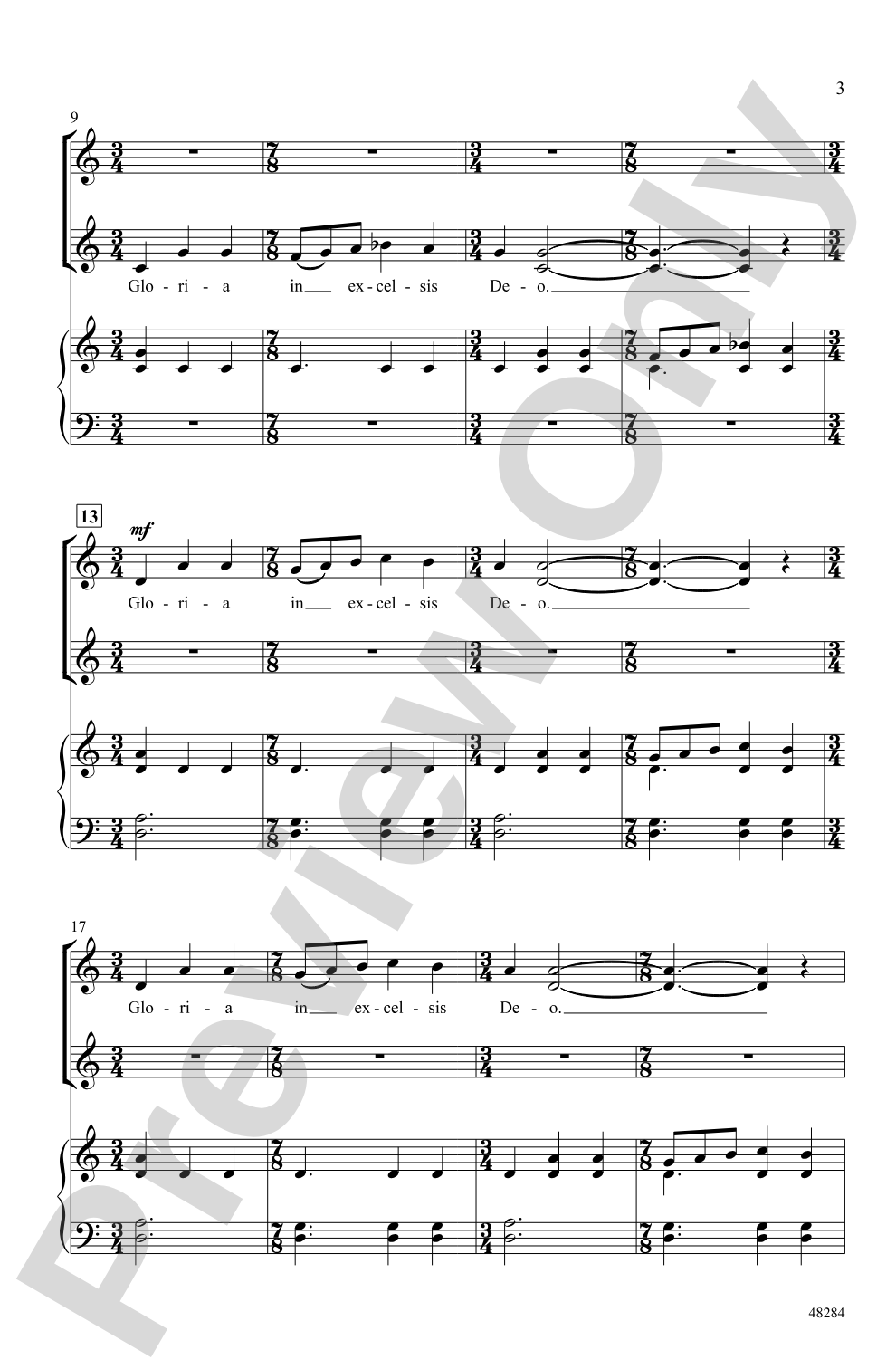
An achievable thriller on a familiar Latin text! Jay Althouse's compelling mixed meter theme develops into a shimmering array of contemporary harmonies in this exciting, angular work. A reflective adagio section in the middle offers contrast before returning to the rhythmic opening.


Gloria in Excelsis Deo: SSAA Choral Octavo isn't in MakeMusic Cloud just yet...but it could be. Let us know you'd like to see it, and you'll help shape what comes next. In the meantime, start a free trial and dive into thousands of interactive titles your students can play along with today.
Request This Title
Tell us you want it.
Start Your Free Trial
Explore everything that's ready to play right now.
Sample Audio
1
Audio File
--:--
0:00
0:00
Sample Video
No sample videos found.
Additional Details
Series:
Alfred Choral Designs
Publisher:
Alfred Music
Page Count:
8
SKU:
00-PO-0006289
More about this title
About the Composer: Jay Althouse

Jay Althouse studied Music Education at Indiana University of Pennsylvania, where he earned both his B.S. and M.Ed. degrees and later received the school's Distinguished Alumni award. His career spans eight years in music publishing administration, including a term on the Executive Board of the Music Publishers Association of America, and he holds ASCAP writer membership with multiple Special Awards for his compositions.
With over 800 choral works in print across all levels, Althouse has established himself as a prolific voice in American choral music, performed widely throughout English-speaking countries. Beyond composing, he has co-written children's musicals with his wife Sally K. Albrecht, edited major vocal solo collections, and authored influential pedagogical resources including "The Complete Choral Warm-up Book" and "Accent on Composers." His collaborative work "I Hear America Singing" was performed by the San Francisco Girls and Boys Choirs at President Obama's 2009 Inauguration. He currently serves on the National Advisory Board of the Folk Art Society of America.
Why we love this
Althouse crafts a piece that delivers genuine drama without demanding advanced vocal gymnastics from a treble choir. The structural arc—angular mixed meter opening, shimmering harmonic landscape, introspective middle section, and dynamic return—creates a arc that feels substantial enough for festival programming while remaining well within reach for developing singers. This is the kind of contemporary writing that convinces audiences and students alike that sacred music can be both accessible and genuinely exciting.
What to expect
The piece unfolds with rhythmic energy and modern harmonic sophistication, creating an intellectual edge that feels refreshing within the sacred music canon. The adagio section provides a moment of stillness and introspection, inviting singers to connect emotionally before the opening's driving character returns with a sense of arrival and affirmation.
Who it's for
This octavo suits advanced treble choirs (middle school through community) who are ready to tackle contemporary harmonic language and shifting meters without sacrificing musicality. Directors seeking a sacred work with genuine artistic substance that still showcases accessible writing will find a strong fit here.
How to get the most out of it
- Establish the mixed meter theme with rhythmic precision in the opening section; the angular quality depends on clean ensemble attacks and releases, not overdone dynamics.
- Shape the contemporary harmonies in the "shimmering array" passage by balancing vertical blend with slight dynamic support for inner voices that carry harmonic color.
- Use the reflective adagio as a true contrast in temperature and weight; pull back the energy completely to let the middle section breathe and reset before the return.
- Return to the opening with renewed drive but avoid simply replaying it; the second statement of the theme feels more assured and grounded after the harmonic exploration.
How to use it
Program this as a concert centerpiece for a treble choir showcase, where its contemporary voice and structural clarity will stand out from more traditional repertoire. The contrast between the rhythmic opening and contemplative middle makes it equally compelling for festival competition or a program exploring how sacred texts inspire modern compositional voices.
Skills your students will build
- Reading and maintaining mixed meters (primarily 4/4 and 3/4 alternation)
- Singing contemporary harmonic language with independent voice parts
- Balancing blend and tuning within tertian and extended harmonies
- Shaping a large-scale musical arc across multiple contrasting sections
- Precision ensemble rhythmic attack and release in angular writing