
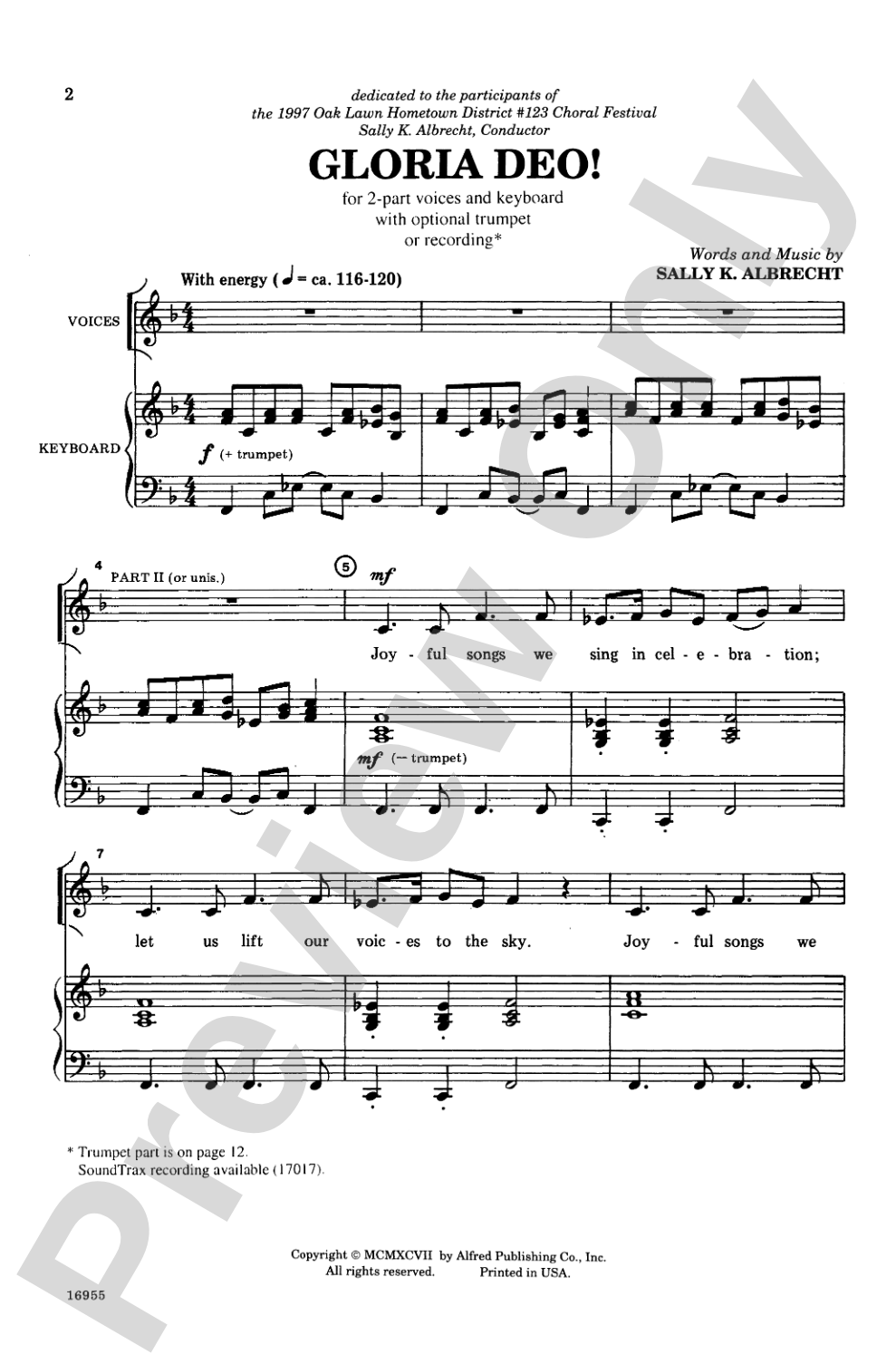

Gloria Deo: 2-Part (with Trumpet) Choral Octavo
Music by Sally K. Albrecht
Item: 00-PO-0002106
$2.25
Minimum order quantity: 20 copies
Pickup currently not available
Description
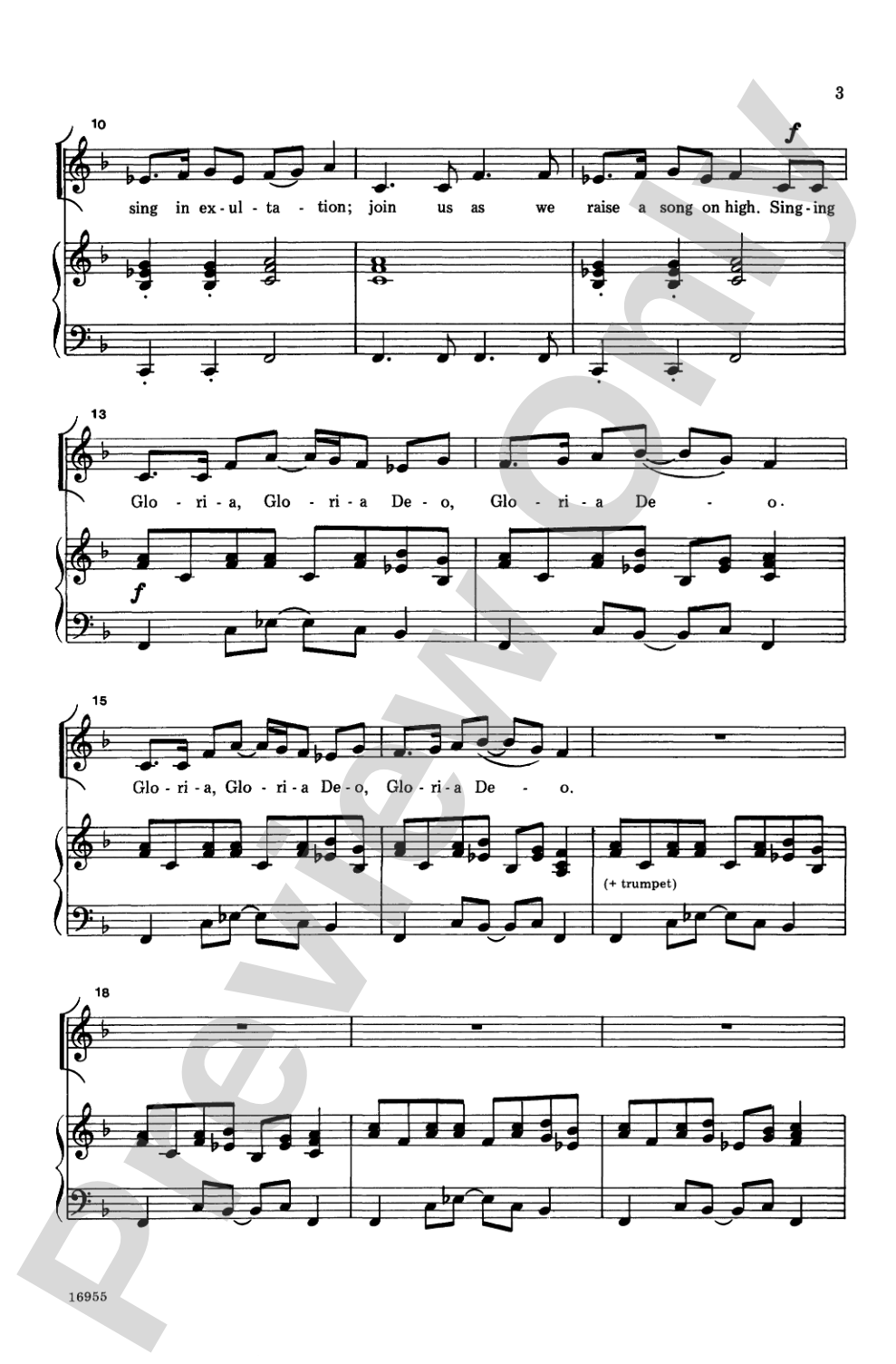
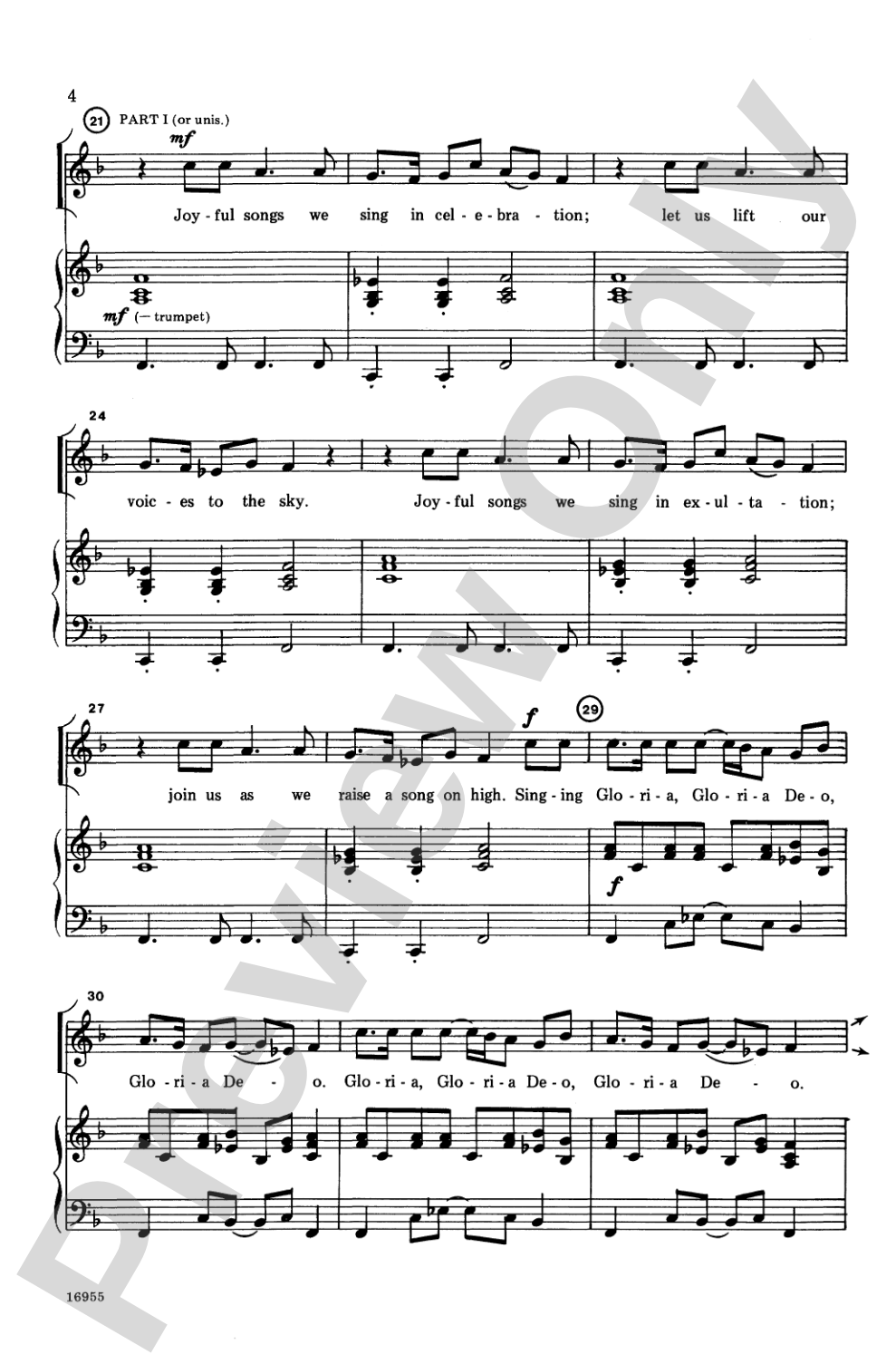
Energetic choral work with a combination English/Latin text especially composed for young and developing choirs. Text has no sacred references and is well-suited for school use. Essentially a partner song with one melody for each of the two voice parts. Easily taught and quickly learned.


Gloria Deo: 2-Part (with Trumpet) Choral Octavo isn't in MakeMusic Cloud just yet...but it could be. Let us know you'd like to see it, and you'll help shape what comes next. In the meantime, start a free trial and dive into thousands of interactive titles your students can play along with today.
Request This Title
Tell us you want it.
Start Your Free Trial
Explore everything that's ready to play right now.
Sample Audio
1
Audio File
--:--
0:00
0:00
Sample Video
No sample videos found.
Additional Details
Series:
Alfred Archive Edition: Alfred Choral Designs
Publisher:
Alfred Music
Page Count:
12
SKU:
00-PO-0002106
Instrumentation:
Trumpet
More about this title
About the Composer: Sally K. Albrecht

Sally K. Albrecht has built a distinctive career bridging choral composition with movement and staging, establishing herself as one of the most widely published choral voices in education. Since receiving the ASCAP Special Music Award annually beginning in 1987, she has accumulated over 600 choral publications and 75 larger works including musicals and songbooks. Her tenure as Director of School Choral, Vocal, and Elementary Publications at Alfred Music and other major publishers shaped choral repertoire for decades, and she has served as a clinician and honor choir conductor at some of the country's most prestigious venues including Lincoln Center, Carnegie Hall, and The Kennedy Center.
Albrecht holds degrees from Rollins College (B.A. in Music and Theater, 1976), the University of Miami (M.A. in Drama, 1977; M.M. in Accompanying, 1979), and has taught at Oakland University, Jersey City State College, and Meredith College. She is married to composer and arranger Jay Althouse. Her leadership extended beyond music into the broader educational community as Chair of the Board of Trustees for Omicron Delta Kappa National Leadership Honor Society, and in 2021 she received the Distinguished Alumna Award from both the University of Miami Frost School of Music and Rollins College.
Why we love this
Albrecht's gift for creating partner songs that feel fresh and uncomplicated makes this piece ideal for choirs building confidence. The combination of English and Latin text keeps the work accessible for school settings while the trumpet adds just enough musical interest to make the accompaniment feel complete without overwhelming developing singers.
What to expect
Energetic and celebratory, with the kind of forward momentum that lifts the singers' spirits. The trumpet adds brightness and definition, and the partner song structure creates a sense of musical conversation between the two voice parts.
Who it's for
Young and developing choirs ready to explore two-part writing with an instrumental layer. This works especially well for middle school or early high school choirs, or for adult non-auditioned groups seeking straightforward but engaging repertoire.
How to get the most out of it
- Balance the trumpet part so it doubles and supports rather than dominates the vocal lines; your accompanist should listen carefully to the singers' blend and adjust accordingly.
- The partner song structure means each voice part hears a complete melody. Work each part separately first, then layer them slowly so singers understand how their line fits into the whole.
- Movement and staging are built into this piece. Block the staging early in rehearsal so singers can integrate it with their singing from the start rather than adding it as an afterthought.
How to use it
Program this as a strong opener to set an uplifted tone for a concert, or place it midsection to provide contrast and energy. The textual content and movement possibilities make it particularly useful for school assemblies, spring concerts, or any occasion where you want music that feels both joyful and pedagogically intentional.
Skills your students will build
- Singing independent melodic lines in two-part writing
- Blending voices across changing harmonies
- Coordinating singing with trumpet accompaniment
- Integrating movement and staging with vocal performance
- Reading and interpreting mixed-language text
- Developing secure intonation in partner song contexts