
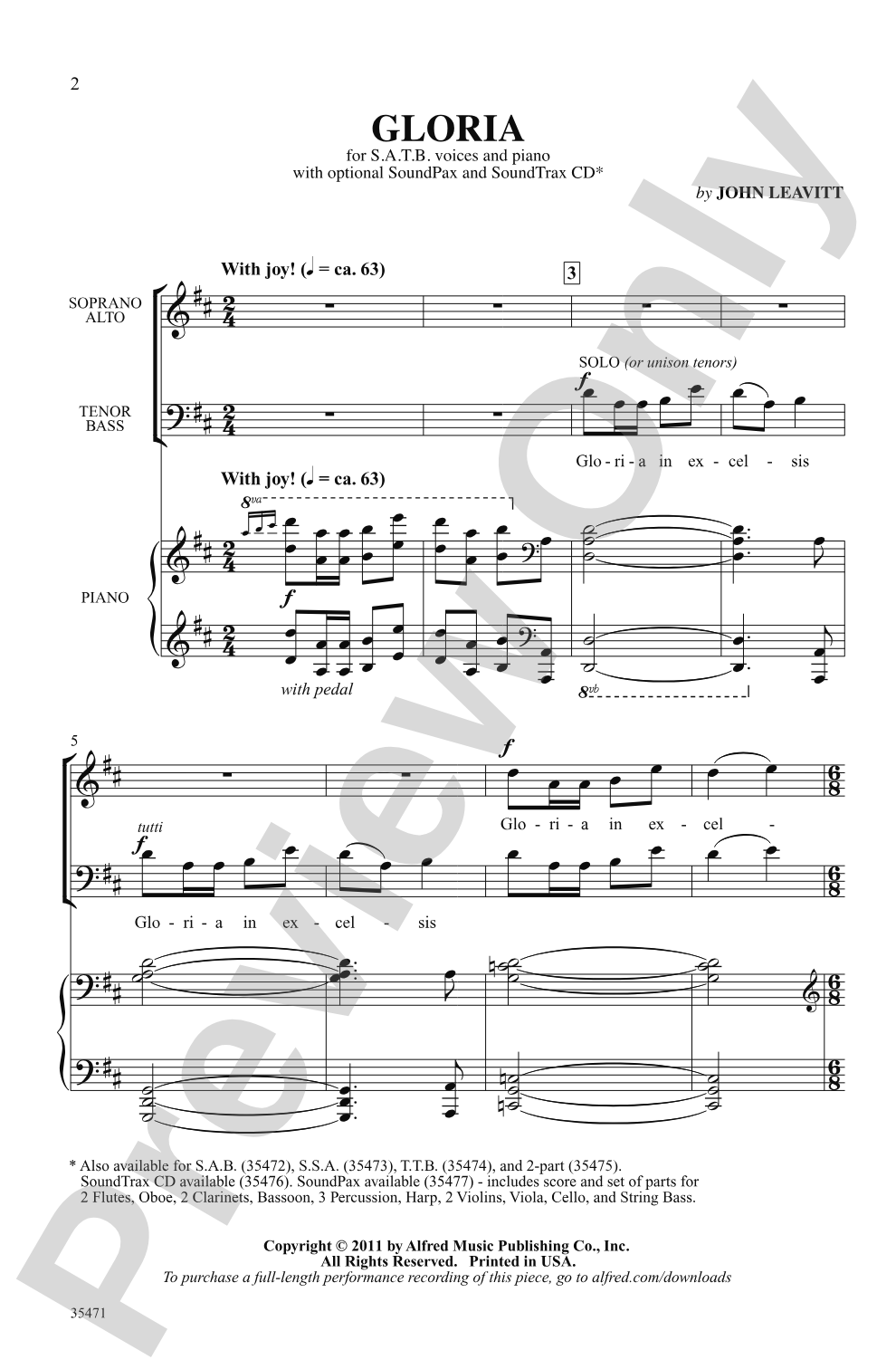
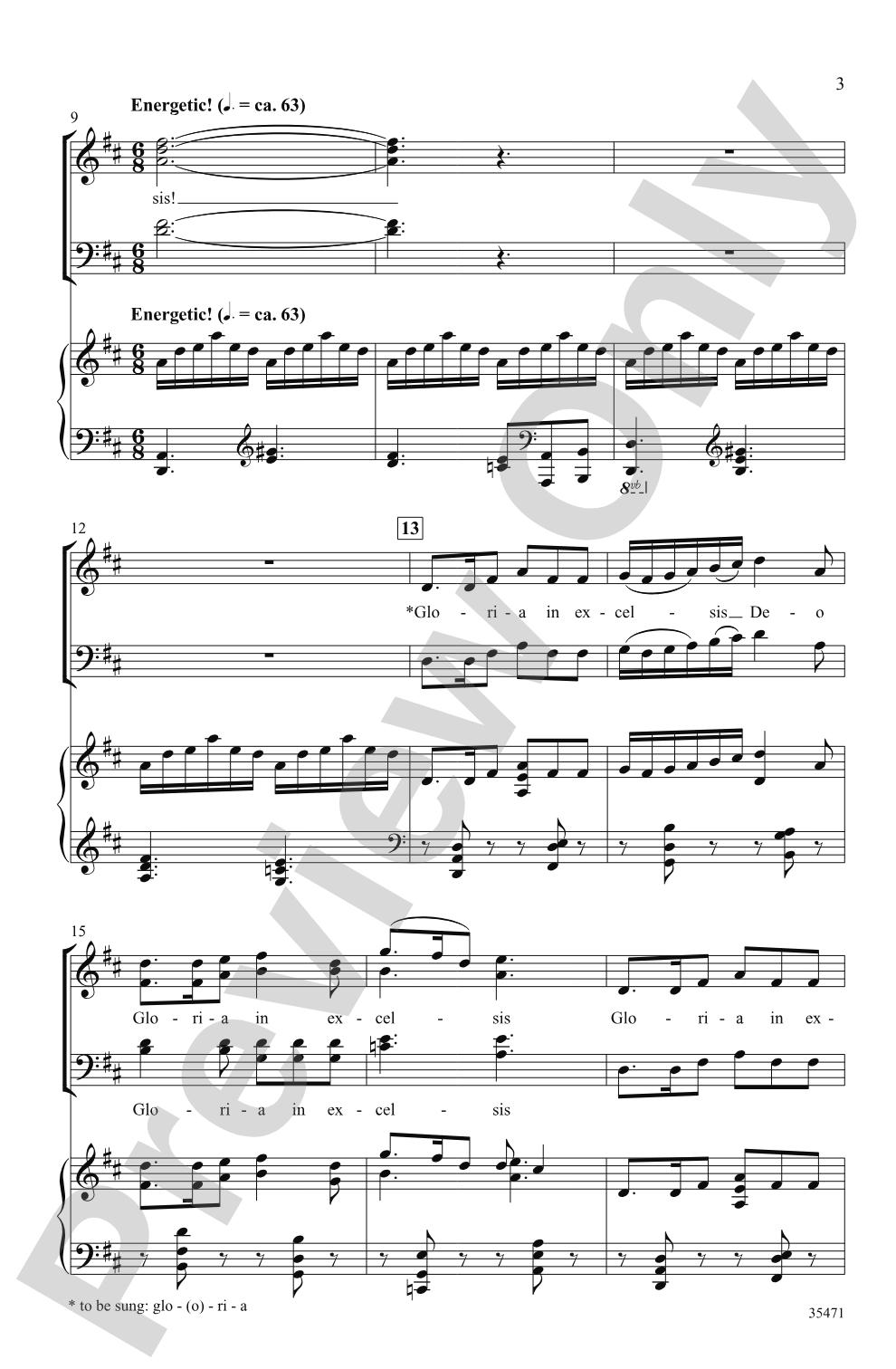
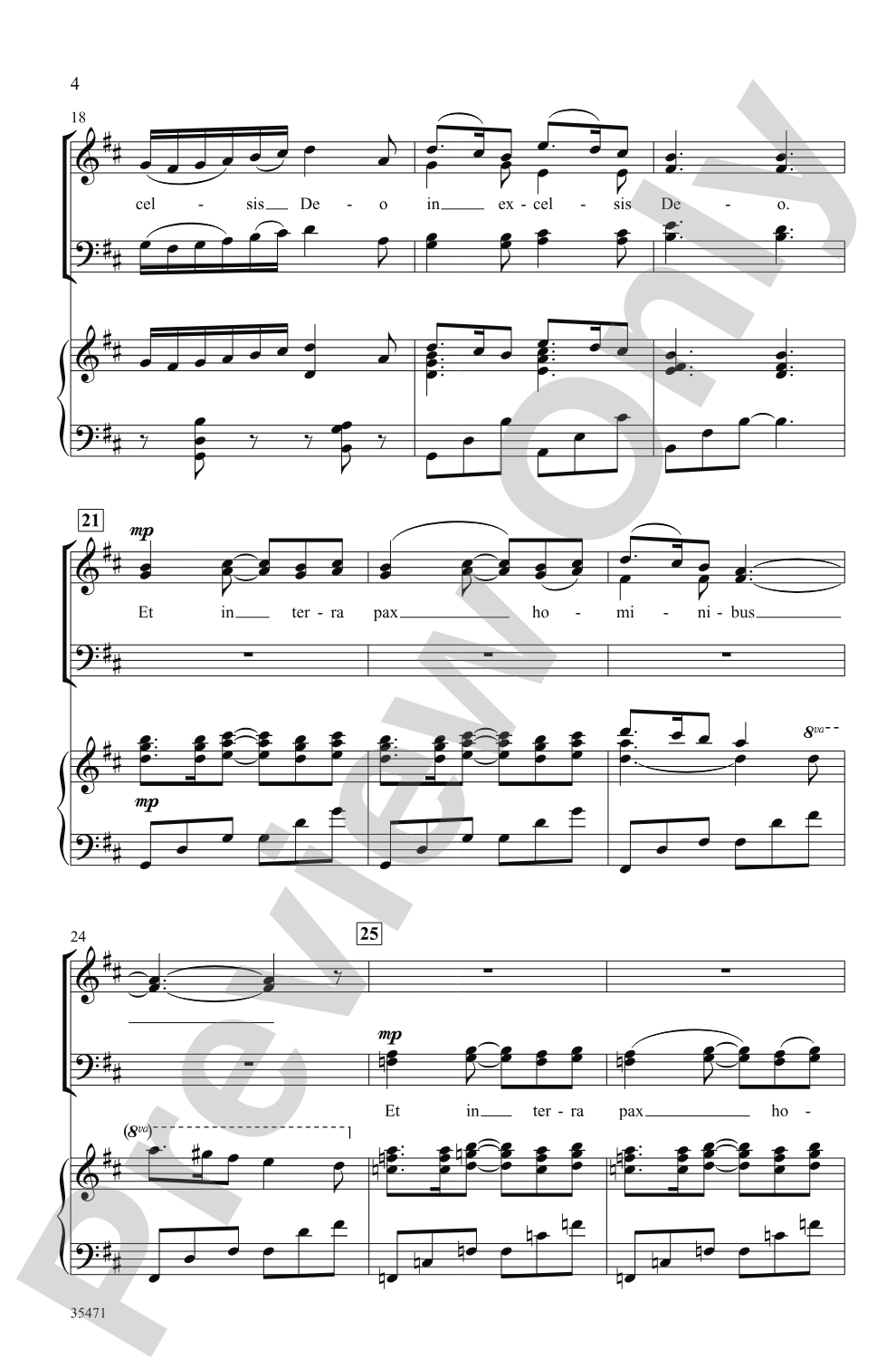

Gloria: SATB Choral Octavo
By John Leavitt
Item: 00-PO-0000886
$2.25
Minimum order quantity: 20 copies
Pickup currently not available
Related Items
Gloria: SoundTrax Digital Audio Download |
$26.99
|
View | |
Gloria: SAB Choral Octavo |
$1.80
|
View | |
Gloria: SSA Choral Octavo |
$1.80
|
View | |
Gloria: TTB Choral Octavo |
$1.80
|
View | |
Gloria: 2-Part Choral Octavo |
$1.80
|
View | |
Gloria: Choral SoundPax |
$40.00
|
View | |
Gloria: SATB Choral Octavo |
$2.25
|
View | |
Gloria: SAB Choral Octavo |
$1.80
|
View | |
Gloria: SSA Choral Octavo |
$1.80
|
View | |
Gloria: TTB Choral Octavo |
$1.80
|
View | |
Gloria: 2-Part Choral Octavo |
$1.80
|
View | |
Gloria: Choral Octavo SoundTrax CD |
$26.99
|
View | |
Gloria: Choral SoundPax |
$40.00
|
View |
Description
A favorite of choral directors everywhere, this extraordinary work will take your choir on a musical adventure. On this, its 20th anniversary, additional voicings and a cinematic orchestration provide new opportunities for contemporary performance. If this is not in your library, add it now!


Gloria: SATB Choral Octavo isn't in MakeMusic Cloud just yet...but it could be. Let us know you'd like to see it, and you'll help shape what comes next. In the meantime, start a free trial and dive into thousands of interactive titles your students can play along with today.
Request This Title
Tell us you want it.
Start Your Free Trial
Explore everything that's ready to play right now.
Sample Audio
1
Audio File
--:--
0:00
0:00
Sample Video
No sample videos found.
Additional Details
Series:
Alfred Choral Designs
Publisher:
Alfred Music
Page Count:
12
SKU:
00-PO-0000886
More about this title
About the Composer: John Leavitt
John Leavitt stands as one of the most performed choral composers in American music education, with a catalog spanning sacred, secular, and seasonal works that have become repertoire staples in thousands of choirs. His compositional approach balances accessibility with artistic substance, creating pieces that engage singers across multiple ability levels while maintaining musical integrity that satisfies both performers and audiences.
Why we love this
Gloria has earned its place as a perennial favorite because it strikes an uncommon balance between genuine musical substance and practical singability. The 20th anniversary edition with expanded voicings and cinematic orchestration options means you can program this work in multiple configurations across consecutive seasons without repeating the exact same arrangement, giving both your singers and audience fresh contexts for a beloved piece.
What to expect
Gloria radiates a sense of celebration and spiritual affirmation grounded in accessible, sometimes unison or homophonic writing that makes the text feel direct and earnest. The work invites your singers into a musical experience that feels both reverent and joyful, with moments of textural clarity that let voices cut through the texture distinctly.
Who it's for
This octavo suits experienced SATB choirs comfortable with rhythmic precision and musical independence among sections, though skilled middle school and high school choirs can also access it successfully. Directors seeking substantial sacred repertoire that offers both immediate appeal and room for deeper musical interpretation will find this a reliable choice.
How to get the most out of it
- Treat the text naturally without excessive rhythmic rigidity; allow the syllabic passages to breathe and flow conversationally, particularly in the opening sections.
- Layer in the recorded accompaniment during early rehearsals to establish harmonic foundation, then gradually reduce reliance as your choir internalizes voice leading.
- Shape phrase arcs by thinking through complete liturgical statements rather than individual musical phrases; this helps singers understand why Leavitt voiced each section as he did.
- Explore the instrumental parts available for your ensemble's instrumentation; they transform this from a choral work into a fuller ensemble sound without requiring full orchestration.
How to use it
This piece anchors a sacred concert or serves as a substantial centerpiece within a broader choral program, offering enough musical substance to stand alongside other established works without overshadowing them. Consider programming it during holiday seasons or spring sacred concerts; the expanded orchestration options make it flexible enough to match whatever instrumentation your venue or collaborating ensemble can provide.
Skills your students will build
- Balancing independence and blend across four distinct voice parts
- Maintaining rhythmic precision in homophonic and imitative textures
- Shaping longer musical phrases with clear structural goals
- Responding to dynamic and textural contrast without losing ensemble cohesion
- Interpreting liturgical text with musical intention