
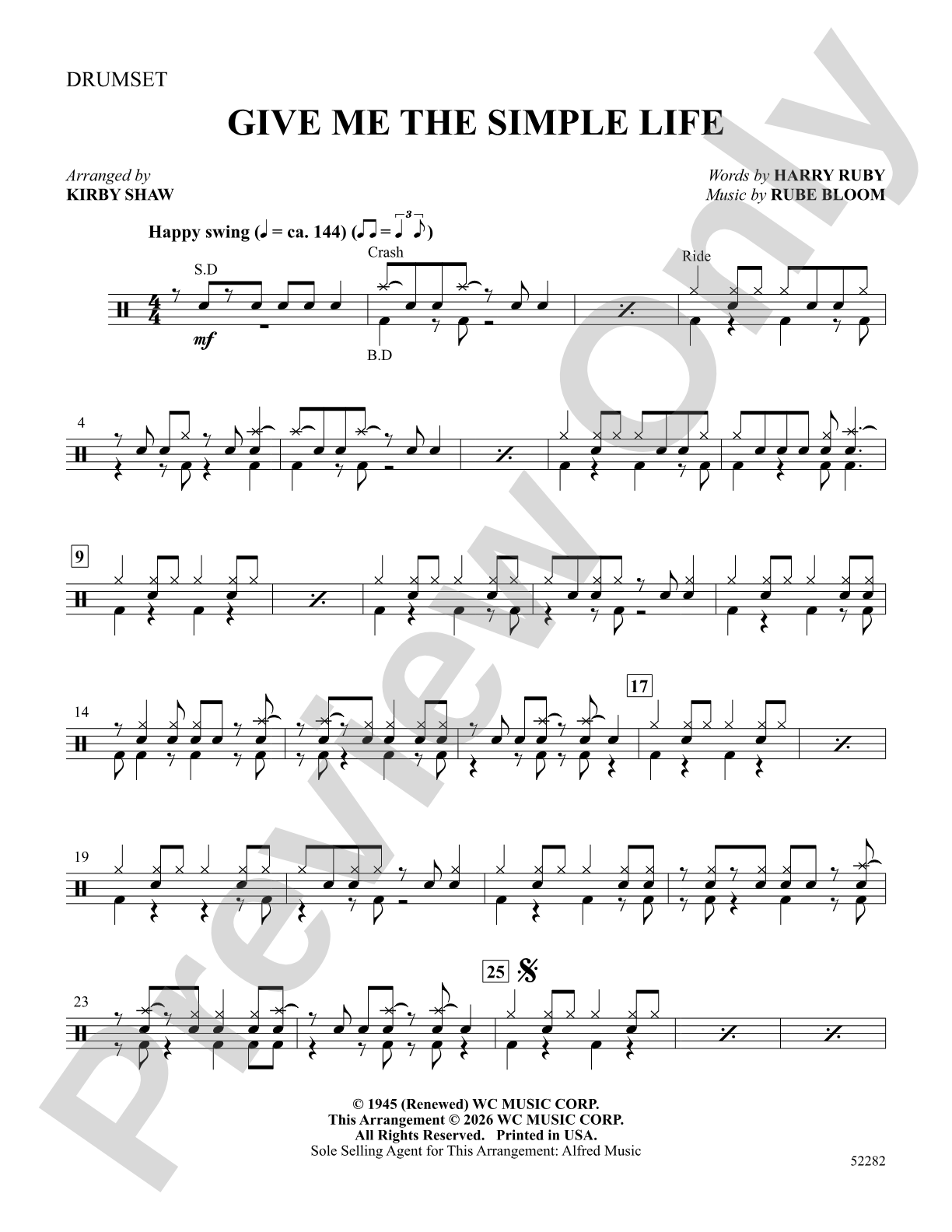
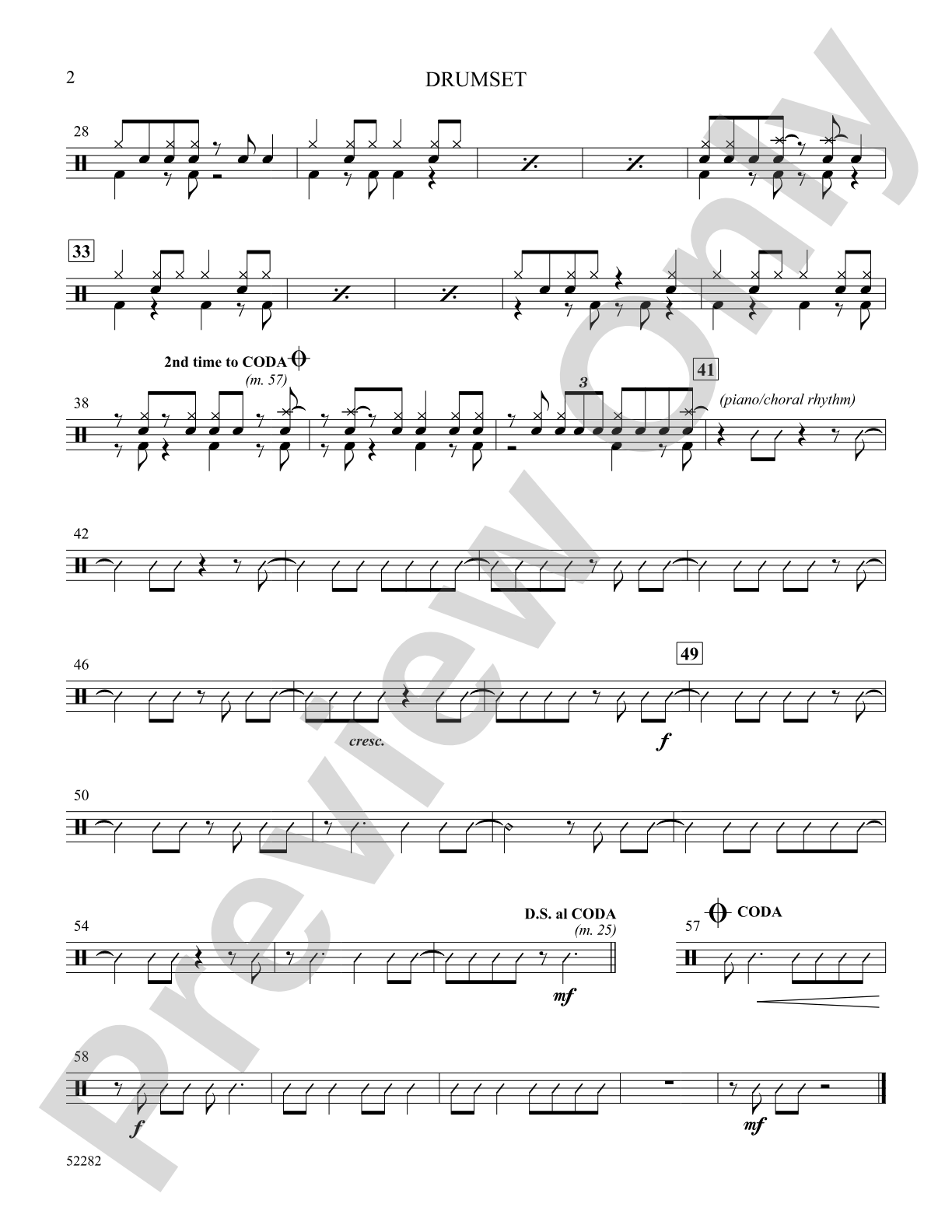

Give Me the Simple Life: Choral SoundPax Digital Download
Words by Harry Ruby, music by Rube Bloom / arr. Kirby Shaw
Item: 00-PK-0009442
$15.00
One moment…
Description
Experience the quintessential charm of the Great American Songbook with this mid-century jazz standard, recorded by modern-day crooner, Seth MacFarlane. His 2025 recording Lush Life debuts long-lost arrangements intended for Frank Sinatra. This kickin' arrangement features tight harmonies, swingin' rhythms that sit right in the pocket, and playful lyrics about finding contentment in life's modest pleasures. Kirby includes the kind of sleek stylizations that vocal jazzers crave, plus a smokin' scat section.


Give Me the Simple Life: Choral SoundPax Digital Download isn't in MakeMusic Cloud just yet...but it could be. Let us know you'd like to see it, and you'll help shape what comes next. In the meantime, start a free trial and dive into thousands of interactive titles your students can play along with today.
Request This Title
Tell us you want it.
Start Your Free Trial
Explore everything that's ready to play right now.
Sample Audio
1
Audio File
--:--
0:00
0:00
Sample Video
No sample videos found.
Additional Details
Series:
Alfred Pop Choral Series
SKU:
00-PK-0009442
More about this title
About the Composer: Rube Bloom
Rube Bloom (1908-1976) was a prolific composer and pianist who helped shape the Great American Songbook during its golden age. Writing primarily for film and stage in the 1930s and 1940s, Bloom crafted melodies that balanced sophistication with accessibility, a hallmark of mid-century popular song. His work appears frequently in jazz repertoire and vocal standards collections, where his gift for memorable hooks and harmonic elegance continues to reward singers and musicians.
Bloom's compositions have endured because they sit comfortably in the voice and swing naturally when phrased with style. Directors and singers return to his catalog repeatedly, drawn by songs that feel both timeless and immediately singable. "Give Me the Simple Life" exemplifies his ability to marry witty, relatable lyrics with a tune that practically sings itself.
Why we love this
Kirby Shaw's arrangement captures everything a modern jazz choir craves: clean harmonic stacking, rhythmic precision, and enough personality to keep the piece fresh after multiple rehearsals. The inclusion of a scat section gives your ensemble a genuine moment to stretch into the jazz idiom beyond simple swing feel, while the recorded accompaniment from Seth MacFarlane's Lush Life project offers singers a contemporary model for phrasing and style without locking them into a single interpretation.
What to expect
Smooth, sophisticated, and genuinely playful. The lyrics celebrate life's simple pleasures, and Shaw's arrangement matches that warmth with tight voicings and a groove that feels effortless. There's a mid-century cool here—Sinatra-adjacent elegance wrapped in swinging rhythms that make singers feel like they're part of something polished and fun.
Who it's for
This arrangement suits choirs comfortable with jazz idioms and interested in Great American Songbook literature. It works equally well for concert choirs seeking a lighter program piece and for jazz vocal ensembles wanting a swinging standard with accessible scat writing. Singers should have basic facility with jazz phrasing and blend; the harmonies assume some vocal independence.
How to get the most out of it
- Lock the rhythm section (bass and drums from the accompaniment) into the pocket before layering vocal parts; the arrangement's charm depends on that grooved, unhurried swing.
- Shape the scat section with clear articulation and lift; jazz phrasing here means light attacks and forward momentum, not heavy or overstated syllables.
- Balance the playful lyricism against harmonic precision. Bloom's chord changes are elegant, so let them breathe rather than rushing through text-driven passages.
- Reference the recorded accompaniment early in rehearsal to establish the groove and overall sonic palette before sectional work begins.
How to use it
Pair this with other Songbook standards or jazz arrangements to anchor a concert focused on American popular song and vocal jazz history. It works beautifully as a lighter contrast piece between more demanding classical or contemporary selections, and its accessible charm makes it an effective audience-engagement moment. The recorded accompaniment makes it viable for smaller ensembles or concert contexts where a full band isn't available.
Skills your students will build
- Swing feel and jazz phrasing (rhythmic placement, articulation)
- Four-part jazz harmony and voice leading
- Scat singing fundamentals (syllable clarity, rhythmic accuracy)
- Interpretive choices within a recorded accompaniment framework
- Blended, balanced jazz voicing across an ensemble