Give It One: 2nd E-flat Alto Saxophone Sheet Music Preview

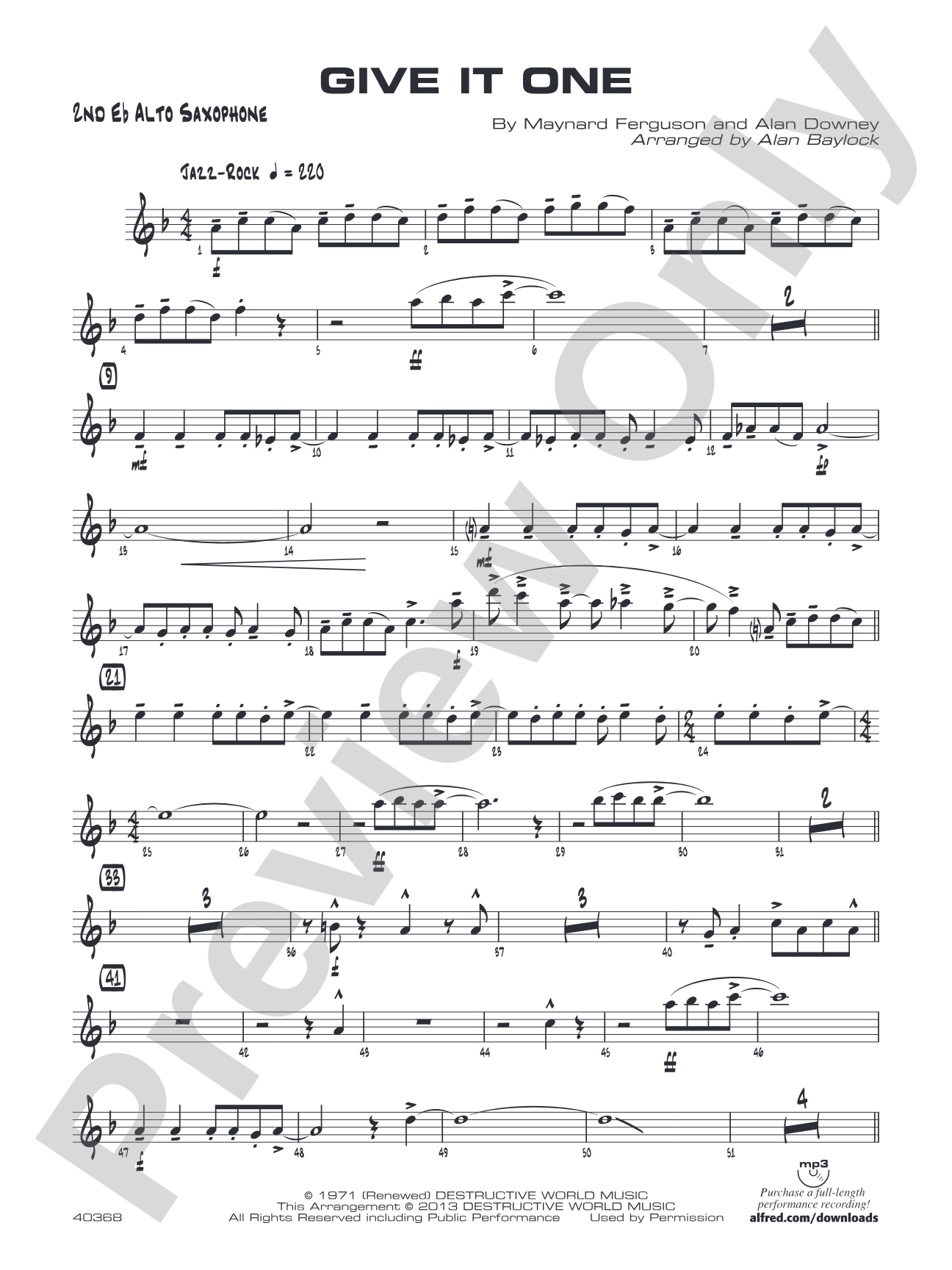
Give It One: 2nd E-flat Alto Saxophone

By Maynard Ferguson and Alan Downey / arr. Alan Baylock

Grade: 4.5 (Medium Advanced / Difficult)

Item: 00-PC-0017572_AX2

Digital Download
$3.00
Description
You gotta have this spectacular chart! Alan arranged this one reminiscent of Maynard's version but in a lower key---the lead trumpet only goes to written D above the staff. Tempo is brisk at 220 BPM but you could play is a little slower. Solo space is provided for all four trumpets for flexibility. Truly outstanding! This title is available in MakeMusic Cloud.

Don't just read it, hear it, play along with it, and watch your students grow with it. In MakeMusic Cloud, Give It One: 2nd E-flat Alto Saxophone comes alive with professional accompaniment, adjustable tempo, and built-in practice tools that turn solo practice into real progress.

Sample Audio
0:00
0:00
Sample Video
Additional Details
Series: Premier Jazz Series
Publisher: Alfred Music
Page Count: 78
SKU: 00-PC-0017572_AX2

More about this title

About the Composer: Maynard Ferguson

Maynard Ferguson (1928-2006) was a Canadian jazz trumpeter and bandleader whose fearless approach to high-register trumpet playing redefined what the instrument could express in big band and fusion contexts. His career spanned seven decades, during which he led multiple ensembles, recorded prolifically across multiple jazz subgenres, and became known for fiery arrangements that showcased virtuosic soloing and precision ensemble work.

Why we love this

Alan Baylock's arrangement channels Ferguson's signature high-energy style while making the piece accessible to strong high school and college ensembles through a strategic key drop that keeps the lead trumpet within reach. The brisk 220 BPM tempo can be adjusted without losing the urgency, and the solo space for all four trumpets gives every section member a genuine spotlight rather than leaving three players as accompaniment.

What to expect

From the first downbeat, this piece crackles with forward momentum and swagger. The arrangement balances the intensity of a hard-driving blues or funk number with jazz sophistication, making it feel both accessible and genuinely exciting to play and hear.

Who it's for

This chart works for advanced high school jazz ensembles and college groups ready to tackle sophisticated big band arranging and fast tempos. The Grade 4.5 difficulty reflects strong section reading ability, solid soloists, and a rhythm section capable of anchoring a brisk, energetic groove.

How to get the most out of it

  • Establish a tight rhythmic grid from the start. The fast tempo rewards locked-in time from the rhythm section; use rehearsal time to lock comping figures and drum grooves before focusing on the horns.
  • Balance the four trumpet solos by giving each player space to shine without overshadowing ensemble passages. Mark dynamics carefully so solos cut through without the background accidentally overwhelming them.
  • Tailor the tempo to your ensemble's comfort level. While 220 BPM captures the intended energy, dropping to 210 or 215 BPM preserves the drive while giving your players margin for clean articulation and accurate intonation.
  • Pay attention to the lead trumpet's range. With the highest written note at D above the staff, the part sits high but avoids the extreme demands of Ferguson's original. Support the lead player with balanced voicings from the rest of the trumpet section.

How to use it

Program this near the end of a concert or festival set when ensemble energy is high and audiences are primed for something with serious drive. It pairs well alongside other uptempo big band charts and works especially effectively on jazz festival or battle-of-the-bands programs where showcasing multiple soloists and tight ensemble work can impress adjudicators.

Skills your students will build

  • Fast-tempo articulation clarity and rhythmic precision in blues-inflected jazz vocabulary
  • Solo construction and phrasing over a 12-bar blues or chord progression
  • Balancing individual solos with ensemble background figures
  • Intonation control in the upper register of the trumpet
  • Listening and responding to soloists while maintaining steady comping and rhythmic support

You May Also Like