
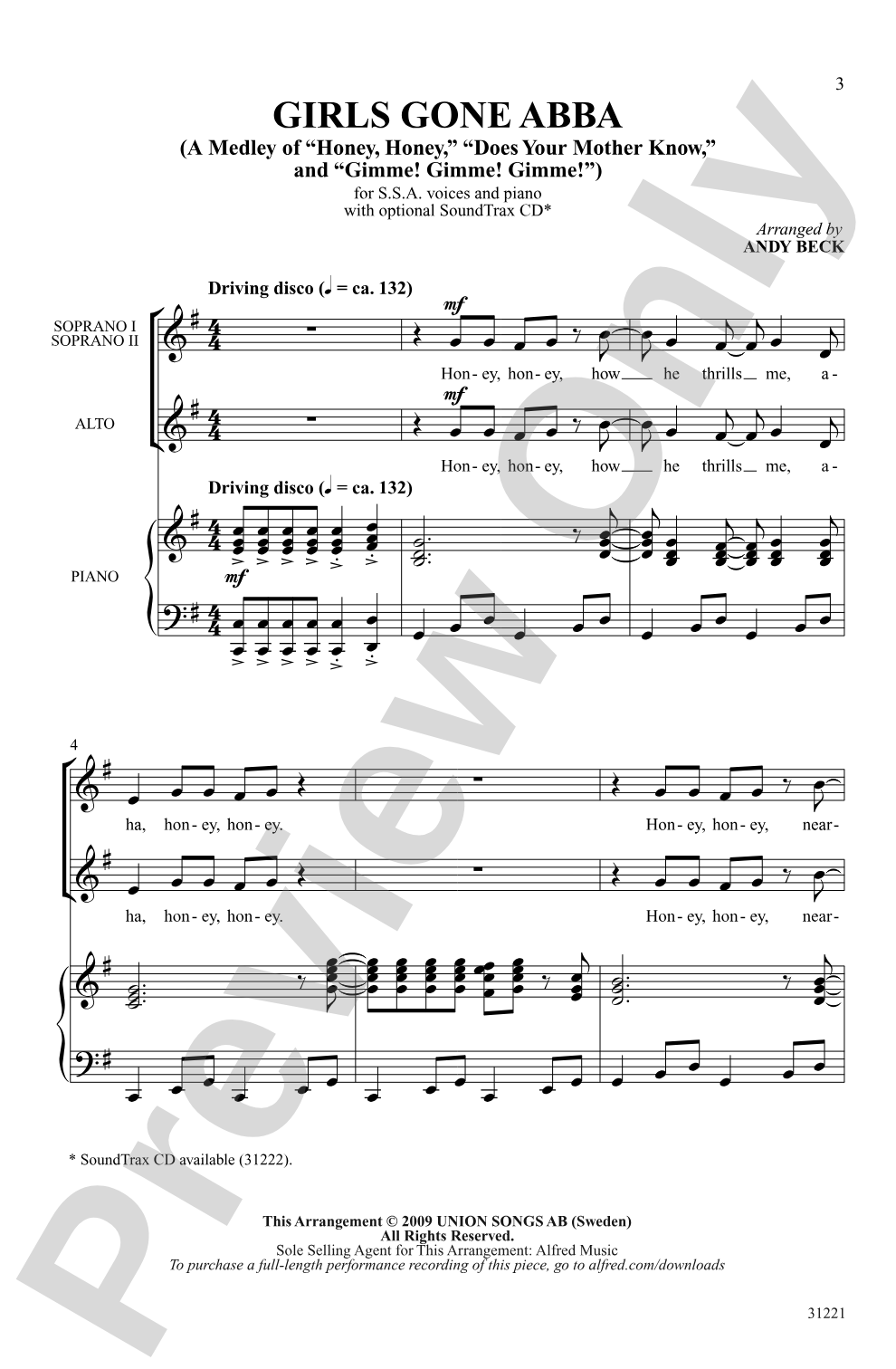

Girls Gone ABBA (A Medley): SSA Choral Octavo
Featuring: Honey, Honey / Does Your Mother Know / Gimme! Gimme! Gimme!
Words and music by Benny Andersson, Björn Ulvaeus, and Stig Anderson / arr. Andy Beck
Item: 00-PO-0006596
$3.50
Minimum order quantity: 20 copies
One moment…
Description
The girls of your choir will stop the show with this fast-paced, energy-filled mini-medley from the mega-hit movie musical, Mamma Mia! Originally made popular by the Swedish music group ABBA. Sensational SSA singing with super-fun "all-girl" lyrics!


Girls Gone ABBA (A Medley): SSA Choral Octavo isn't in MakeMusic Cloud just yet...but it could be. Let us know you'd like to see it, and you'll help shape what comes next. In the meantime, start a free trial and dive into thousands of interactive titles your students can play along with today.
Request This Title
Tell us you want it.
Start Your Free Trial
Explore everything that's ready to play right now.
Sample Audio
1
Audio File
--:--
0:00
0:00
Sample Video
No sample videos found.
Additional Details
Series:
Alfred Pop Choral Series
Publisher:
Alfred Music
Page Count:
20
SKU:
00-PO-0006596
More about this title
About the Composer: Benny Andersson
Benny Andersson co-founded ABBA in the 1970s and became one of the most recognizable songwriters of the pop era. His melodic instincts and harmonic sophistication shaped hits that have endured across generations, making ABBA's catalog a staple of contemporary choral arrangements.
Anderson's work has transcended the recording studio to become standard repertoire in music education. The accessibility and infectious energy of his melodies, combined with their underlying musicality, make them invaluable for teaching musicianship to singers of all levels.
Why we love this
Andy Beck's arrangement captures the irresistible momentum of ABBA's most iconic moments while tailoring the material specifically for treble voices. The SSA voicing feels natural and singable, never squeezed or awkward, and the medley format keeps energy high without demanding extended solo sections from individual singers. This is the kind of piece that generates genuine excitement in rehearsal and delivers that rare combination of commercial appeal and musical substance.
What to expect
Infectious joy mixed with theatrical flair. The medley bounces from one earworm hook to the next, never letting the energy drop, while the SSA voicing creates a bright, unified sound that feels celebratory and triumphant. There's a built-in sense of fun and performance that energizes both singers and listeners.
Who it's for
Treble choirs ranging from high school to community levels will find this arrangement both vocally accessible and dramatically satisfying. Directors seeking concert-closing moments that guarantee audience engagement without sacrificing musicianship will recognize the value immediately. The piece works equally well as a standalone finale or as part of a larger set showcasing contemporary pop repertoire.
How to get the most out of it
- Lock the rhythmic precision from the first downbeat. These songs thrive on tight ensemble singing, so establishing a rock-solid tempo in early rehearsals will make all the choreography and choreographic ideas land with impact.
- Balance the pop sound with actual vocal tone. Encourage singers to maintain supported breath and clear vowels even when the arrangement asks for edgy, contemporary phrasing. The recorded accompaniment can mask lazy technique.
- Identify the melodic anchor in each section of the medley and have those singers bring their voices forward slightly. The surrounding harmonies will lock in more cleanly when they know who carries the tune.
- Explore the dramatic contrasts between sections. ABBA songs often shift mood and tempo; use those transitions to refresh the ensemble's energy and keep the audience leaning forward.
How to use it
Anchor this piece at the end of a concert where you want to send the audience home smiling and humming along. It pairs beautifully after a set of classical or more introspective choral works, providing the tonal and emotional contrast that makes both sound fresher. Alternatively, program it within a pop medley set or a spring concert focused on musical theater repertoire.
Skills your students will build
- Rhythmic precision in syncopated pop idioms
- Dynamic control and tone quality at fast tempos
- Medley structure and phrase shaping across contrasting sections
- Blending treble harmonies while maintaining independence between parts
- Stage presence and performance commitment in contemporary styles