Galloping Stallion Sheet Music Preview

Galloping Stallion: Piano

By Melody Bober

Item: 98-DW9163

Digital Download
$3.50
Description
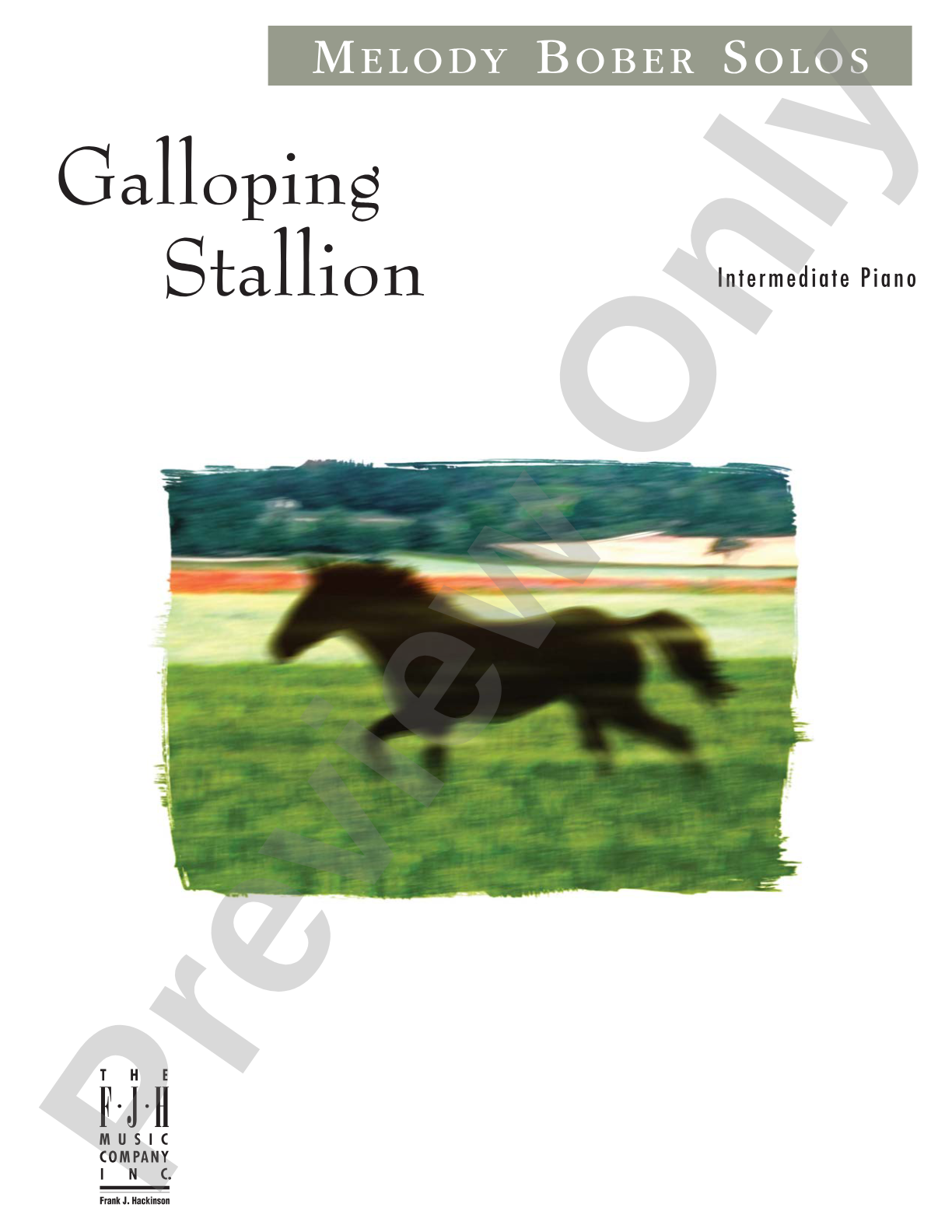
Galloping Stallion is a vibrant, upbeat piece that requires the pianist to move his/her fingers swiftly. Included in the composition are left-hand crossover melodies, fast alternation between the hands, a wide range of dynamics, and segments of the G harmonic minor scale. This solo would be well-received on any recital program.

Galloping Stallion: Piano isn't in MakeMusic Cloud just yet...but it could be. Let us know you'd like to see it, and you'll help shape what comes next. In the meantime, start a free trial and dive into thousands of interactive titles your students can play along with today.

Sample Audio
No sample audio found.
Sample Video
Additional Details
Series: Written For You
Publisher: The FJH Music Company, Inc.
SKU: 98-DW9163

More about this title

About the Composer: Melody Bober

Melody Bober

Melody Bober brings two decades of teaching experience to her compositions, having worked in public school music programs before transitioning to private studio instruction and university-level teaching. Her training spans music education, piano performance, and jazz, earned through degrees from the University of Illinois at Champaign-Urbana and Minnesota State University, Moorhead, where she studied under respected mentors including Joel Shapiro and Andrew Froelich.

Beyond the studio, Bober serves her community as a church pianist and has directed church music programs. Her reputation as both clinician and composer keeps her in demand at piano teacher conventions and workshops throughout North America. She combines her deep pedagogical background with a gift for writing pieces that genuinely resonate with students, grounding her creative work in real classroom and studio needs.

Why we love this

Bober writes with genuine understanding of what intermediate pianists need to feel accomplished without being overwhelmed. The hand independence demands and scale work in Galloping Stallion build real technique, while the vivid animal imagery and propulsive rhythm make the piece rewarding to play. It lands solidly on any recital program without requiring extensive preparation time.

What to expect

A surge of energy and forward motion, like watching a horse break into a gallop. The piece crackles with momentum through its swift figurations and hand crossovers, balanced by dynamic contrasts that let you breathe between phrases and showcase your range of color.

Who it's for

Intermediate pianists ready to tackle hand independence and scale-based technical work without the complexity of advanced repertoire. This piece works well for students who thrive on imagery and character while building the finger dexterity and coordinated movement that foundation-level pieces address more slowly.

How to get the most out of it

  • Map the left-hand crossover passages before adding tempo. Isolate these sections at a slow pace and drill the hand position shifts until they feel automatic.
  • Build the piece's energy through the dynamics rather than relying on speed alone. The wide dynamic range gives you more control and makes the galloping character come through even at a measured tempo.
  • Practice the fast alternations between hands as a single phrase rather than treating each hand separately. Think of it as one musical line that switches sides, which helps maintain evenness and flow.
  • Anchor your G harmonic minor sections with a clear harmonic foundation. Let the scale passages sit comfortably within the underlying harmony rather than rushing through them as mere technical display.

How to use it

Galloping Stallion shines as a centerpiece on recital programs aimed at elementary through middle school age pianists. Its memorable character makes it an ideal choice for community events, studio recitals, or competitions where you want a piece that impresses without overshadowing other works on the program.

Skills your students will build

  • Left-hand crossover passages and hand independence
  • Fast alternation between hands with rhythmic precision
  • G harmonic minor scale fluency and application
  • Dynamic control across a wide range
  • Finger dexterity at moderate to brisk tempos

You May Also Like