
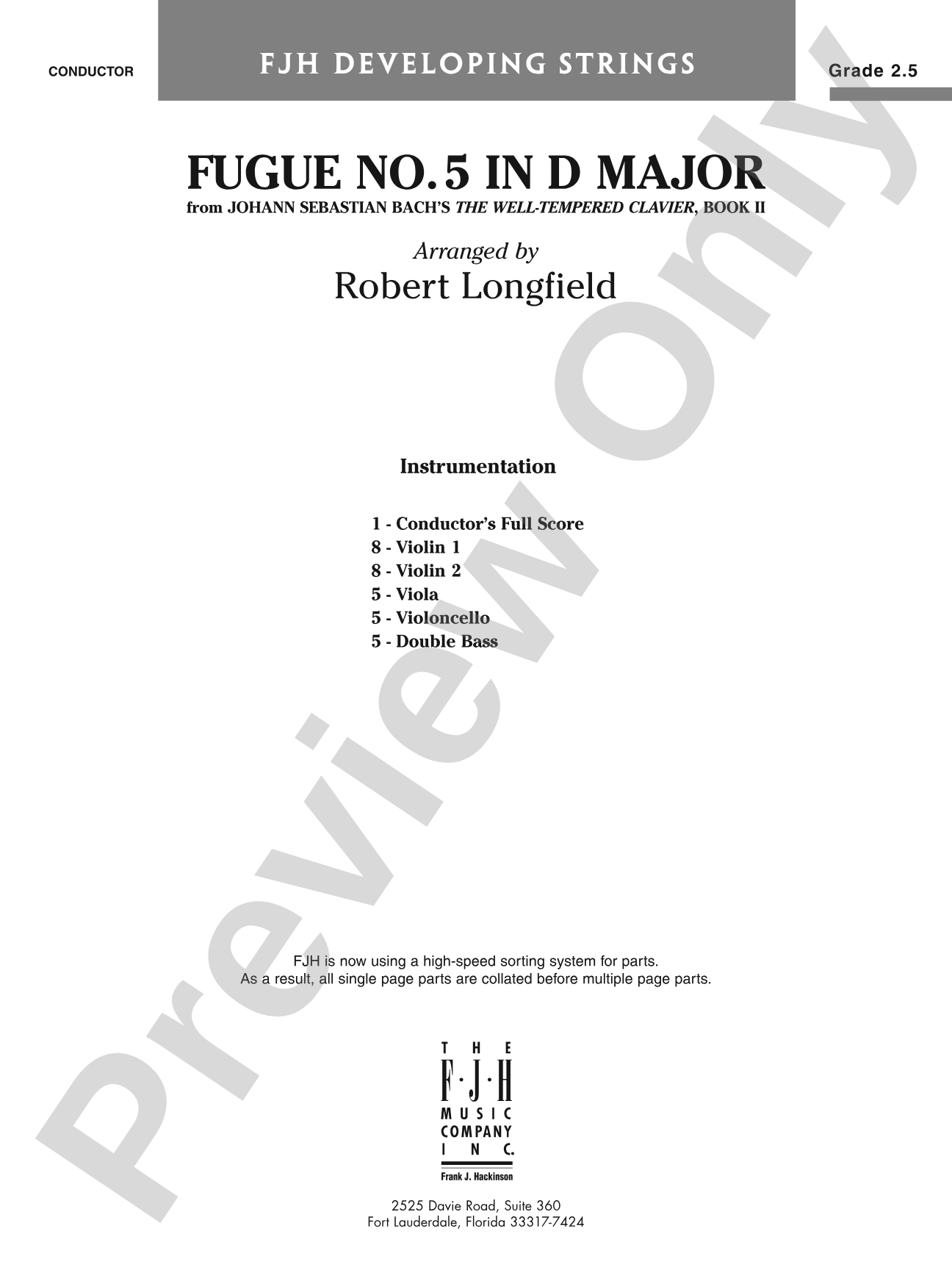
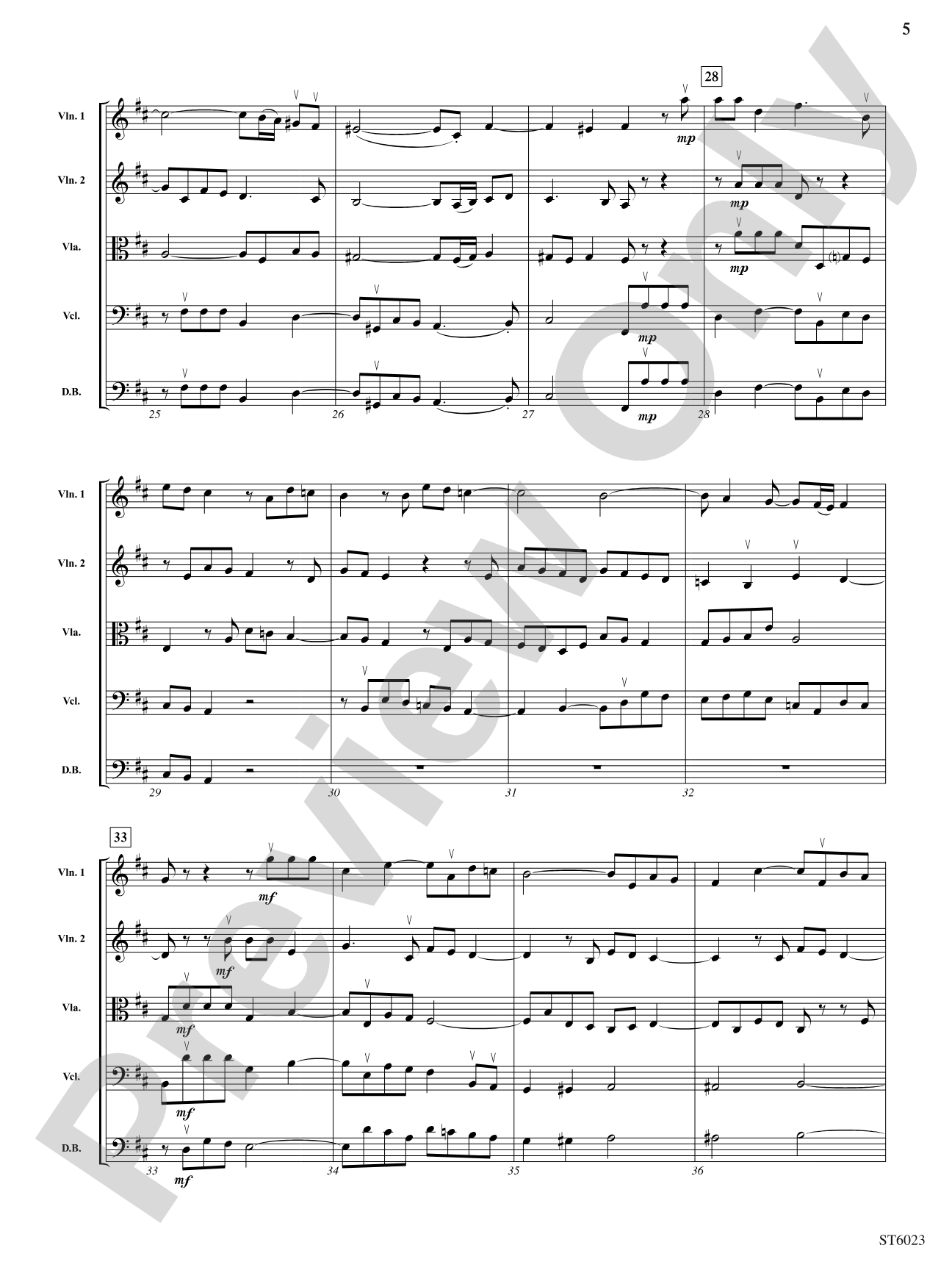
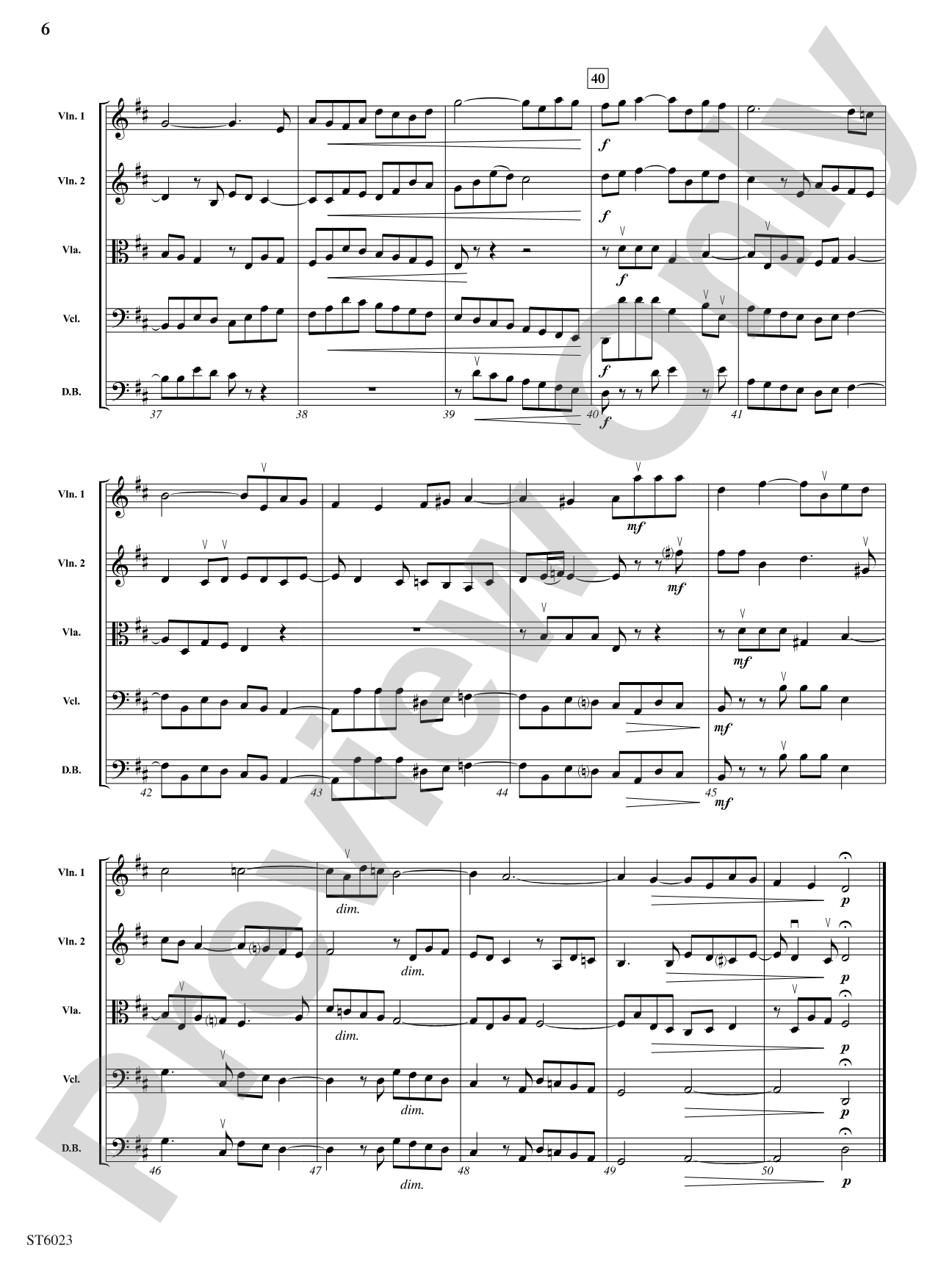

Fugue No. 5 in D Major: String Orchestra Conductor Score & Parts
By Johann Sebastian Bach / arr. Robert Longfield
Grade: 2.5
Item: 98-DST6023
$45.00
Pickup currently not available
Buy Extra Parts (Digital PDF Download)
| Product | Price | Quantity |
|---|---|---|
| Fugue No. 5 in D Major: Score | $5.00 | |
| Fugue No. 5 in D Major: Violin 1 | $7.00 | |
| Fugue No. 5 in D Major: Violin 2 | $7.00 | |
| Fugue No. 5 in D Major: Viola | $7.00 | |
| Fugue No. 5 in D Major: Violoncello | $7.00 | |
| Fugue No. 5 in D Major: Double Bass | $7.00 |
Parts Added to Cart!
Description
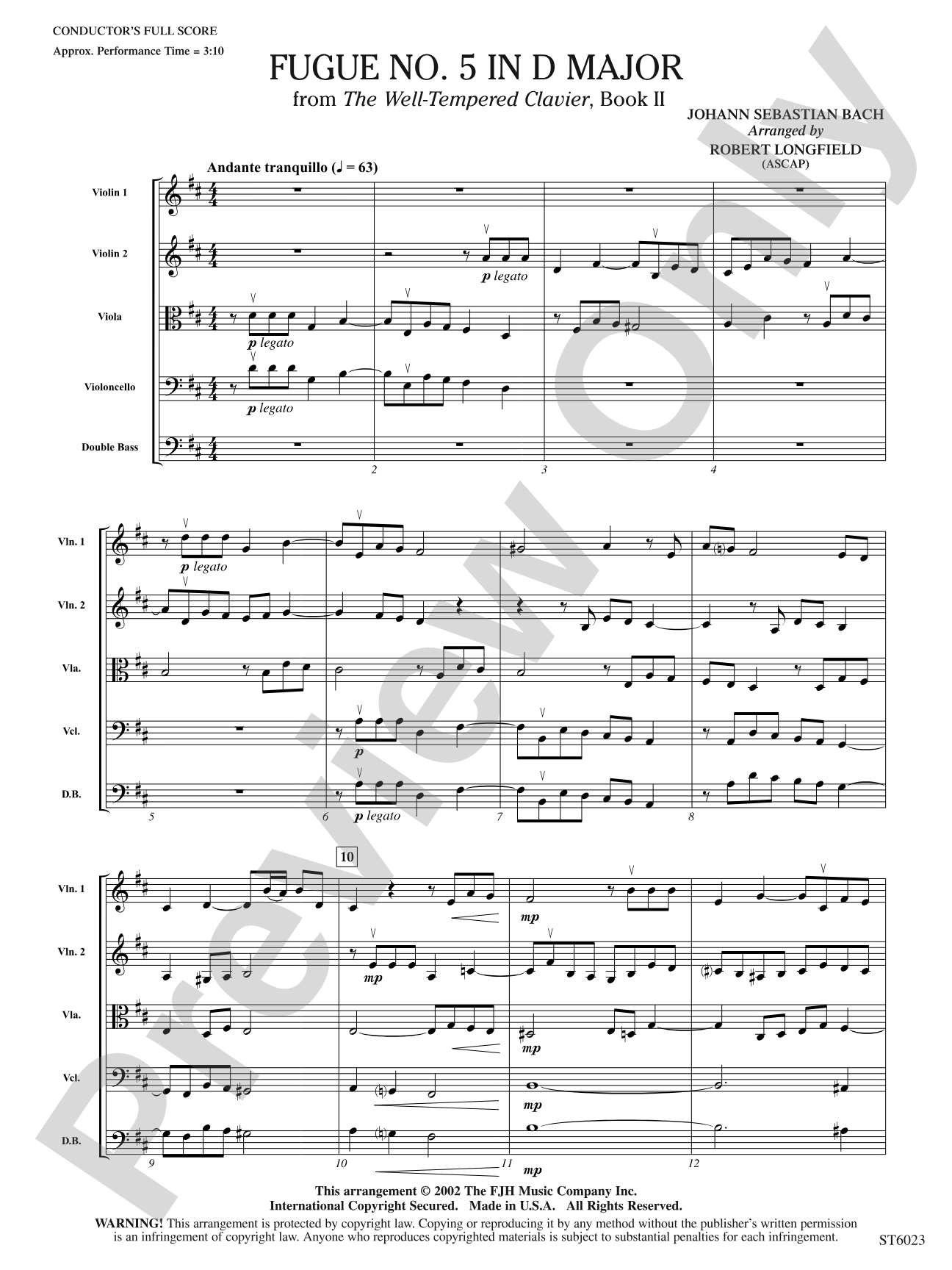
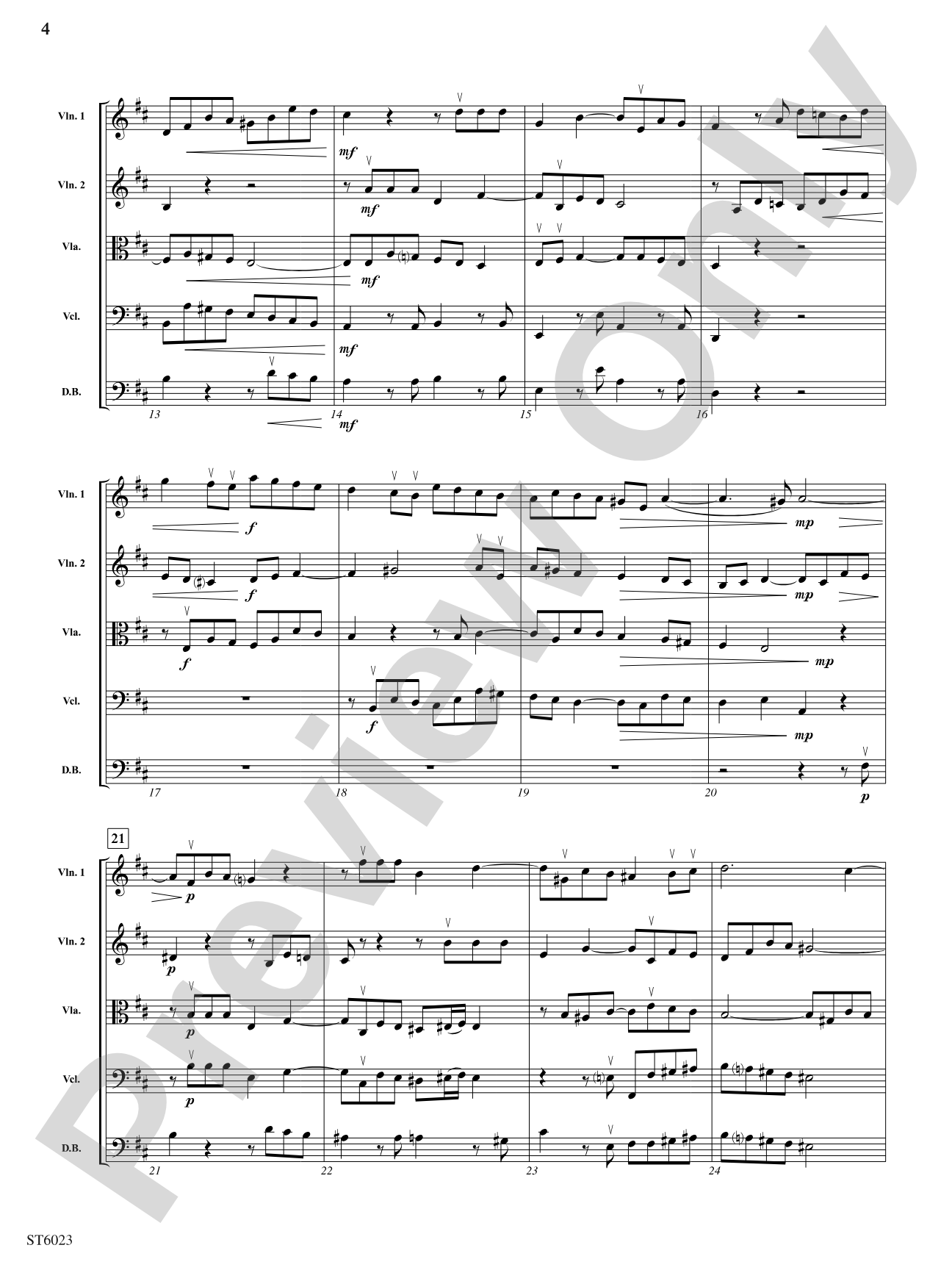
From Bach's The Well-Tempered Clavier, Book II comes this fine adaptation for strings, arranged by Robert Longfield. The piece stays true to the original version throughout. An excellent way to teach your ensemble one of the baroque classics.


Discover MakeMusic Cloud: thousands of interactive titles your students can play along with today.
Sample Audio
1
Audio File
--:--
0:00
0:00
Sample Video
No sample videos found.
Additional Details
Series:
FJH Developing Strings
Publisher:
The FJH Music Company, Inc.
SKU:
98-DST6023
More about this title
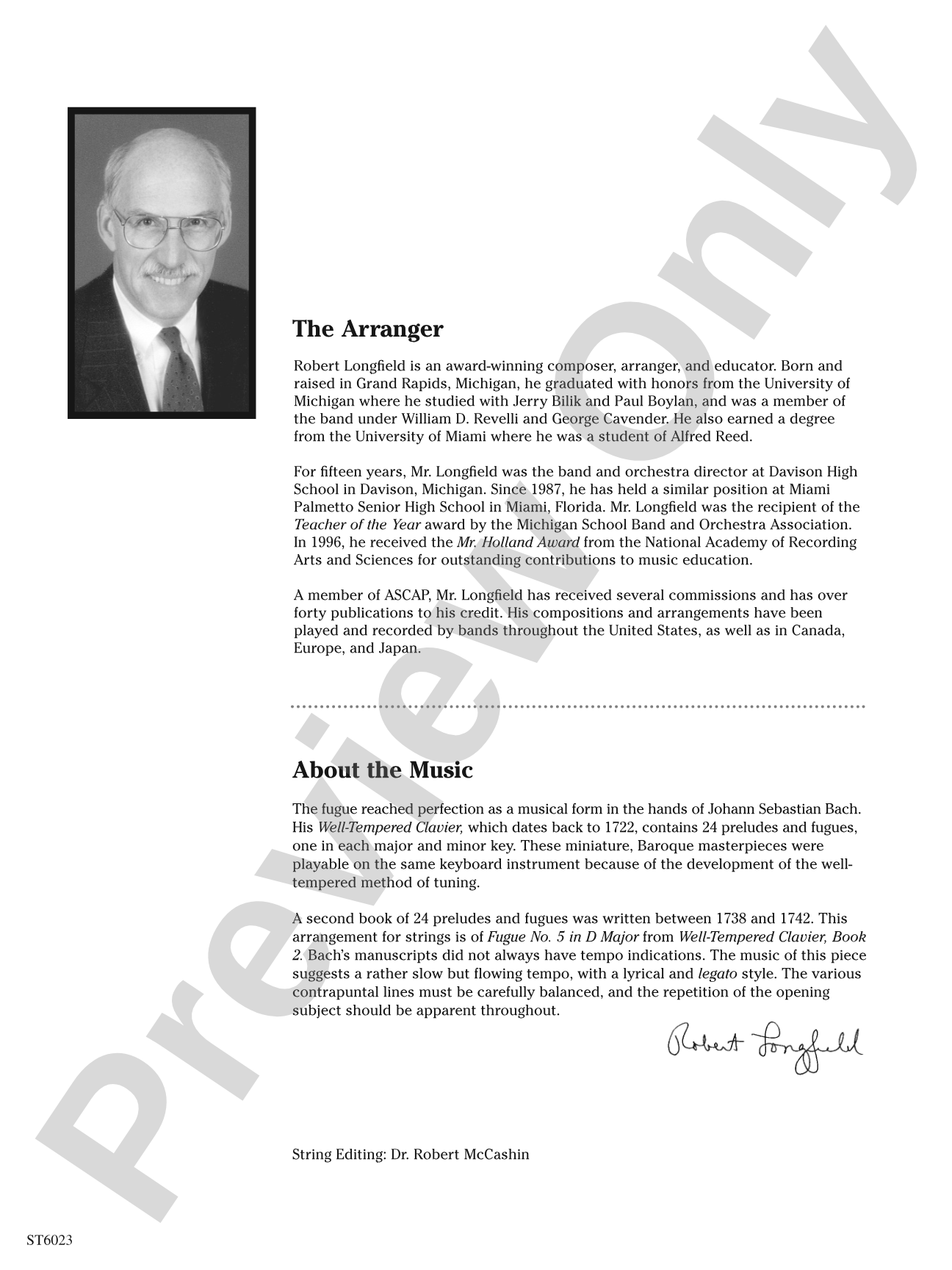
About the Composer: Johann Sebastian Bach
Johann Sebastian Bach (1685, 1750) shaped Western music theory and practice so fundamentally that centuries of composers still study his methods. His mastery of counterpoint, harmonic logic, and structural architecture defined what it means to write with mathematical precision and emotional depth simultaneously. In education, Bach's works serve as the gateway to understanding how voices interact, how a single musical idea can generate an entire piece, and how constraint breeds creativity rather than limiting it.
Why we love this
Longfield's arrangement preserves Bach's counterpoint without compromise while making the piece genuinely playable for developing ensembles. Your strings will encounter authentic baroque polyphony at a manageable level, absorbing the discipline of Bach's voice-leading without drowning in technical complications. It's the rare adaptation that teaches real compositional thinking rather than just simplifying.
What to expect
Intricate and luminous. The D Major key gives the piece brightness, and the fugal structure unfolds with architectural clarity. Students feel the satisfaction of executing something genuinely elegant, with each entrance adding texture and weight until the full ensemble is singing together.
Who it's for
Directors programming grade 2, 3 string orchestras who want their students to engage with genuinely sophisticated baroque writing without waiting for advanced levels. This works especially well for ensembles that have solid intonation and some experience with sustained tone, but haven't tackled complex polyphony yet.
How to get the most out of it
- Shape each melodic line as if it were singing a separate text; Bach's counterpoint demands independence from every voice, not just the top line.
- Bring the inner voices forward in rehearsal so violins hear exactly what they're accompanying. Balance between parts will click once players understand their relationship to the whole.
- Lock the cadential points together with precision. Bach's harmonic rhythm expects articulate ensemble response at structural moments.
- Let the recorded accompaniment guide tempo initially, but trust your ensemble to find a sustainable pulse once they know the material.
How to use it
Pair this with other baroque works to build a thematic concert, or use it mid-year when your ensemble has developed enough ensemble stability to handle counterpoint. It also sits naturally alongside early-level classical repertoire as a stepping stone into structured, developmental thinking.
Skills your students will build
- Following and entering fugal subject entries
- Maintaining independence while listening to other voice parts
- Sustaining intonation across longer phrases in a polyphonic context
- Executing baroque phrasing and articulation conventions
- Reading interconnected lines rather than one dominant melody