
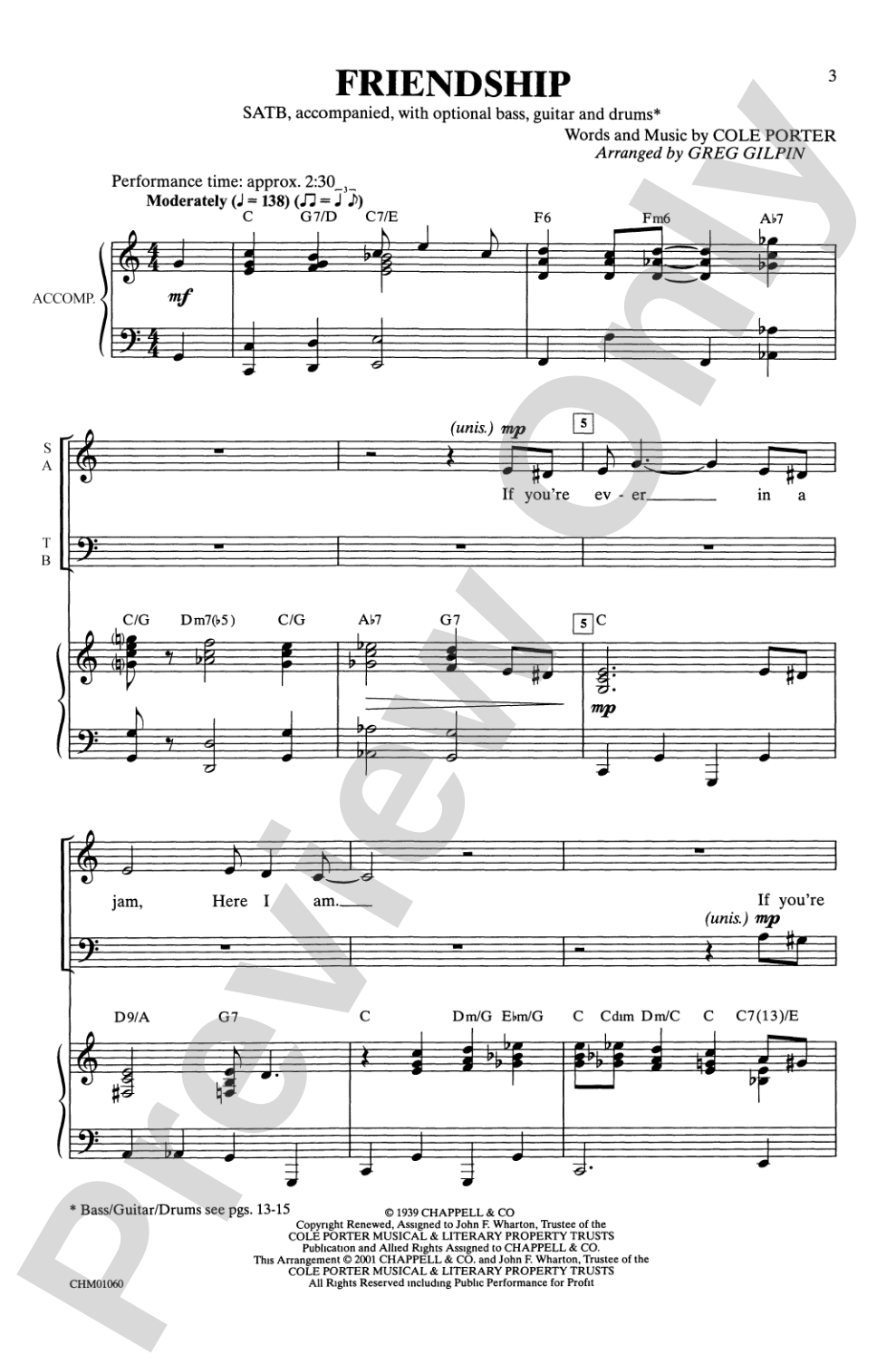
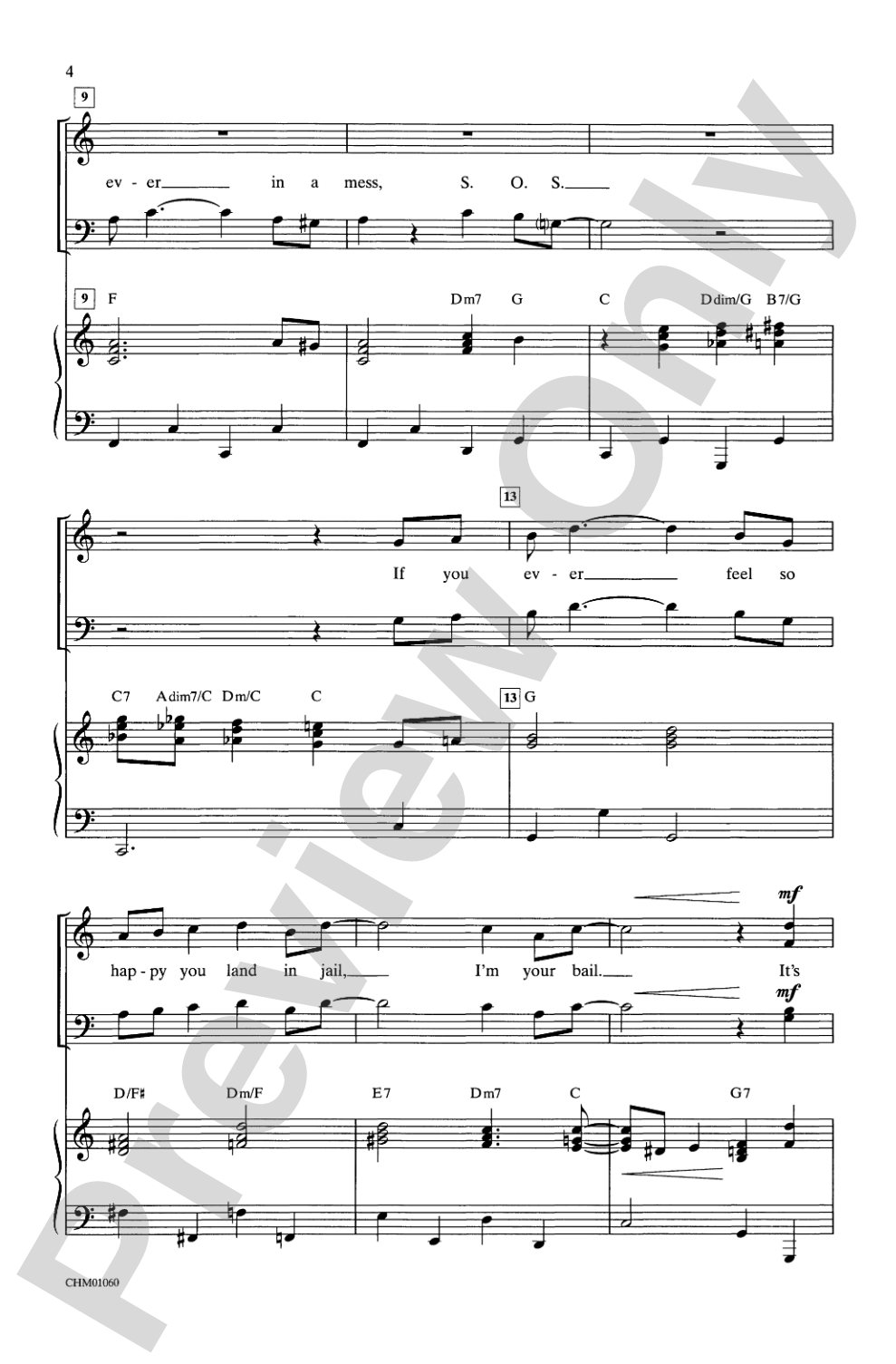
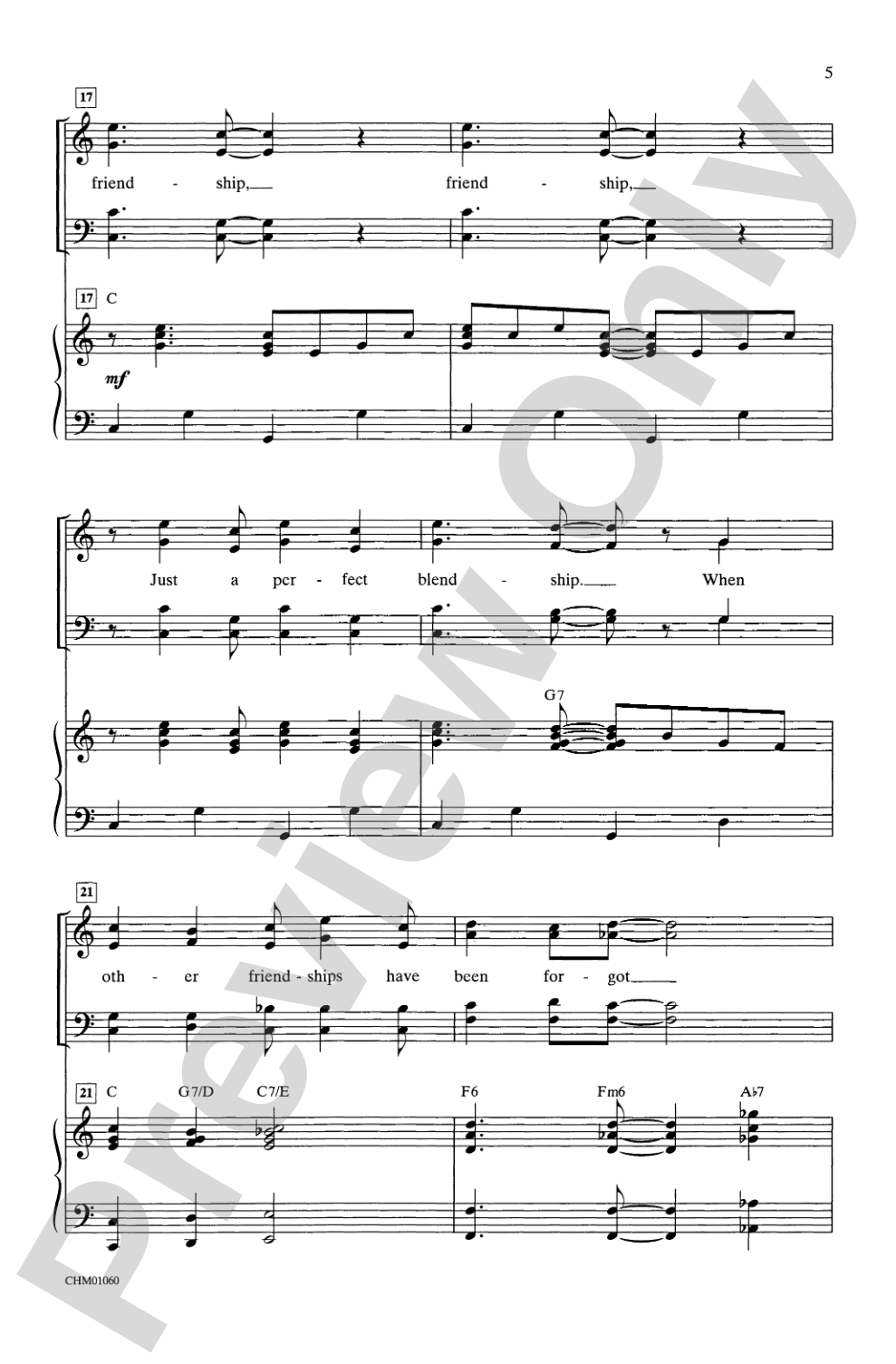

Friendship: SATB Choral Octavo
Words and music by Cole Porter / arr. Greg Gilpin
Level: Moderate
Item: 00-PO-0004778
$2.95
Minimum order quantity: 20 copies
One moment…
Description
This Classic Cole Porter hit from the 1940s was first featured on Broadway and later found its way into the movies. Today it's simply a classic that will delight your audiences.


Friendship: SATB Choral Octavo isn't in MakeMusic Cloud just yet...but it could be. Let us know you'd like to see it, and you'll help shape what comes next. In the meantime, start a free trial and dive into thousands of interactive titles your students can play along with today.
Request This Title
Tell us you want it.
Start Your Free Trial
Explore everything that's ready to play right now.
Sample Audio
No sample audio found.
Sample Video
No sample videos found.
Additional Details
Series:
Alfred Archive Edition: Alfred Pop Choral Series
Publisher:
Alfred Music
Page Count:
16
SKU:
00-PO-0004778
More about this title
About the Composer: Cole Porter
Cole Porter (1891-1964) was an American composer and lyricist whose sophisticated, witty songs defined the Great American Songbook. Born into wealth in Indiana, he studied music at Yale and Paris before establishing himself as a Broadway and Hollywood powerhouse from the 1920s onward. His melodies balanced accessibility with harmonic complexity, and his lyrics combined clever wordplay with genuine emotional depth.
Porter's prolific output includes some of the most frequently performed standards in American music: "Night and Day," "Begin the Beguine," "I've Got You Under My Skin," and "Anything Goes." His work influenced generations of composers and remains a cornerstone of both professional and educational choral repertoire. Despite a serious horseback riding accident in 1937 that left him in chronic pain for the rest of his life, Porter continued composing music of remarkable inventiveness and charm.
Why we love this
Greg Gilpin's arrangement preserves Porter's sophisticated harmonic language while making this standard genuinely singable for high school choirs. The piece carries real emotional weight without melodrama, giving your singers room to develop genuine musicianship rather than just executing a chart. Audiences respond immediately to the melody, but the arrangement rewards careful rehearsal with rich harmonic texture and balanced voice parts.
What to expect
Warmth and sincerity define this arrangement. The song moves with graceful inevitability, never rushing, allowing the meaning of the lyrics to settle into each phrase. Porter's harmonic sophistication gives the piece an adult sensibility even as it remains welcoming and unpretentious.
Who it's for
This octavo works well for high school and community choirs seeking accessible yet substantive secular repertoire. The moderate difficulty level allows groups at grade 3 to build stronger musicianship without getting bogged down in technical complexity. It's equally valuable as a concert opener or closer and works beautifully as a stand-alone feature or paired with other American standards.
How to get the most out of it
- Shape the melody with natural breath points; resist the urge to press through longer phrases without linguistic or musical justification.
- Balance the lower voices carefully in passages where they support the tune. They need presence without overwhelming the soprano line.
- Lean into Porter's harmonic movement rather than singing through it. Let each chord change breathe slightly to highlight his sophisticated voice leading.
- Use the recorded accompaniment as a rehearsal tool early, then gradually reduce reliance on it to build choir independence and confidence.
How to use it
Place this as an effective transition piece between contrasting works, or lead a full program section around American songbook standards and Broadway classics. It pairs naturally with other Porter compositions or with era-appropriate secular choral works. Consider it for spring or fall concerts where you want to showcase your singers' ability to handle music with real harmonic substance.
Skills your students will build
- Balancing melody against supporting harmonies
- Singing Porter's chromatic and jazz-influenced harmonic progressions
- Lyrical phrasing and breath management in longer melodic lines
- Part independence within a four-part harmonic texture
- Connecting to mid-20th century American musical theater style