
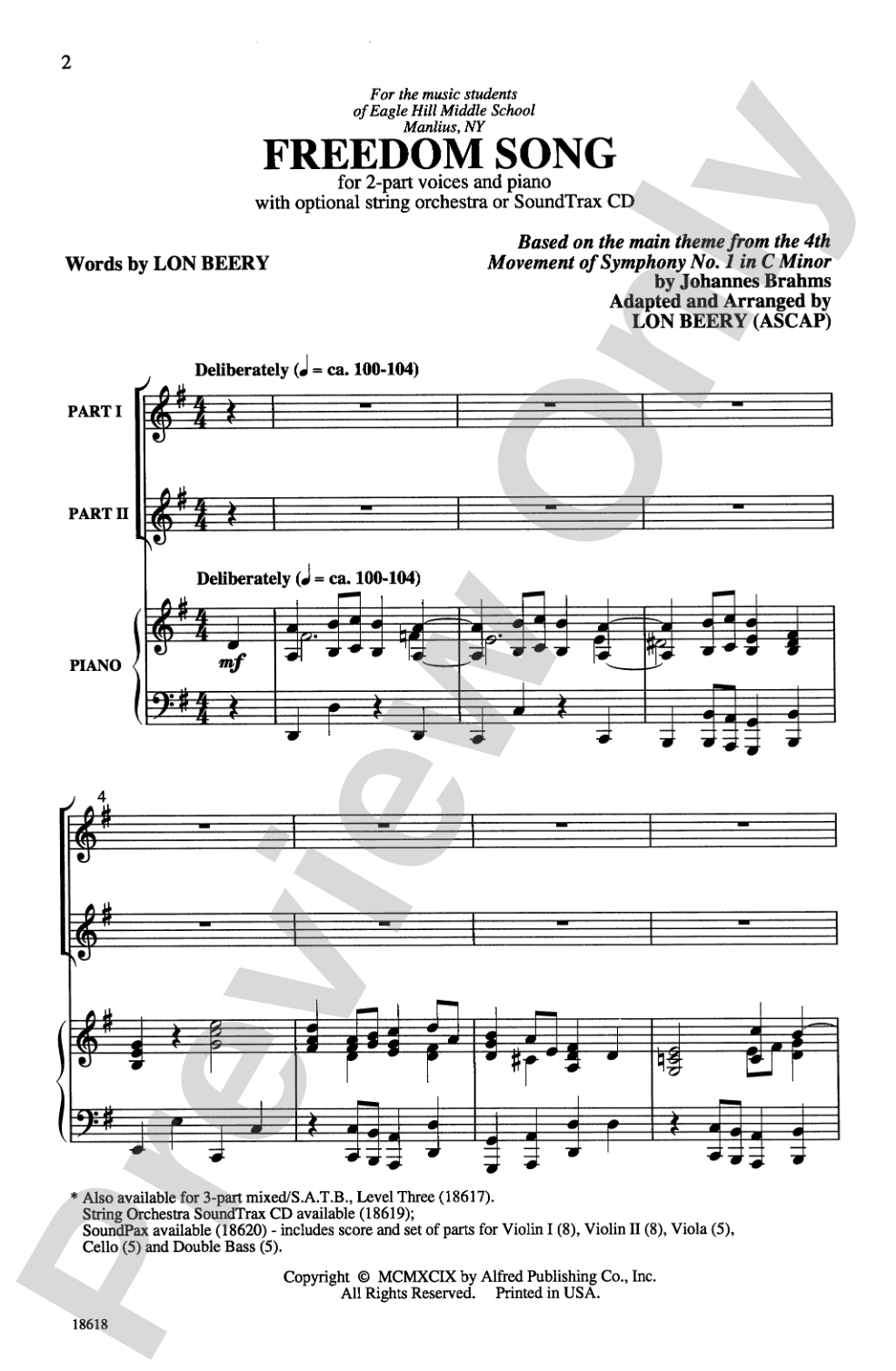

Freedom Song: 2-Part Choral Octavo
Music by Johannes Brahms / arr. Lon Beery
Item: 00-PO-0004069
$2.25
Minimum order quantity: 20 copies
Pickup currently not available
Description
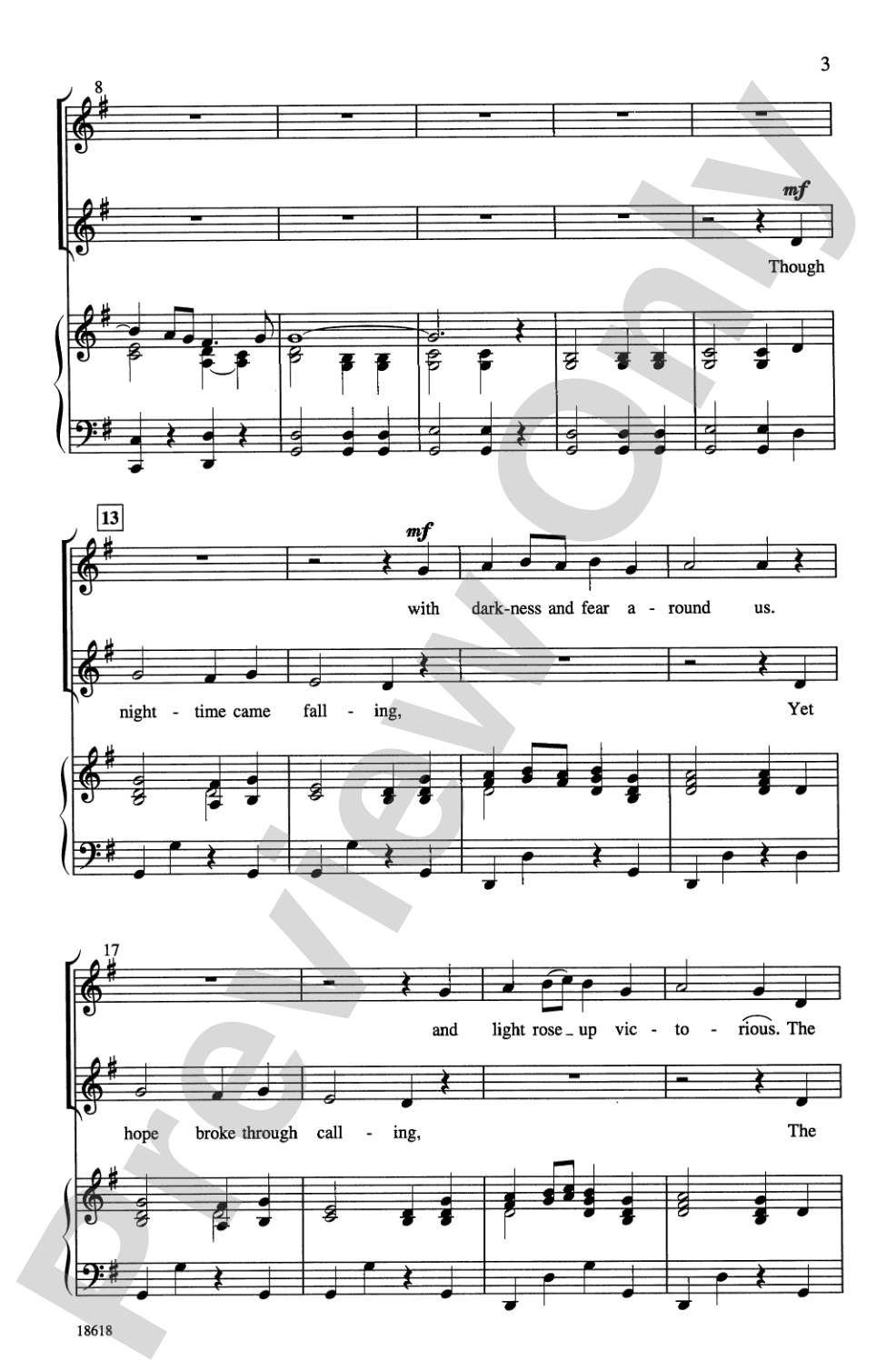
Introduce your choir to an orchestral masterwork with this choral adaptation of the main theme from Brahm's Symphony No. 1. A new text exults the dream of freedom shared by all the world's peoples. SoundTrax CD features live strings, or add your own string orchestra.


Freedom Song: 2-Part Choral Octavo isn't in MakeMusic Cloud just yet...but it could be. Let us know you'd like to see it, and you'll help shape what comes next. In the meantime, start a free trial and dive into thousands of interactive titles your students can play along with today.
Request This Title
Tell us you want it.
Start Your Free Trial
Explore everything that's ready to play right now.
Sample Audio
1
Audio File
--:--
0:00
0:00
Sample Video
No sample videos found.
Additional Details
Series:
Alfred Archive Edition: Alfred Choral Designs
Publisher:
Alfred Music
Page Count:
8
SKU:
00-PO-0004069
More about this title
About the Composer: Johannes Brahms
Johannes Brahms (1833–1897) shaped the Romantic symphony into a form that honored Classical tradition while expanding its emotional and structural possibilities. His four symphonies remain cornerstones of the orchestral repertoire, each one a carefully crafted exploration of thematic development, orchestration, and harmonic language.
For choral educators, Brahms's influence extends beyond his symphonies. His deep engagement with vocal music—from intimate lieder to large choral works—demonstrates a composer who understood how to write idiomatically for the human voice while maintaining sophisticated musical architecture.
Why we love this
This arrangement opens the Symphony No. 1's magnificent theme to young choirs without sacrificing the dignity and power of Brahms's original orchestration. The addition of a freedom-centered text gives singers immediate connection to their part in a masterwork, while the optional string accompaniment (live or recorded) means you can perform this with forces you actually have available.
What to expect
Soaring and affirming. The melody carries the warmth and forward momentum of Brahms's orchestral theme while the new text gives singers a sense of purpose and collective voice. There is both contemplation and quiet strength in the way the harmony settles beneath the primary line.
Who it's for
This works best with choirs at the middle school level and above who have foundational blend and can sustain longer phrases. The 2-part texture makes it accessible for developing singers while the Brahmsian substance keeps it musically satisfying for directors seeking substantive repertoire.
How to get the most out of it
- Shape the melody with long-lined phrasing that honors Brahms's Romantic sensibility; resist the urge to break it into smaller gestures.
- Balance the two parts so neither overwhelms the other; this is a dialogue between voices, not a melody with accompaniment.
- If using the recorded strings, run rehearsals without them first to establish the choir's independence, then layer in the accompaniment once intonation and blend are secure.
How to use it
This pairs naturally with a concert exploring peace, unity, or human connection. It also works as a standalone feature that demonstrates to audiences how orchestral masterworks can become choral experiences. Consider programming it where you want to uplift without overwhelming a younger or developing choir.
Skills your students will build
- Sustaining long melodic lines with consistent tone and phrasing
- Balancing two independent vocal parts in a harmonic framework
- Reading and interpreting Romantic-era harmonic language
- Performing with recorded and live orchestral accompaniment