
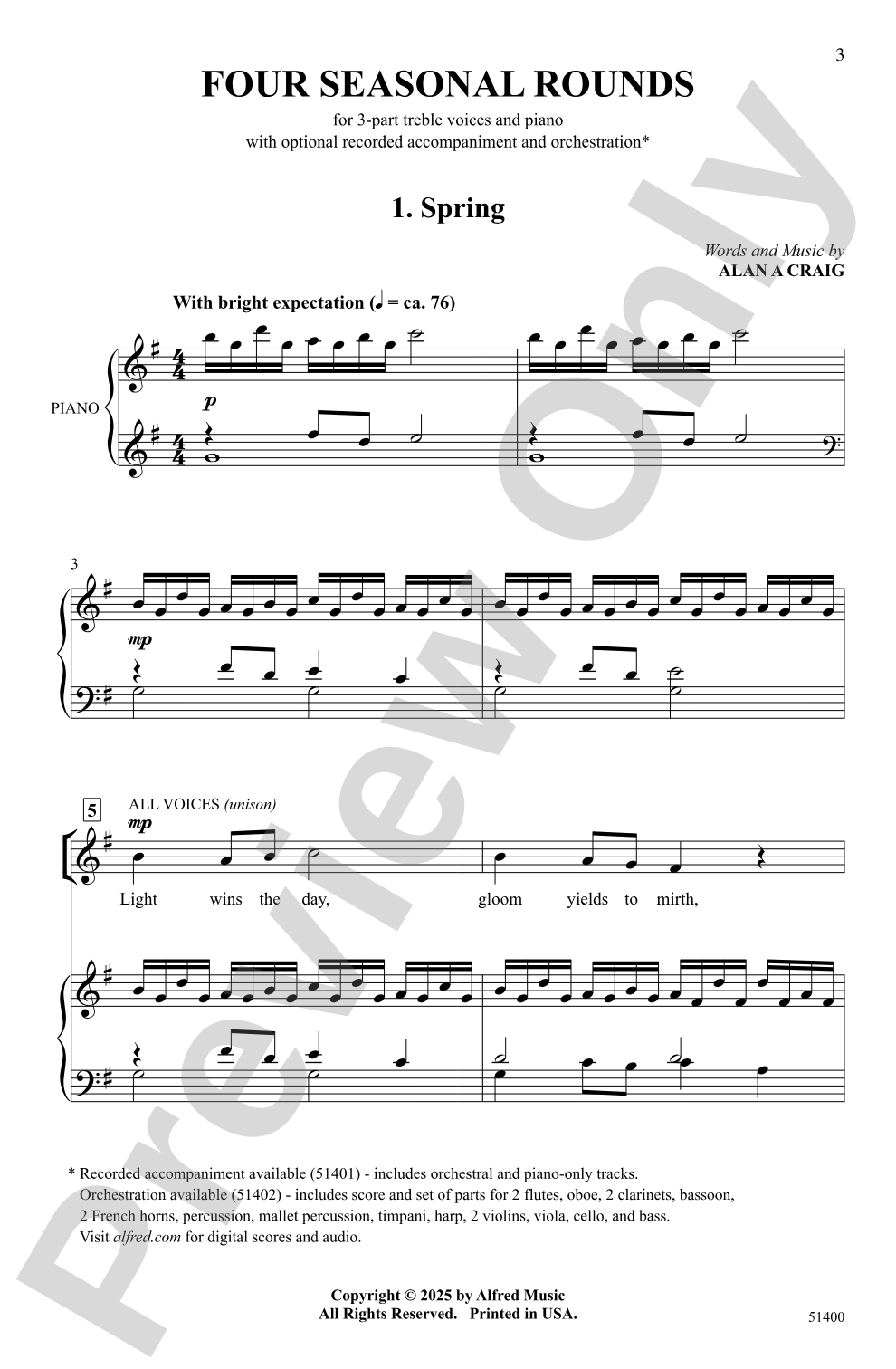
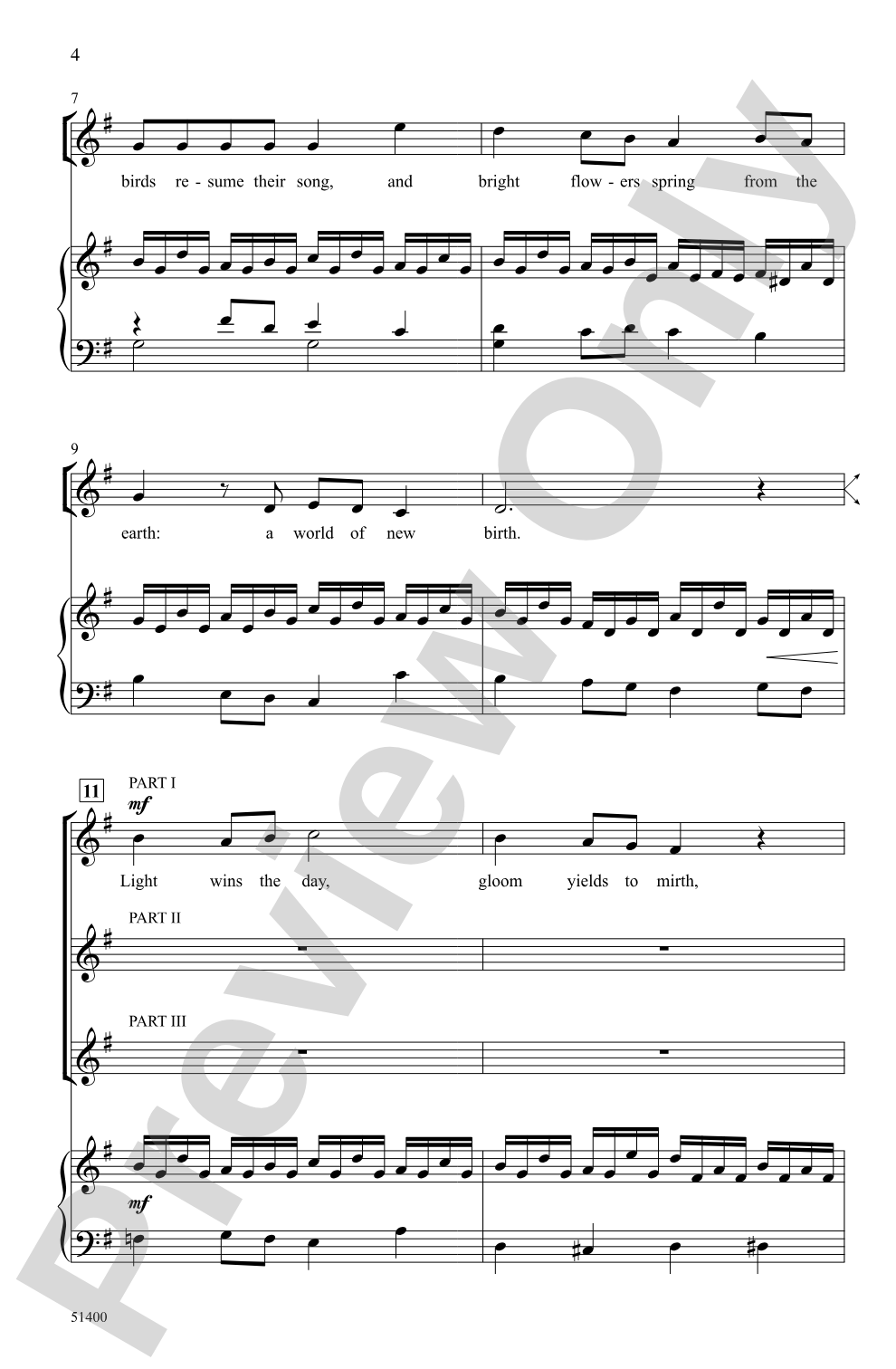
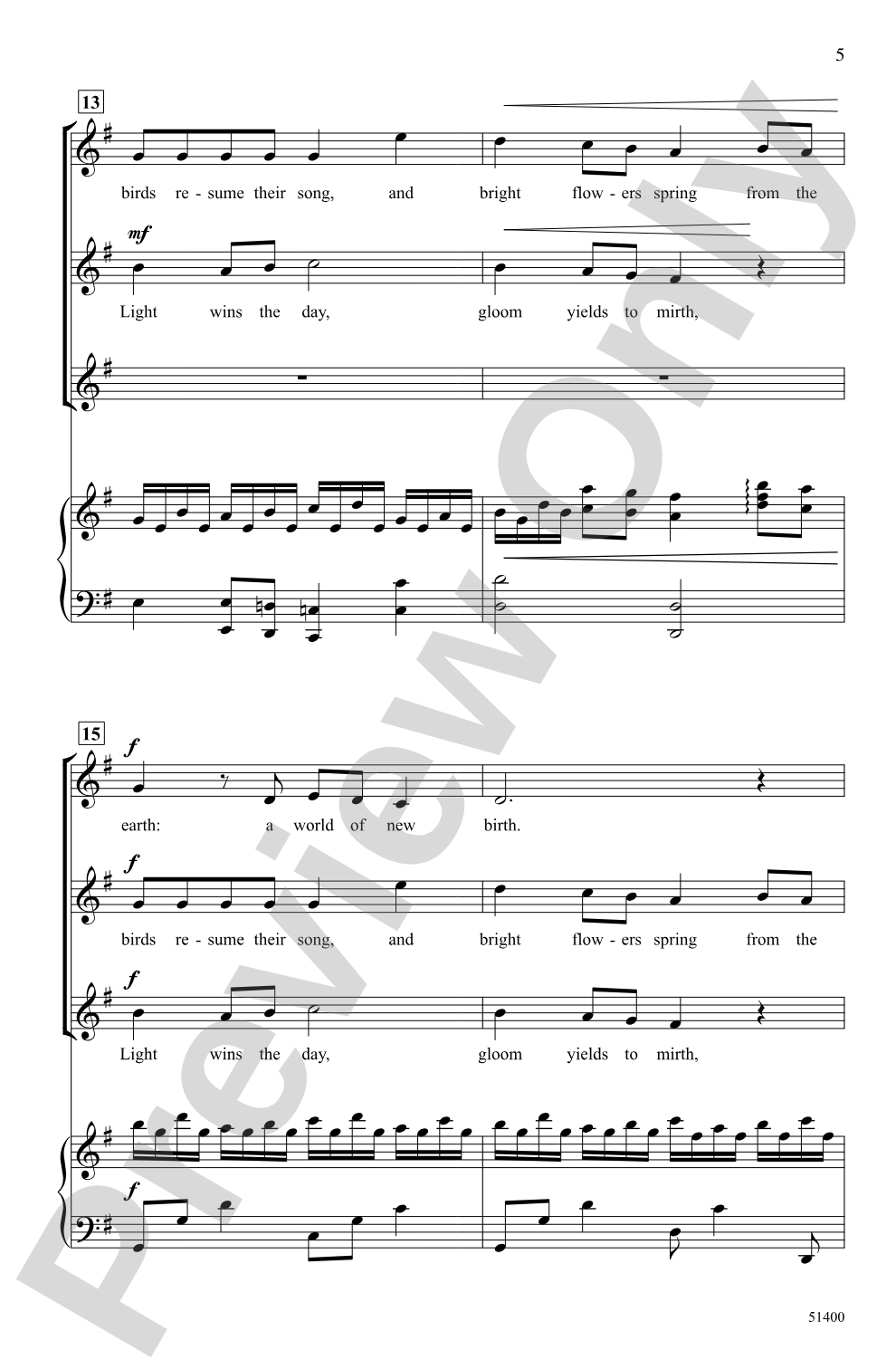
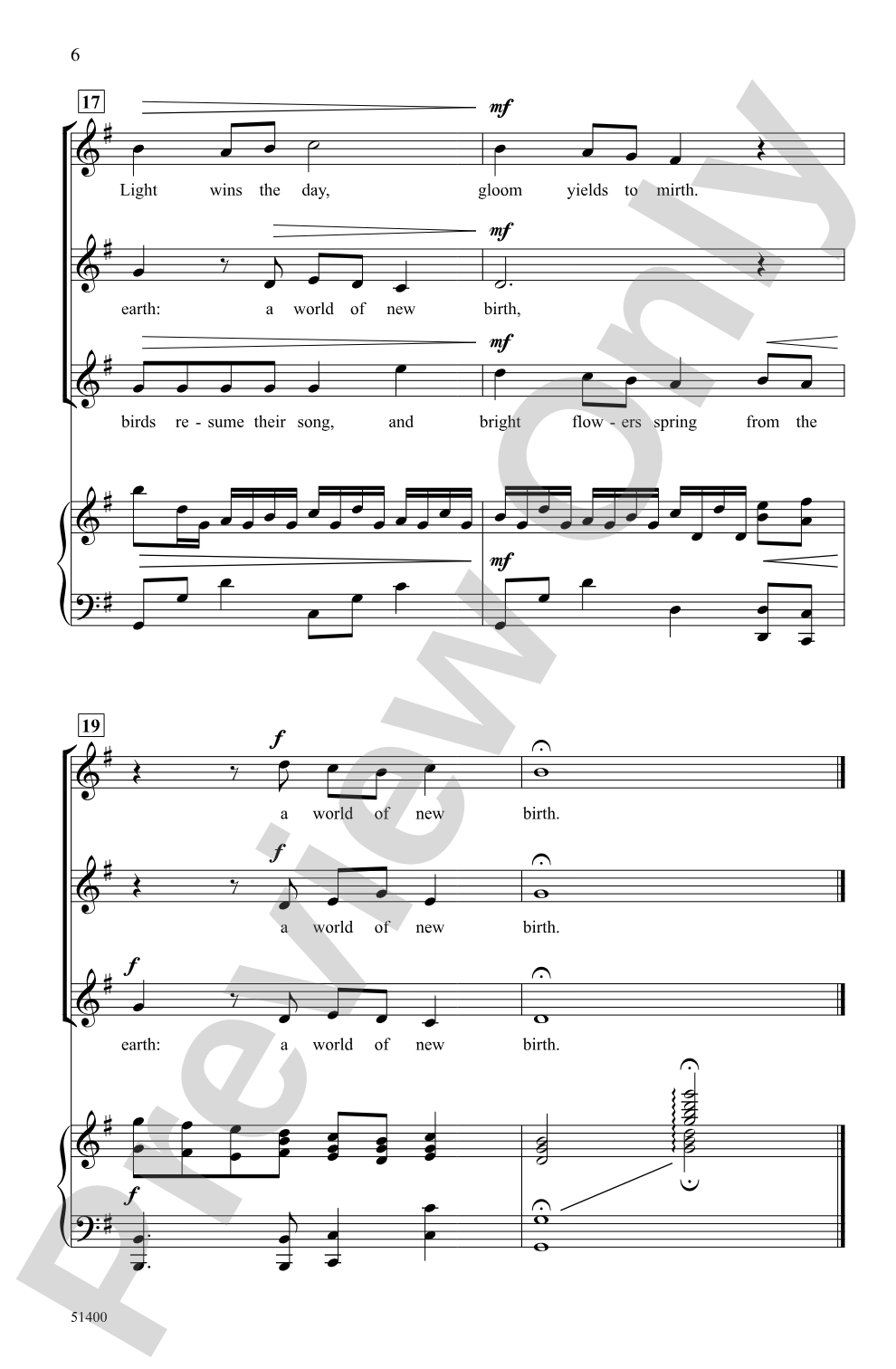

Four Seasonal Rounds: 3-Part Treble Choral Octavo
(Spring * Summer * Autumn * Winter)
Words and music by Alan A Craig
Item: 00-PO-0007429
$2.70
Minimum order quantity: 20 copies
Pickup currently not available
Description
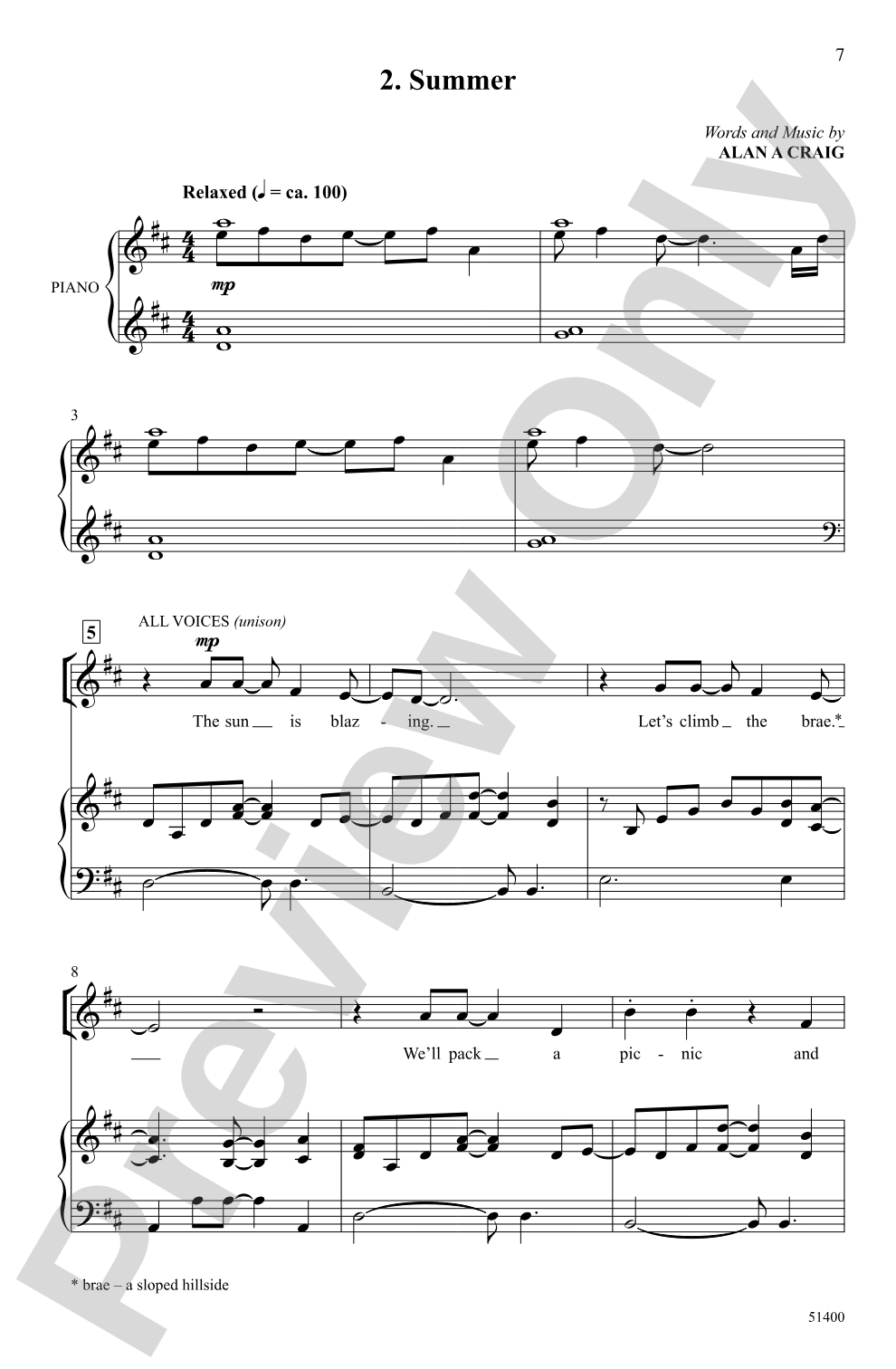
This tasteful set of brief canons is an elegant journey through the four seasons. Each movement presents a melody in unison before staggering entrances to assemble beautiful polyphony. Creative accompaniments provide harmonic and rhythmic variations that elevate the genre to a place of excellence. Program individually throughout the year or as a 6-minute feature. Perform with piano alone or the full orchestral accompaniment.


Four Seasonal Rounds: 3-Part Treble Choral Octavo isn't in MakeMusic Cloud just yet...but it could be. Let us know you'd like to see it, and you'll help shape what comes next. In the meantime, start a free trial and dive into thousands of interactive titles your students can play along with today.
Request This Title
Tell us you want it.
Start Your Free Trial
Explore everything that's ready to play right now.
Sample Audio
1
1 Spring
--:--
2
2 Summer
--:--
3
3 Autumn
--:--
4
4 Winter
--:--
5
5 Spring (orch)
--:--
6
6 Summer (orch)
--:--
7
7 Autumn (orch)
--:--
8
8 Winter (orch)
--:--
1 Spring
0:00
0:00
Sample Video
Additional Details
Series:
Lawson-Gould
Publisher:
Alfred Music
Page Count:
24
SKU:
00-PO-0007429
More about this title
About the Composer: Alan A Craig

Alan A Craig is a Scottish composer, conductor, and educator who has shaped music education and performance in Scotland for over two decades. Since 2002, he has directed the music program at Glasgow Clyde College while building an international reputation for compositions ranging from children's opera to large-scale choral works. His music has appeared in television and film, and he has worked alongside professional orchestras including the Royal Scottish National Orchestra and the National Symphony Orchestra of London.
Beyond composition, Craig founded The Springfield Cambridge Festival Chorus and Orchestra in 2002, an organization that merges community performance with charitable fundraising. The group's annual Christmas concerts at Glasgow Royal Concert Hall have raised over £500,000 for Children's Hospices Across Scotland. His commitment to music education and community engagement earned him the Paul Harris Fellowship from Rotary International (2011) and an appointment as MBE in the 2026 New Year's Honours.
Why we love this
Craig's approach to the round tradition feels contemporary without abandoning the form's core joy. Each seasonal movement unfolds with melodic clarity before the staggered entrances create layered harmony, and the creative accompaniments transform what could be a simple exercise into genuinely rewarding music for singers and listeners alike. The flexibility to program individual movements throughout the year or present all four as a cohesive suite makes this both practical and artistically satisfying.
What to expect
These rounds capture the character of each season through melody and harmonic color without relying on heavy orchestration. Singing in canon creates that distinctive blend of individual line clarity and collective resonance, making performers aware of both their own voice and the larger harmony they are building together.
Who it's for
Directors working with treble choirs at the middle school through adult community level will find these rounds immediately accessible yet satisfying to prepare. The SSA/SSAA voicing accommodates flexibility in voice distribution, and the brief length makes them ideal for singers who are developing independence in part-singing.
How to get the most out of it
- Establish the unison melody with confidence and clear vowels before introducing the canon entries; this foundation makes the polyphony land with precision rather than muddiness.
- Balance the accompaniment so it supports rather than masks the voice parts; the recorded arrangement offers one solution, but adjusting instrumental texture to your ensemble's blend strengthens the overall effect.
- Stagger your rehearsal of the canon portions by having each voice section nail their entrance point independently before combining; this prevents the timing confusion that can derail canons in ensemble singing.
- Consider performing at least one movement with piano alone to showcase the voices against a simpler texture, then use the full orchestral accompaniment for contrast in a larger program.
How to use it
Perform individual rounds seasonally throughout the concert year, opening a winter concert with the first movement or closing a spring program with renewal. Alternatively, present all four movements as a 6-minute choral feature that charts a complete journey, allowing audiences to experience the arc Craig has designed across the full work.
Skills your students will build
- Canon entry accuracy and rhythmic independence
- Listening to other voice parts while maintaining their own line
- Unison melody clarity before transitioning to polyphony
- Sustaining pitch stability in staggered harmonic textures
- Responsive interpretation of seasonal musical character