
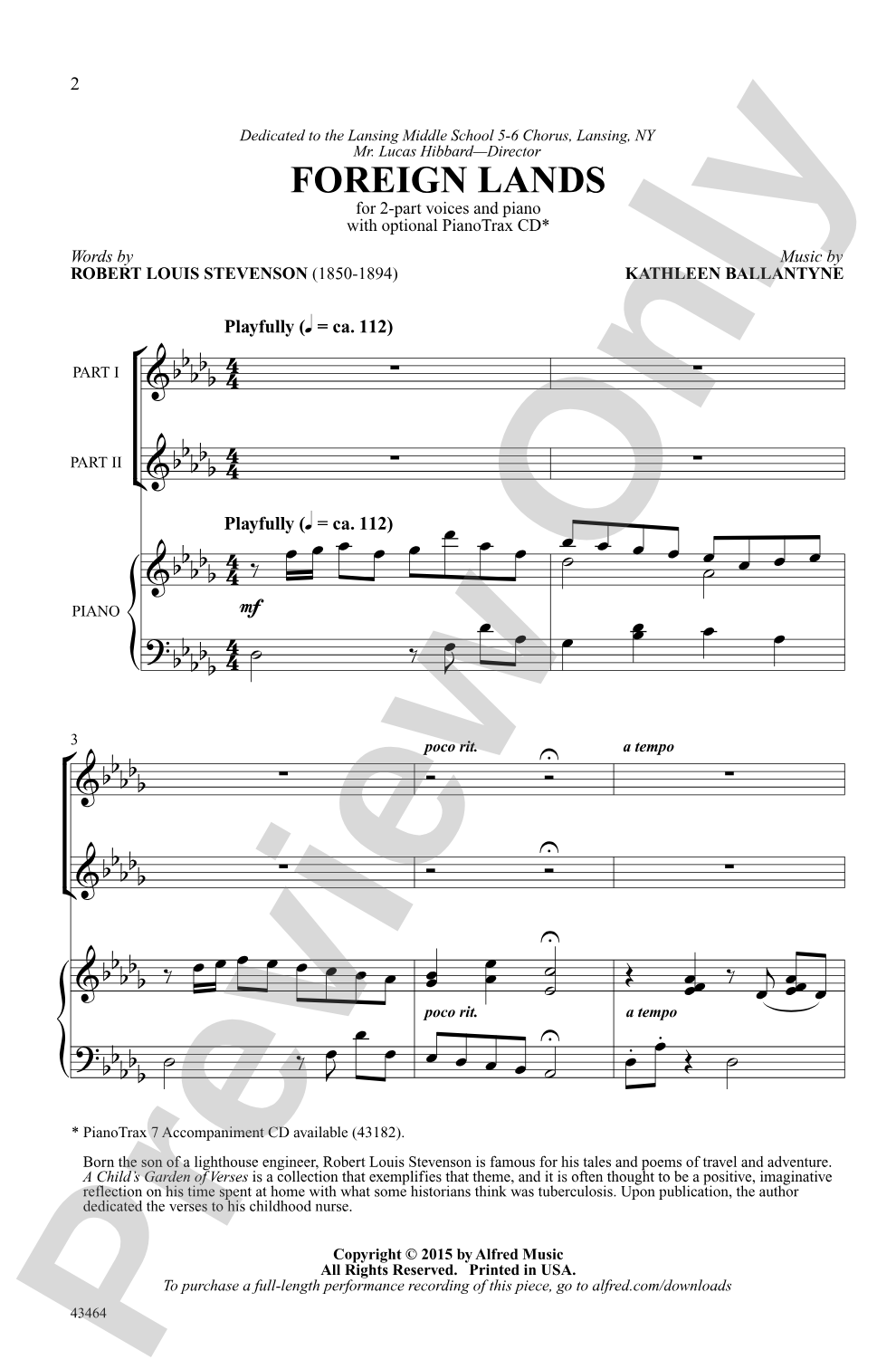

Foreign Lands: 2-Part Choral Octavo
Words by Robert Louis Stevenson, music by Kathleen Ballantyne
Item: 00-PO-0003380

$1.90
Minimum order quantity: 20 copies
Pickup currently not available
Description
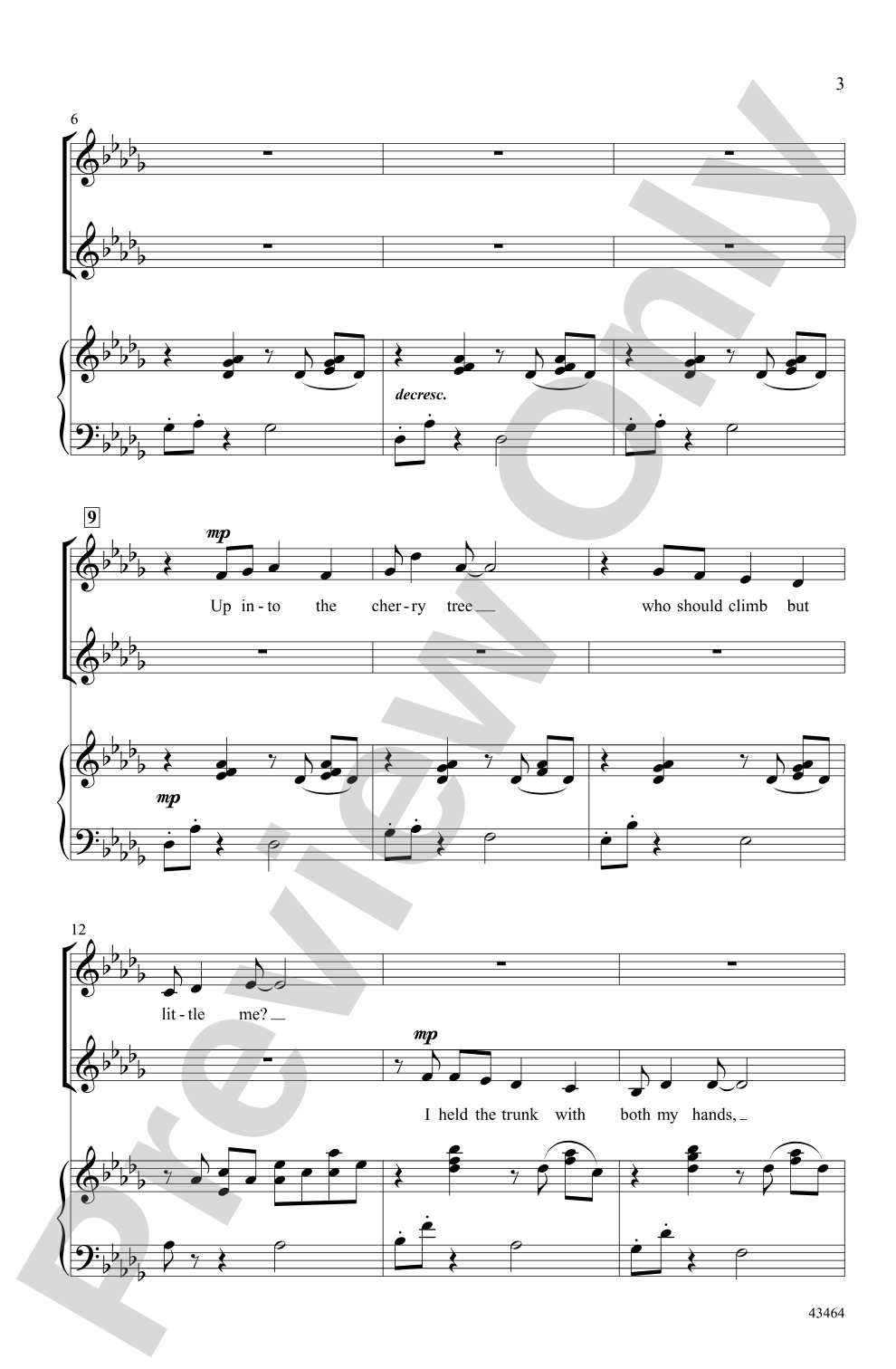
This winsome poem from A Child's Garden of Verses depicts a child's view of the world from atop a tree. Set in the most charming way, musical highlights include a playful melody (on which both voices take turns), complementary counterlines (independent and easily learned), and a nimble piano accompaniment (supportive, but not doubling). Delightful!


Don't just read it, hear it, play along with it, and watch your students grow with it. In MakeMusic Cloud, Foreign Lands: 2-Part Choral Octavo comes alive with professional accompaniment, adjustable tempo, and built-in practice tools that turn solo practice into real progress.
Open in the Player
Jump straight in and assign it today.
Start Your Free Trial
Open this title and explore the full library in minutes.
Sample Audio
1
Audio File
--:--
0:00
0:00
Sample Video
No sample videos found.
Additional Details
Series:
Alfred Choral Designs
Publisher:
Alfred Music
Page Count:
8
SKU:
00-PO-0003380
More about this title
Why we love this
Ballantyne captures the whimsy of Stevenson's verse without oversimplifying the musical setting. The alternating melody between voices keeps both parts engaged and visible, while the independent counterlines reward careful listening. A piano accompaniment that supports without doubling demonstrates compositional craft at an accessible level.
What to expect
Light and observant, with a sense of childlike wonder. The melody dances between voices like a child shifting perspective, while complementary lines weave underneath in a way that feels inevitable rather than crowded. The overall mood is buoyant and intimate at once.
Who it's for
This octavo suits intermediate 2-part choirs in upper elementary through middle school settings, as well as treble choirs seeking accessible concert or festival repertoire with genuine musical substance. Directors searching for secular selections that honor literary quality while keeping both voice parts meaningfully engaged will find this a strong choice.
How to get the most out of it
- Bring out the dialogue between the two voice parts when the melody passes back and forth; this conversational quality mirrors the poem's intimate perspective.
- Shape the counterline phrases independently, resisting the urge to match dynamics with the melody line; clarity between parts creates the charming texture Ballantyne intends.
- Allow the piano accompaniment breathing room; it's written to enhance, not to lead, so singers should anchor the musical line while the keyboard provides gentle harmonic color.
- Work the text with attention to phrasing rather than bar lines; Stevenson's language flows conversationally, and your singers will find natural breath points by following the poetry.
How to use it
Pair this with other Romantic-era poetry settings or use it as the centerpiece of a concert section exploring literature through music. Its modest length and charm make it an effective opener, and its contest-friendly appeal suits both spring and fall festival calendars.
Skills your students will build
- Independent line singing and awareness of complementary countermelodies
- Melodic exchange between voice parts
- Text-driven phrasing and expressive communication of a poetic narrative
- Balance between voice parts and piano accompaniment