Follow the River Cover Image

Follow the River: 2-Part Choral Octavo

$2.25 USD
Sale price  $2.25 USD Regular price 
Skip to product information
Follow the River Cover Image

Follow the River: 2-Part Choral Octavo

Music by Mary Donnelly and George L. O. Strid

Item: 00-18690

makemusic Cloud badge

Need it now?

Buy Digital Version
$2.25
Shipped

One moment…

Description
Written in a folk song style, this two part choral work has the feel of a gently rolling river. A touching text and a flowing piano accompaniment enhance the echo vocal passages, making it a superb year round choice.

Don't just read it, hear it, play along with it, and watch your students grow with it. In MakeMusic Cloud, Follow the River: 2-Part Choral Octavo comes alive with professional accompaniment, adjustable tempo, and built-in practice tools that turn solo practice into real progress.

Sample Pages

Sample Audio
0:00
0:00
Sample Video
Additional Details
Series: Alfred Archive Edition: Alfred Choral Designs
Publisher: Alfred Music
Page Count: 12
UPC: 038081173306
SKU: 00-18690

More about this title

About the Composer: Mary Donnelly
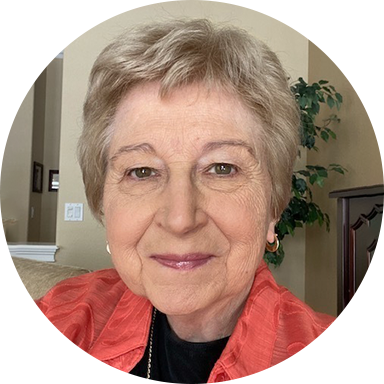
Mary Donnelly

Mary Donnelly grew up in Reno, Nevada, and studied English and French at the University of Nevada, Reno. While still an undergraduate, she discovered her passion for music education by helping launch two children's choruses, a experience that led her back to school for music certification. She earned a Master's Degree in Education from Lesley College in Cambridge, Massachusetts, where she focused on integrating the arts across the curriculum.

Donnelly spent thirty years teaching general music and choir in the Washoe County School District, retiring after a career dedicated to making music accessible to young singers. In 1985, she began collaborating with George Strid when they were asked to write a musical for a school reading week; that first project launched a partnership that has produced over two hundred songs and twenty-five musicals. She holds membership in ACDA, NEA, and ASCAP.

Why we love this

Donnelly and Strid craft straightforward, singable lines that never condescend to younger voices. The echo vocal passages create natural antiphonal opportunities without requiring advanced rhythmic independence, making this accessible to developing choirs while still offering genuine musicality.

What to expect

The piece unfolds with the gentle, unhurried motion of water moving steadily downhill. Echo passages create moments of reflection and intimacy, while the flowing piano accompaniment mimics the river's continuous motion, giving singers something tangible to follow and inhabit.

Who it's for

This work suits treble or mixed-voice choirs at the middle school and upper elementary level, or any developing ensemble seeking accessible sacred or secular repertoire with genuine musical substance. The two-part voicing removes barriers for singers building confidence while the folk idiom appeals broadly across age groups.

How to get the most out of it

  • Shape the echo passages to sit slightly behind the main vocal line; think of them as a gentle response rather than a mechanical repetition, which allows the text to breathe.
  • Use the piano accompaniment to anchor harmonic clarity in the parts, especially during the echo exchanges where singers might lose pitch confidence.
  • Balance the flowing accompaniment so it supports without overshadowing the choral sound; the river metaphor guides the texture, not dominates it.

How to use it

Pair this with other folk-inspired works to build a thematic concert around nature or water imagery, or slot it into a spring or end-of-year program where its accessible two-part writing lets younger singers contribute meaningfully alongside more experienced groups. The year-round flexibility means it works equally well as a filler piece in November or the centerpiece of a May concert.

Skills your students will build

  • Singing independent lines in two-part texture without doubling unison
  • Following echo phrases that require precise rhythmic alignment with a responding section
  • Matching sustained vowels across echo passages for tonal blend
  • Tracking a flowing piano accompaniment while maintaining vocal independence

You May Also Like
