

Follow the Drinking Gourd: 2-Part Choral Octavo
Traditional Spiritual / arr. Greg Gilpin
Item: 00-PO-0006964
$2.30
Minimum order quantity: 20 copies
Pickup currently not available
Related Items
Follow the Drinking Gourd: SATB Choral Octavo |
$2.30
|
View | |
Follow the Drinking Gourd: 3-Part Mixed Choral Octavo |
$2.30
|
View | |
Follow the Drinking Gourd: PianoTrax Digital Audio Download |
$9.99
|
View | |
Follow the Drinking Gourd: PartTrax Digital Audio Download |
$49.99
|
View | |
Follow the Drinking Gourd: PartTrax Digital Audio Download |
$49.99
|
View | |
Follow the Drinking Gourd: PartTrax Digital Audio Download |
$49.99
|
View | |
Follow the Drinking Gourd: SATB Choral Octavo |
$2.30
|
View | |
Follow the Drinking Gourd: 3-Part Mixed Choral Octavo |
$2.30
|
View | |
Follow the Drinking Gourd: 2-Part Choral Octavo |
$2.30
|
View |
Description
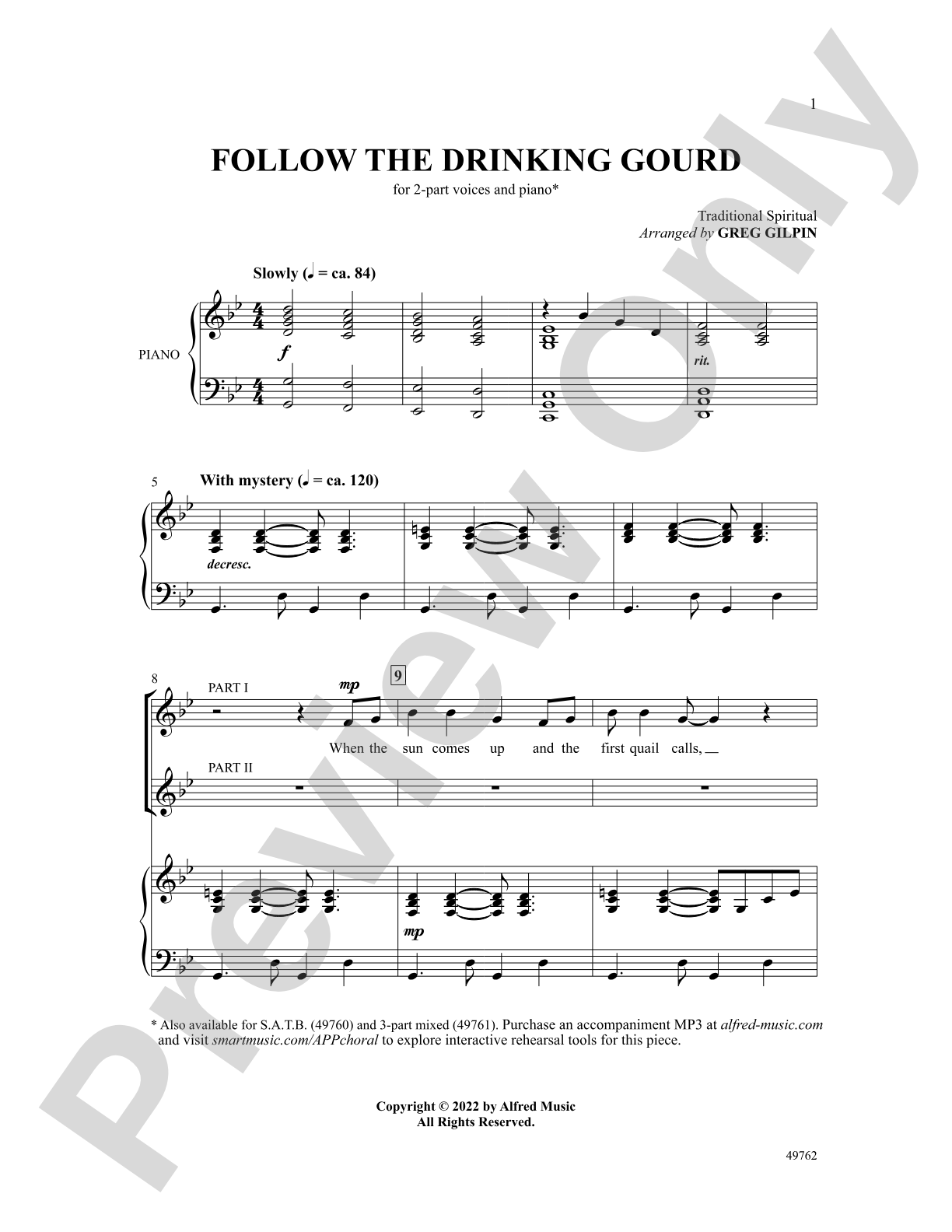
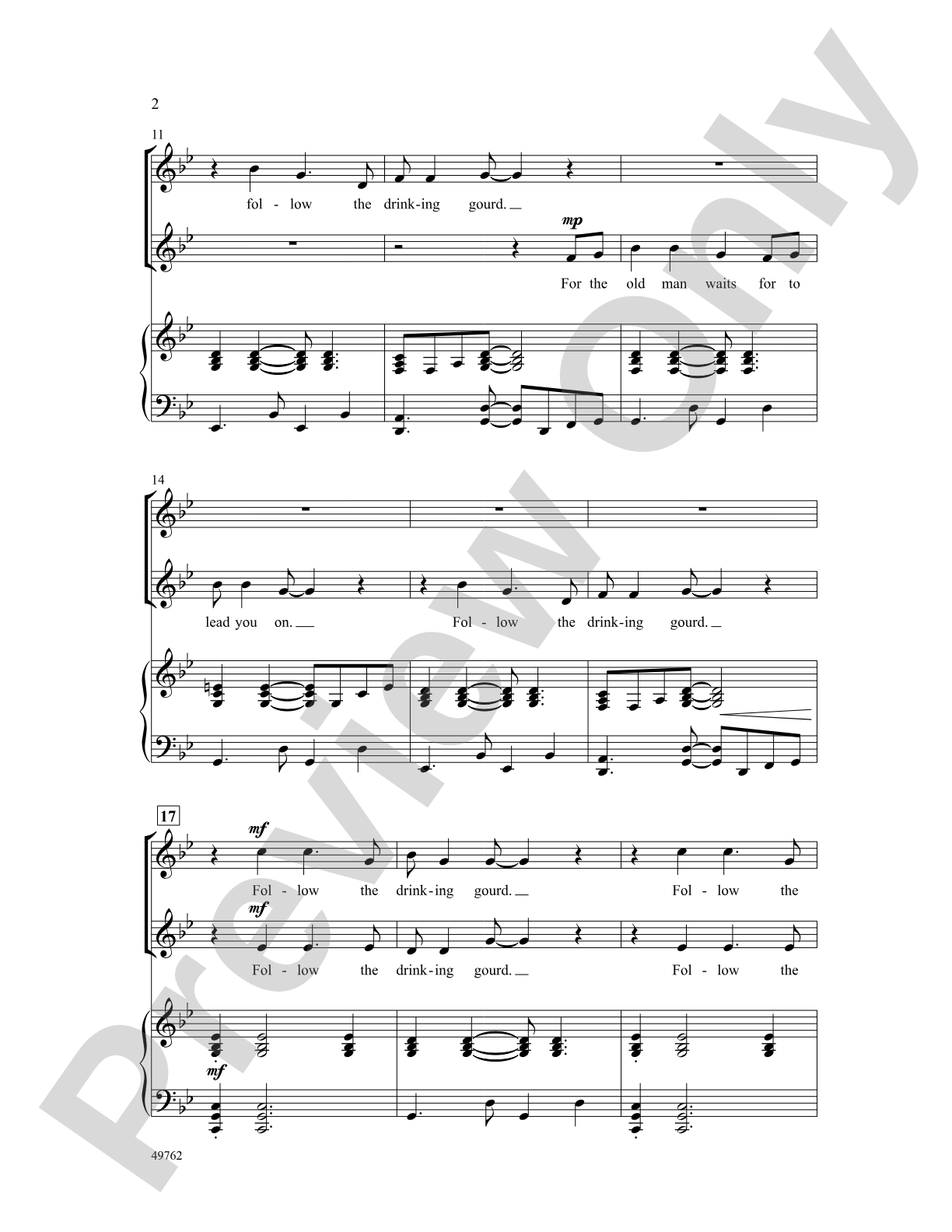
A percolating, rhythmic setting of the traditional spiritual that invites exciting minor key singing. Independent lines and stacked ostinatos captivate.
The PerformancePlus+ series is an innovative addition to the ever-expanding MakeMusic Cloud interactive library. These engaging selections are presented with educational resources designed to enrich the rehearsal process and create outstanding performances. Including:


The PerformancePlus+ series is an innovative addition to the ever-expanding MakeMusic Cloud interactive library. These engaging selections are presented with educational resources designed to enrich the rehearsal process and create outstanding performances. Including:
- Assignment, recording, and assessment tools within MakeMusic Cloud
- Part-predominant and accompaniment tracks
- Printable sheet music (with a standard MakeMusic Cloud subscription)
- Correlated rehearsal guides and performance notes
- Rights to perform in a live or virtual setting
Follow the Drinking Gourd: 2-Part Choral Octavo isn't in MakeMusic Cloud just yet...but it could be. Let us know you'd like to see it, and you'll help shape what comes next. In the meantime, start a free trial and dive into thousands of interactive titles your students can play along with today.
Request This Title
Tell us you want it.
Start Your Free Trial
Explore everything that's ready to play right now.
Sample Audio
1
Audio File
--:--
0:00
0:00
Sample Video
Additional Details
Series:
Alfred Choral Designs
Publisher:
Alfred Music
Page Count:
12
SKU:
00-PO-0006964
More about this title
About the Arranger: Greg Gilpin

Greg Gilpin brings together decades of experience as a choral conductor, composer, and arranger with a track record of leading performances at some of the world's most prestigious venues: Carnegie Hall, Lincoln Center, the Sydney Opera House, and Royal Festival Hall among them. An ASCAP award-winning musician, Gilpin currently serves as Director of Educational Choral Publications for Shawnee Press and has built a reputation for creating engaging, singable choral literature that works in educational settings.
Beyond the choral world, Gilpin has composed for film (earning Best Score for the short "Rosie's Rescue" in 2021) and collaborated with internationally recognized artists on concert arrangements. He is an active member of ACDA, NAfME, and Phi Mu Alpha Sinfonia, reflecting his deep commitment to music education and the choral art.
Why we love this
Gilpin's arrangement transforms this spiritual into something rhythmically propulsive without losing the song's soul. The stacked ostinatos and independent lines give your singers real musical material to sink their teeth into while the minor key setting adds sophistication and intrigue that goes well beyond typical two-part fare.
What to expect
A spiritual that pulses with forward motion and contemporary energy. The minor key wraps the traditional melody in a sophisticated harmonic context while the rhythmic ostinatos create momentum and drive that keeps the ensemble and audience engaged throughout.
Who it's for
Two-part choirs looking for spirituals that challenge beyond unison arrangements. This works for middle school through adult community choirs seeking material with genuine harmonic and rhythmic interest.
How to get the most out of it
- Lock in the rhythmic foundation early. The percolating accompaniment and ostinatos demand precise ensemble rhythm, so isolate the rhythmic patterns in rehearsal before layering the melody lines on top.
- Balance the two parts so neither dominates. Independent lines mean both parts carry equal weight; avoid letting part one overshadow part two in passages where they diverge.
- Use the recorded accompaniment during rehearsal to anchor tempo and groove, then gradually rehearse without it so singers own the rhythmic precision themselves.
- Lean into the minor key color. This arrangement's strength lies in its darker, more sophisticated sound, so encourage singers to voice the minor harmonies with intention and warmth rather than backing away from the sonority.
How to use it
Program this as a concert centerpiece that demonstrates your ensemble's rhythmic tightness and harmonic awareness. It pairs well with other spirituals or cultural repertoire, and its recorded accompaniment makes it suitable for festival contexts where you need professional-sounding support.
Skills your students will build
- Independence between vocal lines (singing different rhythmic and melodic material simultaneously)
- Rhythmic precision in syncopated and ostinato-based arrangements
- Singing in minor keys with tonal security and expression
- Ensemble balance when parts carry equal musical weight