
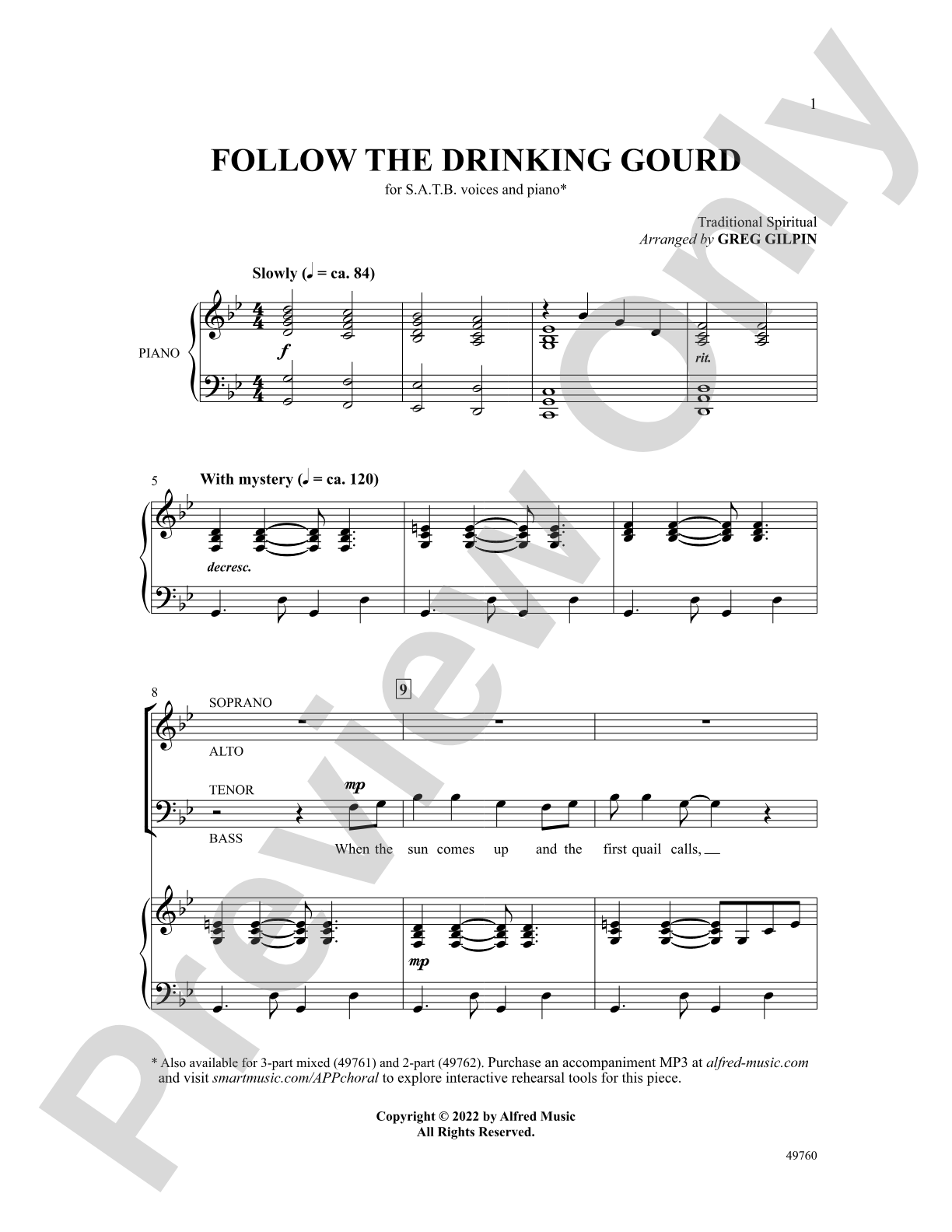
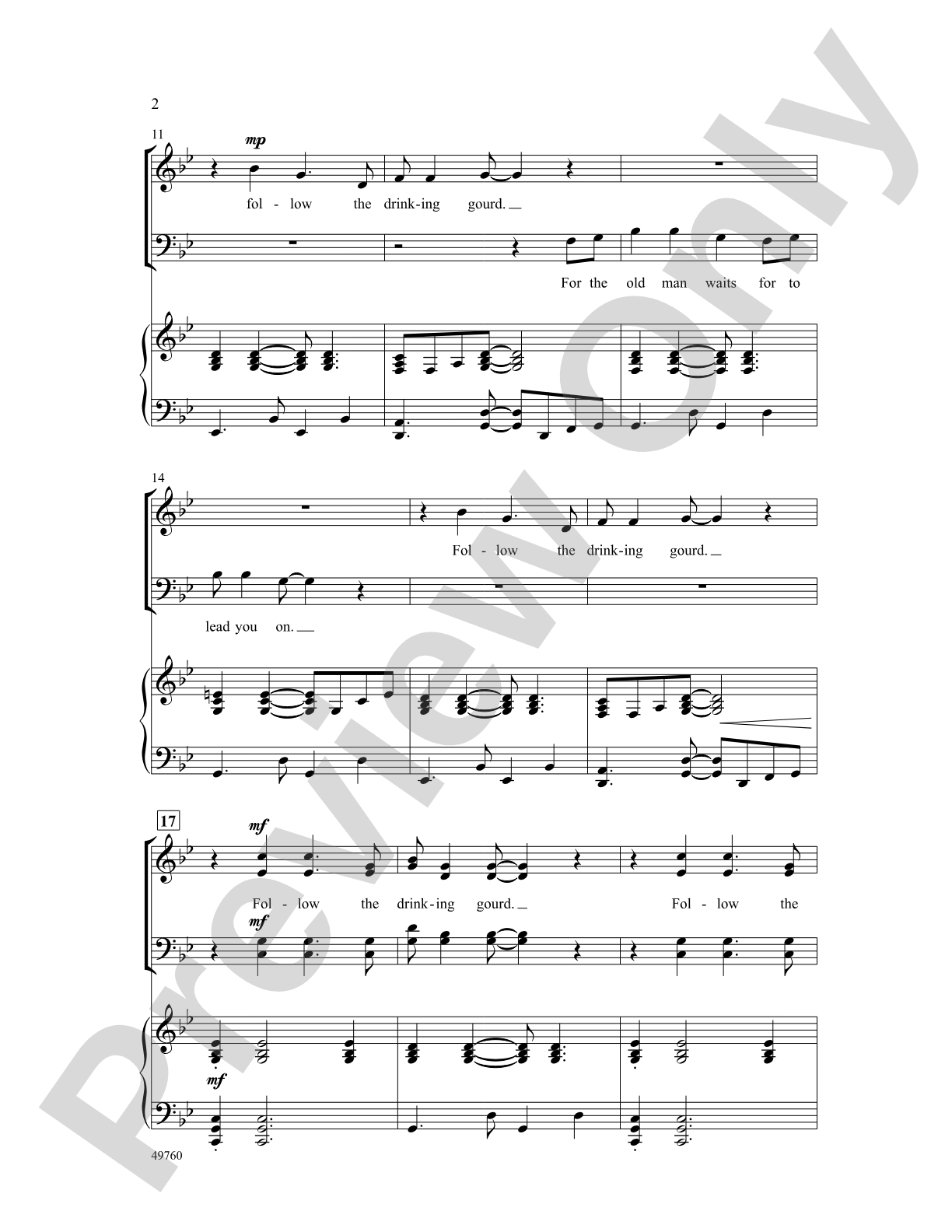
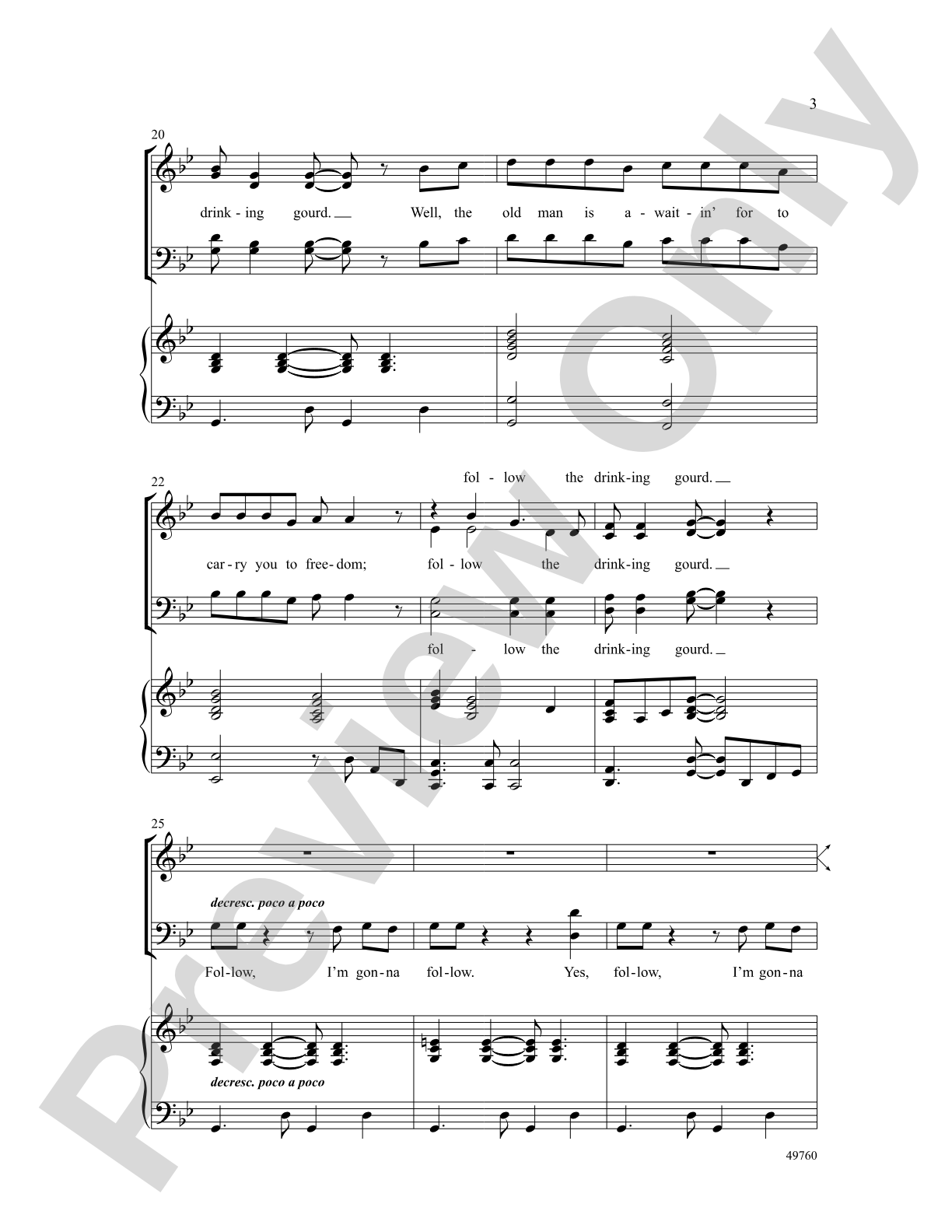

Follow the Drinking Gourd: SATB Choral Octavo
Traditional Spiritual / arr. Greg Gilpin
Item: 00-PO-0006962

$2.30
Minimum order quantity: 20 copies
Pickup currently not available
Related Items
Follow the Drinking Gourd: 3-Part Mixed Choral Octavo |
$2.30
|
View | |
Follow the Drinking Gourd: 2-Part Choral Octavo |
$2.30
|
View | |
Follow the Drinking Gourd: PianoTrax Digital Audio Download |
$9.99
|
View | |
Follow the Drinking Gourd: PartTrax Digital Audio Download |
$49.99
|
View | |
Follow the Drinking Gourd: PartTrax Digital Audio Download |
$49.99
|
View | |
Follow the Drinking Gourd: PartTrax Digital Audio Download |
$49.99
|
View | |
Follow the Drinking Gourd: SATB Choral Octavo |
$2.30
|
View | |
Follow the Drinking Gourd: 3-Part Mixed Choral Octavo |
$2.30
|
View | |
Follow the Drinking Gourd: 2-Part Choral Octavo |
$2.30
|
View |
Description
A percolating, rhythmic setting of the traditional spiritual that invites exciting minor key singing. Independent lines and stacked ostinatos captivate.
The PerformancePlus+ series is an innovative addition to the ever-expanding MakeMusic Cloud interactive library. These engaging selections are presented with educational resources designed to enrich the rehearsal process and create outstanding performances. Including:


The PerformancePlus+ series is an innovative addition to the ever-expanding MakeMusic Cloud interactive library. These engaging selections are presented with educational resources designed to enrich the rehearsal process and create outstanding performances. Including:
- Assignment, recording, and assessment tools within MakeMusic Cloud
- Part-predominant and accompaniment tracks
- Printable sheet music (with a standard MakeMusic Cloud subscription)
- Correlated rehearsal guides and performance notes
- Rights to perform in a live or virtual setting
Don't just read it, hear it, play along with it, and watch your students grow with it. In MakeMusic Cloud, Follow the Drinking Gourd: SATB Choral Octavo comes alive with professional accompaniment, adjustable tempo, and built-in practice tools that turn solo practice into real progress.
Open in the Player
Jump straight in and assign it today.
Start Your Free Trial
Open this title and explore the full library in minutes.
Sample Audio
1
Audio File
--:--
0:00
0:00
Sample Video
Additional Details
Series:
Alfred Choral Designs
Publisher:
Alfred Music
Page Count:
12
SKU:
00-PO-0006962
More about this title
About the Arranger: Greg Gilpin

Greg Gilpin is an ASCAP award-winning choral composer and arranger whose work has been heard across prestigious concert halls including Carnegie Hall, Lincoln Center, Ryman Auditorium, the Sydney Opera House, Royal Festival Hall, and Harpa Concert Hall. As Director of Educational Choral Publications for Shawnee Press, he shapes the choral landscape through his arrangements and original compositions, while maintaining an active career as a conductor and recording industry professional.
Beyond music, Gilpin has expanded his professional reach into organizing and producing, founding Maestro Organizing and earning certifications as a financial coach and professional organizer. His diverse expertise has led to media appearances on network television and the series "Hoarders." In 2021, he composed the score for the award-winning short film "Rosie's Rescue" and collaborated with opera singer Angela Brown on a world premiere arrangement of "What Child is This?" He is an active member of ACDA, NAfME, SAG-AFTRA, and a Life Loyal Member of Phi Mu Alpha Sinfonia.
Why we love this
Gilpin's rhythmic vitality and harmonic language transform this spiritual into a piece that feels completely fresh while honoring its roots. The independent voice writing and layered ostinatos give every section something engaging to sing, making rehearsal feel purposeful and collaborative rather than rote.
What to expect
The minor key setting creates an introspective intensity, while the percolating rhythms and stacked ostinatos generate forward momentum that feels both grounded and propulsive. Singing these independent lines creates a sense of collective architecture, where every voice contributes to something larger than itself.
Who it's for
This arrangement engages singers who thrive on rhythmic complexity and harmonic color. It works for high school through adult choirs preparing for concert or festival performance, and its moderate technical demands make it accessible without sacrificing musical sophistication.
How to get the most out of it
- Keep the rhythmic drive consistent throughout; the percolating accompaniment depends on solid ensemble pulse, especially when minor key harmonies shift the harmonic center.
- Shape the stacked ostinatos as distinct musical lines rather than background texture; balance them so each layer is audible and contributes to the cumulative effect.
- Use the recorded accompaniment track during early rehearsals to establish the rhythmic character and minor key tonality before focusing on voice independence.
How to use it
Program this alongside spirituals from different regions or time periods to create a thematic concert segment, or use it as a concert opener to establish rhythmic energy and tonal color. Its moderate length and engaging character make it equally effective in a festival context where you need a piece that demonstrates both ensemble cohesion and harmonic sophistication.
Skills your students will build
- Reading and maintaining independent lines within complex harmonic progressions
- Sustaining rhythmic precision across stacked ostinatos
- Singing securely in minor keys with chromatic voice leading
- Balancing blend while maintaining textural clarity