
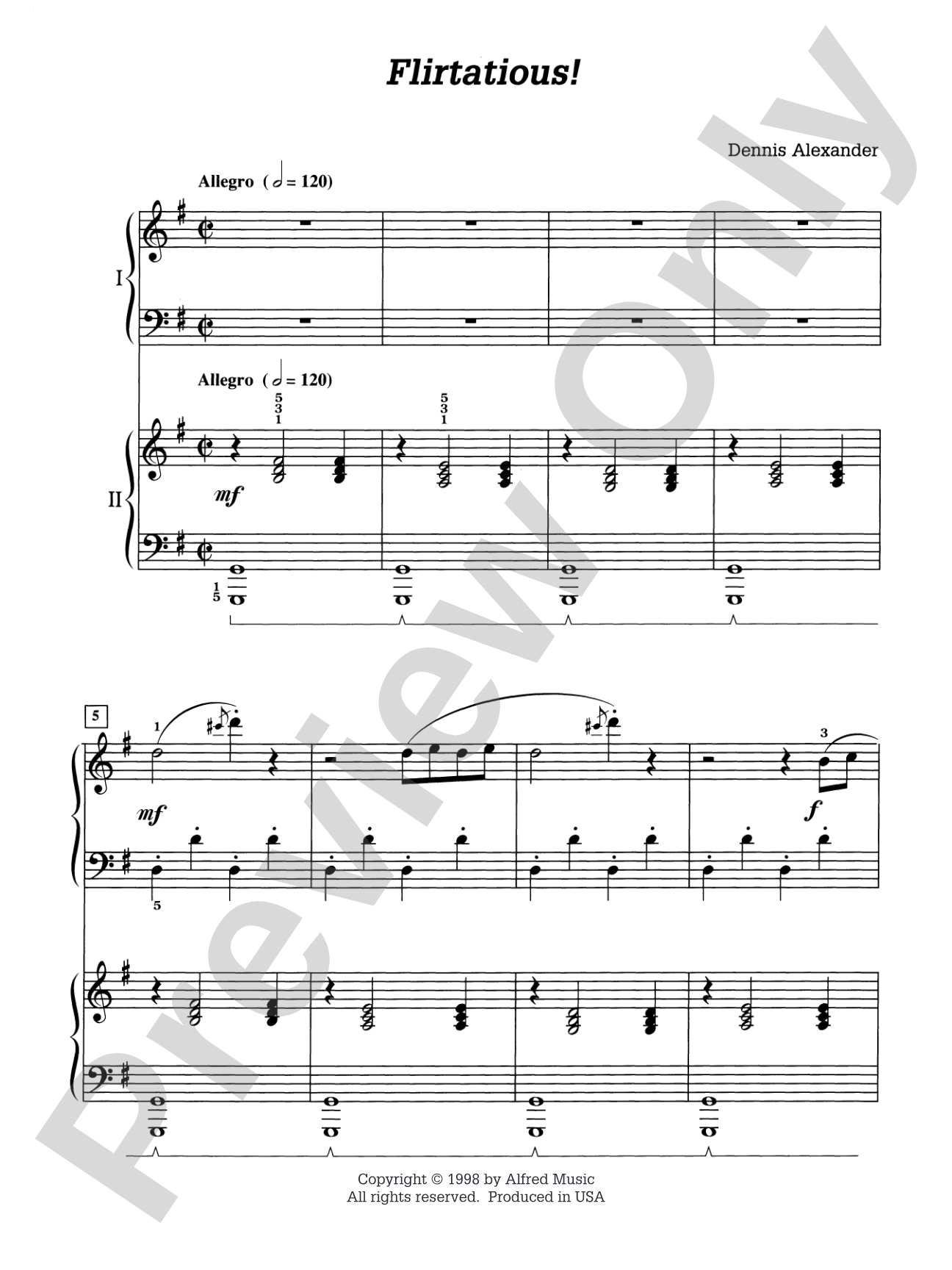

Flirtatious! - Piano Duo (2 Pianos, 4 Hands): Piano Duo (2 Pianos, 4 Hands)
By Dennis Alexander
Level: Intermediate
Item: 00-PS-0017496
$4.99
Pickup currently not available
Related Items
Flirtatious!: Piano Duo (2 Pianos, 4 Hands) Sheet (2 copies included) |
$4.99
|
View |
Description
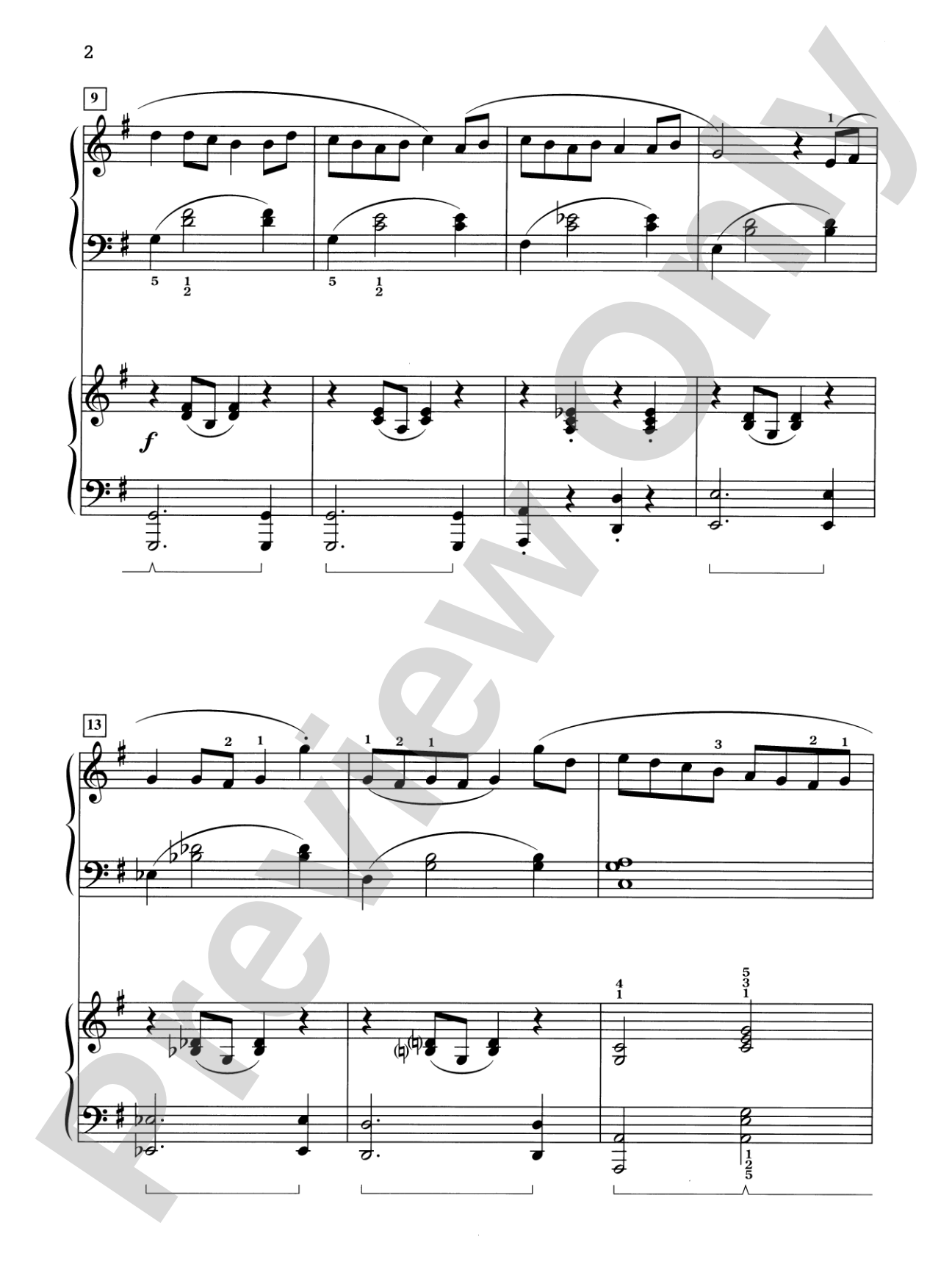
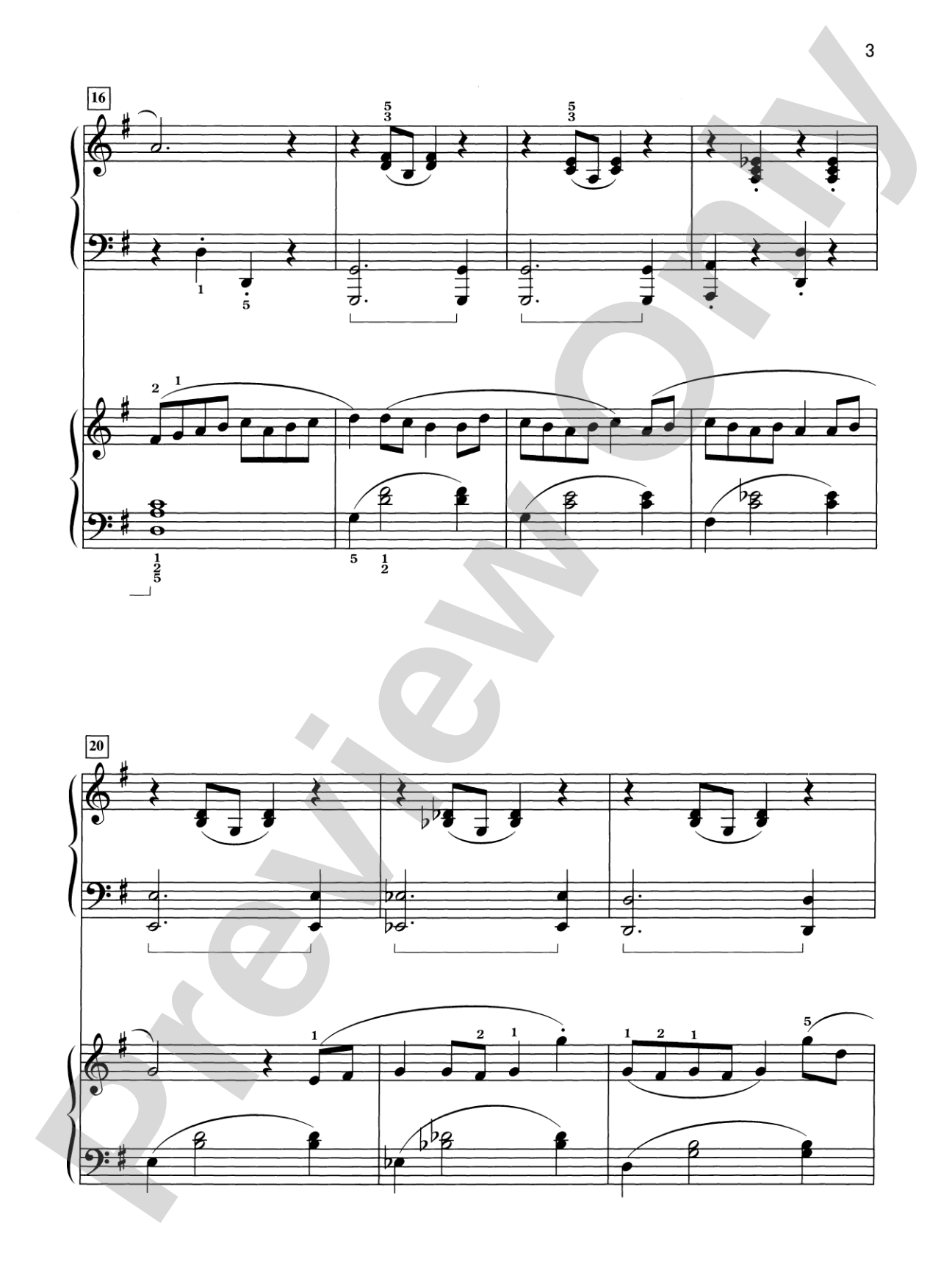
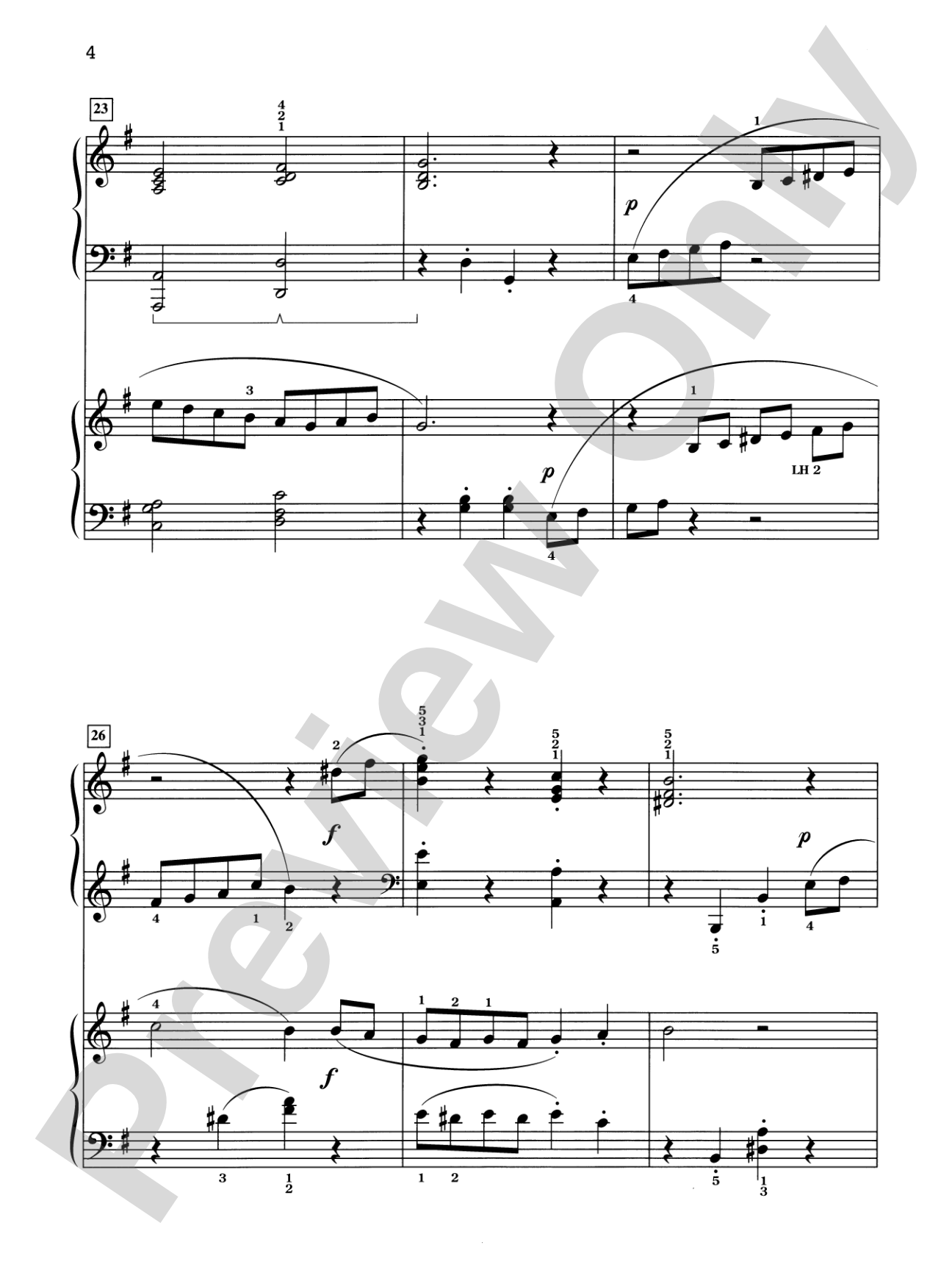
The playful melody is passed between the two players throughout this piece in G major by Dennis Alexander for an intermediate ensemble of two pianos, four hands. Written in cut time, this eight-page piece is engaging and fun to play. Two copies are included. A Federation Festivals 2024-2028 selection.


Discover MakeMusic Cloud: thousands of interactive titles your students can play along with today.
Sample Audio
1
Flirtatious
--:--
Flirtatious
0:00
0:00
Sample Video
No sample videos found.
Additional Details
Series:
The Alfred Ensemble Series
Publisher:
Alfred Music
Page Count:
16
SKU:
00-PS-0017496
More about this title
About the Composer: Dennis Alexander

Dennis Alexander has shaped music education for decades through his prolific output of pedagogically sound yet genuinely musical compositions. Since 1986, his partnership with Alfred Music Publishing has produced over 400 works that have become standards in studio and classroom settings worldwide. He taught piano pedagogy at the University of Montana for 24 years before relocating to California, where he held faculty positions at Cal State Fullerton and Cal State Northridge. Alexander maintains an active schedule as a composer, clinician, and performer, having made his Carnegie Recital Hall debut in 1987 and toured internationally to conduct masterclasses and perform recitals across Asia, Europe, and North America.
Beyond the studio, Alexander has earned recognition as a frequent commissioned composer for state and national music organizations. He served as president of the Montana State Music Teachers Association and continues to be a sought-after clinician at MTNA conventions and state music teacher conferences. His chamber work and collaborative experience with soloists and ensembles inform the musical sophistication evident in his educational compositions.
Why we love this
Alexander writes duets that feel genuinely social rather than purely pedagogical. The playful back-and-forth of the melody between players creates natural ensemble communication and keeps both pianists equally engaged from start to finish, which is exactly what intermediate students need to stay interested in duo repertoire.
What to expect
Light, witty, and conversational. The melody dances between the two players with a flirting quality that keeps the musical dialogue playful and never heavy-handed. The G major tonality and cut time give it an almost lilting quality despite the intermediate technical demands.
Who it's for
This duet works beautifully for intermediate pianists who are ready to think about ensemble playing and need repertoire that rewards listening to their partner. It's equally suitable for festival preparation or a casual collaborative piece at a studio recital.
How to get the most out of it
- Balance the melodic line as it trades between the two pianos. The player holding the tune should voice it clearly while the accompanying partner stays supportive underneath.
- Use the cut time signature as permission to move the piece along with energy. Eight measures feel lighter in cut time, which matches the flirtatious character perfectly.
- Synchronize the rhythmic figures that occur simultaneously in both parts. Lock in on the offbeats especially, where the harmonic texture matters most.
- Shape the phrase arcs together rather than individually. Since the melody moves between players, treat longer musical sentences as a shared responsibility.
How to use it
Include this as a studio recital piece where two of your intermediate students can showcase their listening and communication skills. It also pairs well on a program with more substantial duo repertoire, offering variety and humor without breaking the musical thread. As a Federation Festivals selection, it's already vetted for competition use if your students want that challenge.
Skills your students will build
- Hearing and balancing melody against accompaniment in ensemble context
- Reading cut time and maintaining its faster harmonic rhythm
- Coordinating entrances and rhythmic synchronization across two instruments
- Shaping melodic phrases collaboratively as the line transfers between players
- Sustaining musical character (lightness, clarity, playfulness) across intermediate technical passages