
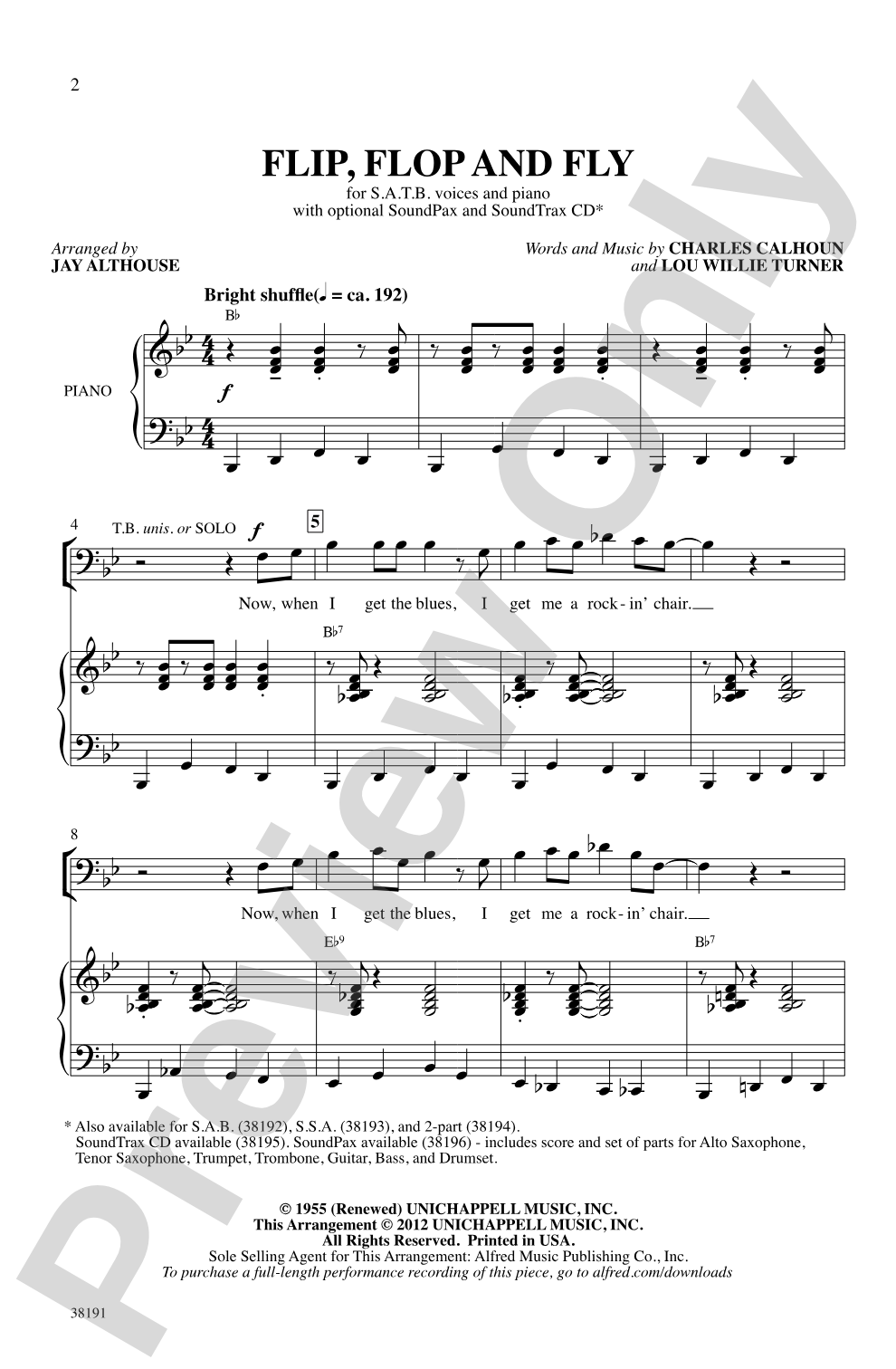
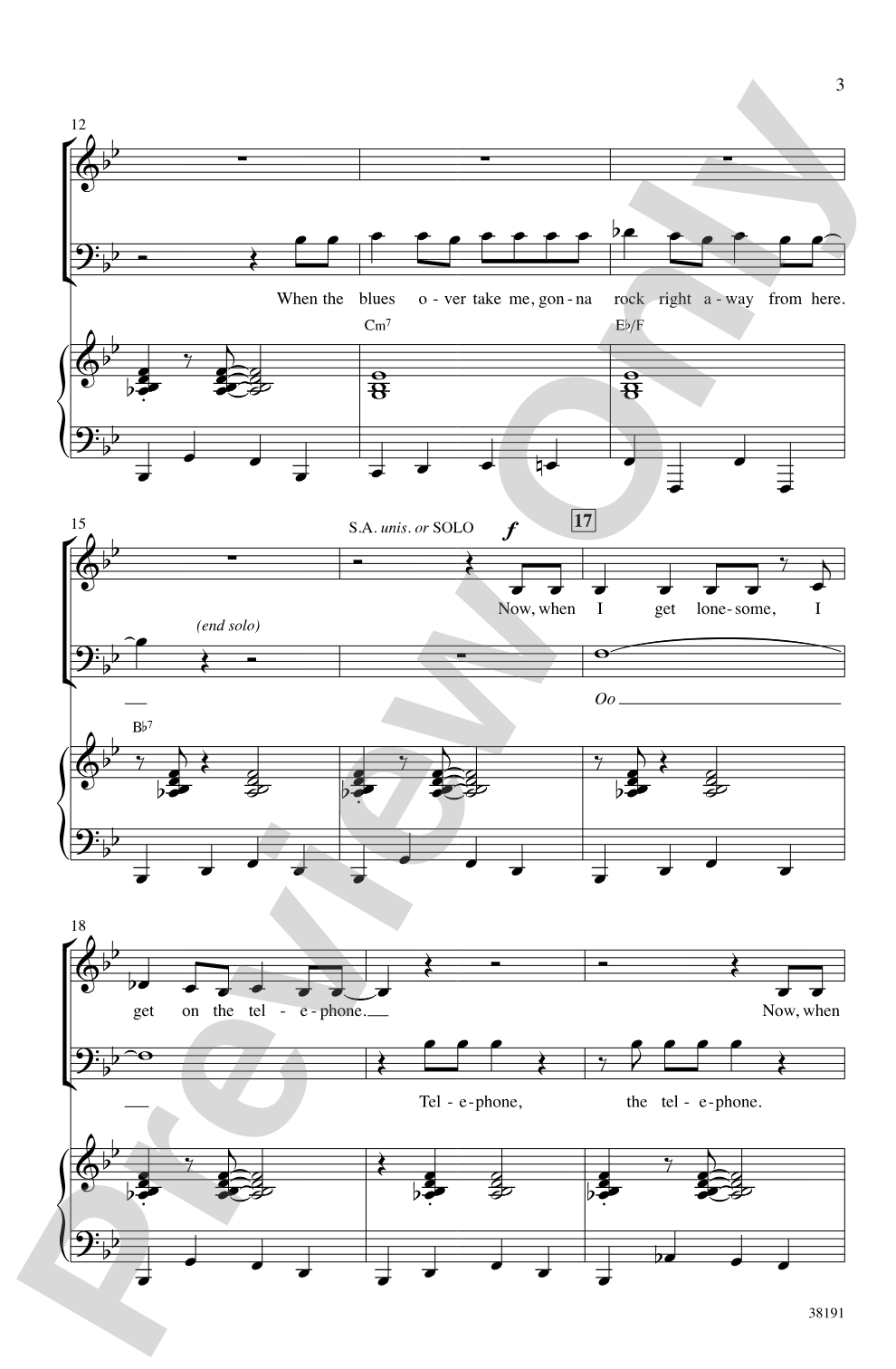
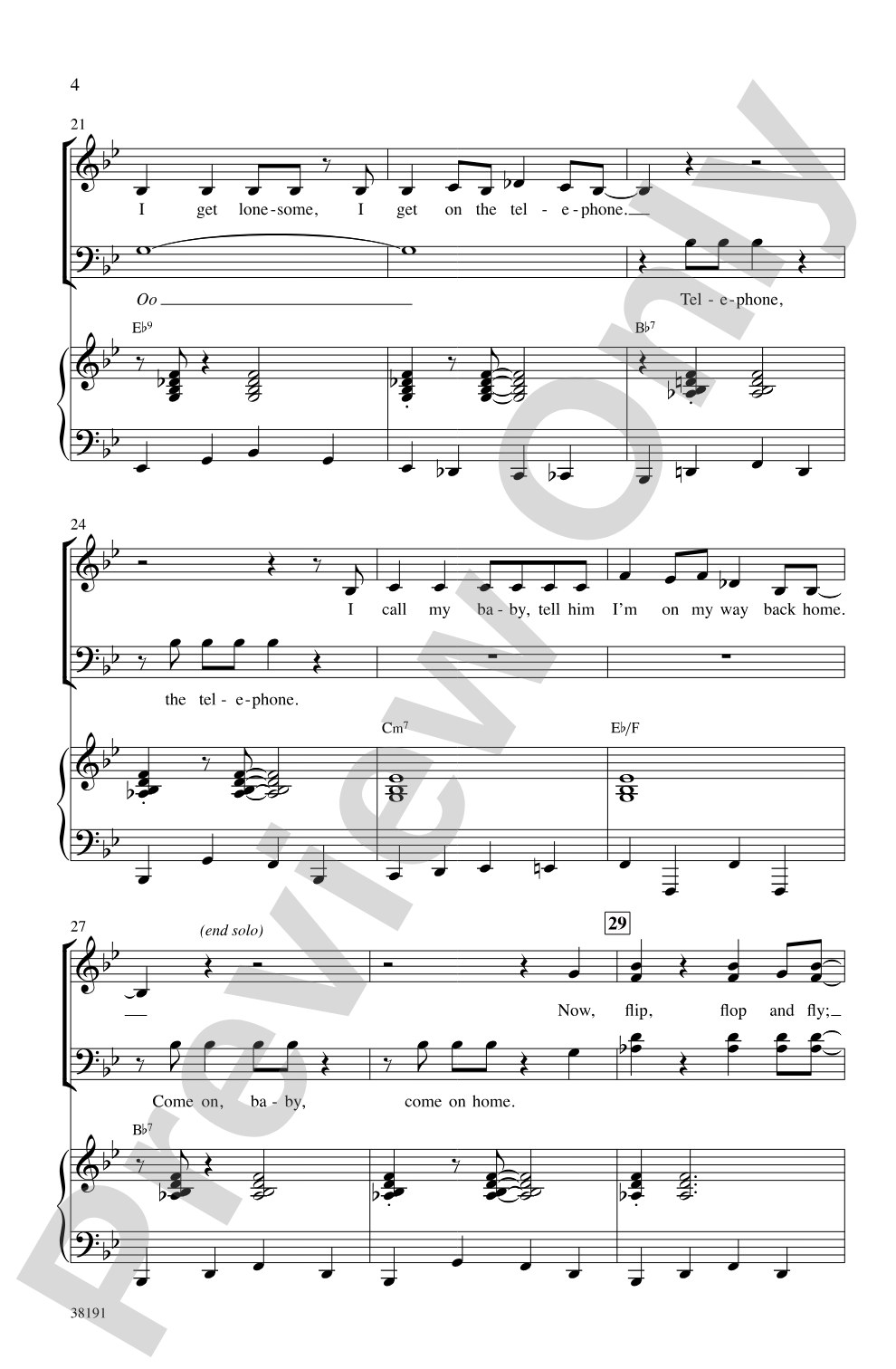

Flip, Flop and Fly: SATB Choral Octavo
Words and music by Charles Calhoun and Lou Willie Turner / arr. Jay Althouse
Item: 00-PO-0001434
$1.90
Minimum order quantity: 20 copies
One moment…
Related Items
Flip, Flop and Fly: SoundTrax Digital Audio Download |
$26.99
|
View | |
Flip, Flop and Fly: SAB Choral Octavo |
$1.90
|
View | |
Flip, Flop and Fly: SSA Choral Octavo |
$1.90
|
View | |
Flip, Flop and Fly: 2-Part Choral Octavo |
$1.90
|
View | |
Flip, Flop and Fly: Choral SoundPax |
$35.00
|
View | |
Flip, Flop and Fly: SATB Choral Octavo |
$1.90
|
View | |
Flip, Flop and Fly: SAB Choral Octavo |
$1.90
|
View | |
Flip, Flop and Fly: SSA Choral Octavo |
$1.90
|
View | |
Flip, Flop and Fly: 2-Part Choral Octavo |
$1.90
|
View | |
Flip, Flop and Fly: Choral Octavo SoundTrax CD |
$26.99
|
View | |
Flip, Flop and Fly: Choral SoundPax |
$35.00
|
View |
Description
This classic tune from the '50s has also appeared as a "Blues Brothers" classic and in the movie Chicken Run. It's kickin' again in this swingin' Althouse arrangement.


Flip, Flop and Fly: SATB Choral Octavo isn't in MakeMusic Cloud just yet...but it could be. Let us know you'd like to see it, and you'll help shape what comes next. In the meantime, start a free trial and dive into thousands of interactive titles your students can play along with today.
Request This Title
Tell us you want it.
Start Your Free Trial
Explore everything that's ready to play right now.
Sample Audio
1
Audio File
--:--
0:00
0:00
Sample Video
No sample videos found.
Additional Details
Series:
Alfred Pop Choral Series
Publisher:
Alfred Music
Page Count:
12
SKU:
00-PO-0001434
More about this title
About the Composer: Charles Calhoun
Charles Calhoun was a prolific R&B and rock and roll songwriter whose compositions became standards of early rock history. Working during the 1950s, he crafted songs that bridged blues tradition with the emerging popular music landscape, writing material recorded by artists across multiple genres. His songwriting legacy continues to resonate through covers and reinterpretations by contemporary artists.
Why we love this
Jay Althouse's arrangement captures the infectious energy of this blues-rooted tune while keeping the vocal writing accessible for mixed choirs. The swing feel and rhythmic drive make rehearsals genuinely fun, and the chart's flexibility (with optional instrumental parts) lets you shape the sound to match your ensemble's strengths. This is the kind of repertoire that reminds singers why they joined the choir.
What to expect
Swinging and playful, with the sly humor and rhythmic swagger of 1950s R&B. The piece grooves rather than swells, and singers feel the drive in their bodies as much as their voices. There's a joyful irreverence here—this is music meant to make people smile and move.
Who it's for
Mixed choirs at intermediate level and above who want to program something with infectious rhythm and immediate audience appeal. This works equally well in concert settings, pop music courses, or as a showstopper on a mixed program where you need energy and lift.
How to get the most out of it
- Lock in the rhythmic pocket early in rehearsal by isolating the rhythm section figures (bass line and drum pattern implied in the vocal parts) before adding upper lines.
- Shape the phrasing around the lyrical and rhythmic hooks rather than phrase marks; blues-based music gains authenticity when singers feel the groove rather than sing strict legit style.
- Balance the parts so the melody remains clear even in full sections; the arrangement's effectiveness depends on hearing the classic hook throughout.
- If using the recorded accompaniment, allow singers to explore their own interpretation of swing rhythms and bluesy articulation after they've internalized the basic structure.
How to use it
Program it as an intermission closer or a final selection on a concert where you want to send the audience out energized. It pairs naturally with other swing-era or pop standards and makes a memorable contrast after more formal classical repertoire. The chart's accessibility also makes it solid repertoire for community or informal concerts where repertoire needs to connect quickly.
Skills your students will build
- Swing articulation and rhythmic feel (eighth-note swing, syncopation)
- Blues-inflected phrasing and microtonal expression
- Part independence in homophonic textures with moving rhythm sections
- Balancing melodic transparency in full four-part voicings
- Interpreting groove-based rather than legit classical style