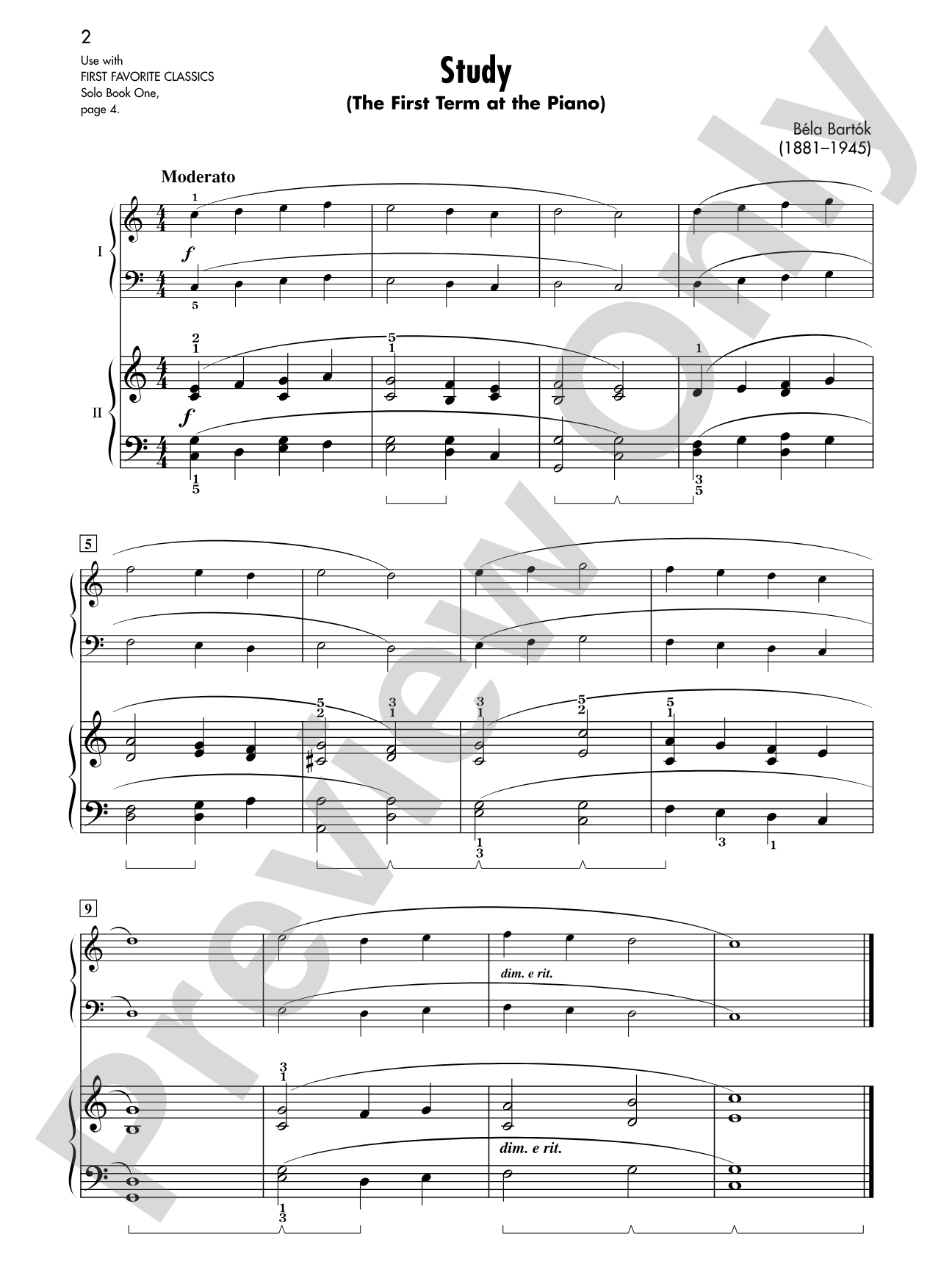
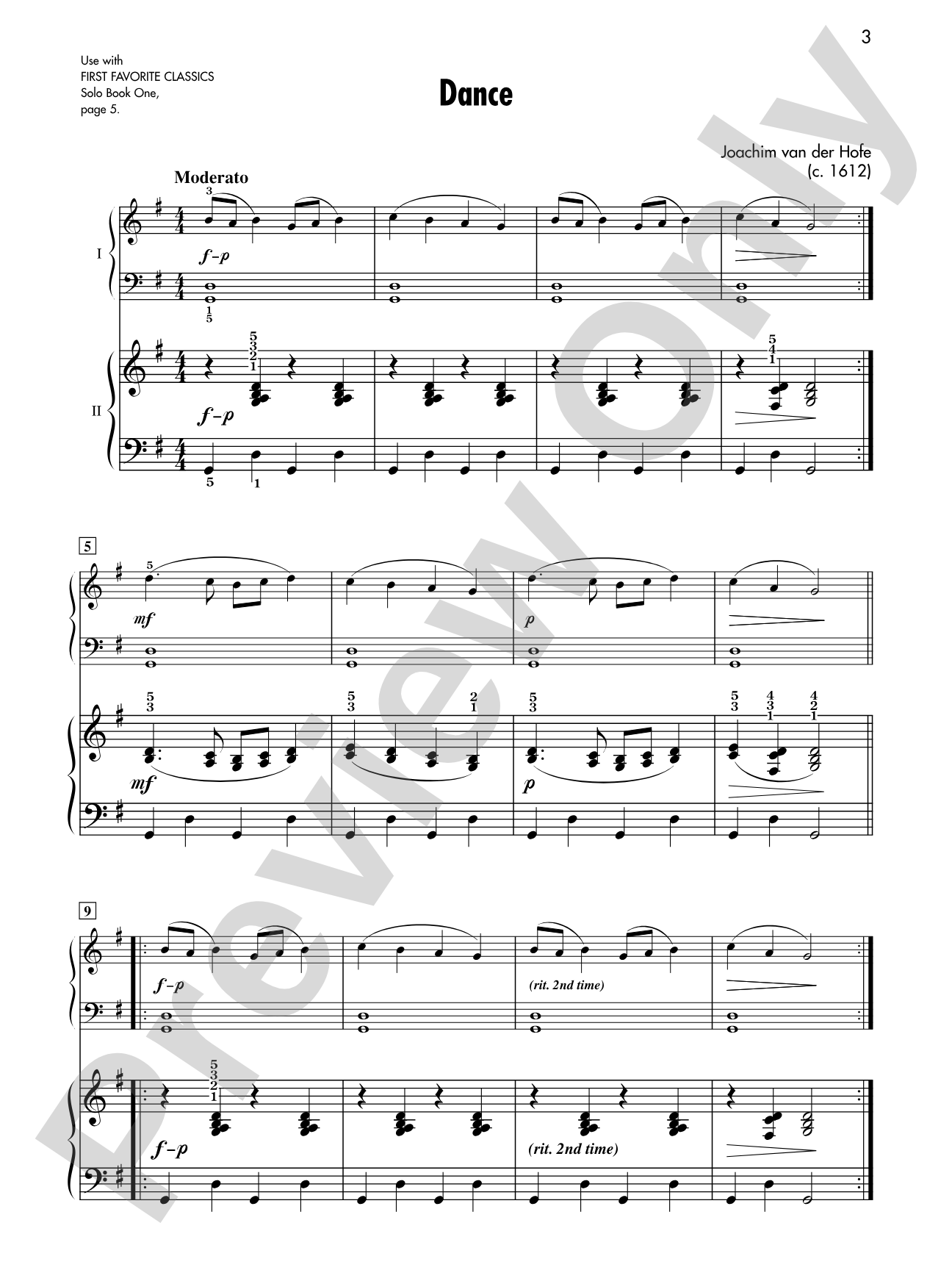
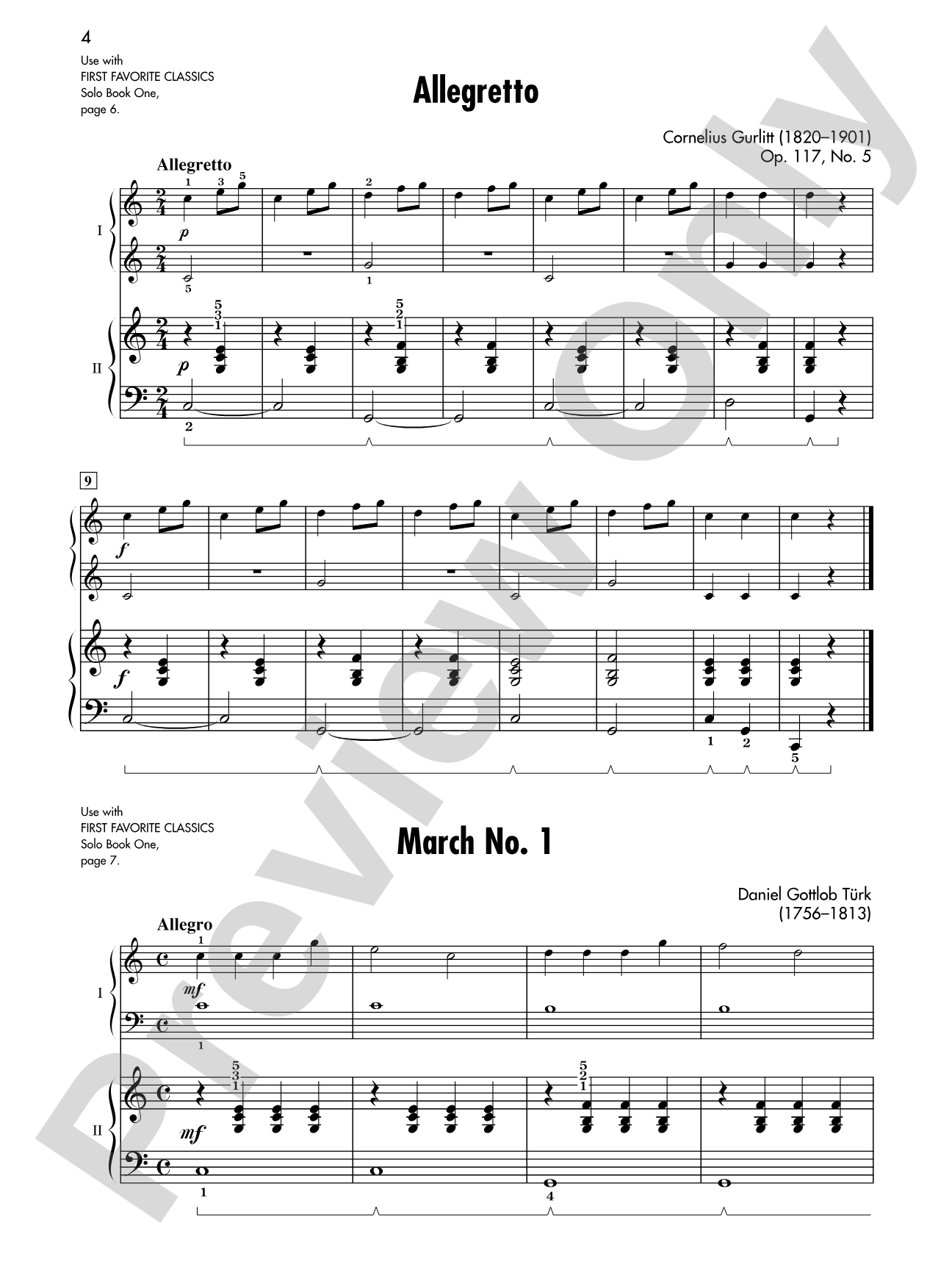
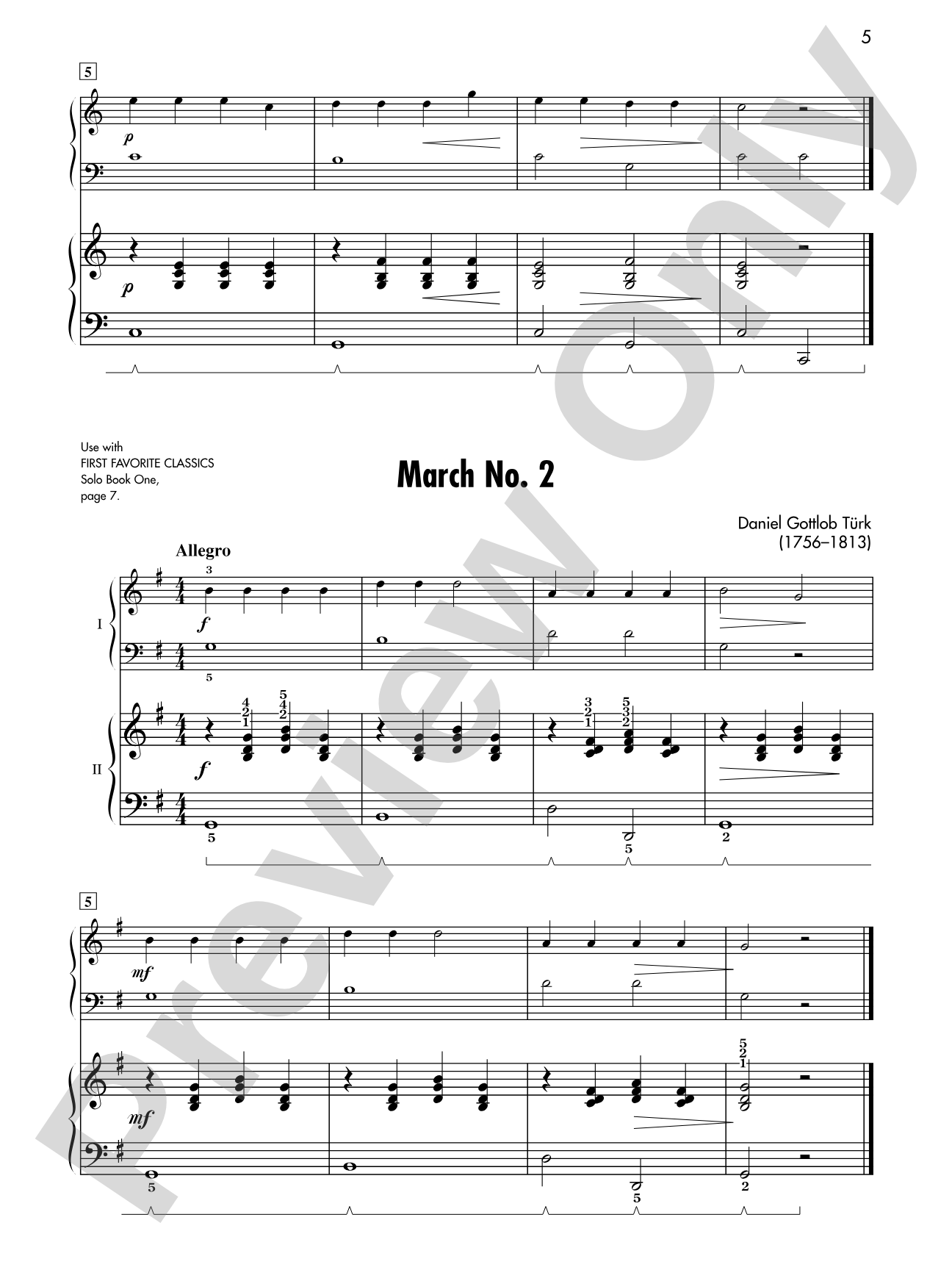
First Favorite Classics: Accompaniment, Book 1 Sheet Music Preview

First Favorite Classics: Accompaniment, Book 1: Piano

Ed. E. L. Lancaster and Kenon D. Renfrow

Level: Elementary / Late Elementary

Item: 00-PB-0000531

Digital Download
$6.99
Description
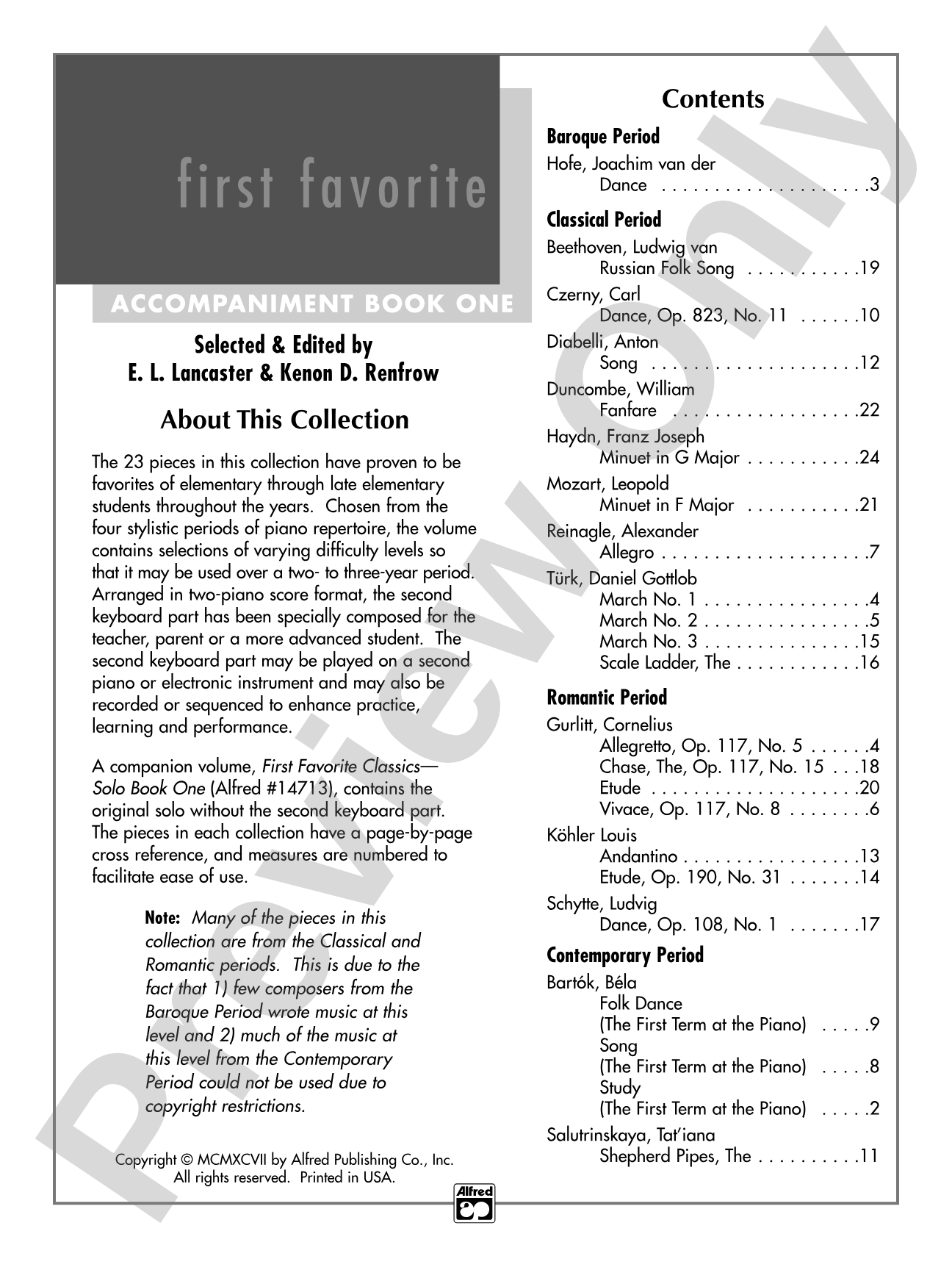
The pieces in this collection have proven to be favorites of elementary through early intermediate students throughout the years. There are 23 pieces in Book 1 and 33 in Book 2. The Accompaniment Books contain specially composed second keyboard parts for the teacher, parent or more advanced student. A Federation Festivals 2024-2028 selection.

First Favorite Classics: Accompaniment, Book 1: Piano isn't in MakeMusic Cloud just yet...but it could be. Let us know you'd like to see it, and you'll help shape what comes next. In the meantime, start a free trial and dive into thousands of interactive titles your students can play along with today.

Sample Audio
No sample audio found.
Sample Video
Additional Details
Series: Favorite Classics
Publisher: Alfred Music
Page Count: 24
SKU: 00-PB-0000531

More about this title

Why we love this

These 23 pieces give elementary and late elementary pianists genuine classical repertoire without overwhelming them. The specially composed second piano parts transform solo practice into genuine collaborative music-making, giving your more advanced students or studio teachers a meaningful role at the keyboard.

What to expect

Stepping into the living tradition of classical music. Each piece carries the weight of centuries of musical taste, yet the writing remains transparent and inviting, never condescending. There is real substance here alongside genuine accessibility.

Who it's for

Studio teachers building classical repertoire skills with elementary and late elementary pianists. Directors preparing students for solo festivals or recitals who want accompaniment support. More advanced students in a studio or school program looking for meaningful collaborative experience.

How to get the most out of it

  • Assign the accompaniment part to a student who reads fluently at or above the primary student's level; the coordination required between parts rewards careful listening and attention to pulse.
  • Use the accompaniment to establish a steady tempo when the student struggles with rhythmic consistency; the supporting keyboard part anchors the performance.
  • Record yourself playing the accompaniment and have students practice along, especially useful for students working independently between lessons.

How to use it

Program these selections for festival solo competitions where accompaniment strengthens performance and musicality. Use them in group recitals where multiple students can perform throughout the year, or schedule them as stepping stones between method book material and more substantial solo repertoire.

Skills your students will build

  • Reading and performing classical forms (minuets, marches, character pieces)
  • Coordinating rhythmic independence between right and left hand
  • Responding to an accompaniment and maintaining ensemble awareness
  • Stylistic interpretation of baroque and classical idioms
  • Sight-reading at instructional level

You May Also Like