

Fire, Fire: SSA, a cappella Choral Octavo
Music by Thomas Morley / arr. Russell Robinson
Item: 00-PO-0004316
$2.25
Minimum order quantity: 20 copies
Pickup currently not available
Description
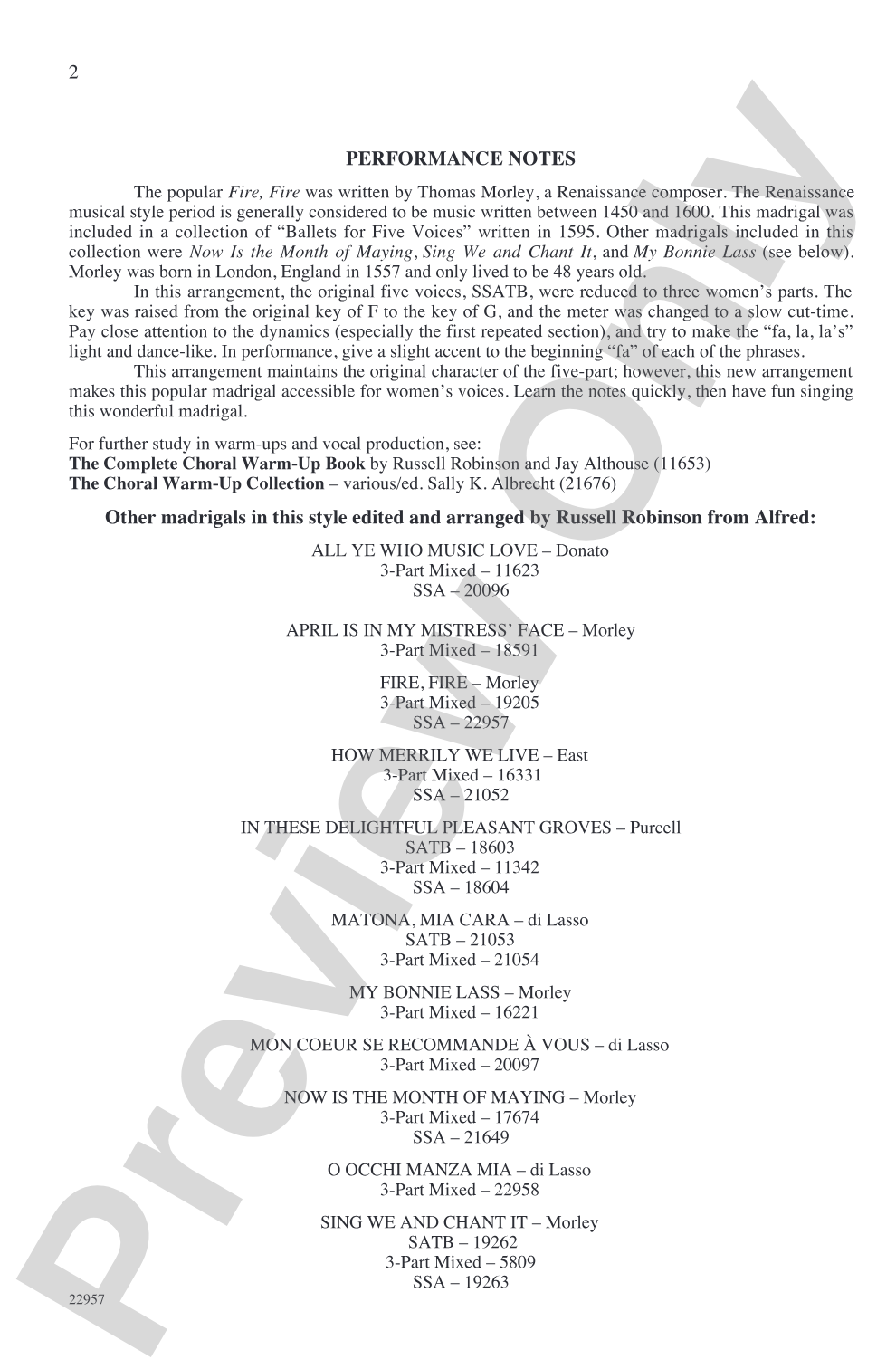
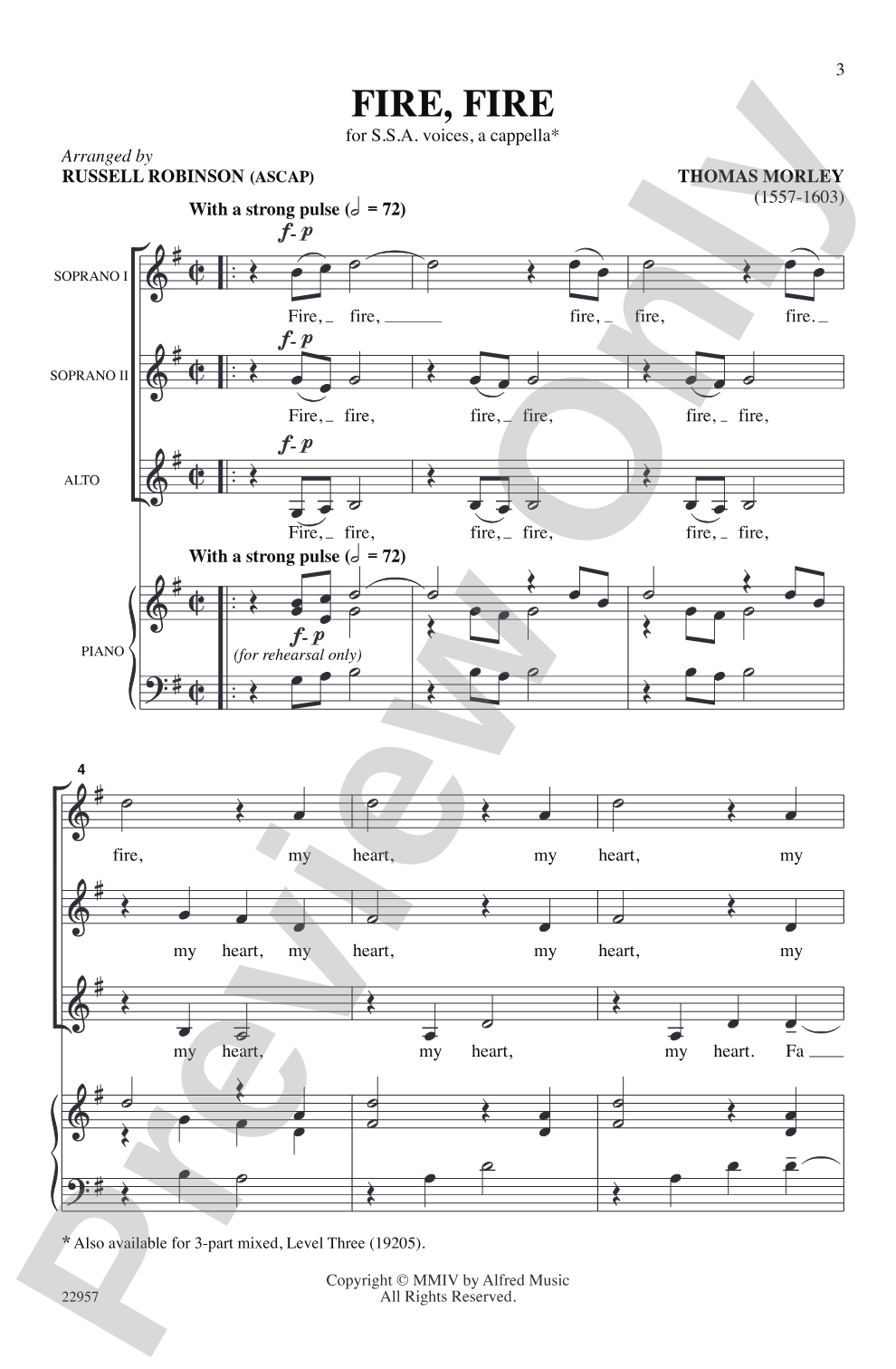
Russell Robinson has adapted one of Thomas Morley's most enduring madrigals for 3-part voices, just right for today's young and developing choirs. The new SSA arrangement sounds polished with treble voices, and in the 3-part mixed edition, the male part has a limited 5-note range...great for changing voices. A perfect first madrigal for any choir.


Fire, Fire: SSA, a cappella Choral Octavo isn't in MakeMusic Cloud just yet...but it could be. Let us know you'd like to see it, and you'll help shape what comes next. In the meantime, start a free trial and dive into thousands of interactive titles your students can play along with today.
Request This Title
Tell us you want it.
Start Your Free Trial
Explore everything that's ready to play right now.
Sample Audio
1
Audio File
--:--
0:00
0:00
Sample Video
No sample videos found.
Additional Details
Series:
Alfred Archive Edition: Alfred Choral Designs
Publisher:
Alfred Music
Page Count:
12
SKU:
00-PO-0004316
More about this title
About the Composer: Thomas Morley
Thomas Morley (1557-1602) was an English composer and music theorist who shaped the development of the English madrigal during its golden age. He served as a gentleman of the Chapel Royal and was granted a monopoly on music printing in England, positions that reflect his prominence in late Renaissance musical life. Morley's madrigals and secular vocal works remain touchstones of the period, prized for their expressive text-painting, rhythmic vitality, and accessibility to singers of varying abilities.
Why we love this
Russell Robinson's SSA adaptation preserves what makes this madrigal so rewarding to sing while making it genuinely singable for developing choirs. The treble voicing sits naturally for young singers, and Robinson's thoughtful arranging maintains Morley's harmonic character without requiring advanced vocal technique. This is the kind of piece that builds a choir's confidence with real Renaissance literature.
What to expect
Energetic and conversational. The text-painting crackles with energy, and the interplay between voices feels like a musical conversation rather than a formal composition. There's joy in the simplicity and directness of the writing.
Who it's for
Young and developing choirs seeking their first madrigal experience. The SSA voicing makes it accessible for treble-heavy ensembles, while the limited range in the male part of the mixed edition supports singers with changing voices.
How to get the most out of it
- Shape the phrases through vowel color rather than dynamic swells; let the text and harmony carry expression across the a cappella texture
- Establish clear articulation at the beginning so the madrigal's dialogue and imitation come through without sounding muddled
- Approach the SSA voicing as equal partners; resist the temptation to highlight the top line, which will deepen the sense of ensemble
How to use it
Program this as a bridge between unison or two-part work and more complex polyphonic literature. It works well in a concert celebrating Renaissance music or as part of a program exploring secular vocal traditions. The piece also shines in a festival or contest setting where it represents genuine musicianship without overwhelming younger singers.
Skills your students will build
- Reading three independent melodic lines simultaneously
- Sustaining intonation in a cappella singing across changing harmonic contexts
- Text-painting and interpretive choices in Renaissance music
- Ensemble listening and blend within a treble voicing