

Fire, Fire: 3-Part Mixed, a cappella Choral Octavo
Music by Thomas Morley / arr. Russell Robinson
Item: 00-PO-0004139
$2.25
Minimum order quantity: 20 copies
Pickup currently not available
Description
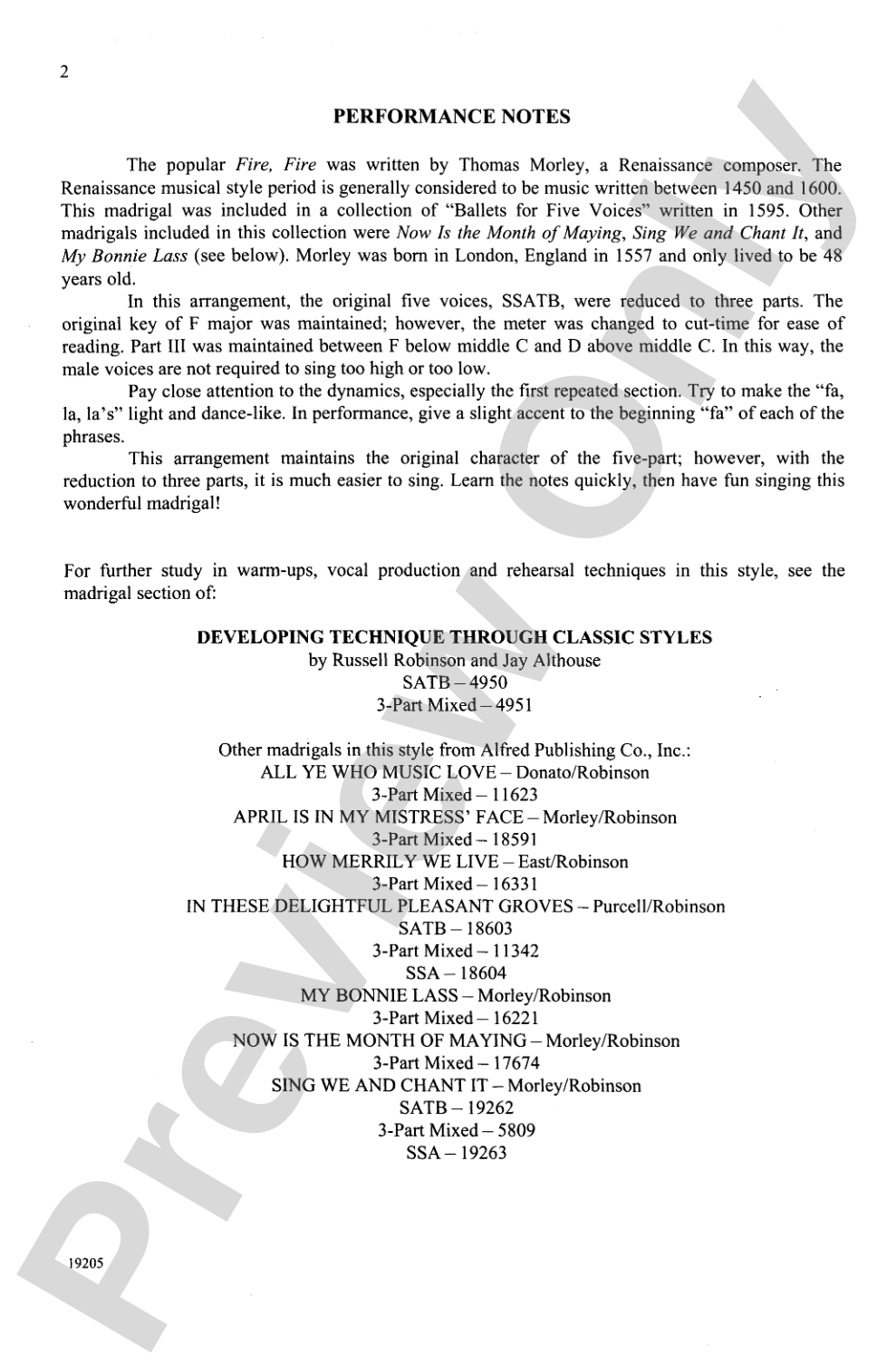
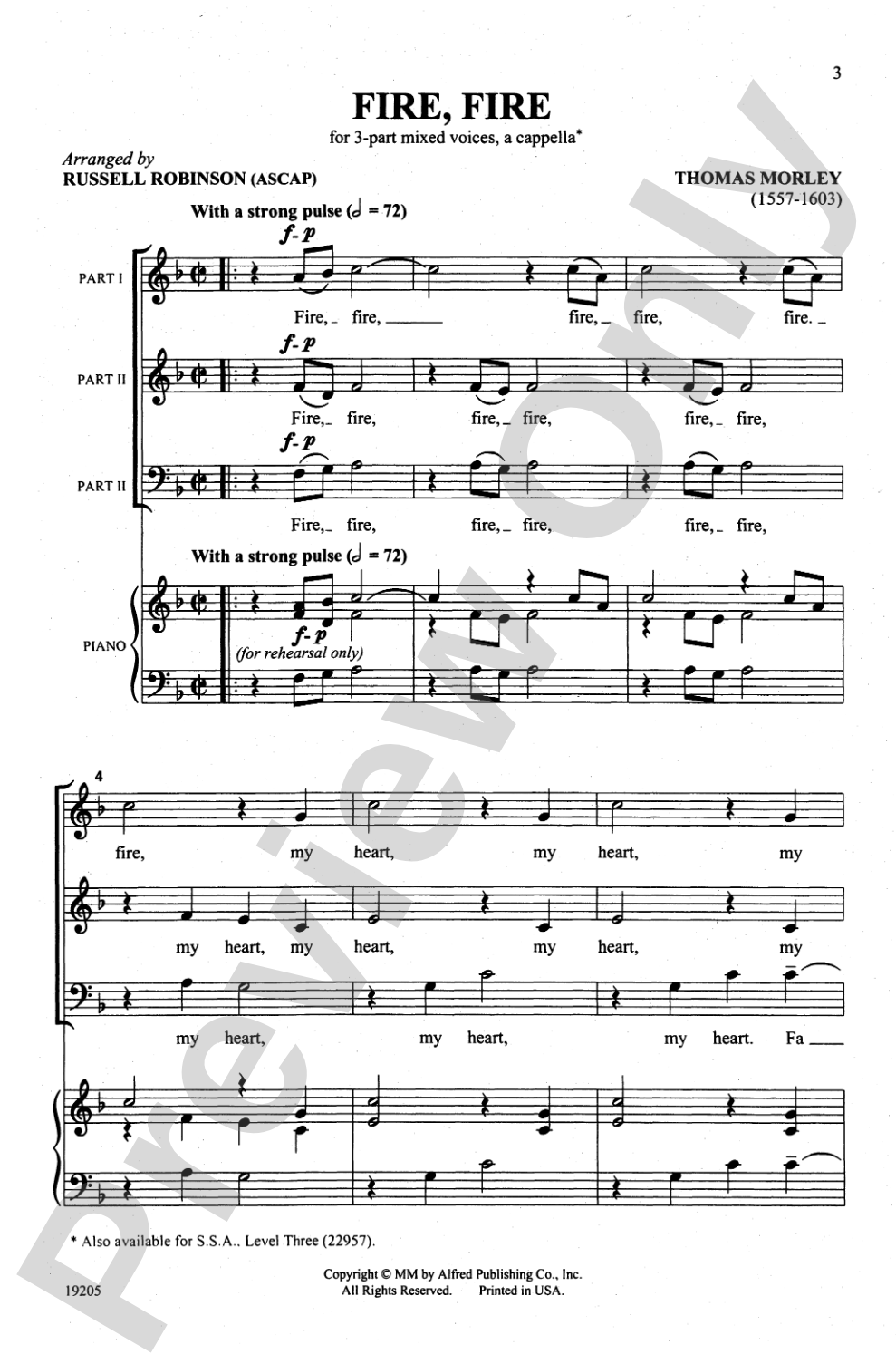
Russell Robinson has adapted one of Thomas Morley's most enduring madrigals for 3-part voices, just right for today's young and developing choirs. The male part has a limited, 5-note range...great for changing voices. The independent vocal lines make it an excellent learning piece and a perfect "first madrigal" for any choir. Carefully tailored to the needs of middle school and junior high singers.


Fire, Fire: 3-Part Mixed, a cappella Choral Octavo isn't in MakeMusic Cloud just yet...but it could be. Let us know you'd like to see it, and you'll help shape what comes next. In the meantime, start a free trial and dive into thousands of interactive titles your students can play along with today.
Request This Title
Tell us you want it.
Start Your Free Trial
Explore everything that's ready to play right now.
Sample Audio
1
Audio File
--:--
0:00
0:00
Sample Video
No sample videos found.
Additional Details
Series:
Alfred Archive Edition: Alfred Choral Designs
Publisher:
Alfred Music
Page Count:
12
SKU:
00-PO-0004139
More about this title
About the Composer: Thomas Morley
Thomas Morley (1557-1602) was among the most prolific and inventive English composers of the Renaissance, leaving a legacy that shaped secular vocal music for generations. His madrigals stand out for their rhythmic vitality, expressive text-painting, and the way they balance accessibility with musical sophistication, making them enduring choices for choral education.
Why we love this
Robinson's arrangement honors Morley's gift for catchy, singable melodies while solving a real classroom problem: how to teach madrigal style to singers whose ranges and voice maturity don't yet match the original four-part version. The 5-note male part frees changing voices from anxiety and lets everyone focus on independent lines, text clarity, and ensemble blend. Young singers gain genuine exposure to a masterwork, not a simplified substitute.
What to expect
Playful and energetic, with the rhythmic drive characteristic of Morley's style. The independent lines create a conversation between voices that feels fresh and engaging rather than heavy, inviting singers to listen to each other and respond with precision and personality.
Who it's for
Middle school and junior high choirs seeking their first madrigal experience will find an entry point that feels neither watered down nor overwhelming. The arrangement is equally valuable for developing high school choirs or adult groups looking for accessible Renaissance repertoire that builds vocal independence without requiring soloistic maturity.
How to get the most out of it
- Emphasize clarity of diction across all three parts; the independent lines will only shine when each word lands crisply and the text drives the phrasing.
- Shape each vocal line as a melody first, resisting the urge to lock into harmony. These parts were written to dance around each other, not to support a bass line.
- Balance the voices so no single part dominates; in madrigals, the interest lives in the interplay between lines rather than a hierarchical blend.
How to use it
Schedule this as a concert centerpiece when you want to showcase your choir's growth toward independence and musicality. It pairs beautifully with other secular Renaissance works or as a contrasting neighbor to spiritual music, and it works equally well in a festival setting where judges appreciate hearing young singers tackle genuine historical repertoire.
Skills your students will build
- Reading independent vocal lines and maintaining part integrity in ensemble
- Text-painting and expressive phrasing in secular Renaissance style
- Diction and articulation in English text
- Listening and blending across three distinct melodic voices
- Understanding madrigal form and its harmonic language