

Finding You Here: Jazz Ensemble Conductor Score & Parts
By Erik Morales
Grade: 1.5
Item: 98-DJE4116
$45.00
Pickup currently not available
Buy Extra Parts (Digital PDF Download)
| Product | Price | Quantity |
|---|---|---|
| Finding You Here: Score | $5.00 | |
| Finding You Here: Alto Sax 1 | $7.00 | |
| Finding You Here: Alto Sax 2 | $7.00 | |
| Finding You Here: Tenor Sax 1 | $7.00 | |
| Finding You Here: Opt. Tenor Sax 2 | $7.00 | |
| Finding You Here: Opt. Baritone Sax | $7.00 | |
| Finding You Here: Trumpet 1 | $7.00 | |
| Finding You Here: Trumpet 2 | $7.00 | |
| Finding You Here: Opt. Trumpet 3 | $7.00 | |
| Finding You Here: Opt. Trumpet 4 | $7.00 | |
| Finding You Here: Trombone 1 | $7.00 | |
| Finding You Here: Opt. Trombone 2 | $7.00 | |
| Finding You Here: Opt. Trombone 3 | $7.00 | |
| Finding You Here: Opt. Trombone 4 | $7.00 | |
| Finding You Here: Guitar Chord Guide | $7.00 | |
| Finding You Here: Guitar | $7.00 | |
| Finding You Here: Piano | $7.00 | |
| Finding You Here: Bass | $7.00 | |
| Finding You Here: Drum Set | $7.00 | |
| Finding You Here: Alternate C Flute | $7.00 | |
| Finding You Here: Alternate F Horn | $7.00 | |
| Finding You Here: Alternate Baritone T.C. | $7.00 |
Parts Added to Cart!
Description
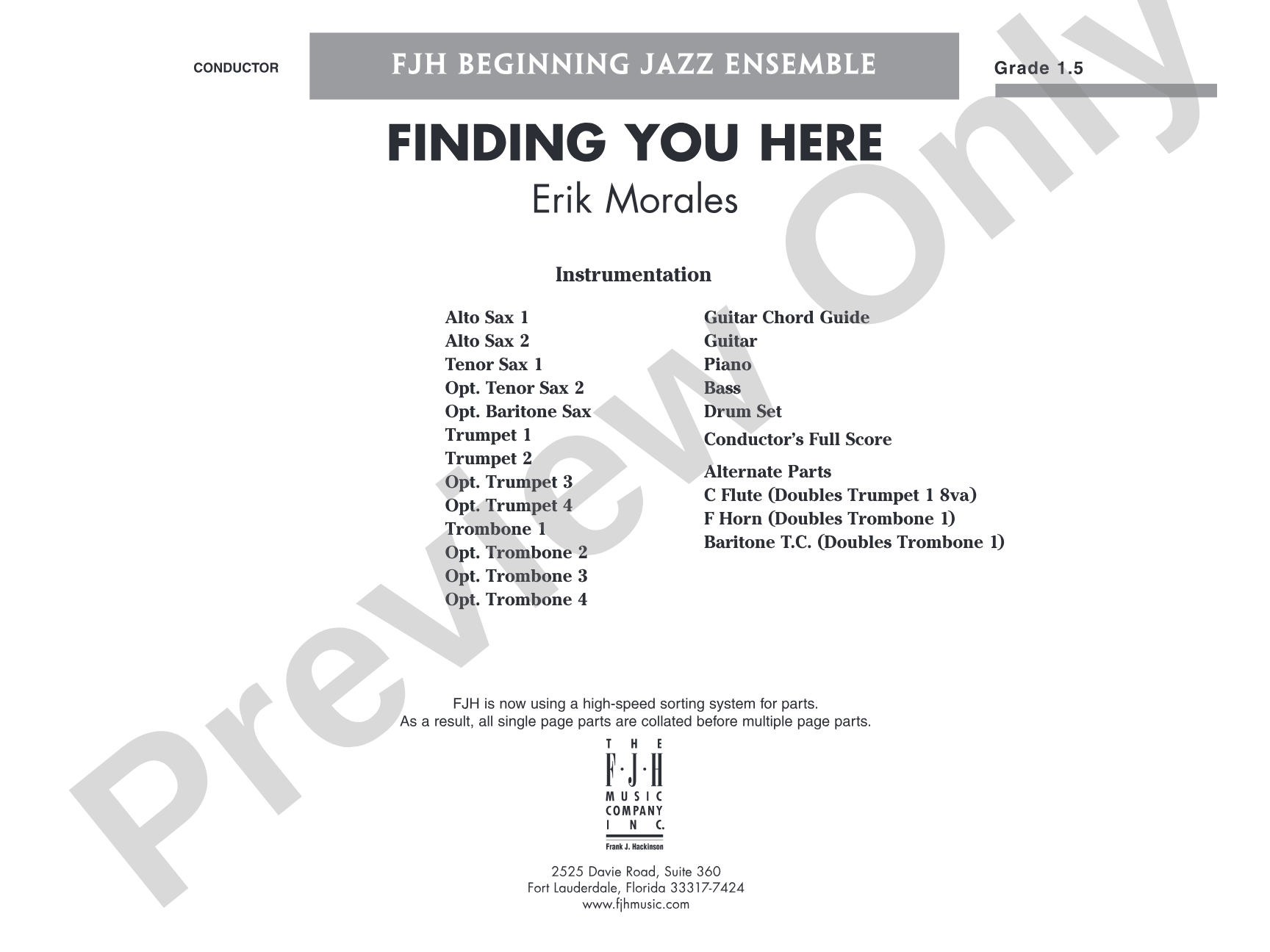
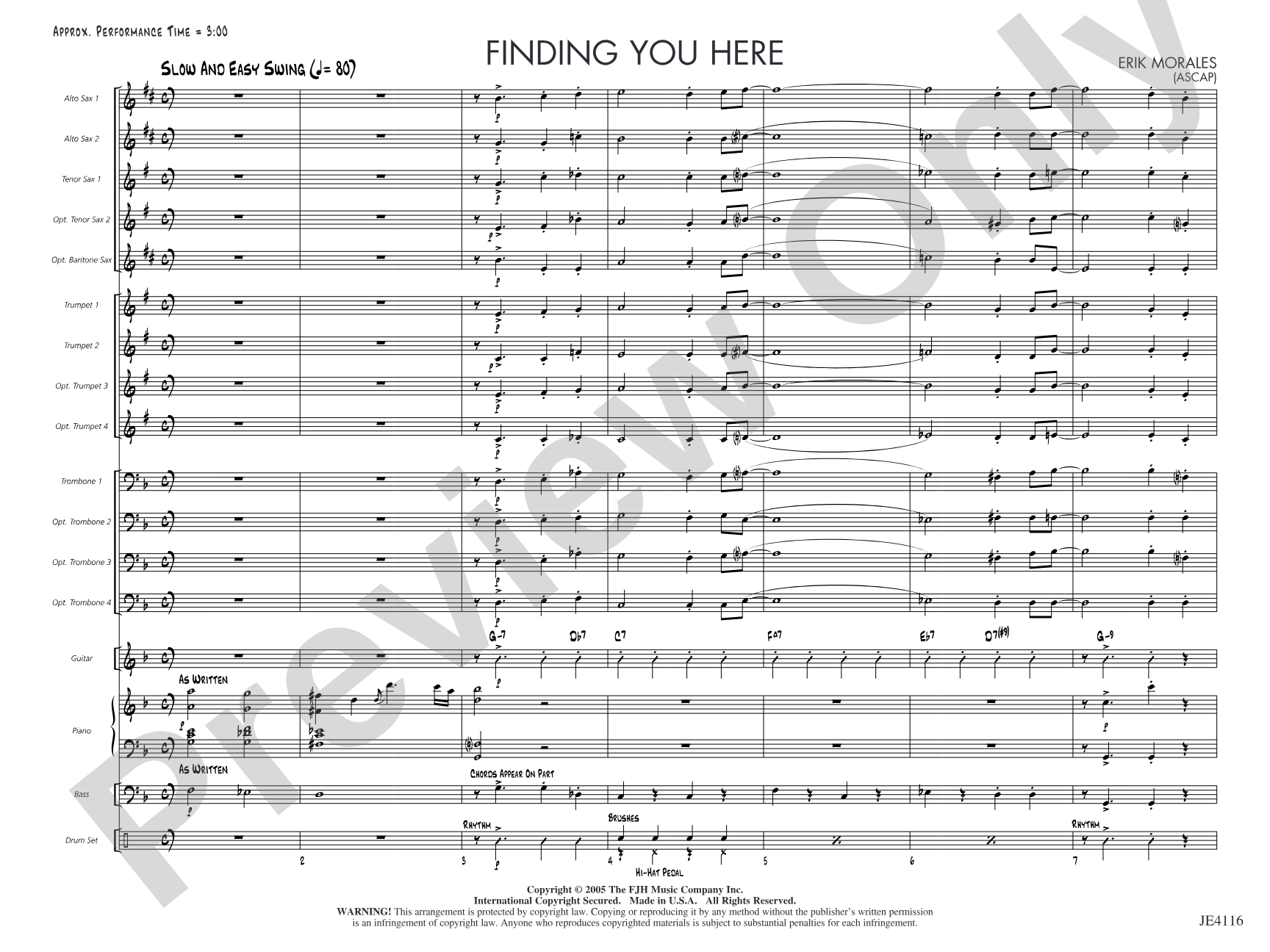
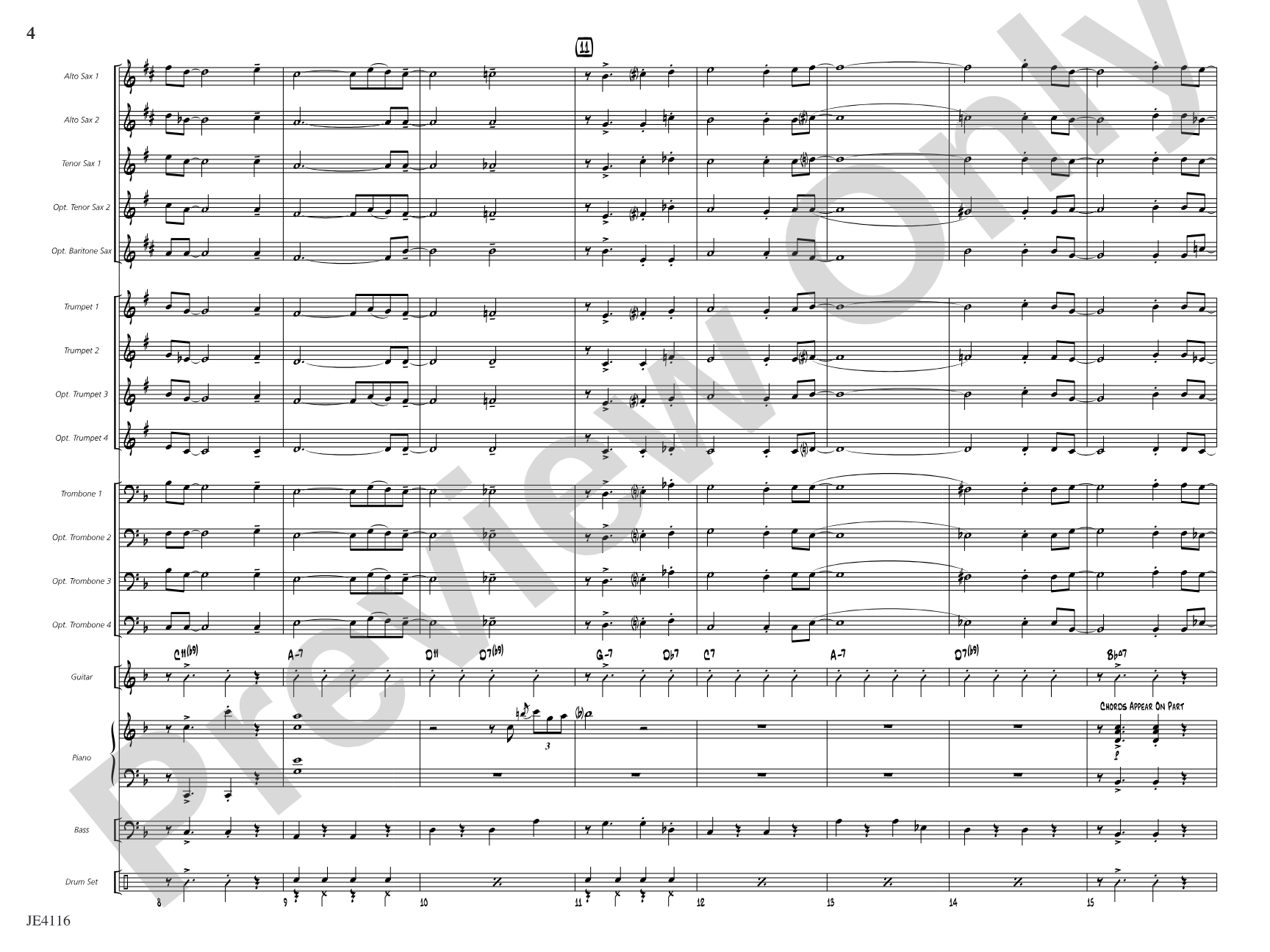
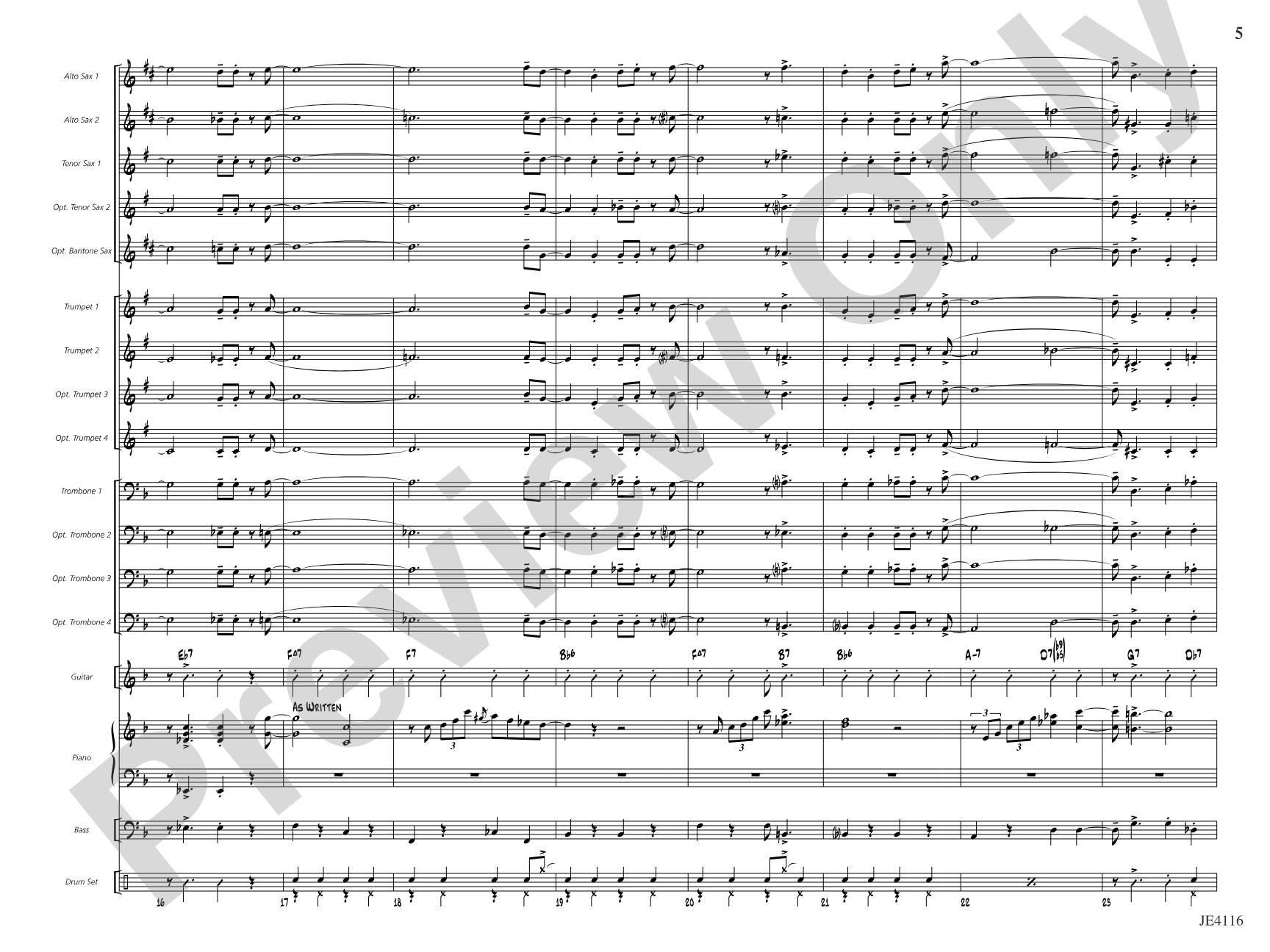
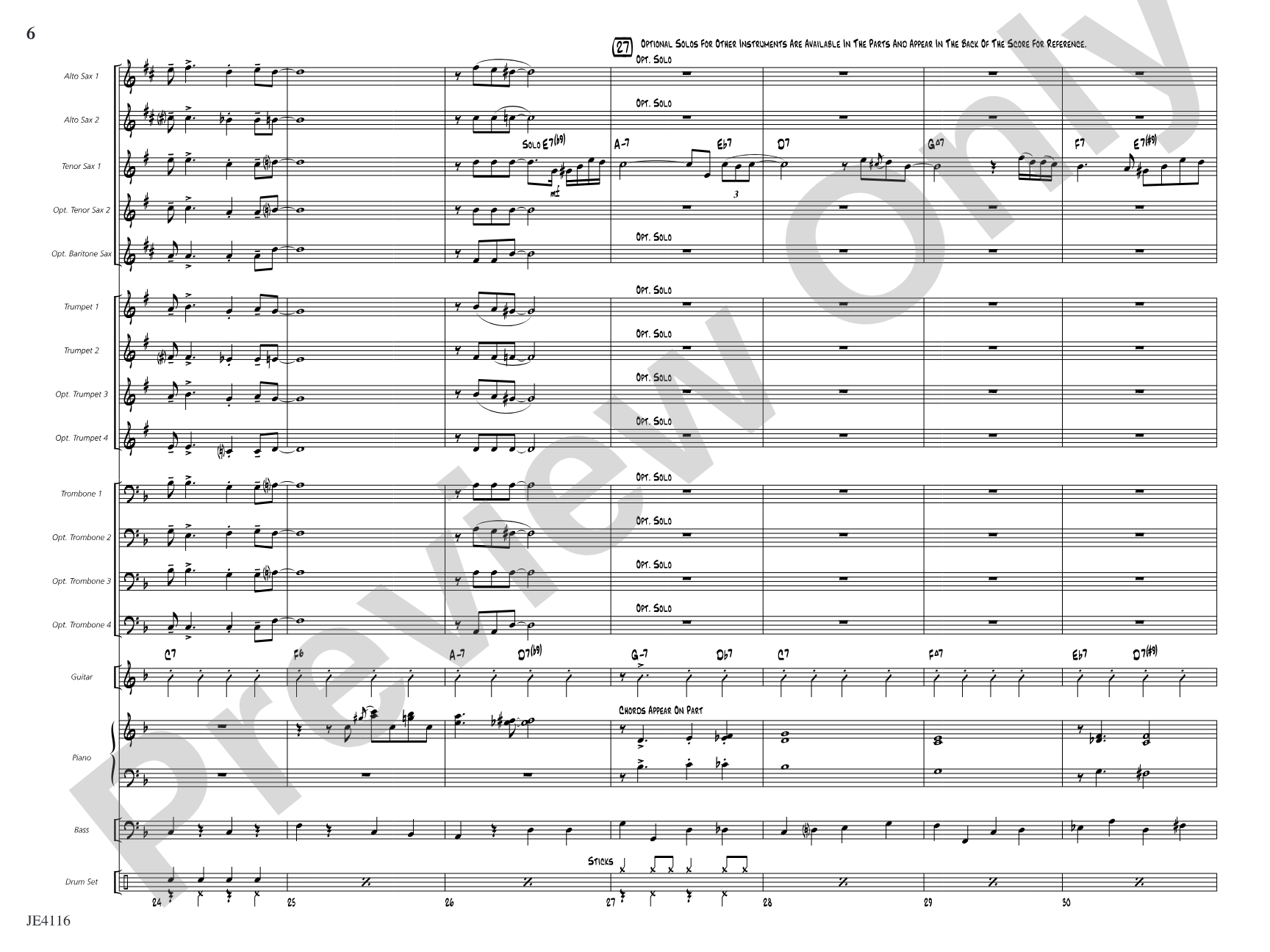
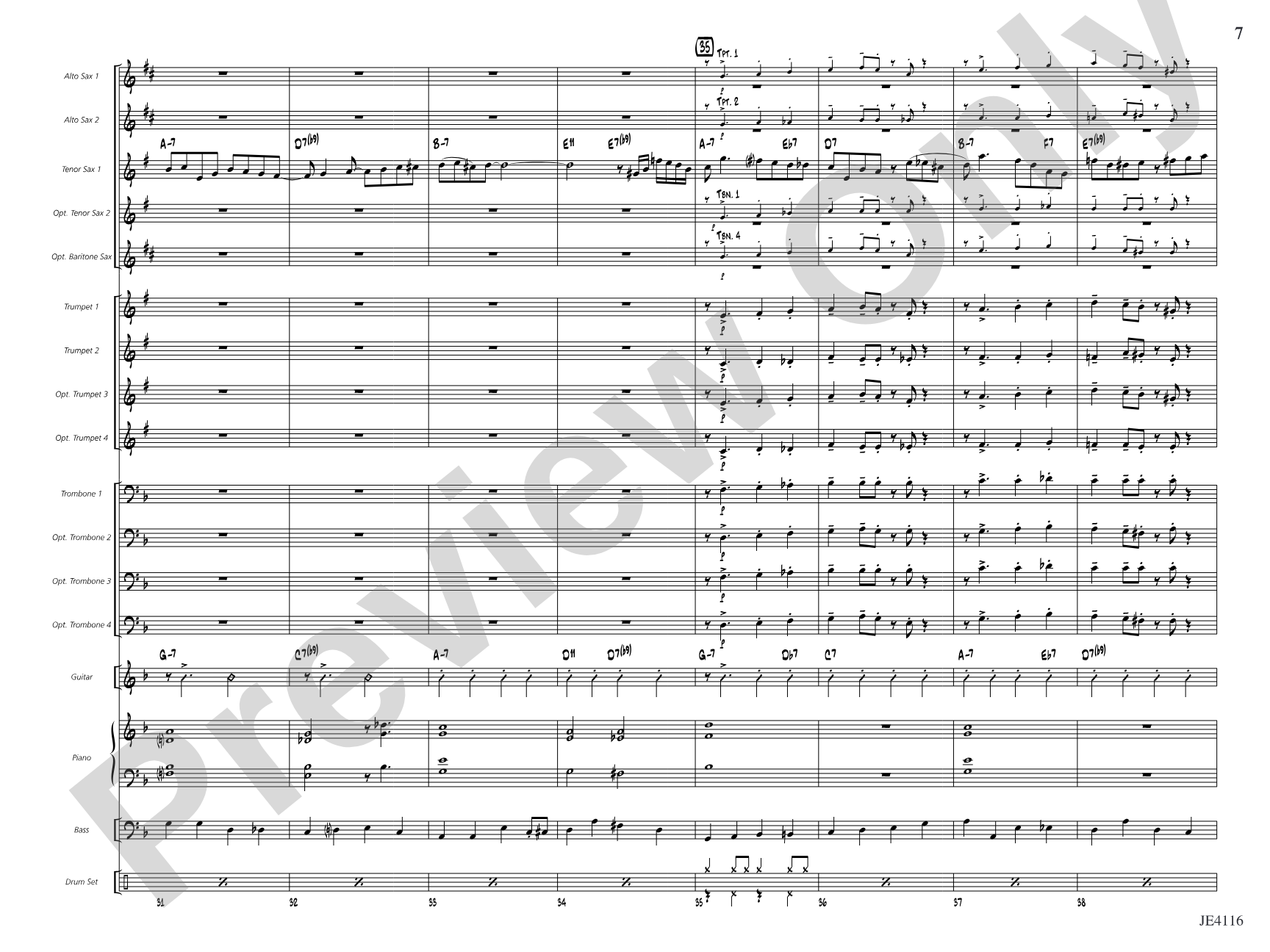
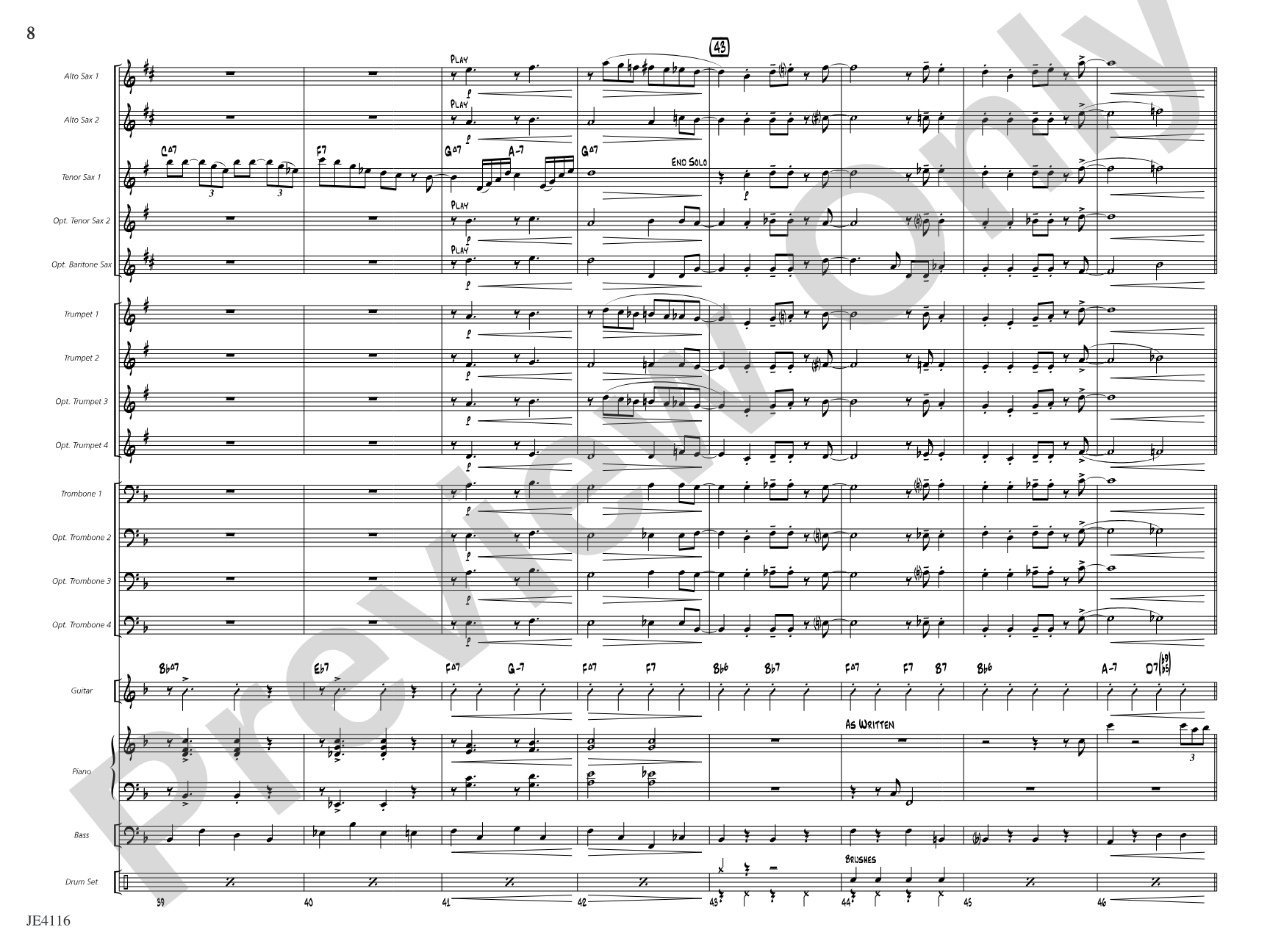
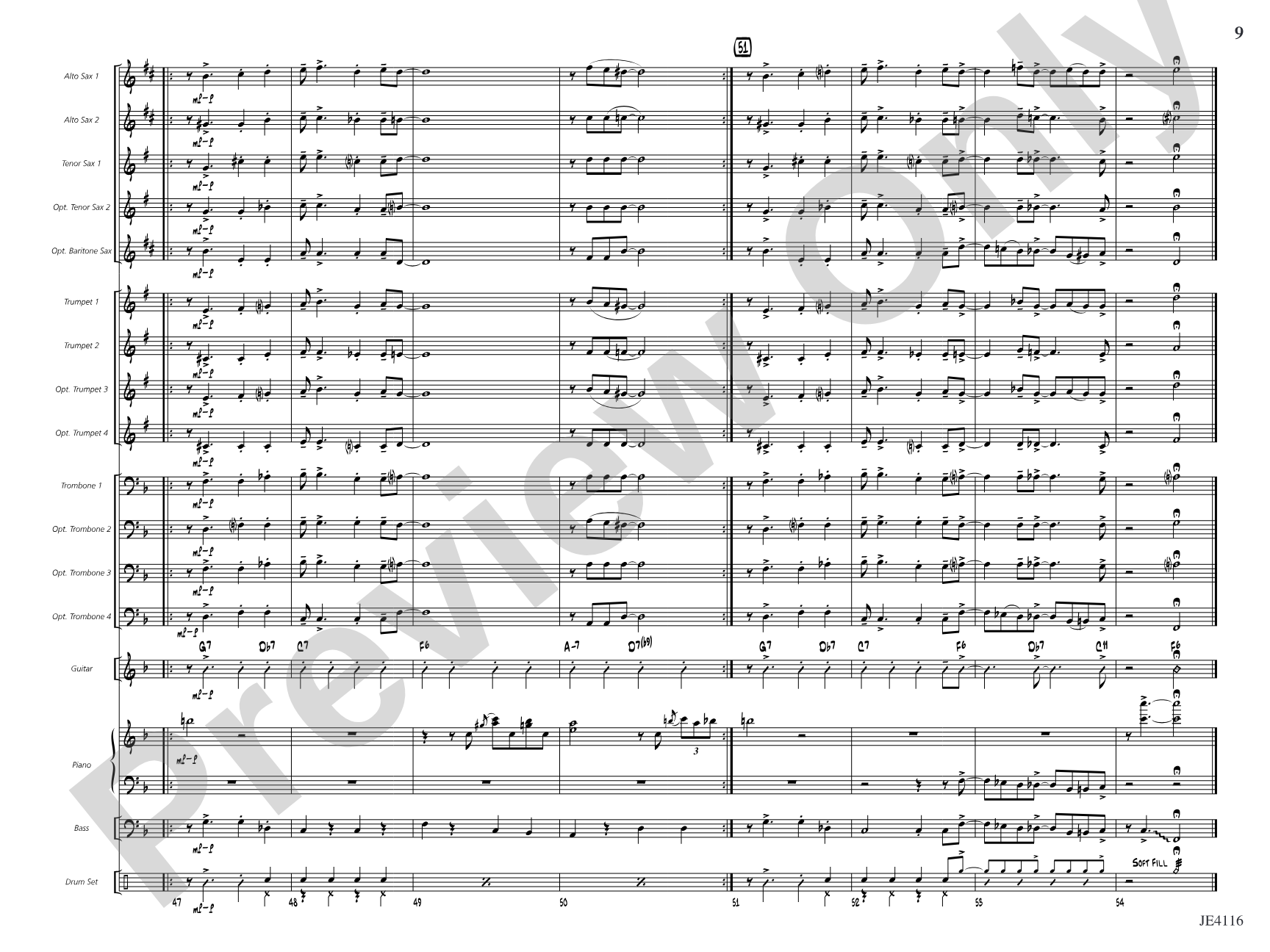
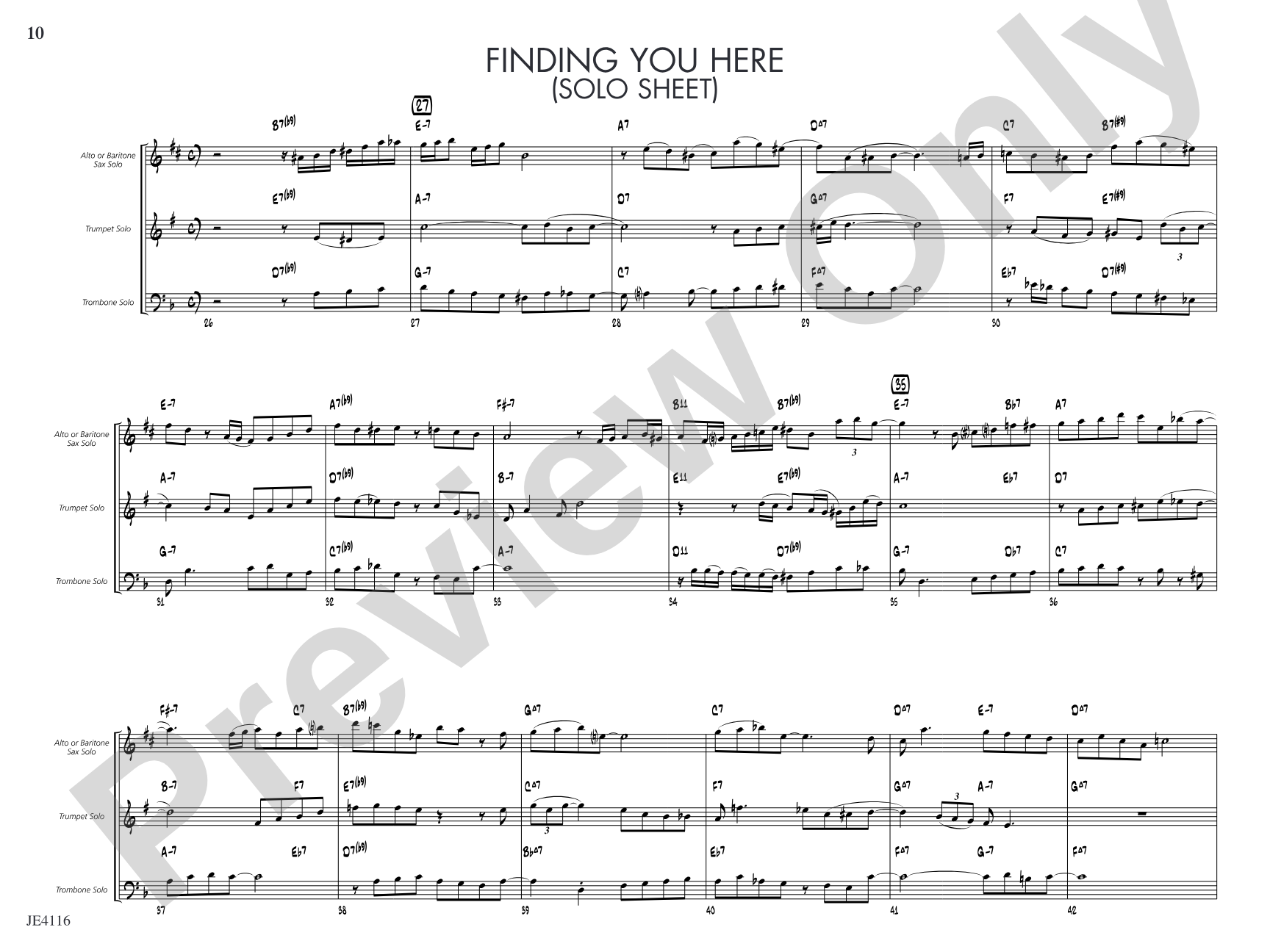
This easy swing ballad pays homage to the great Neal Hefti and his classic Li'l Darlin', which was written for the Count Basie Orchestra and is now standard repertoire in the big band genre. There is plenty of ensemble work, along with a great written tenor sax solo (also with chord symbols). For greater performance flexibility, an optional solo sheet is included for other instruments as well. A great vehicle for teaching the most basic elements of jazz in a musical setting!


Finding You Here: Jazz Ensemble Conductor Score & Parts isn't in MakeMusic Cloud just yet...but it could be. Let us know you'd like to see it, and you'll help shape what comes next. In the meantime, start a free trial and dive into thousands of interactive titles your students can play along with today.
Request This Title
Tell us you want it.
Start Your Free Trial
Explore everything that's ready to play right now.
Sample Audio
1
Audio File
--:--
0:00
0:00
Sample Video
No sample videos found.
Additional Details
Series:
FJH Beginning Jazz Ensemble
Publisher:
The FJH Music Company, Inc.
SKU:
98-DJE4116
More about this title
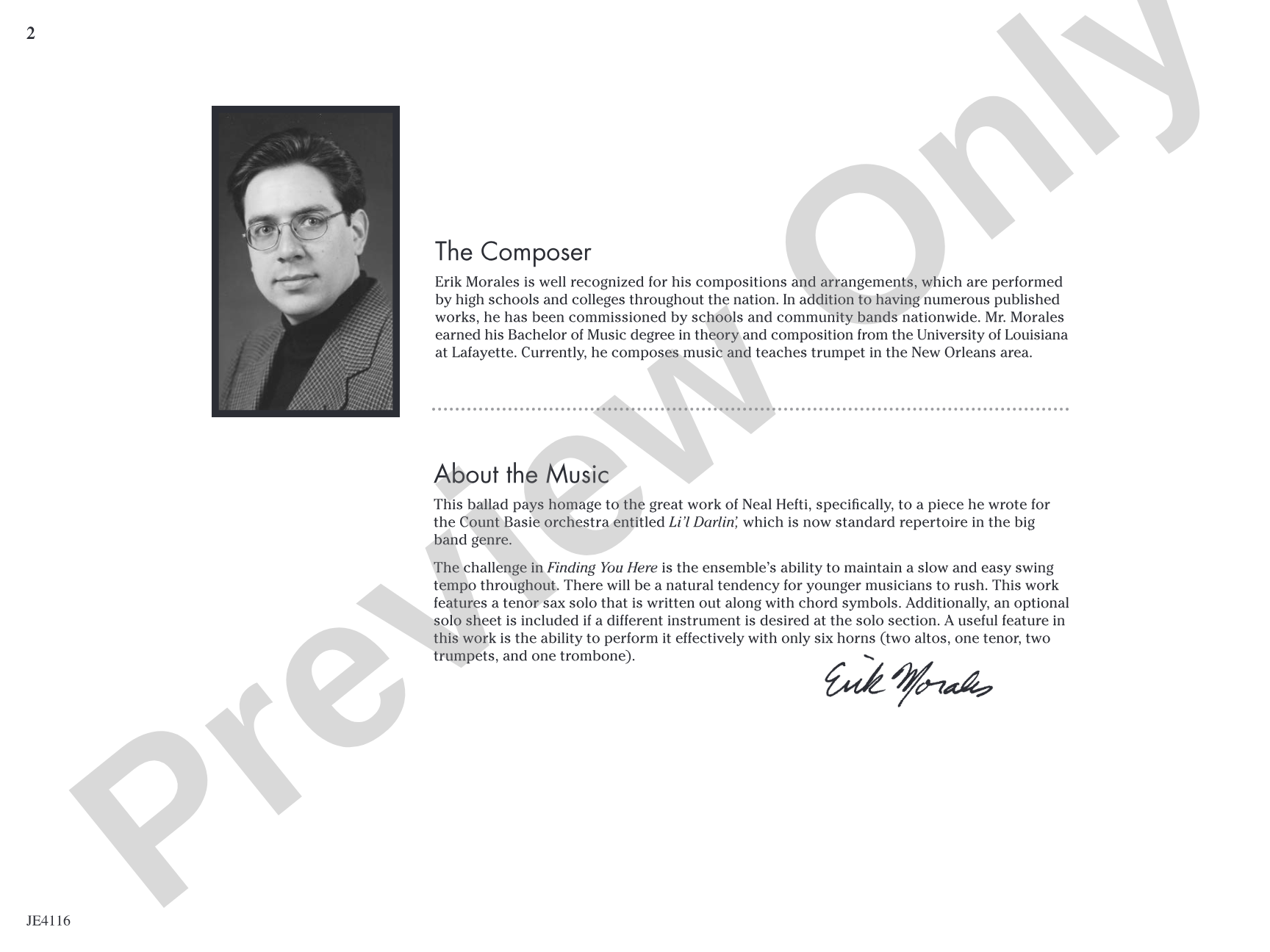
About the Composer: Erik Morales

Erik Morales grew up in New York City and began composing during his high school years in south Florida, when his band director first invited him to arrange for the marching ensemble in 1985. That early opportunity launched a prolific career spanning classical, jazz, and commercial music; he holds degrees from Florida International University and the University of Louisiana, Lafayette, and has maintained a steady presence in educational music publishing since 2002.
With over 150 published works to his name, Morales has built a reputation for blending artistic integrity with pedagogical clarity. His trumpet writing has earned recognition at national competitions, and his Concerto for Trumpet in C premiered at the 2009 International Trumpet Guild conference. In 2016, he was inducted into the Louisiana Association for Jazz Education's Hall of Fame, cementing his influence across multiple musical genres and educational settings.
Why we love this
Morales channels the spirit of Neal Hefti's orchestration without pastiche, building this ballad around genuine pedagogical moments. The written tenor solo gives students a concrete model of jazz phrasing and articulation, while the included optional part extends the piece beyond a single soloist and opens the door for rotation and ensemble participation.
What to expect
A warm, unhurried ballad that breathes with classic big band sophistication. The melody unfolds with the ease of a standard, supported by straightforward harmonic writing that lets young musicians hear how swing rhythm and jazz phrasing work in a real musical context.
Who it's for
Beginning jazz ensemble directors looking for accessible, musically legitimate repertoire that teaches foundational concepts without talking down to students. This works equally well for groups just starting jazz as for experienced ensembles wanting a shorter, confidence-building addition to a program.
How to get the most out of it
- Balance the written tenor line so it sings without overpowering the ensemble; this isn't a feature but a conversation between soloists and the band.
- Keep the swing feel relaxed and grounded. The rhythm section should lock the groove first before worrying about dynamics or expression.
- Encourage the soloist to listen to Li'l Darlin' recordings to absorb the harmonic language and phrasing conventions of that tradition.
- Use the optional solo parts as a teaching tool: rotate different instruments through the solo section to show how melody adapts across the range and character of different instruments.
How to use it
Program this early in the concert or rehearsal schedule as a palate cleanser between heavier jazz pieces, or use it as an opening number to set a cool, inviting tone. It pairs naturally with uptempo swingers and allows your group to demonstrate range without requiring the technical demands of bebop or complex ensemble writing.
Skills your students will build
- Reading and interpreting jazz articulation marks and phrasing conventions
- Playing swing eighth notes and triplet-based rhythms
- Understanding chord symbol notation and changes
- Listening and responding to ensemble balance in a small-group setting
- Approaching written solo passages with musicality and shape