

Fill the World with Music: SATB Choral Octavo
Words and music by David Waggoner
Item: 00-PO-0006653
$2.05
Minimum order quantity: 20 copies
Pickup currently not available
Related Items
Fill the World with Music: PianoTrax Digital Audio Download |
$9.99
|
View | |
Fill the World with Music: 3-Part Mixed / SAB Choral Octavo |
$2.05
|
View | |
Fill the World with Music: 2-Part Choral Octavo |
$2.05
|
View | |
Fill the World with Music: SATB Choral Octavo |
$2.05
|
View | |
Fill the World with Music: 3-Part Mixed / SAB Choral Octavo |
$2.05
|
View | |
Fill the World with Music: 2-Part Choral Octavo |
$2.05
|
View |
Description
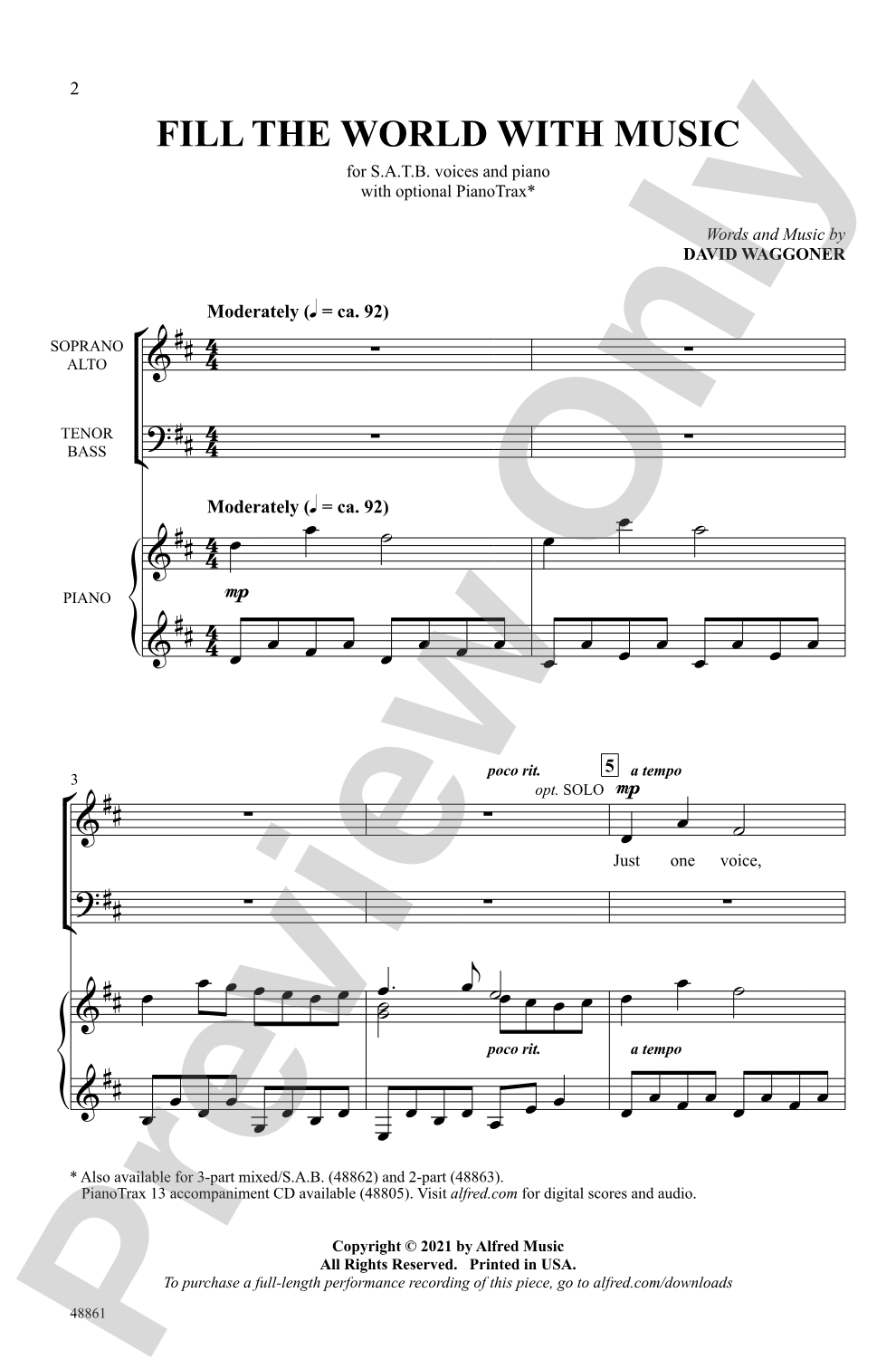
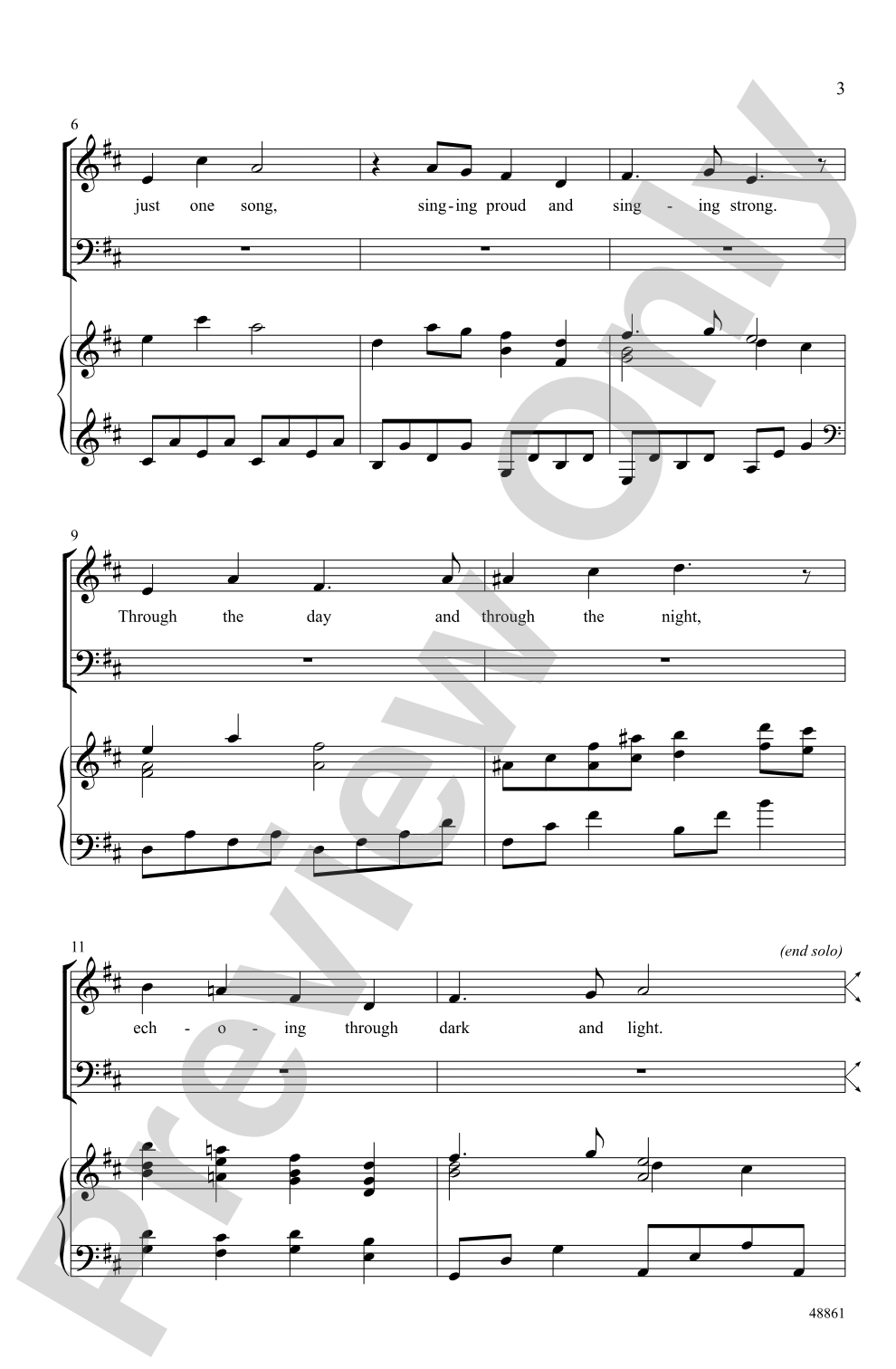
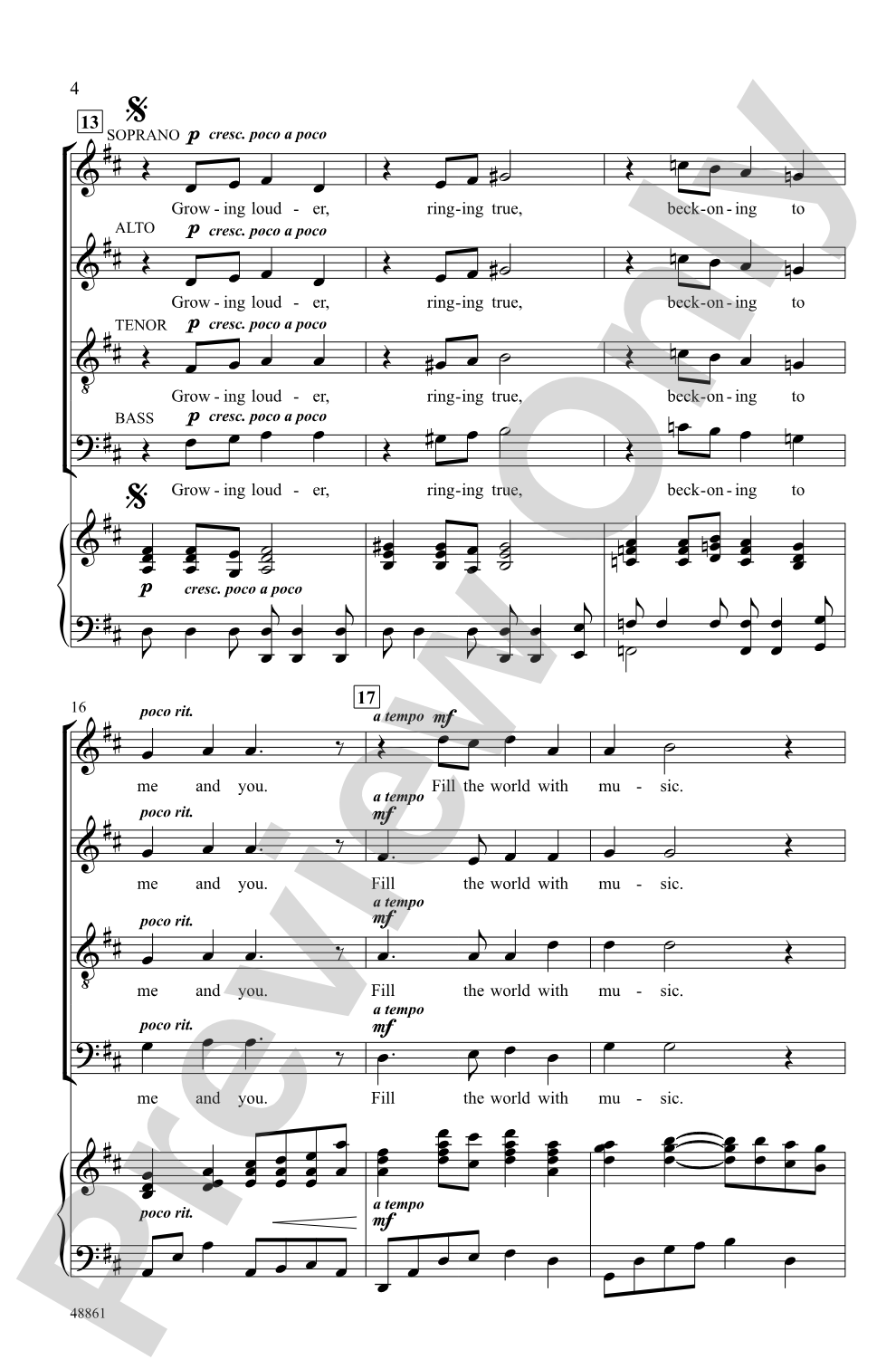
After a year with limited music making, there could be nothing better. Imagine throwing open the shutters to sing with your neighbors as this beautiful piece unfolds. It's consistently lyrical and legato, with peaks and valleys built into the dynamics to heighten emotions and capture joy. We love this expressive piano part, especially the delicate music box-inspired introduction. Don't miss the dramatic modulation before the pinnacle refrain crescendos to a big finish.


Fill the World with Music: SATB Choral Octavo isn't in MakeMusic Cloud just yet...but it could be. Let us know you'd like to see it, and you'll help shape what comes next. In the meantime, start a free trial and dive into thousands of interactive titles your students can play along with today.
Request This Title
Tell us you want it.
Start Your Free Trial
Explore everything that's ready to play right now.
Sample Audio
1
Audio File
--:--
0:00
0:00
Sample Video
1 / 2
Additional Details
Series:
Alfred Choral Designs
Publisher:
Alfred Music
Page Count:
12
SKU:
00-PO-0006653
More about this title
About the Composer: David Waggoner

David Waggoner holds degrees from the University of Michigan School of Music and Eastern Michigan University, where he earned a master's degree in music. He brings his training directly into his work as an elementary music teacher in Woodhaven, MI, and serves as Director of Music at the First United Methodist Church in Wyandotte, MI.
Waggoner has built a prolific catalog across multiple ensembles and instrumental families, composing for choirs, handbells, and various other instruments. His compositions reflect both his classroom experience and his deep involvement in community music making.
Why we love this
This piece captures something essential about why we gather to sing together. The music box introduction draws listeners in immediately, while the arc from legato lyricism through dynamic peaks to that dramatic modulation gives singers a real journey to shape and own. It's the kind of piece that reminds ensembles why they chose to sing in the first place.
What to expect
Fill the World with Music opens like someone throwing open shutters to let in light and air. It breathes throughout—warm, lyrical passages that feel unhurried give way to moments of genuine joy, all supported by an expressive piano part that never overshadows the voices. The final crescendo arrives not as a shock but as the natural culmination of everything you've been building together.
Who it's for
This octavo works for choirs ranging from advanced high school through community and church ensembles. It sits at a level where singers can focus on musicianship and expression rather than wrestling with technical complexity, making it ideal for groups ready to build confidence after limited singing opportunities.
How to get the most out of it
- Shape the legato phrases by thinking horizontally through the melodic lines rather than vertically from chord to chord. Sustained vowels and connected breath work will reveal the beauty of Waggoner's writing.
- Let the music box introduction set the emotional tone. The piano's delicate figurework should feel intimate, so encourage singers to enter from that same place of restraint and warmth.
- Build the crescendo toward the final refrain deliberately, using the modulation as your signpost. A well-timed lift in energy here transforms the ending from loud to genuinely triumphant.
- Attend closely to the dynamic valleys indicated in the score. These softer moments are just as essential as the peaks, and they're what give the big moments their power.
How to use it
This piece stands as a natural centerpiece for a concert celebrating community and shared music making. Program it after your ensemble has built ensemble blend and confidence with other repertoire, so singers can give it the full expressive weight it deserves. It also makes an excellent choice for festival or contest contexts where the emotional arc and musical literacy it requires will impress adjudicators.
Skills your students will build
- Sustaining legato phrasing across longer melodic lines
- Understanding and executing dynamic shaping (peaks and valleys)
- Managing modulation and tonal center shifts
- Balancing voice parts in homophonic and mixed textures
- Responding to expressive piano writing with sensitive ensemble listening