Fiddler's Farewell Cover Image

Fiddler's Farewell: String Orchestra Conductor Score & Parts

$45.00 USD
Sale price  $45.00 USD Regular price 
Skip to product information
Fiddler's Farewell Cover Image

Fiddler's Farewell: String Orchestra Conductor Score & Parts

By Loreta Fin

Grade: 2.5

Item: 76-49877

$45.00
Shipped

One moment…

Description
With a nod to the composer's Irish lineage on her mother's side, this work encompasses the characteristics of a jig, emphasizing the strong sense of pulse required for this lively dance. The bowing is a mixture of hooked strokes and alternating down and up bows, encouraging sound left- and right-hand coordination. This piece is dedicated to the students and teachers of Somerville House, both past and present, as a parting gift after 35 Years as Director of Strings at the South Brisbane school. Fiddler's Farewell is composed by Loreta Fin. (2:05)

Fiddler's Farewell: String Orchestra Conductor Score & Parts isn't in MakeMusic Cloud just yet...but it could be. Let us know you'd like to see it, and you'll help shape what comes next. In the meantime, start a free trial and dive into thousands of interactive titles your students can play along with today.

Sample Pages

Sample Audio
No sample audio found.
Sample Video
Additional Details
Series: Wilfin String Orchestra: Young String Ensemble Series
Publisher: Wilfin Music
ISBN10: 1-4706-5124-6
ISBN13: 978-1-4706-5124-4
UPC: 038081572154
SKU: 76-49877

More about this title

About the Composer: Loreta Fin
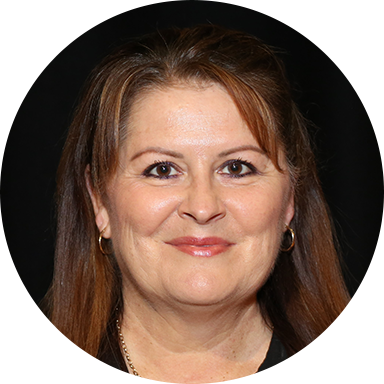
Loreta Fin

Loreta Fin AM is an Australian violist, educator, and prolific composer based in Brisbane. A graduate of the Sydney Conservatorium of Music, she performed as concertmaster with the Sydney Youth Orchestra and has maintained an active performance career in chamber and orchestral settings while serving as Principal Viola with the Queensland Pops Orchestra for over 25 years. She has collaborated with internationally renowned artists and has presented her work at major Australian and American music education conferences.

Fin's impact on string education extends across multiple roles: she directed strings at Somerville House School for 35 years, served as State and National President of the Australian Strings Association, and currently advises on string education policy in Queensland. An experienced adjudicator and examiner, she has composed more than 100 works for string orchestra published worldwide. Her contributions to music education earned her a Queensland State Award in 2009 and a National Award for Services to Music and String Teaching.

Why we love this

Fin brings her three decades of string directing experience directly into the writing. The bowing combinations feel genuinely idiomatic for young players—hooked strokes and alternating bows are placed where they build coordination without overwhelming a Grade 2.5 ensemble. The jig rhythm sits naturally under the fingers and carries enough rhythmic drive to engage students without requiring advanced technical facility.

What to expect

Fiddler's Farewell captures the spirited lift and forward motion of an Irish jig. The melody dances above steady accompaniment, inviting performers into the physical joy of dance music while the bowing patterns create a satisfying coordination challenge that feels earned rather than imposed.

Who it's for

String orchestra directors teaching Grade 2.5 ensembles who want to introduce jig rhythms and coordinate bowing techniques in an authentic musical context. This work suits both concert performances and festival programming, offering students a complete idiomatic experience that goes beyond technical drill.

How to get the most out of it

  • Establish the jig pulse early in rehearsals using a clear, steady beat. Young players often rush this idiom, so anchor the pulse in both written and unwritten downbeats.
  • Separate your work on hooked strokes from alternating bow patterns. Isolate each bowing type at a slow tempo before combining them in phrases.
  • Balance the melody across first and second violins so the tune remains transparent even when both parts move in parallel motion.
  • Bring out the rhythmic energy of the dance by encouraging even tone through bow changes; uneven pressure during transitions muddies the lively character.

How to use it

Program this as a concert opener to establish energy and ensemble unity, or pair it with other world music selections to create a global dance theme. At festival competitions, it demonstrates ensemble control of mixed bowing in a musically rewarding way that adjudicators recognize as solid musicianship at this level.

Skills your students will build

  • Executing hooked bowstrokes and alternating down-up bow patterns with rhythmic precision
  • Reading and performing jig rhythms with authentic pulse and forward motion
  • Coordinating left-hand and right-hand technique simultaneously in a single musical context
  • Playing with clarity and transparency in parallel string motion
  • Developing stylistic awareness through a dance-based musical tradition

You May Also Like