
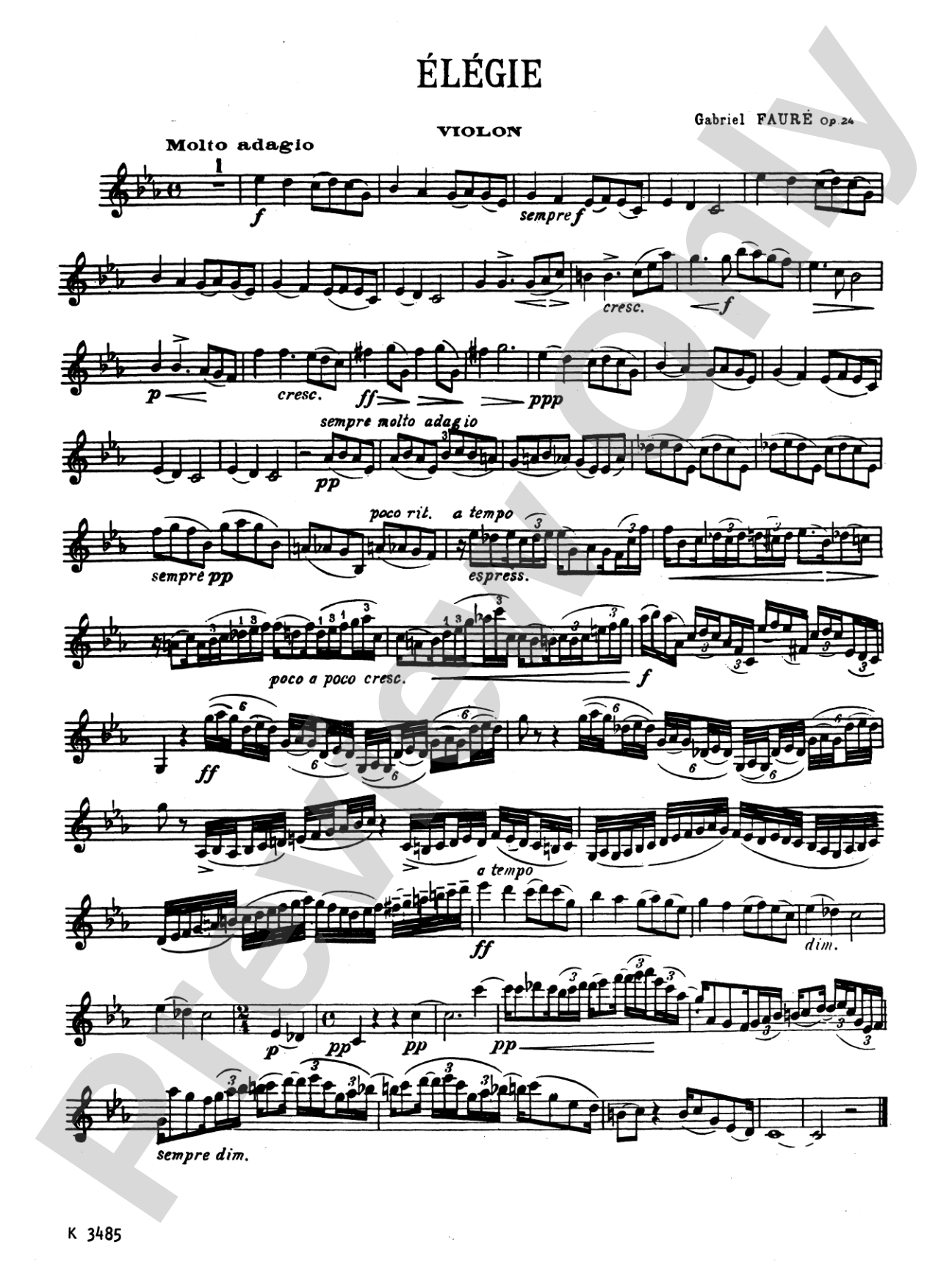

Fauré: Élégie, Op. 24: Cello Book
By Gabriel Fauré
Item: 00-PK-0003117

$7.99
Pickup currently not available
Buy Extra Parts (Digital PDF Download)
| Product | Price | Quantity |
|---|---|---|
| Fauré: Élégie, Op. 24 | $1.99 | |
| Fauré: Élégie, Op. 24 | $1.99 | |
| Fauré: Élégie, Op. 24 | $1.99 |
Parts Added to Cart!
Related Items
Elegie, Opus 24: Cello Book |
$7.95
|
View |
Description
A Cello solo with Piano Accompaniment composed by Gabriel Fauré.


Don't just read it, hear it, play along with it, and watch your students grow with it. In MakeMusic Cloud, Fauré: Élégie, Op. 24: Cello Book comes alive with professional accompaniment, adjustable tempo, and built-in practice tools that turn solo practice into real progress.
Open in the Player
Jump straight in and assign it today.
Start Your Free Trial
Open this title and explore the full library in minutes.
Sample Audio
No sample audio found.
Sample Video
No sample videos found.
Additional Details
Series:
Kalmus Edition
Publisher:
Alfred Music
Page Count:
12
SKU:
00-PK-0003117
More about this title
About the Composer: Gabriel Fauré
Gabriel Fauré (1845, 1924) shaped French music across five decades as a composer, organist, and pedagogue. His harmonic language, subtle, refined, and deeply personal, emerged from the salon tradition yet transcended it, influencing generations of 20th-century composers. Fauré held the position of Director of the Paris Conservatoire late in his career, but his legacy rests equally on works like the Élégie, which distill Romantic emotion into crystalline, economical forms that demand expressive maturity from performers.
Why we love this
This work appears on virtually every prestigious cello competition and festival repertoire list because it demands everything: technical fluency, tonal control, and the maturity to inhabit its quiet lyricism. Fauré's harmonic language rewards close listening and repeated performances—each phrase reveals new depth. For directors and teachers, it's a gateway to the post-Romantic aesthetic and a piece that builds genuine musical sophistication in students.
What to expect
The Élégie unfolds like a private meditation, intimate without being sentimental. Its opening cello line carries both resignation and quiet dignity, while the harmonic language drifts between major and minor in ways that feel almost suspended. The work never climbs toward grand gesture; instead, it deepens, inviting the listener into increasingly subtle emotional terrain.
Who it's for
Advanced young cellists preparing for college auditions, concerto competitions, or concert recitals will find an essential work that showcases both technical control and interpretive depth. This piece also serves intermediate-advanced students who are ready to move beyond etude-like repertoire into the world of concert standard chamber music. Cellists at any level serious about repertoire will eventually encounter this work.
How to get the most out of it
- Shape the melody in long arcs rather than phrase-by-phrase units; Fauré's harmonic shifts often arrive quietly, and the larger arc will reveal them naturally.
- Let the piano establish the harmonic context early. The cello enters into an already-colored world, so listen before you play.
- Sit with the ambiguous passages (where major and minor tonalities overlap) without resolving them too quickly; the tension is the point.
- Balance vibrato carefully, the Impressionistic language needs space to breathe, so reserve wider vibrato for climactic moments rather than constant application.
How to use it
Program this as a centerpiece solo on a cello recital, pairing it with either a contemporary work for contrast or a Baroque piece that complements its Romantic elegance. It works equally well as a competition entry or festival performance piece. For a full chamber concert, follow it with something more energetic to balance its introspective character.
Skills your students will build
- Lyrical phrasing and long-line singing in the upper register
- Tonal control and vibrato application across dynamic ranges
- Navigation of post-Romantic harmonic language and modal inflections
- Interpretive maturity and emotional restraint in sustained passages
- Rhythmic independence from the piano accompaniment while remaining connected