Fauré: Élégie, Op. 24 Sheet Music Preview

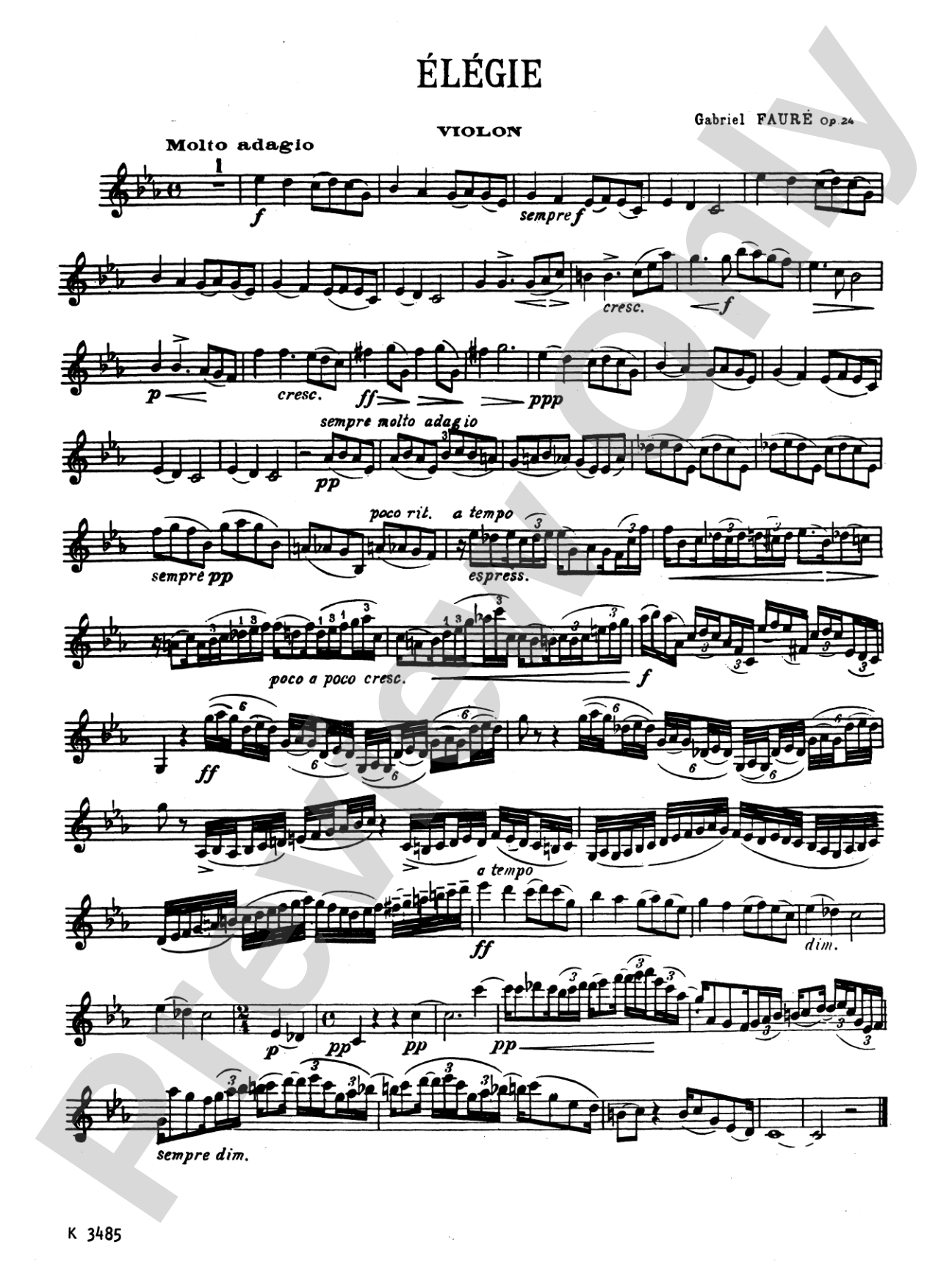
Fauré: Élégie, Op. 24

By Gabriel Fauré

Item: 00-PC-0007329

Digital Download
$1.99
Description
A Cello solo with Piano Accompaniment composed by Gabriel Fauré.

Don't just read it, hear it, play along with it, and watch your students grow with it. In MakeMusic Cloud, Fauré: Élégie, Op. 24 comes alive with professional accompaniment, adjustable tempo, and built-in practice tools that turn solo practice into real progress.

Sample Audio
No sample audio found.
Sample Video
Additional Details
Series: Kalmus Edition
Publisher: Alfred Music
Page Count: 12
SKU: 00-PC-0007329

More about this title

About the Composer: Gabriel Fauré

Gabriel Fauré (1845-1924) stands as one of the most refined voices in French Romantic music, a composer whose harmonic innovations and lyrical sensibility shaped the trajectory from Romanticism toward Impressionism. His career spanned decades as both a performer and educator; he served as director of the Paris Conservatoire and taught composition to an entire generation of French musicians. Fauré's gift lay in distilling profound emotion into elegant forms, creating works that feel both intimate and architecturally sophisticated.

His chamber and solo works remain staples of the concert hall and studio alike. The Élégie, Op. 24 exemplifies his gift for the cello, an instrument whose warm, singing quality matched his own compositional voice perfectly. Written in 1880, this piece captures the essence of Fauré's mature style: restrained passion, modal harmony, and a sense of melancholy that never slides into sentimentality.

Why we love this

This work appears on virtually every prestigious cello competition and festival repertoire list because it demands everything: technical fluency, tonal control, and the maturity to inhabit its quiet lyricism. Fauré's harmonic language rewards close listening and repeated performances—each phrase reveals new depth. For directors and teachers, it's a gateway to the post-Romantic aesthetic and a piece that builds genuine musical sophistication in students.

What to expect

The Élégie unfolds like a conversation with an absent friend—reflective, tender, sometimes tinged with regret. Fauré's harmonies shift under a predominantly gentle melodic line, creating moments of subtle intensity without ever abandoning a sense of poise. The piece breathes with the natural phrasing of the human voice, asking the cellist to sing through the instrument rather than display it.

Who it's for

Advanced young cellists preparing for college auditions, concerto competitions, or concert recitals will find an essential work that showcases both technical control and interpretive depth. This piece also serves intermediate-advanced students who are ready to move beyond etude-like repertoire into the world of concert standard chamber music. Cellists at any level serious about repertoire will eventually encounter this work.

How to get the most out of it

  • Shape the opening melody with a warm, singing tone rather than projecting loudly; Fauré's writing asks for intimacy within the concert hall
  • Pay attention to the subtle harmonic shifts in the accompaniment, which often guide the emotional arc when the cello line seems static
  • Approach tempo flexibility with restraint; the piece permits expressive rubato, but excessive tempo variance obscures Fauré's architectural clarity
  • Balance vibrato carefully through sustained passages; consistent, moderately slow vibrato complements the Impressionistic harmony better than wide or frequent variation

How to use it

Program this as a centerpiece solo on a cello recital, pairing it with either a contemporary work for contrast or a Baroque piece that complements its Romantic elegance. It works equally well as a competition entry or festival performance piece. For a full chamber concert, follow it with something more energetic to balance its introspective character.

Skills your students will build

  • Lyrical phrasing and long-line singing in the upper register
  • Tonal control and vibrato application across dynamic ranges
  • Navigation of post-Romantic harmonic language and modal inflections
  • Interpretive maturity and emotional restraint in sustained passages
  • Rhythmic independence from the piano accompaniment while remaining connected

You May Also Like