Farandole: 1st Violin Sheet Music Preview

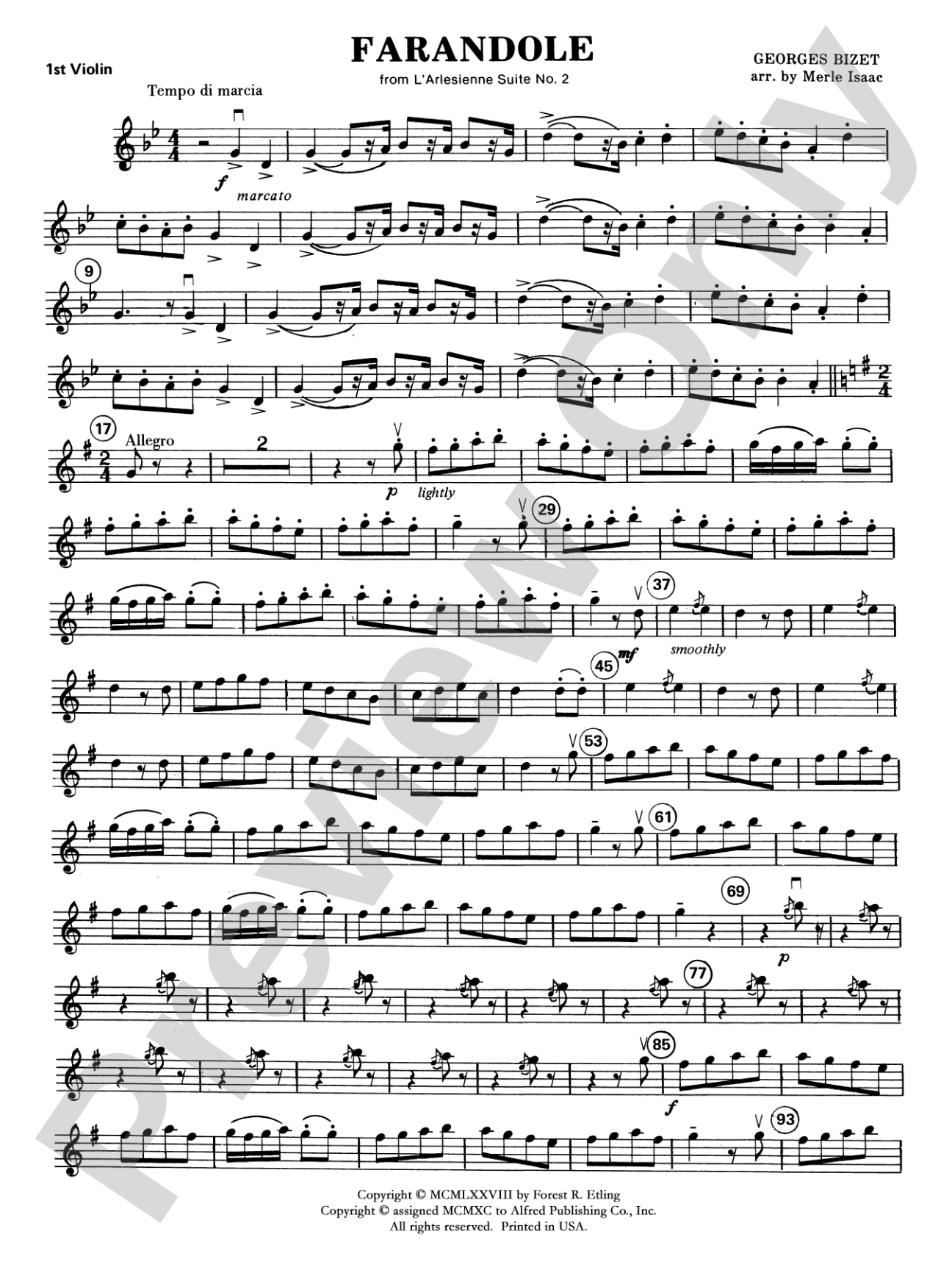
Farandole: 1st Violin

By Georges Bizet / arr. Merle J. Isaac

Grade: 3

Item: 00-PC-0000100_VN1

Digital Download
$5.99
Description
This title is available in MakeMusic Cloud. A Federation Festivals 2020-2024 selection.

Don't just read it, hear it, play along with it, and watch your students grow with it. In MakeMusic Cloud, Farandole: 1st Violin comes alive with professional accompaniment, adjustable tempo, and built-in practice tools that turn solo practice into real progress.

Sample Audio
No sample audio found.
Sample Video
Additional Details
Series: Highland/Etling String Orchestra
Publisher: Alfred Music
Page Count: 148
SKU: 00-PC-0000100_VN1

More about this title

About the Composer: Georges Bizet

Georges Bizet (1838-1875) was a French composer whose gift for melody and orchestral color shaped Romantic opera and orchestral music. Though he died at just 36, his works remain central to the repertoire, particularly Carmen and his instrumental compositions that showcase his mastery of instrumental writing and dramatic pacing.

Bizet's music combines lyrical charm with structural clarity, making his works ideal for developing musicians. His melodies sing naturally on any instrument, and his orchestrations reward both individual players and the ensemble as a whole.

Why we love this

This arrangement captures the irresistible rhythmic vitality of Bizet's original while sitting comfortably within the technical reach of Grade 3 string players. The Farandole's folk-dance energy and memorable themes make it a crowd-pleaser that builds genuine ensemble cohesion without requiring advanced shifting or position work.

What to expect

Sunlit and buoyant, with the unpretentious charm of a folk celebration. The Farandole dances forward with infectious melody, rhythmic vitality, and moments of lyricism that remind players why they love playing together.

Who it's for

String orchestras working at the Grade 3 level who want a masterwork that combines festival appeal with genuine musical substance. Directors seeking repertoire that challenges ensemble musicianship without overwhelming developing technique will find this a reliable choice for contest or concert programming.

How to get the most out of it

  • Keep the rhythmic pulse crisp and forward-moving throughout; this is a dance, not a reverie, so let the lilting meter propel the music naturally without dragging.
  • Balance the dialogue between parts carefully, especially when themes pass between first violins and lower voices; clarity of line matters more than volume.
  • Shape phrases within the longer sections rather than playing through-composed; find small peaks and valleys to maintain listener engagement across 148 pages of material.
  • Use controlled vibrato and avoid oversinging on sustained notes, which allows the rhythmic and melodic energy to stay in focus.

How to use it

Program this as a centerpiece for a pops or family concert, where its accessibility and energy will resonate with audiences of all backgrounds. It also works effectively on festival programs, where judges consistently appreciate the combination of recognizable thematic material and clean orchestral writing.

Skills your students will build

  • Maintaining steady rhythmic pulse in a lilting meter
  • Balancing ensemble voices within the same range
  • Shaping lyrical phrases within a dance context
  • Responding to conductor cues across longer formal structures
  • Sustaining tone quality at varying dynamic levels

You May Also Like