
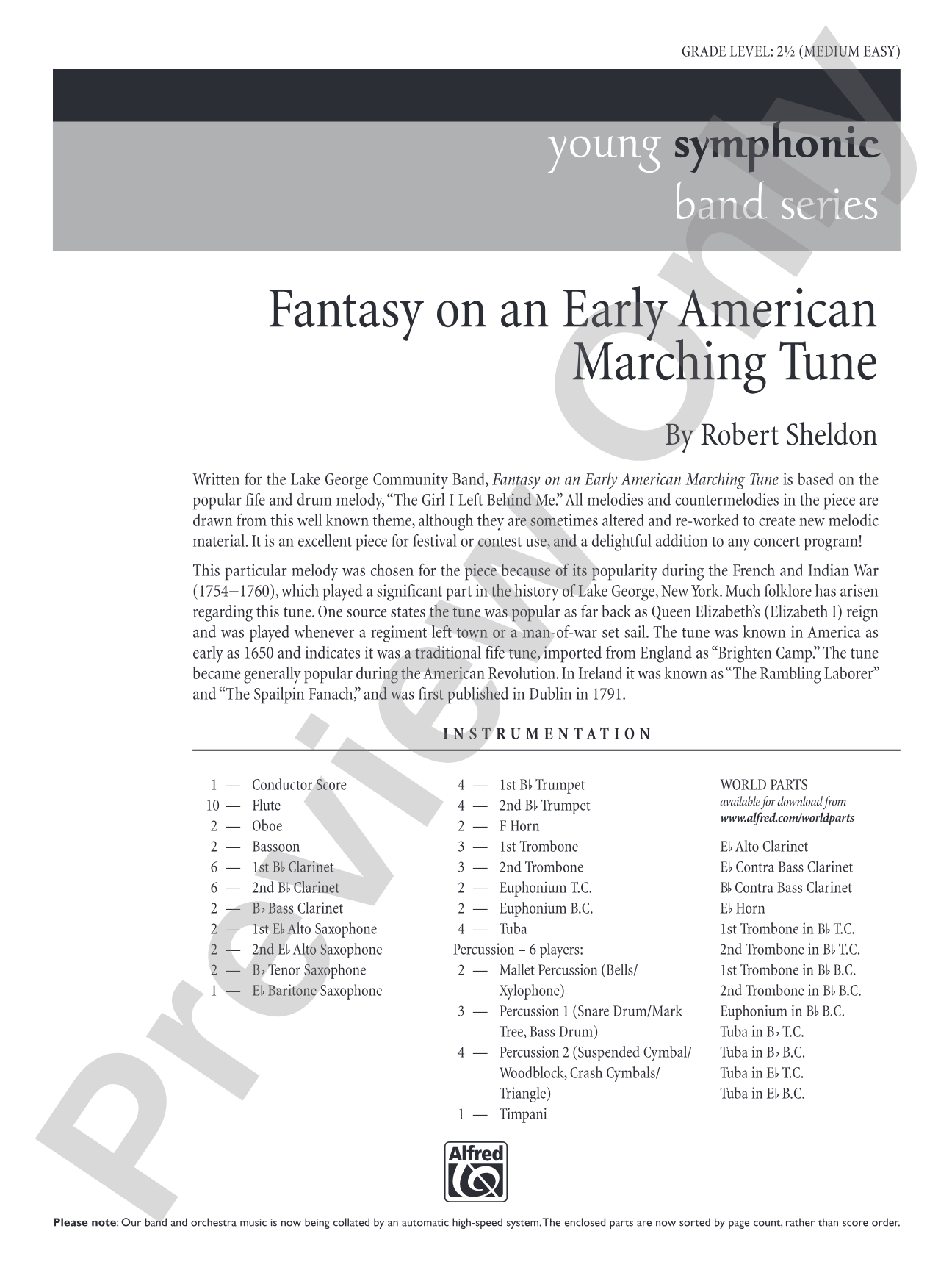
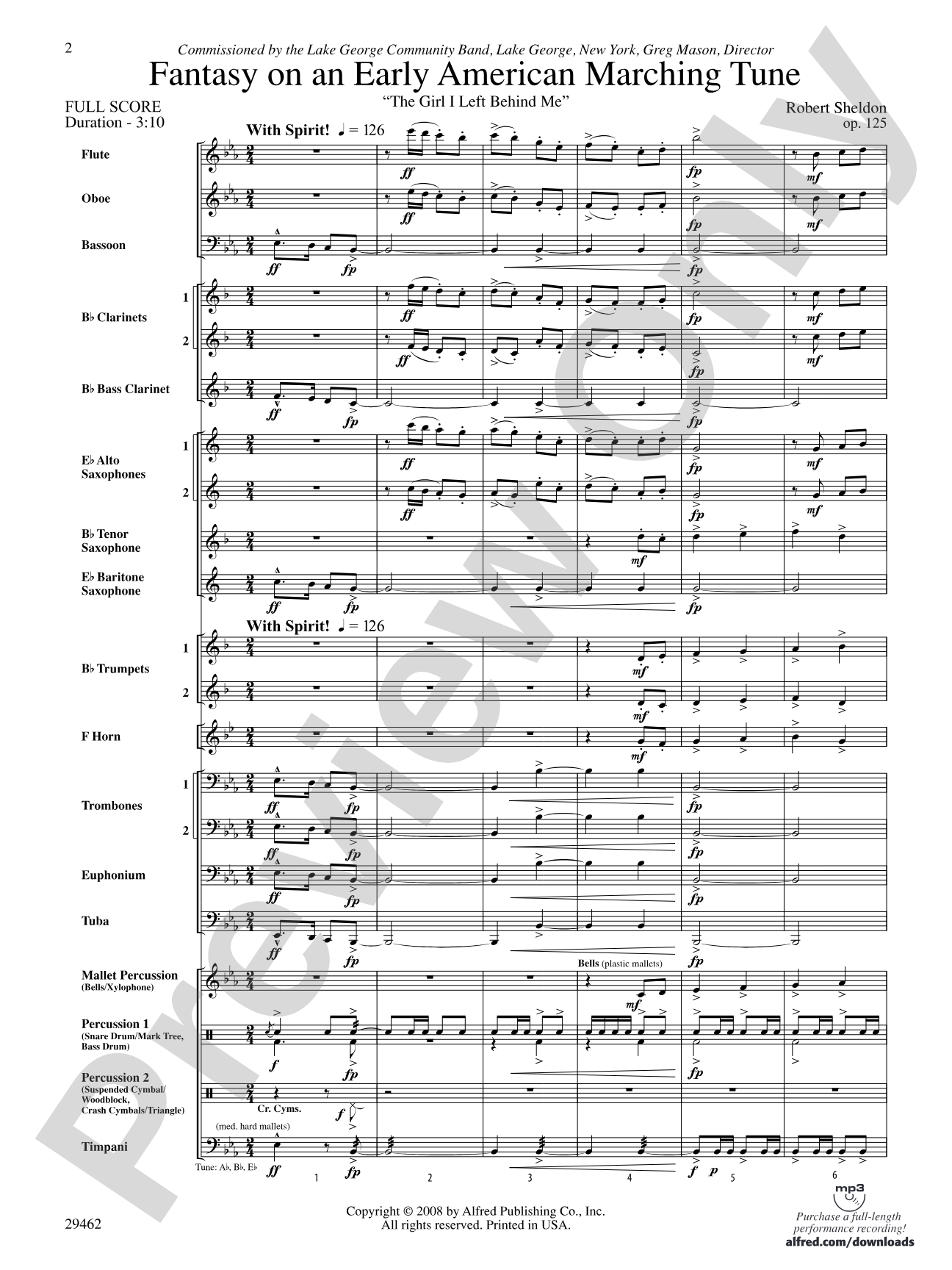
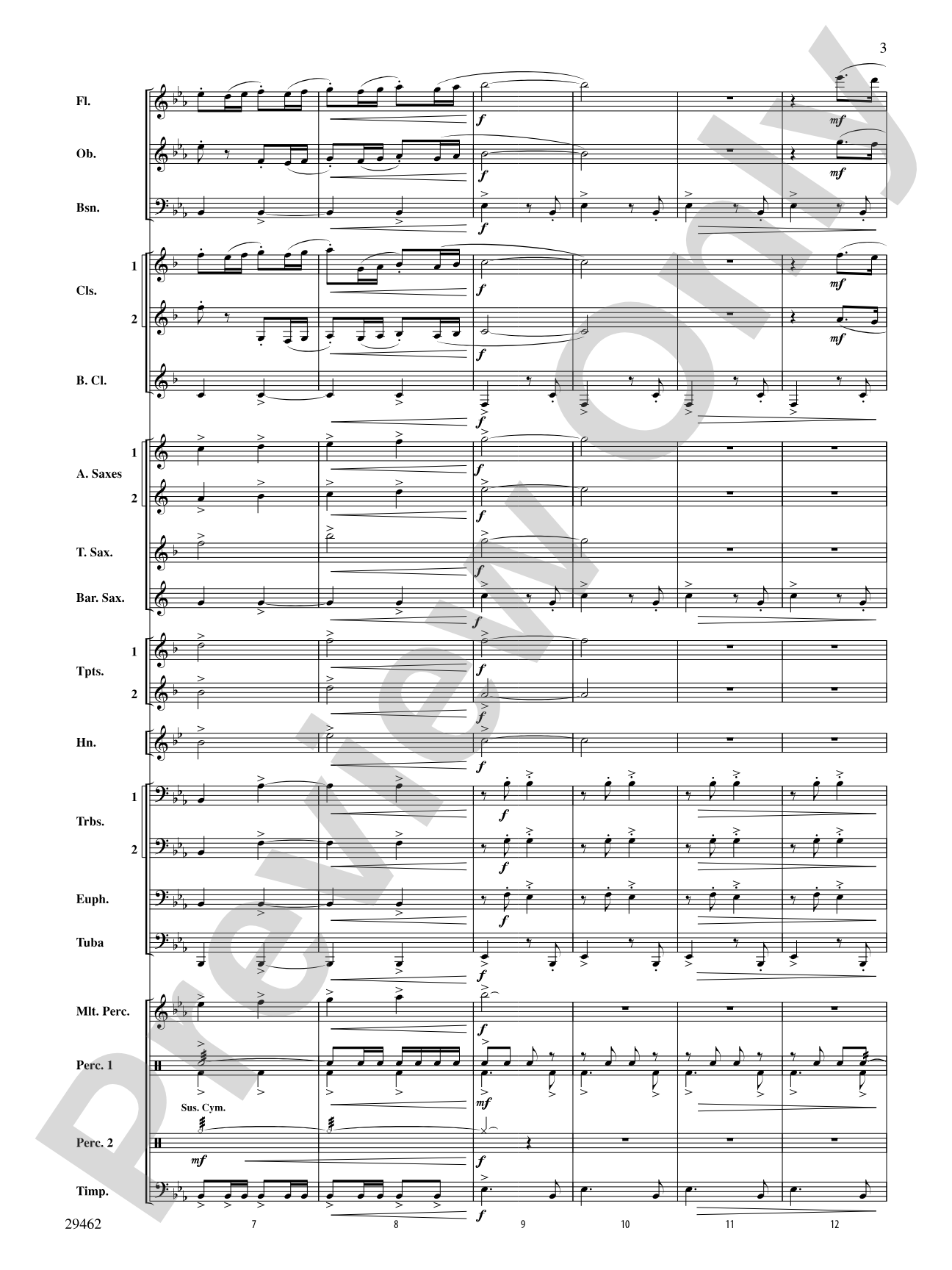
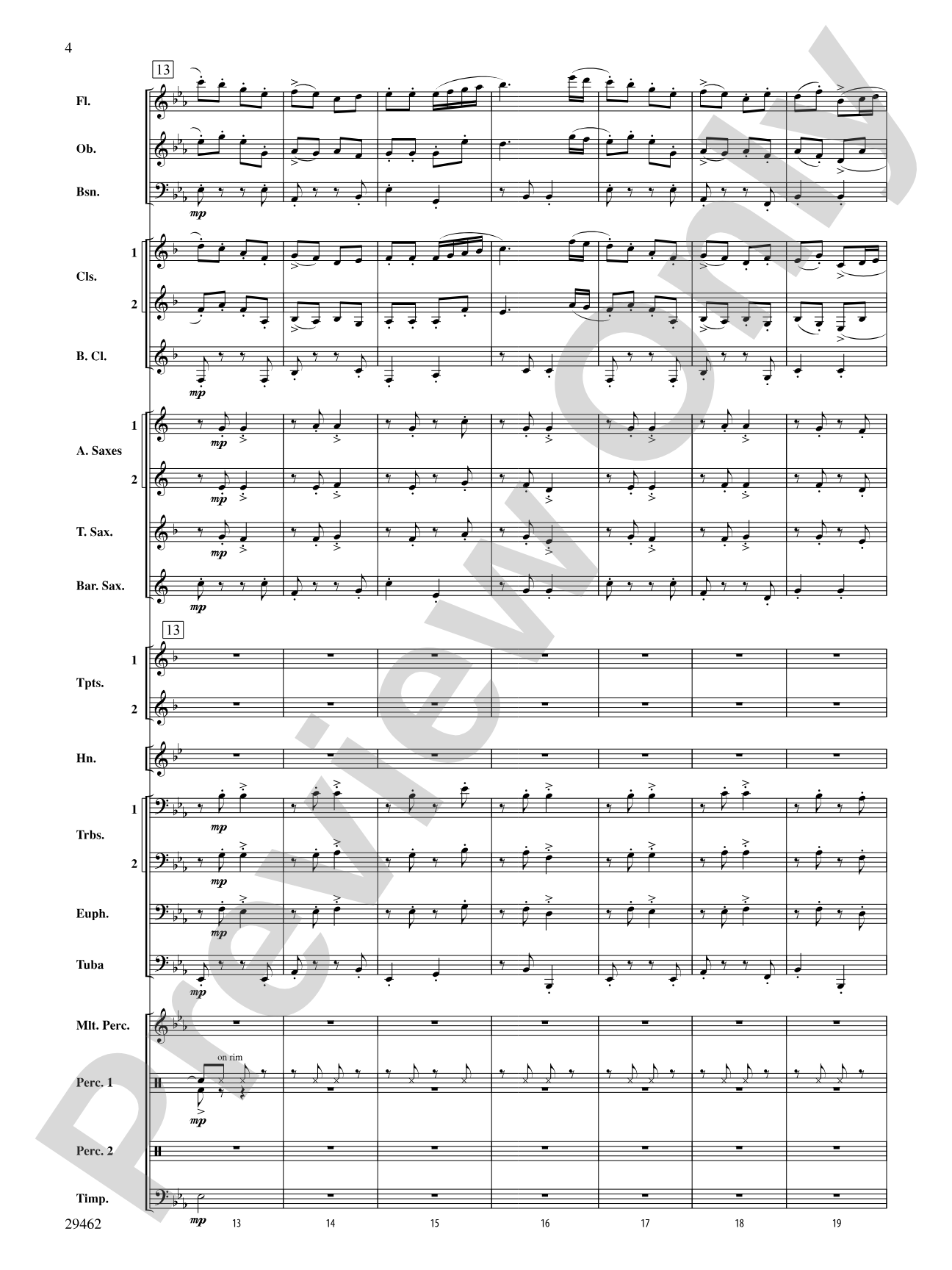
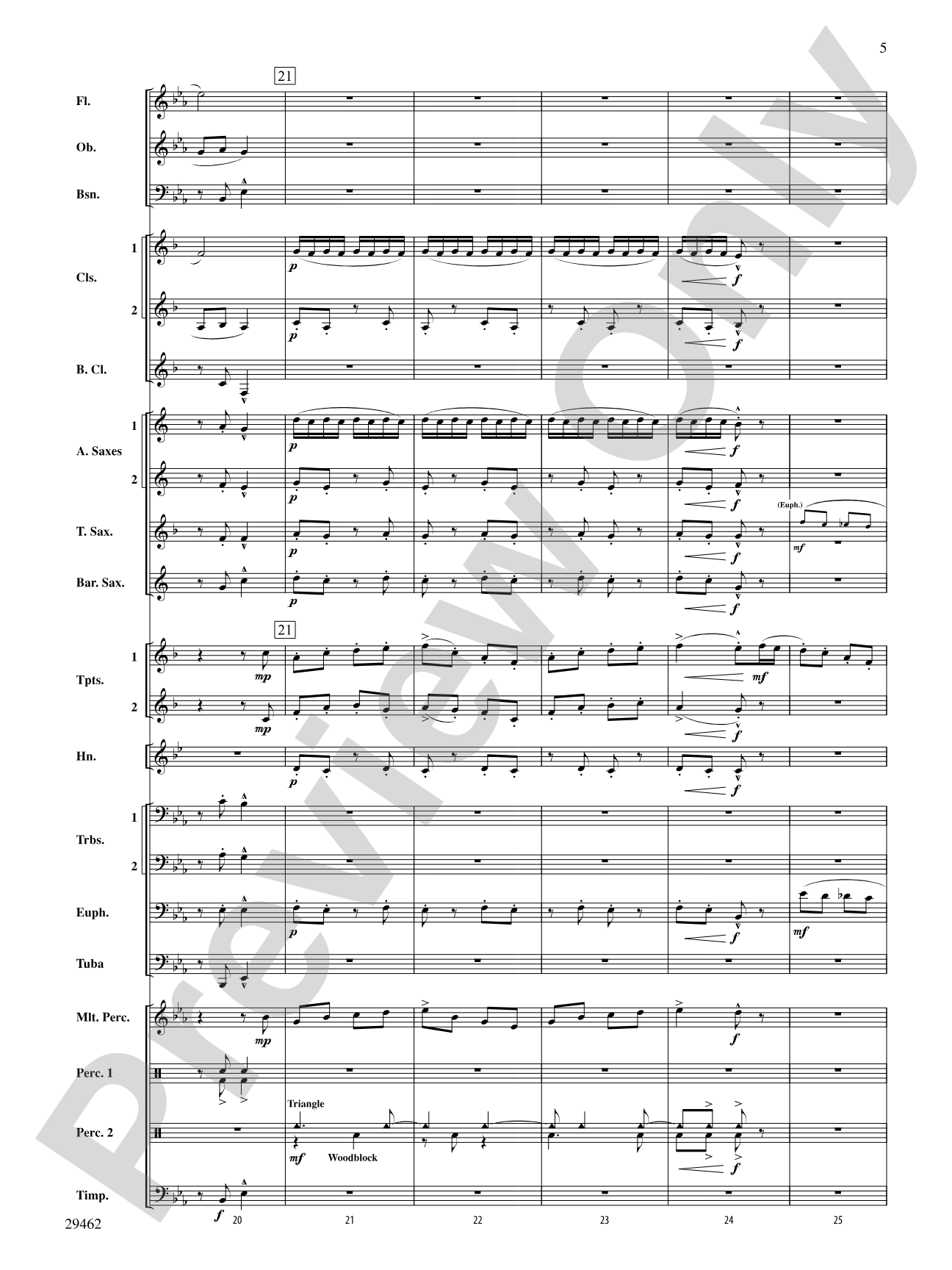
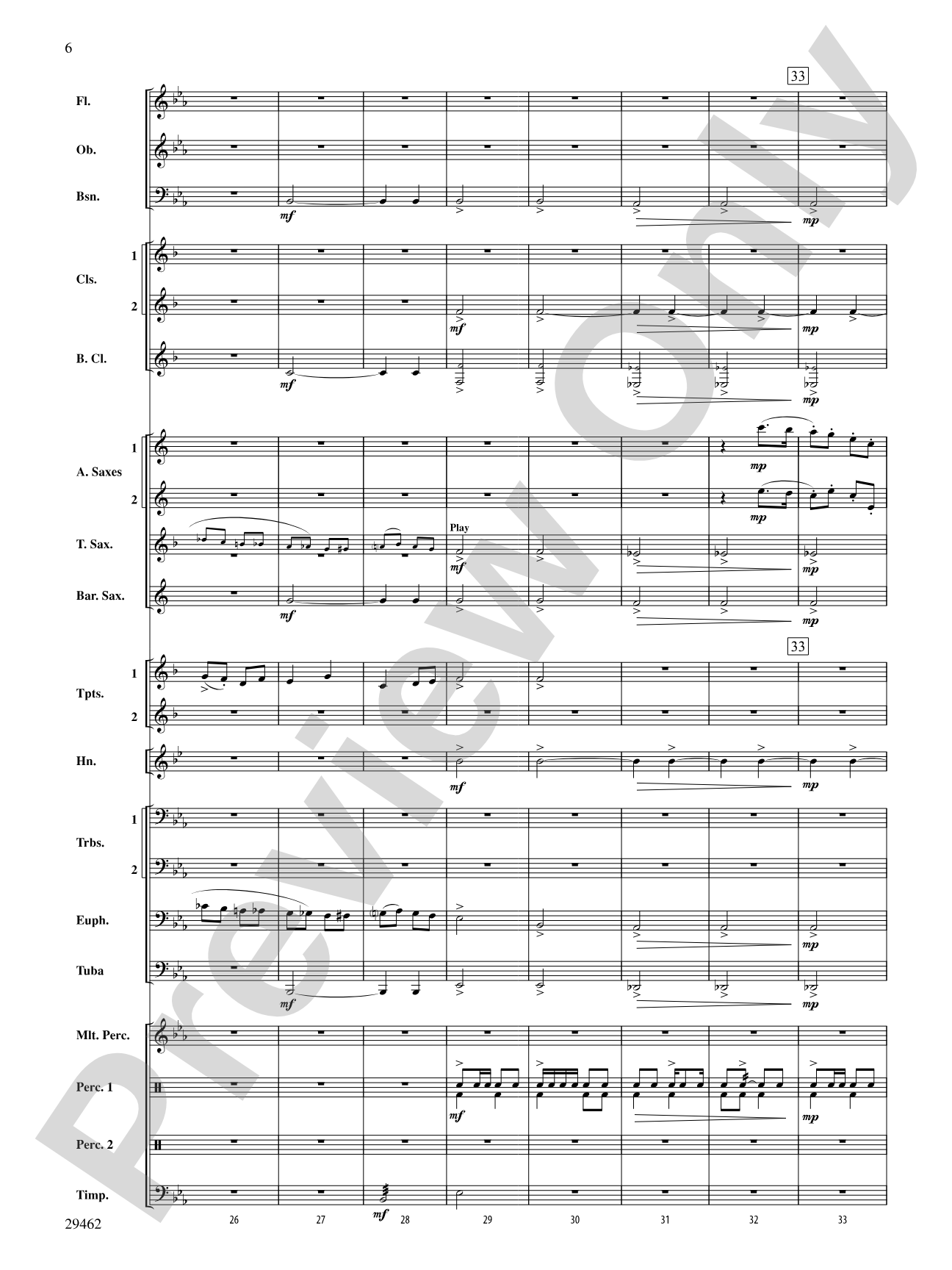
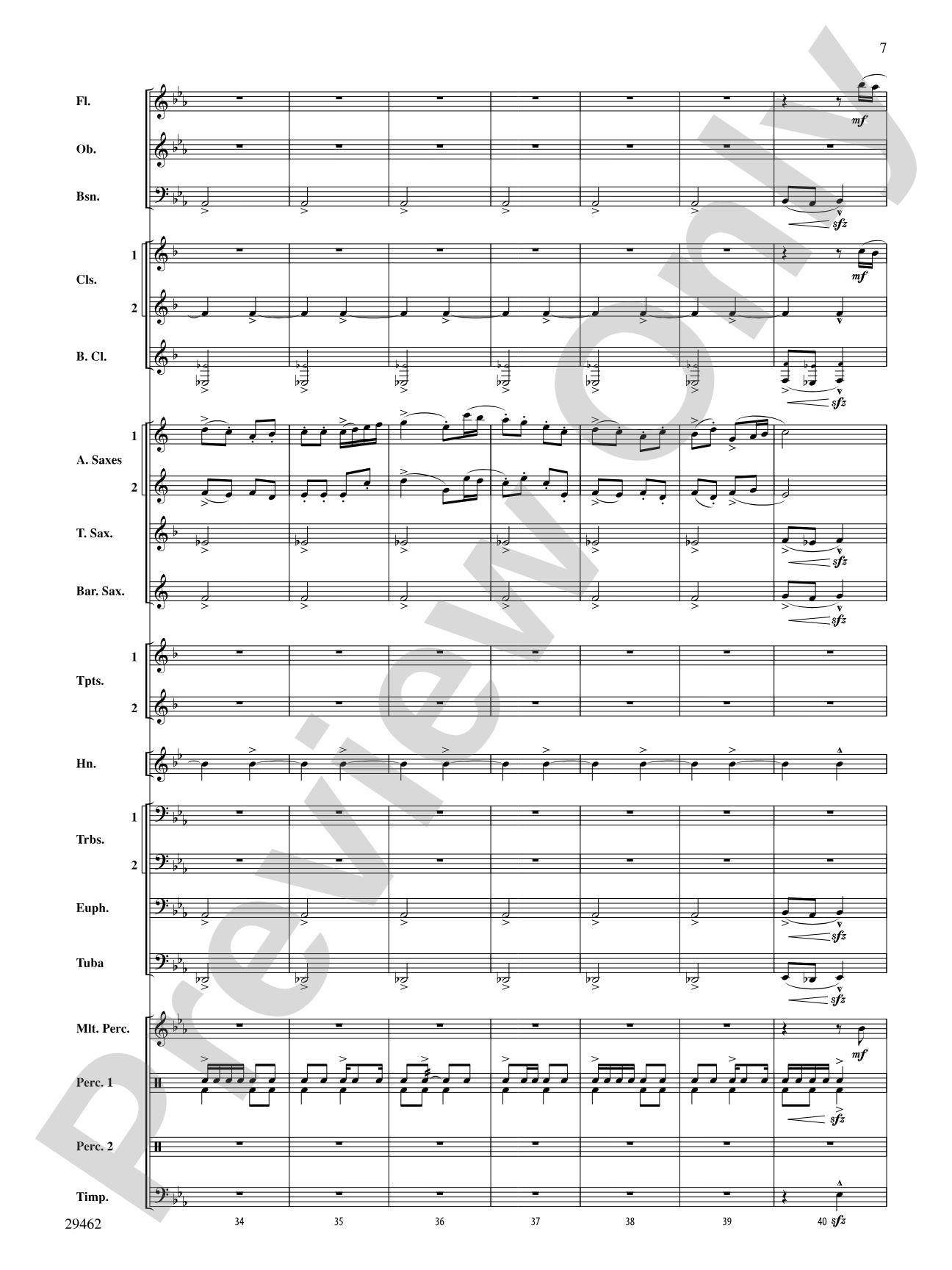
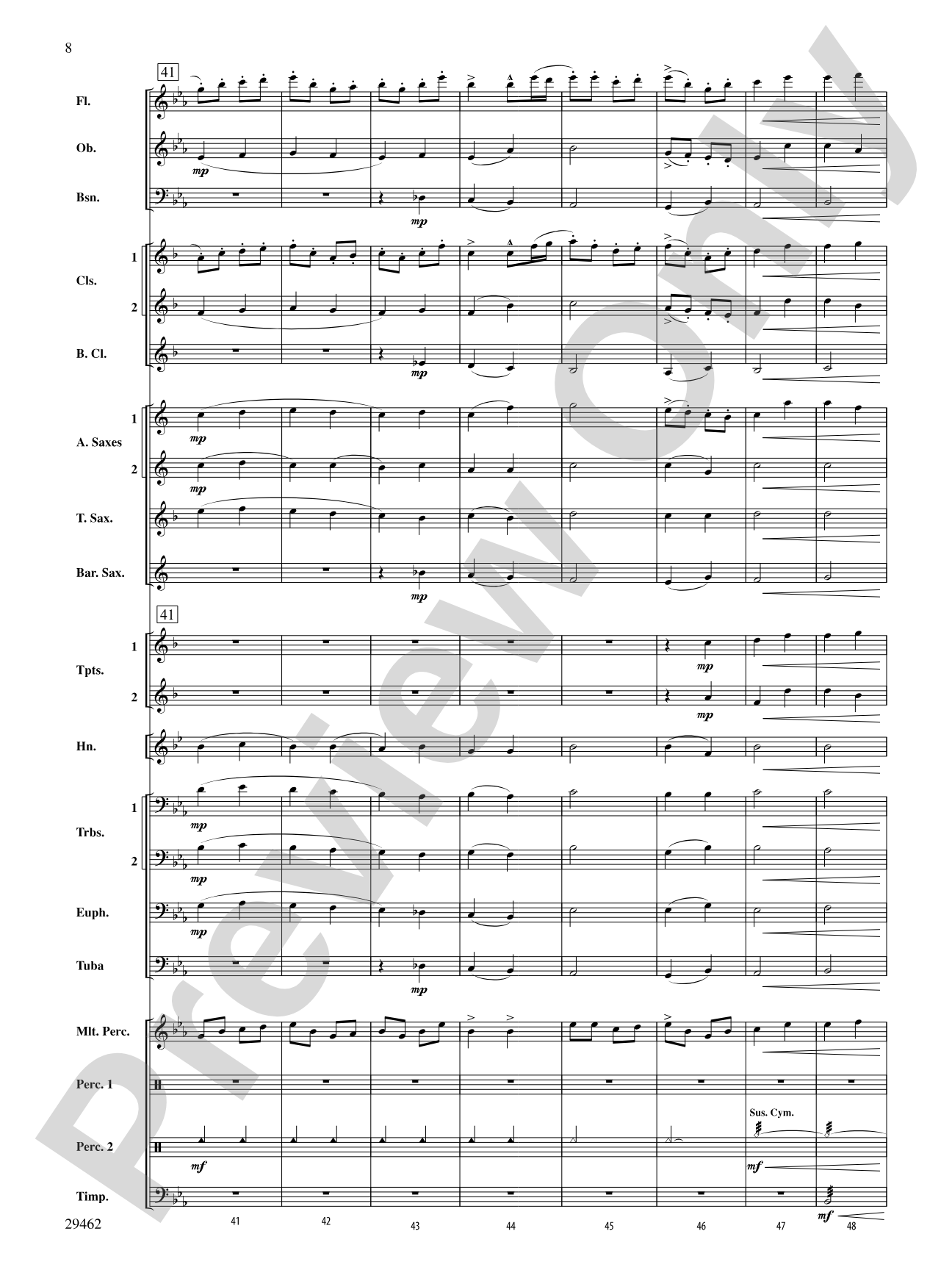
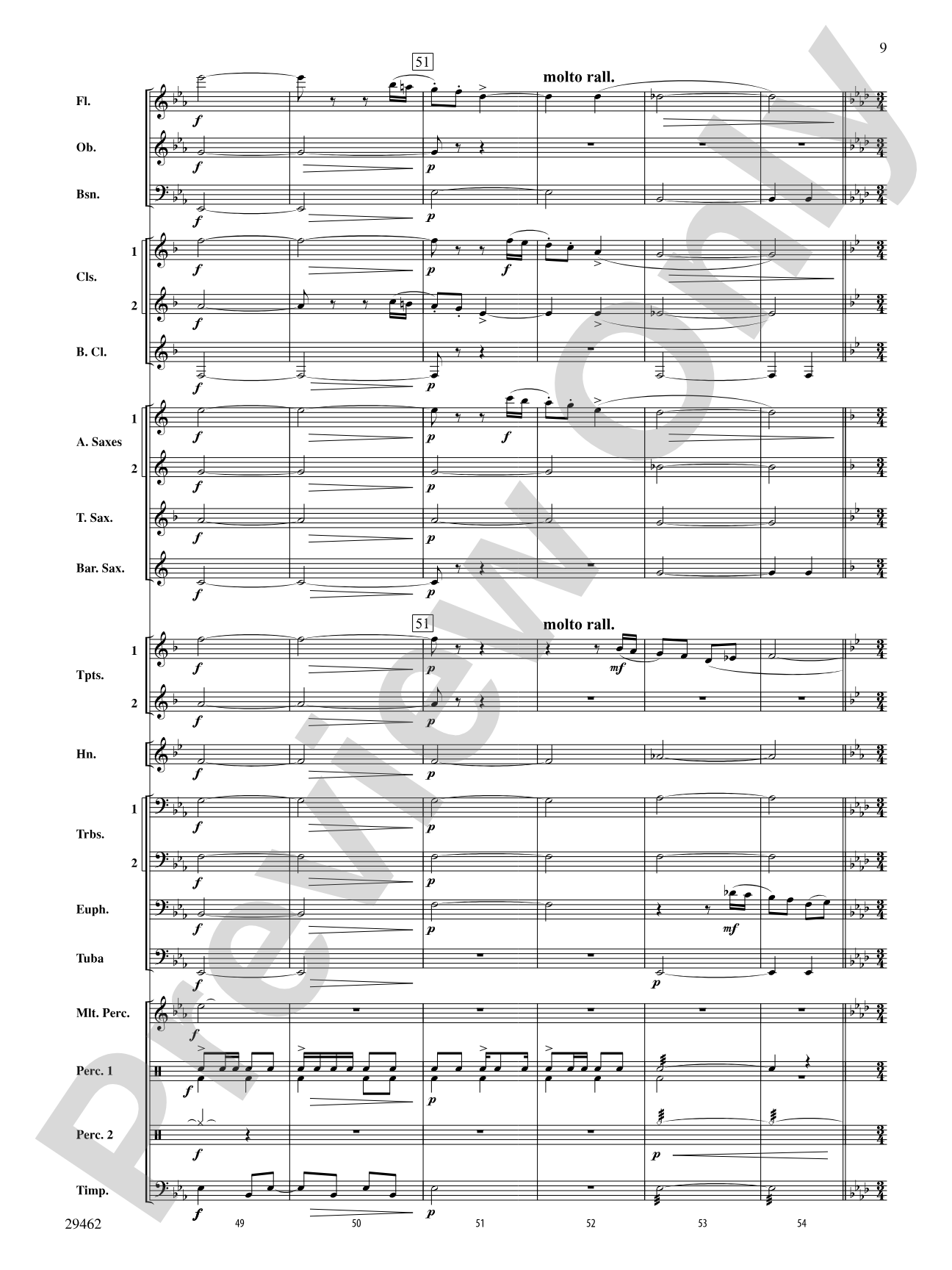
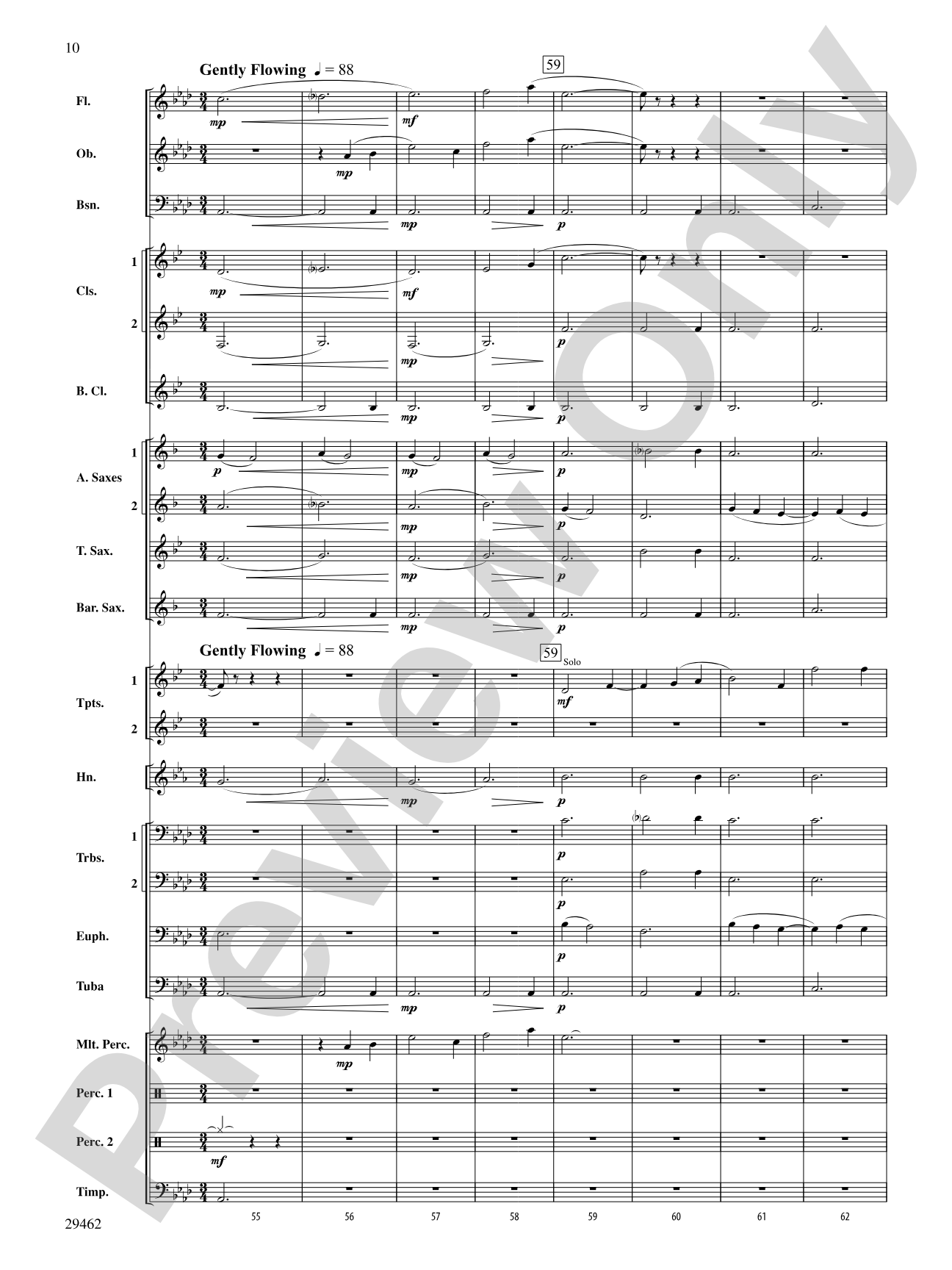
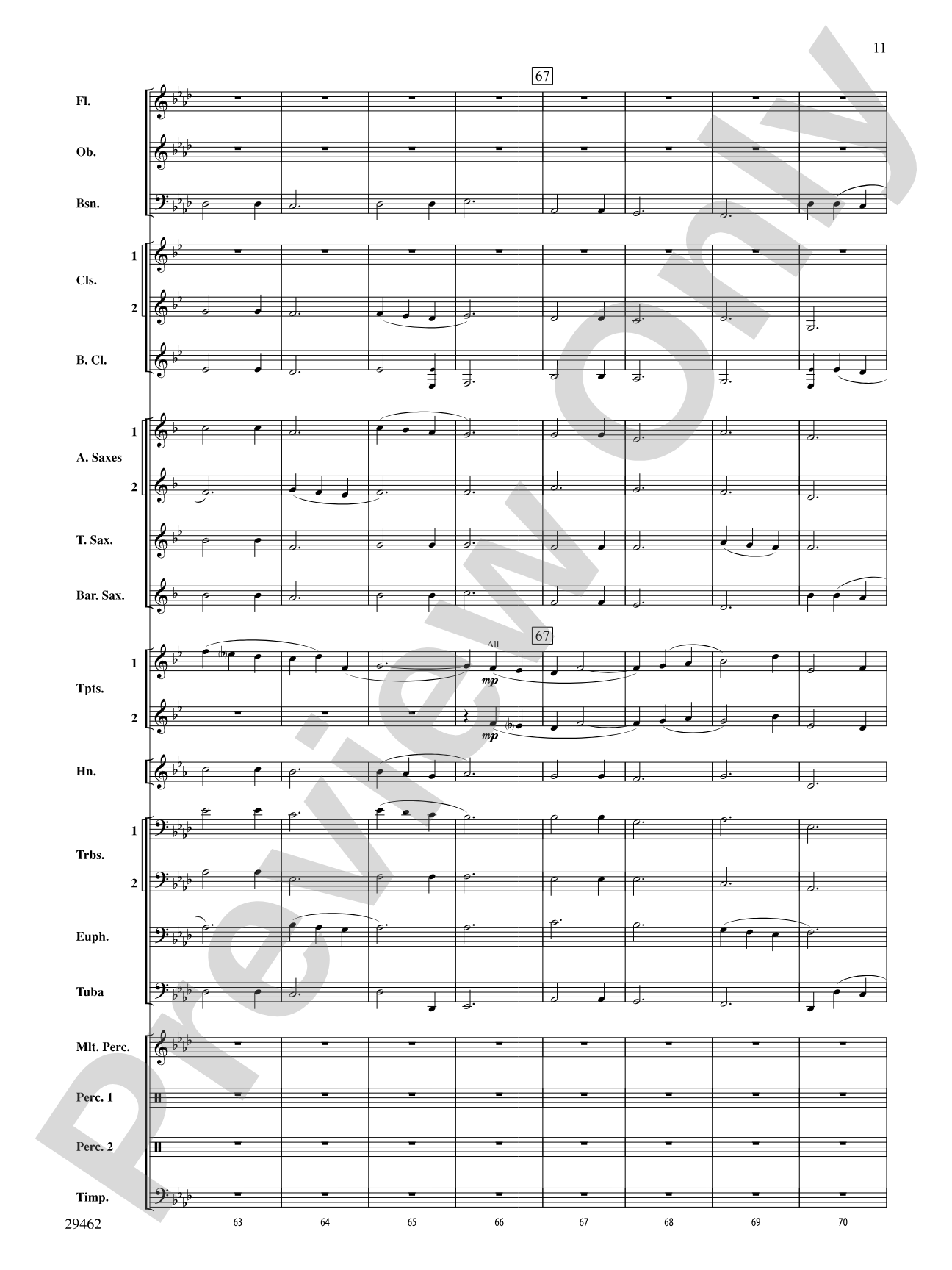
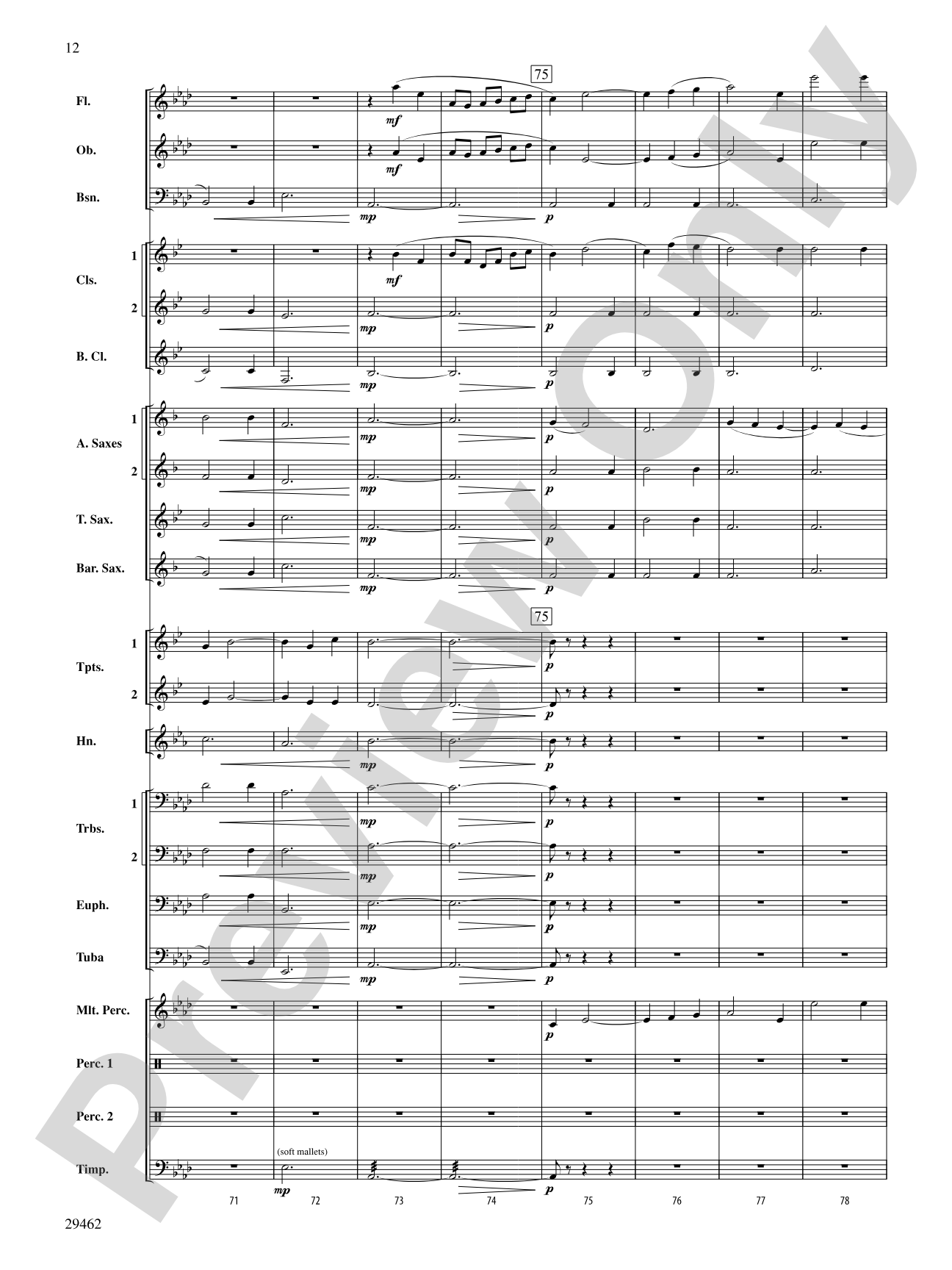
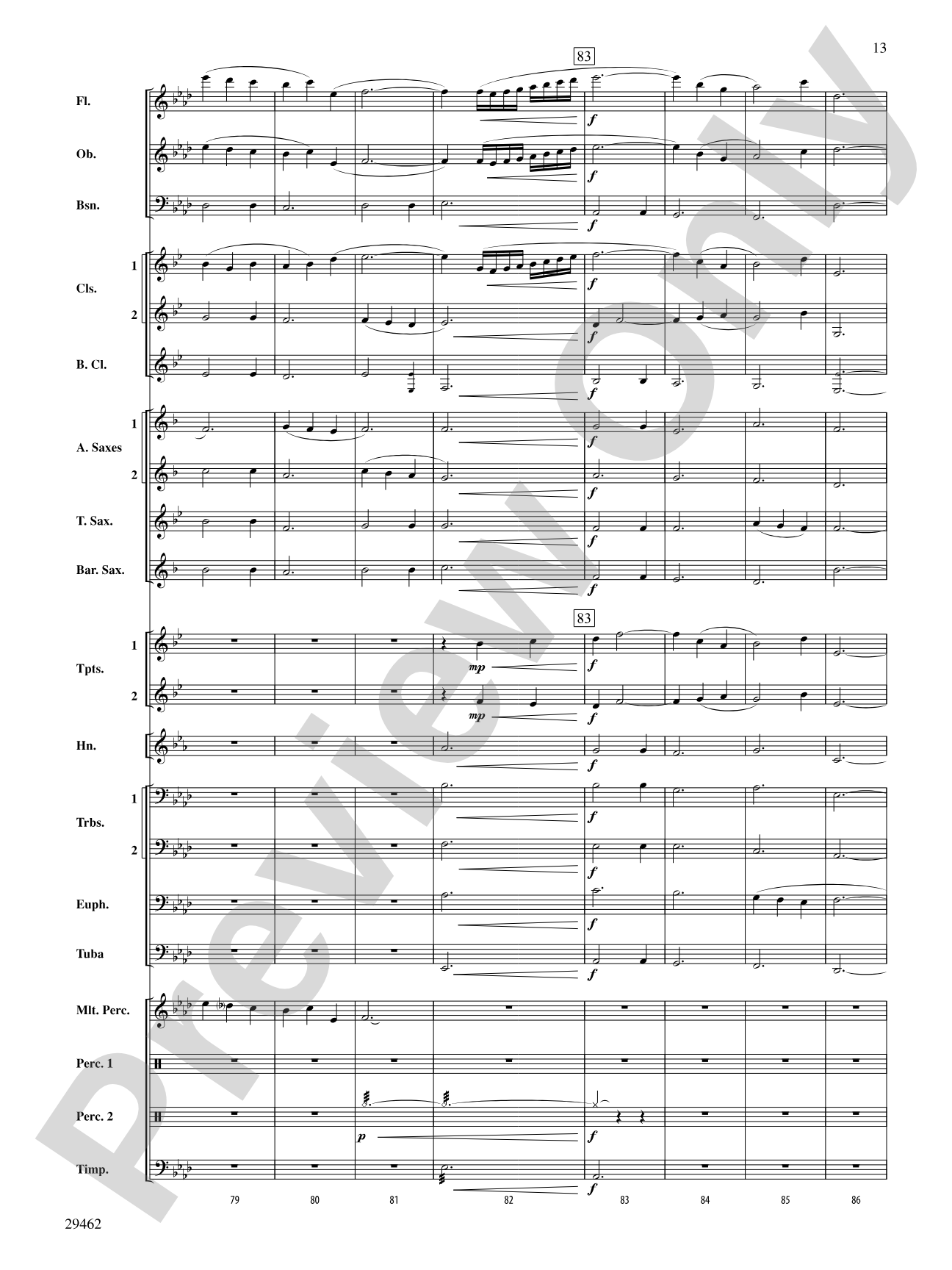
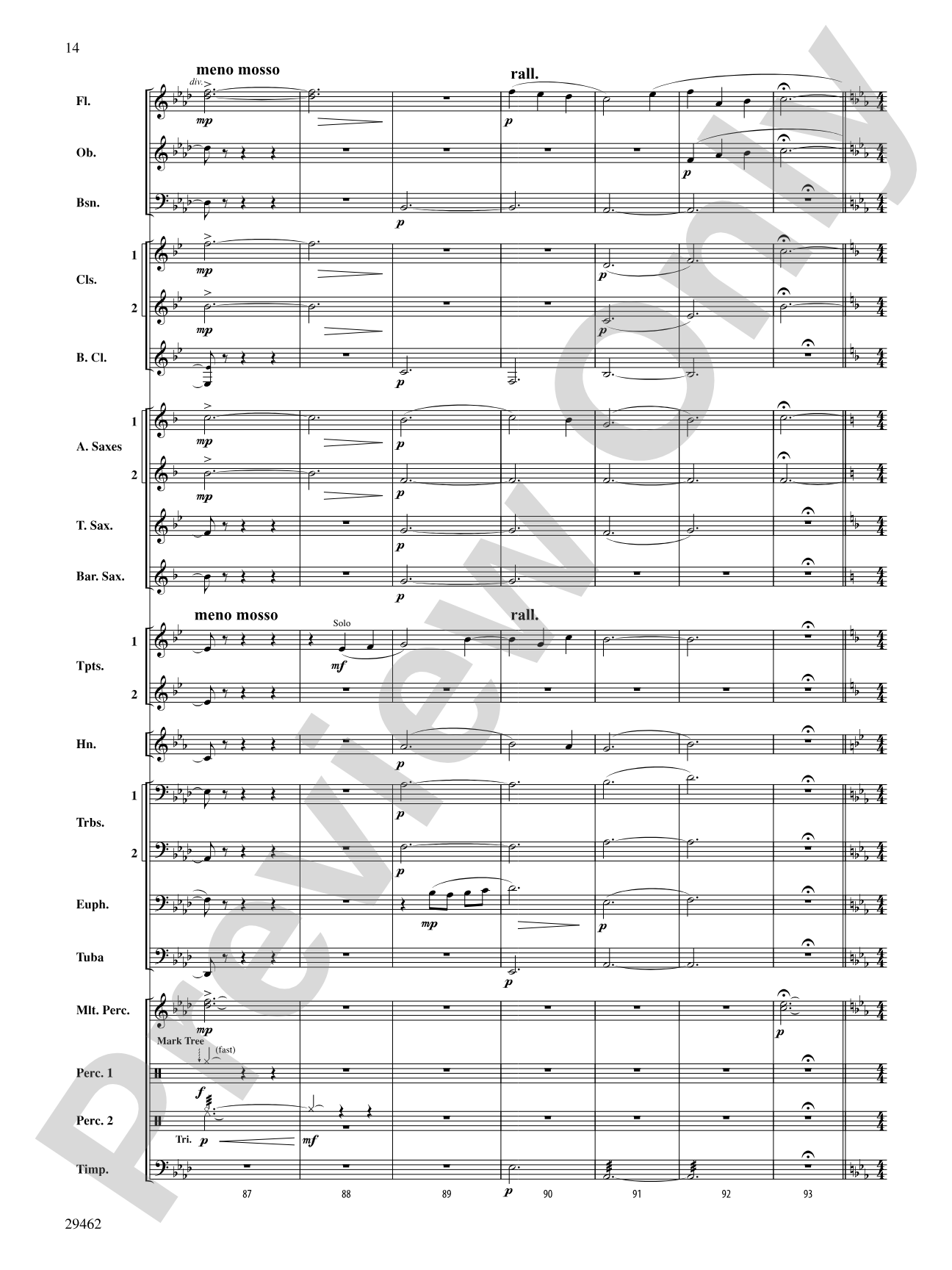
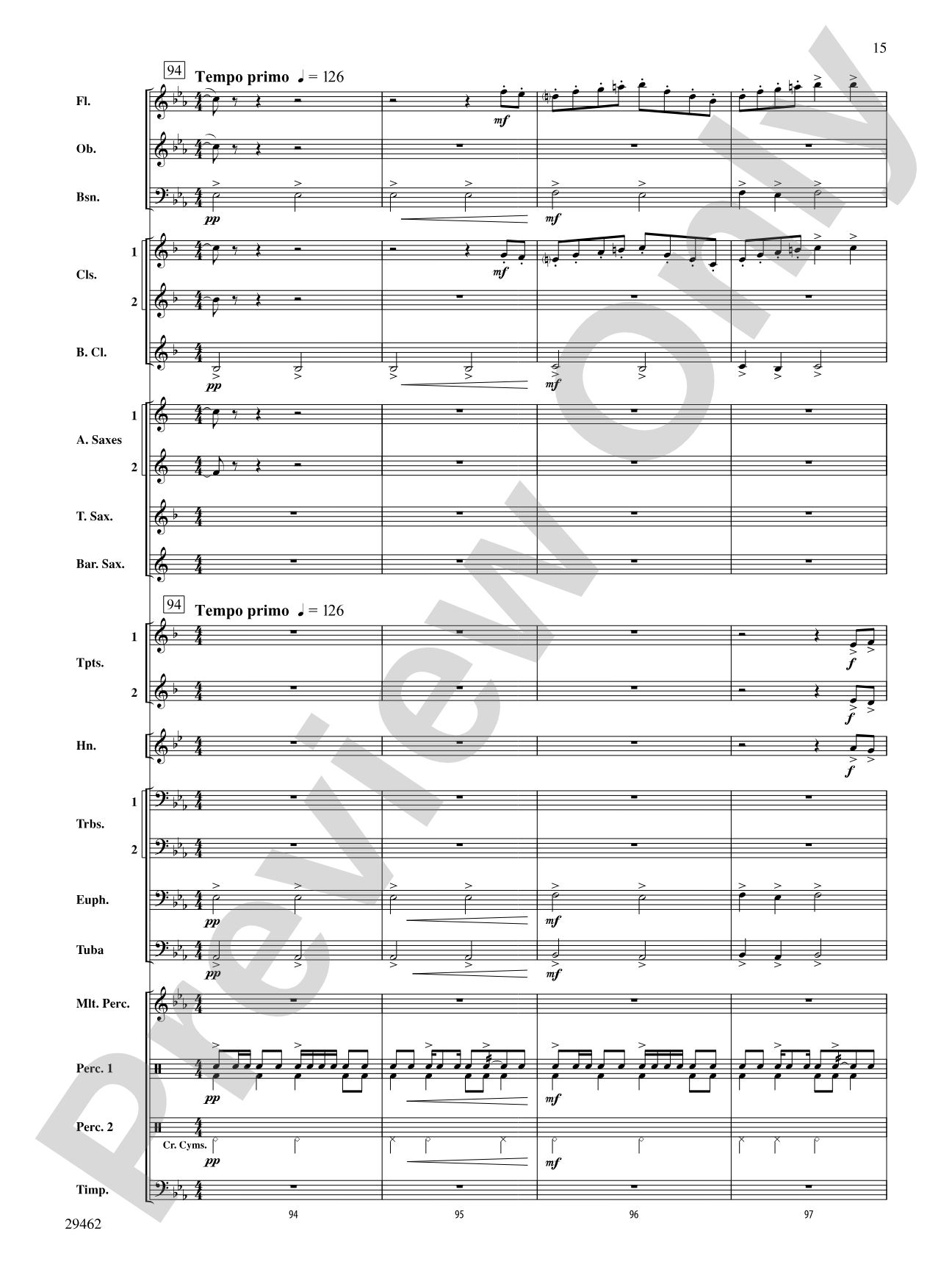
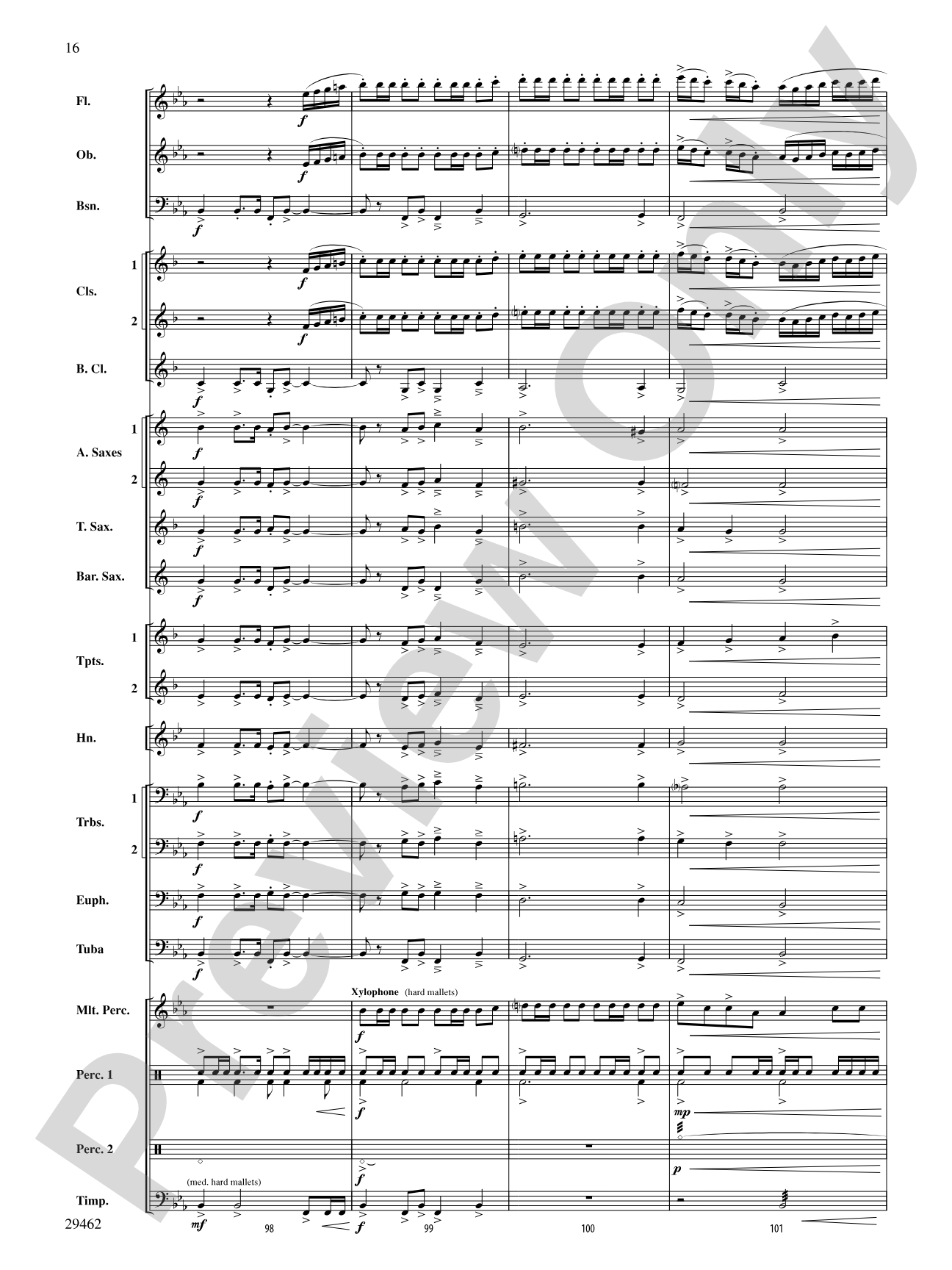
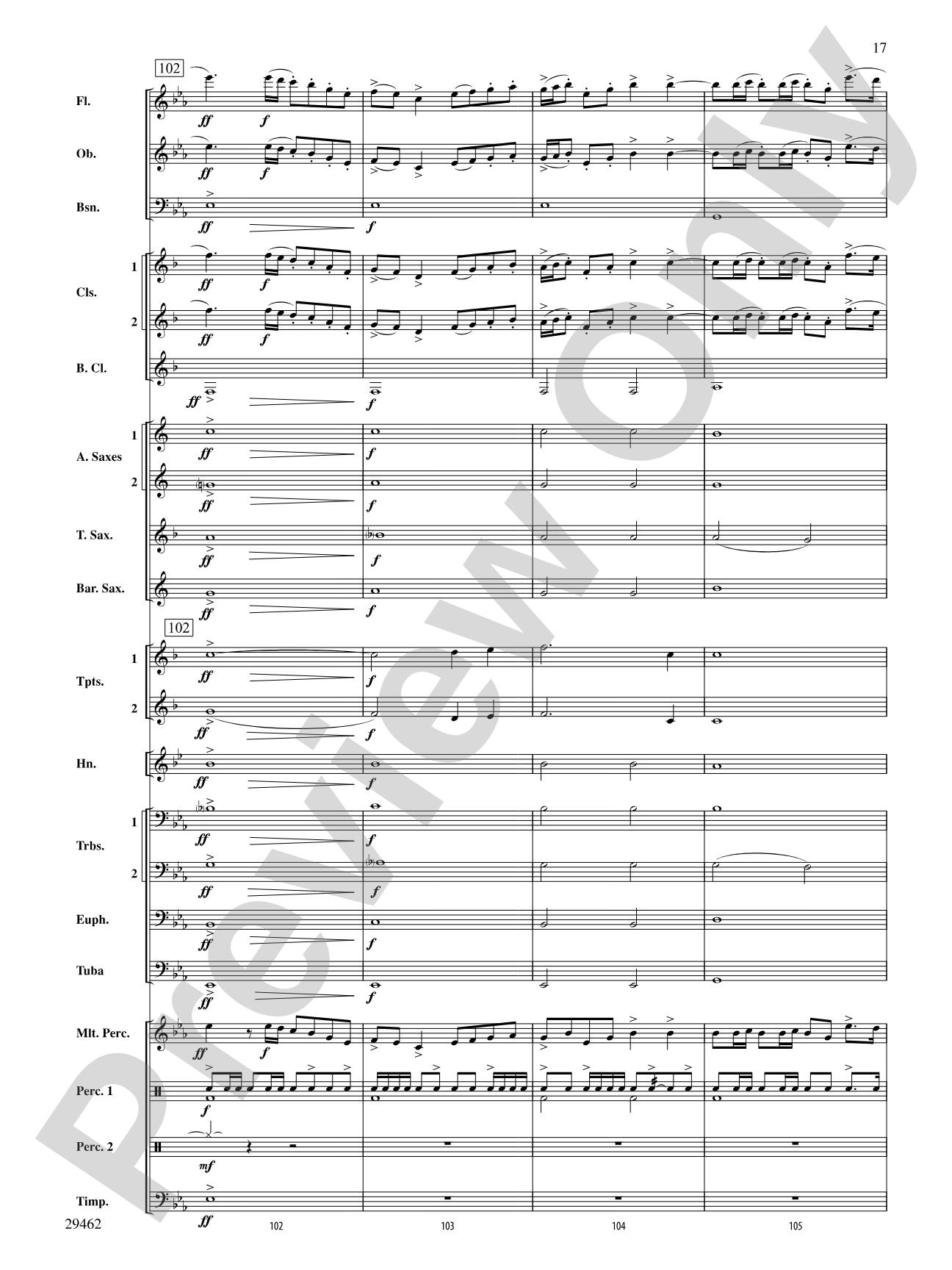
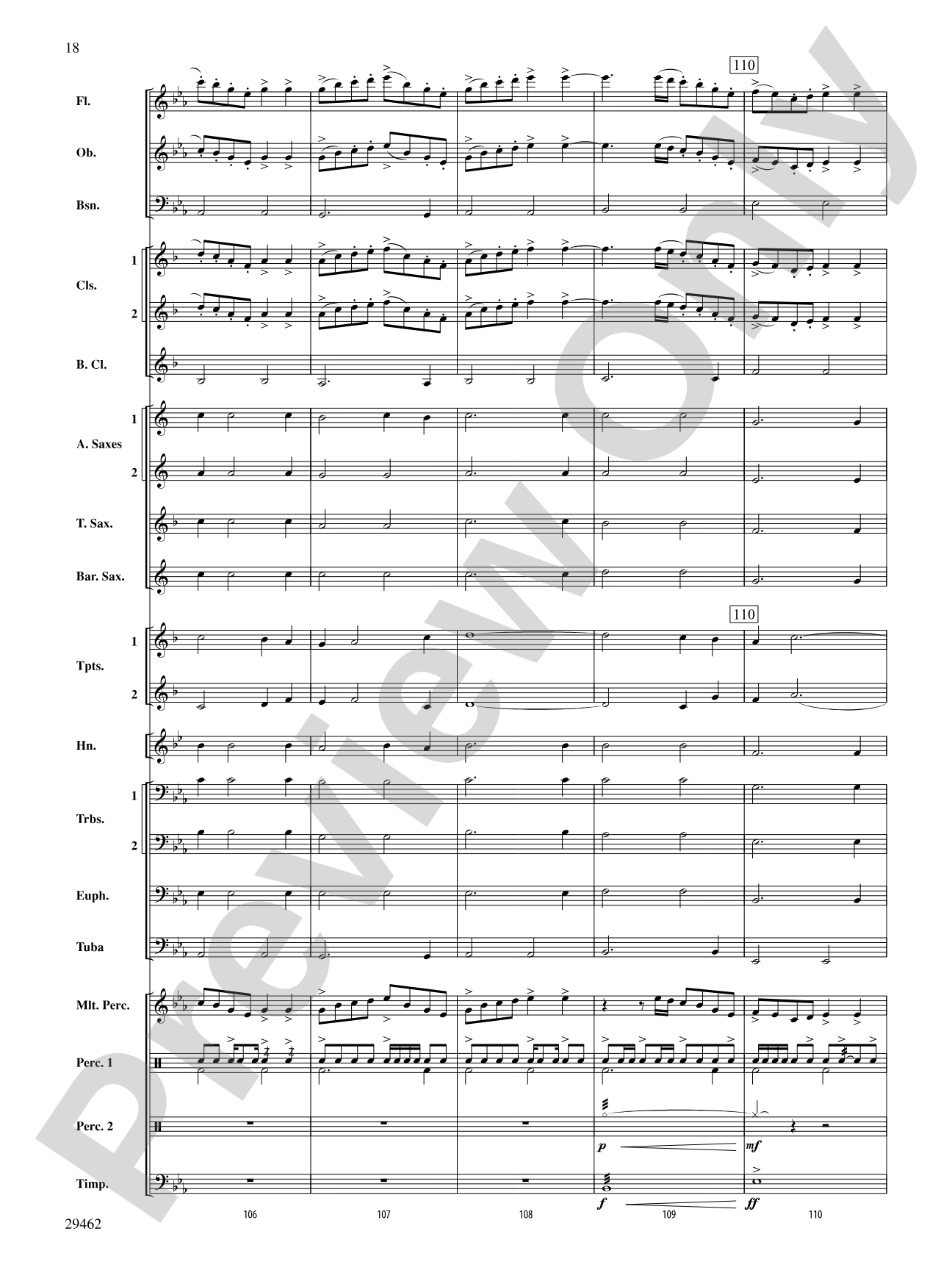
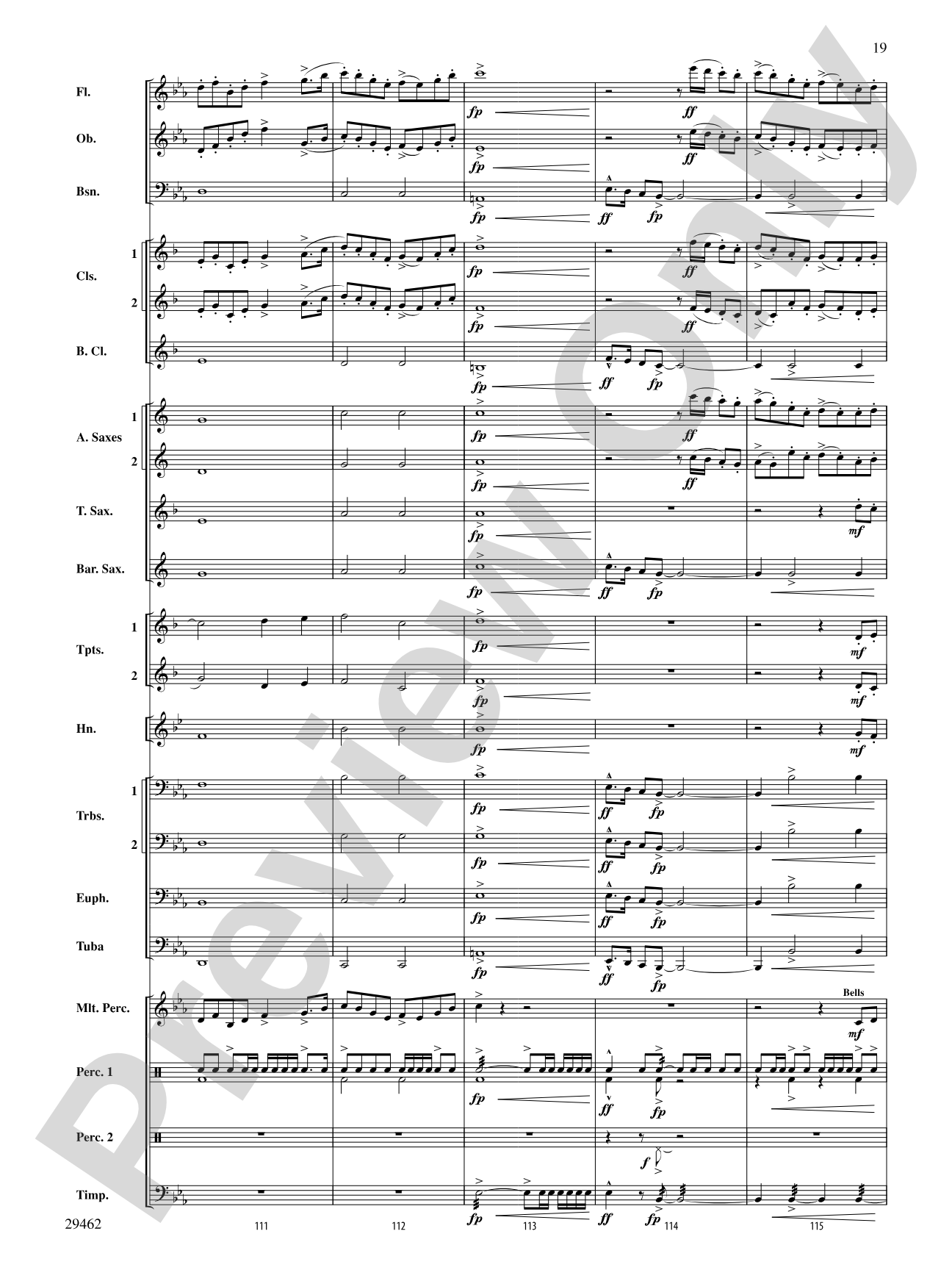
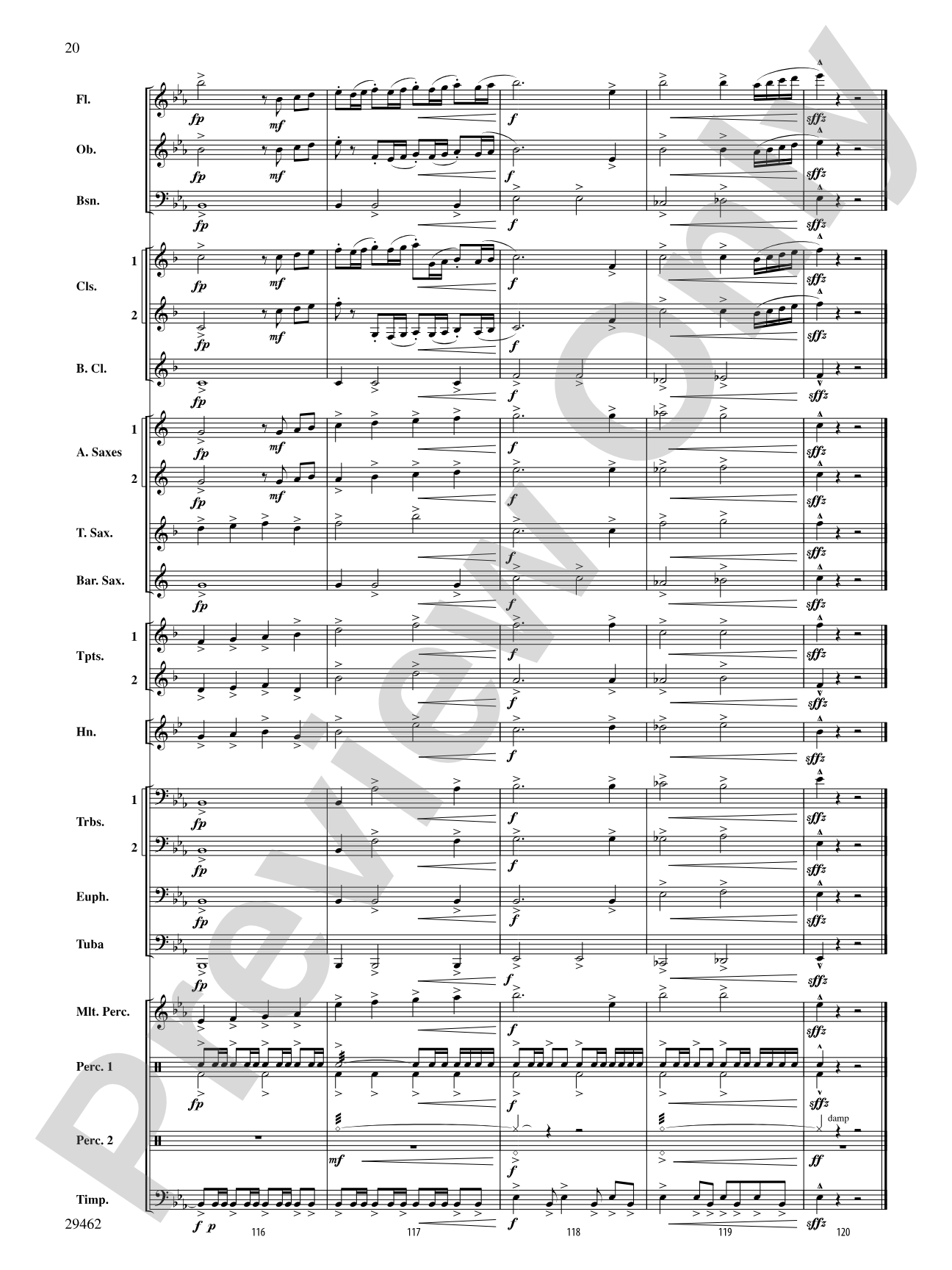

Fantasy on an Early American Marching Tune: Score
By Robert Sheldon
Grade: 2.5 (Medium Easy)
Item: 00-PR-0001400
$8.00
Pickup currently not available
Description
Fantasy on an Early American Marching Tune is based on the popular fife and drum melody, "The Girl I Left Behind Me." All melodies and countermelodies in the piece are drawn from this well-known theme, as they are altered and re-worked to create new melodic material. An excellent piece for festival or contest use, and a delightful addition to any concert program! (3:10)


Don't just read it, hear it, play along with it, and watch your students grow with it. In MakeMusic Cloud, Fantasy on an Early American Marching Tune: Score comes alive with professional accompaniment, adjustable tempo, and built-in practice tools that turn solo practice into real progress.
Open in the Player
Jump straight in and assign it today.
Start Your Free Trial
Open this title and explore the full library in minutes.
Sample Audio
1
Audio File
--:--
0:00
0:00
Sample Video
No sample videos found.
Additional Details
Series:
Young Symphonic
Publisher:
Alfred Music
Page Count:
250
SKU:
00-PR-0001400
More about this title
About the Composer: Robert Sheldon

Robert Sheldon's work dominates the concert band repertoire at every level, from middle school through professional ensembles. His output is staggering, hundreds of publications, countless commissions, and a presence on virtually every significant contest and festival list worldwide. He co-authored Sound Innovations, the standard method book for young band musicians, and has earned recognition from the American School Band Directors Association, Phi Beta Mu, and ASCAP for his contributions to wind band literature.
As a guest conductor and clinician, Sheldon brings his expertise to All-State bands, regional honors ensembles, and universities across six continents. His music has been performed at Carnegie Hall, Symphony Hall Boston, Orchestra Hall Chicago, the Sydney Opera House, and the Kennedy Center. In 2020, VanderCook College of Music awarded him an honorary doctorate in recognition of his impact on music education.
Why we love this
Sheldon takes a single familiar melody and transforms it into something that keeps audiences engaged while remaining accessible to younger ensembles. The piece demonstrates how strong compositional technique can breathe new life into a well-known theme without requiring virtuosic technical demands from your band.
What to expect
Energetic and nostalgic at once, the familiar marching tune grounds the listener while constant melodic variation keeps the ear engaged. The piece carries the spirit of early American patriotic music without ever feeling quaint or dated.
Who it's for
Grade 2.5 ensembles preparing for festival or contest will find this piece both rewarding and manageable. It works equally well for directors building programming that balances accessibility with musical substance.
How to get the most out of it
- Highlight the contrast between sections by adjusting the weight and color of the articulation; the main theme needs clarity, while the variations benefit from a rounder, more lyrical approach
- Use the countermelodies to create a sense of dialogue between sections; make sure inner voices are audible without covering the primary material
- Shape the phrase endings deliberately to preserve forward momentum across the three-minute arc, preventing the fantasy structure from feeling episodic
How to use it
Open a patriotic-themed concert with this piece to establish energy and familiarity, or use it as a crowd-pleasing centerpiece that sits comfortably between more demanding works. It pairs naturally with other Americana-influenced concert band repertoire and gives audiences an immediate point of connection.
Skills your students will build
- Sustaining musical shape across multiple melodic variations derived from a single theme
- Balancing primary melodies against supporting countermelodies in ensemble texture
- Executing clear articulation changes that define sectional contrasts
- Reading and executing the specific demands of Grade 2.5 concert band scoring