

Fame Is a Fickle Food: SATB Choral Octavo
Text by Emily Dickinson, music by Ruth Morris Gray
Item: 00-PO-0000019
$1.65
Minimum order quantity: 20 copies
Pickup currently not available
Description
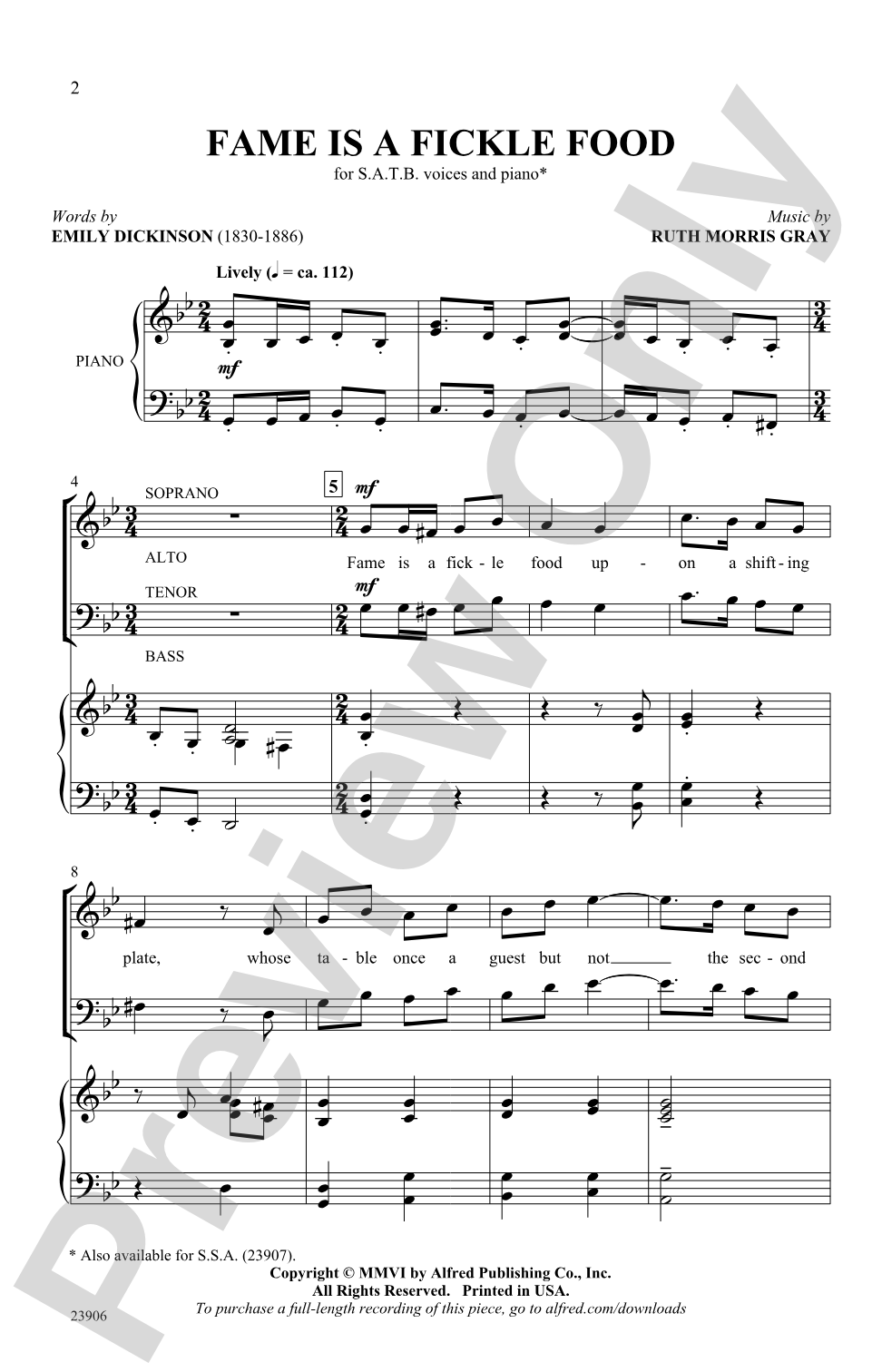
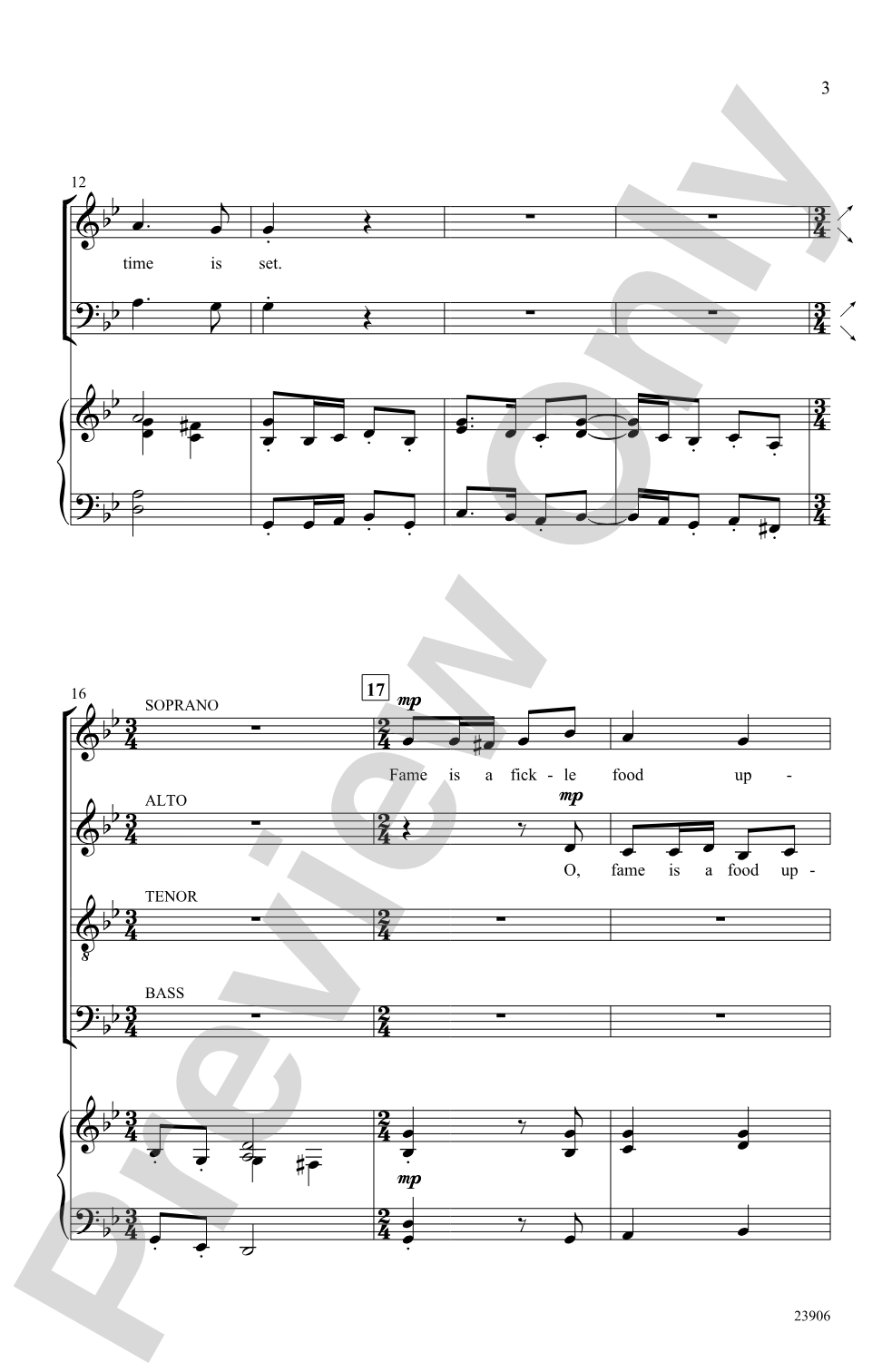
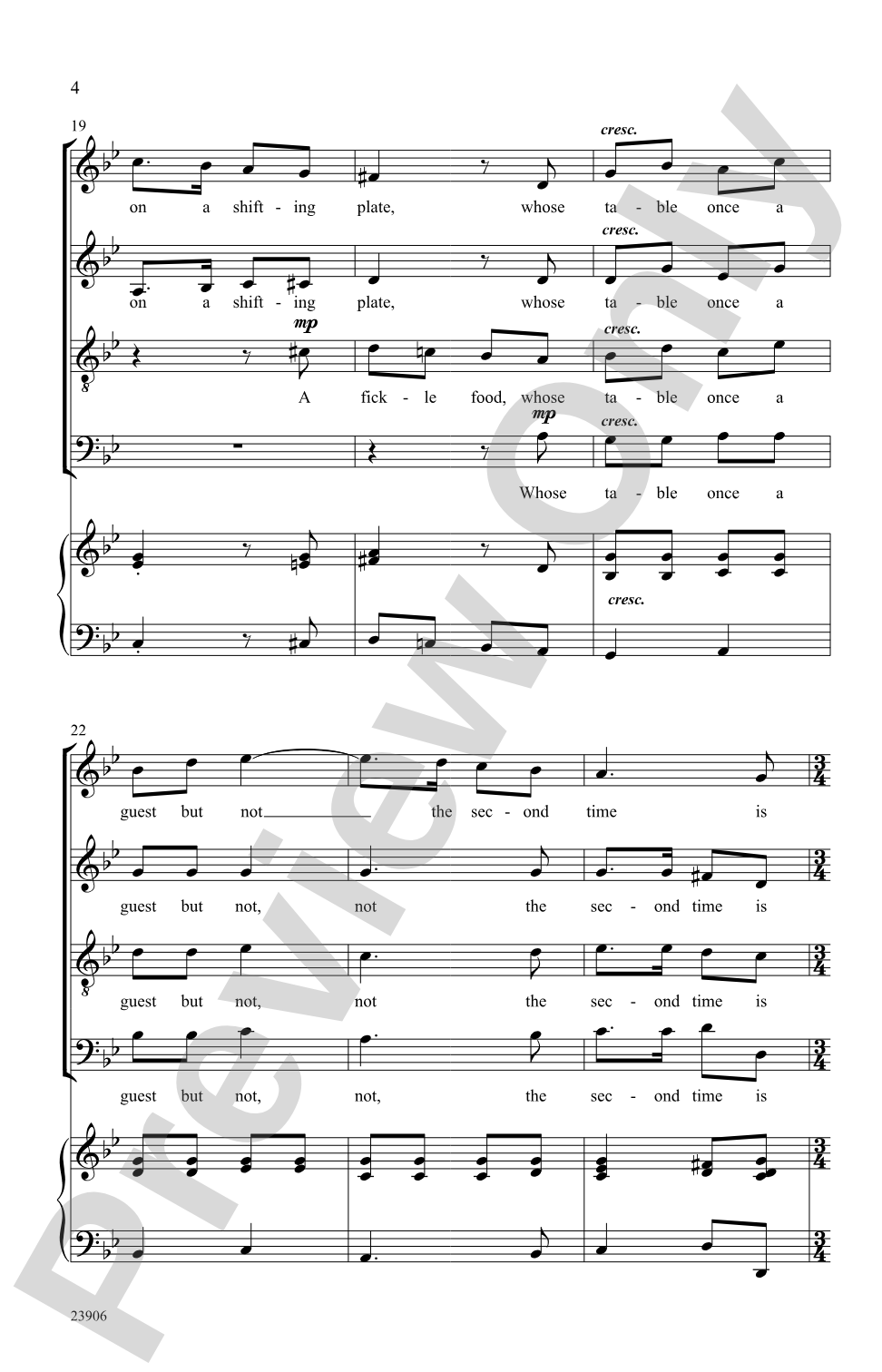
This playfully polyphonic piece, composed in a minor key, features a text by Emily Dickinson and lively music reminiscent of the Classical era. An agile piano accompaniment and satisfying vocal parts that work well together make it a tasty treat to perform. Great for contests!


Fame Is a Fickle Food: SATB Choral Octavo isn't in MakeMusic Cloud just yet...but it could be. Let us know you'd like to see it, and you'll help shape what comes next. In the meantime, start a free trial and dive into thousands of interactive titles your students can play along with today.
Request This Title
Tell us you want it.
Start Your Free Trial
Explore everything that's ready to play right now.
Sample Audio
1
Audio File
--:--
0:00
0:00
Sample Video
No sample videos found.
Additional Details
Series:
Alfred Choral Designs
Publisher:
Alfred Music
Page Count:
12
SKU:
00-PO-0000019
More about this title
About the Composer: Ruth Morris Gray

Ruth Morris Gray has shaped choral music education as Director of Choirs at Rosemead High School in Rosemead, CA, where she has taught since 2004. Her compositional output spans over 100 published works, grounded in formal training that includes a Bachelor of Music in Piano Performance and Composition from Biola University and a Master of Arts in Music Composition from UC Santa Barbara. She holds a California Single Subject Music Credential from California State University, Northridge.
Beyond the rehearsal hall and composition desk, Gray pursues music in performance and collaboration with other musicians. Her interests outside music include travel, reading, swimming, and cycling with her husband, Douglas.
Why we love this
Ruth Morris Gray captures Dickinson's wit in music that feels both intellectually engaging and immediately performable. The polyphonic texture and Classical sensibility create sophistication without sacrificing the joy that comes from singing well-crafted vocal lines, and the accompaniment sits perfectly under the voices rather than competing with them. This is the kind of piece that earns applause at contests because singers enjoy performing it and judges hear solid musicianship throughout.
What to expect
The piece moves with the buoyancy and elegant restraint of Classical-era vocal writing, yet Gray's harmonic language gives it modern wit that mirrors Dickinson's dry observation about fame. Singers discover intricate voice interactions that feel conversational rather than academic, and the minor key lends a sophisticated lightness to what could have been a merely clever setting.
Who it's for
SATB choirs seeking literature that blends literary substance with genuine musicality. This octavo works equally well for high school ensembles, college choir courses, and adult amateur groups that value both poetic text and compositional craft.
How to get the most out of it
- Balance the inner voices carefully during passages of dense counterpoint; the piano part supports rather than doubles, so each choir section must carry its own melodic weight.
- Maintain the dance-like energy of the Classical idiom by keeping diction crisp and articulation precise, especially on lighter syllables.
- Work the piano accompaniment from the start, since its rhythmic vitality drives the overall character; the pianist's tempo flexibility in classical passages will help the choir breathe naturally.
How to use it
Pair this with other settings of American poetry or slot it alongside Art Songs with words by 19th-century American writers for a thematic concert program. Its contest-ready craftsmanship and accessible difficulty make it an ideal choice for February or March competition seasons.
Skills your students will build
- Reading independent vocal lines in polyphonic texture
- Balancing harmonic function across four voices without doubling from the piano
- Executing crisp articulation and diction in Classical style
- Collaborating with piano accompaniment that requires ensemble attention to tempo and phrase shaping