
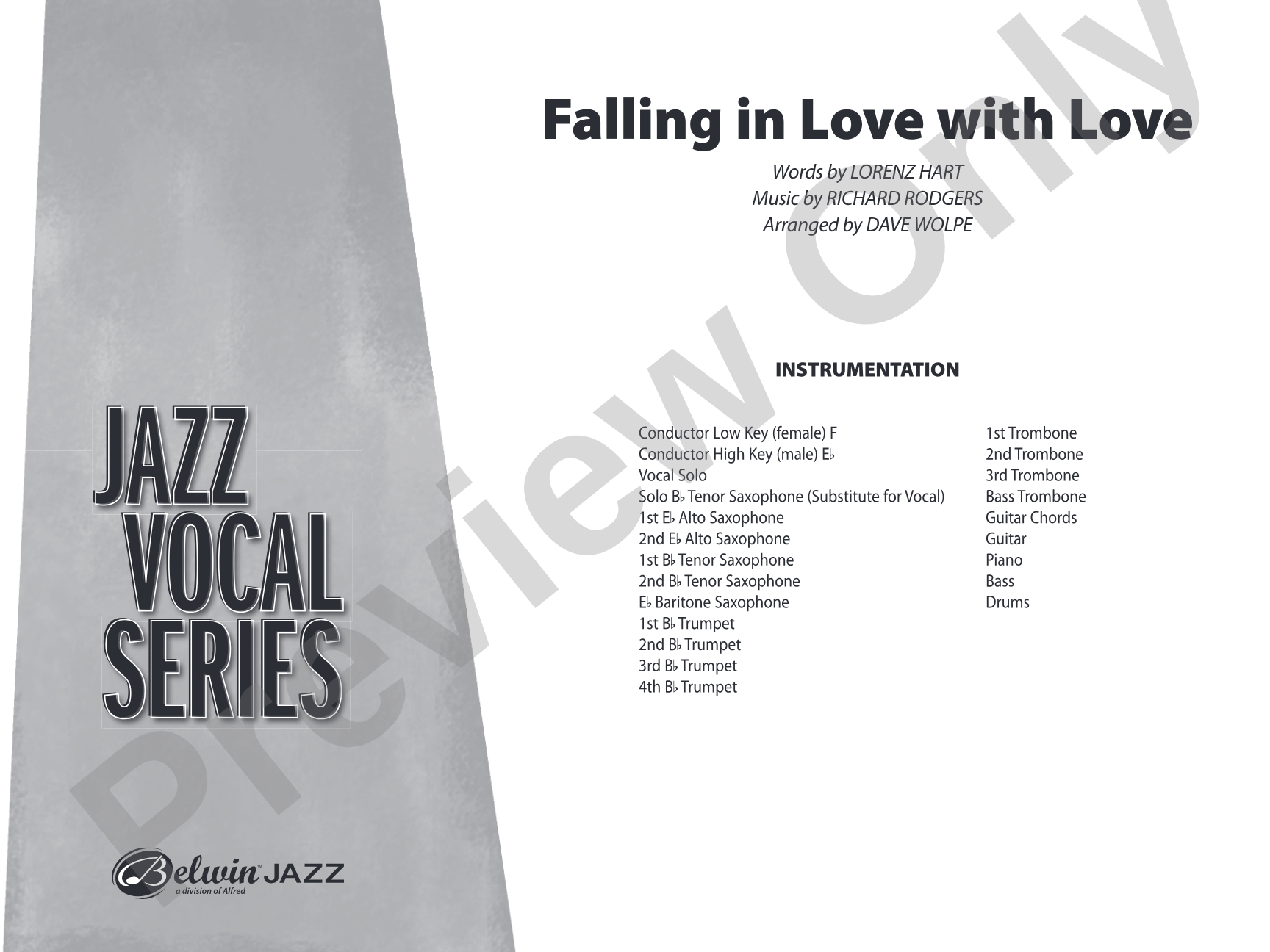
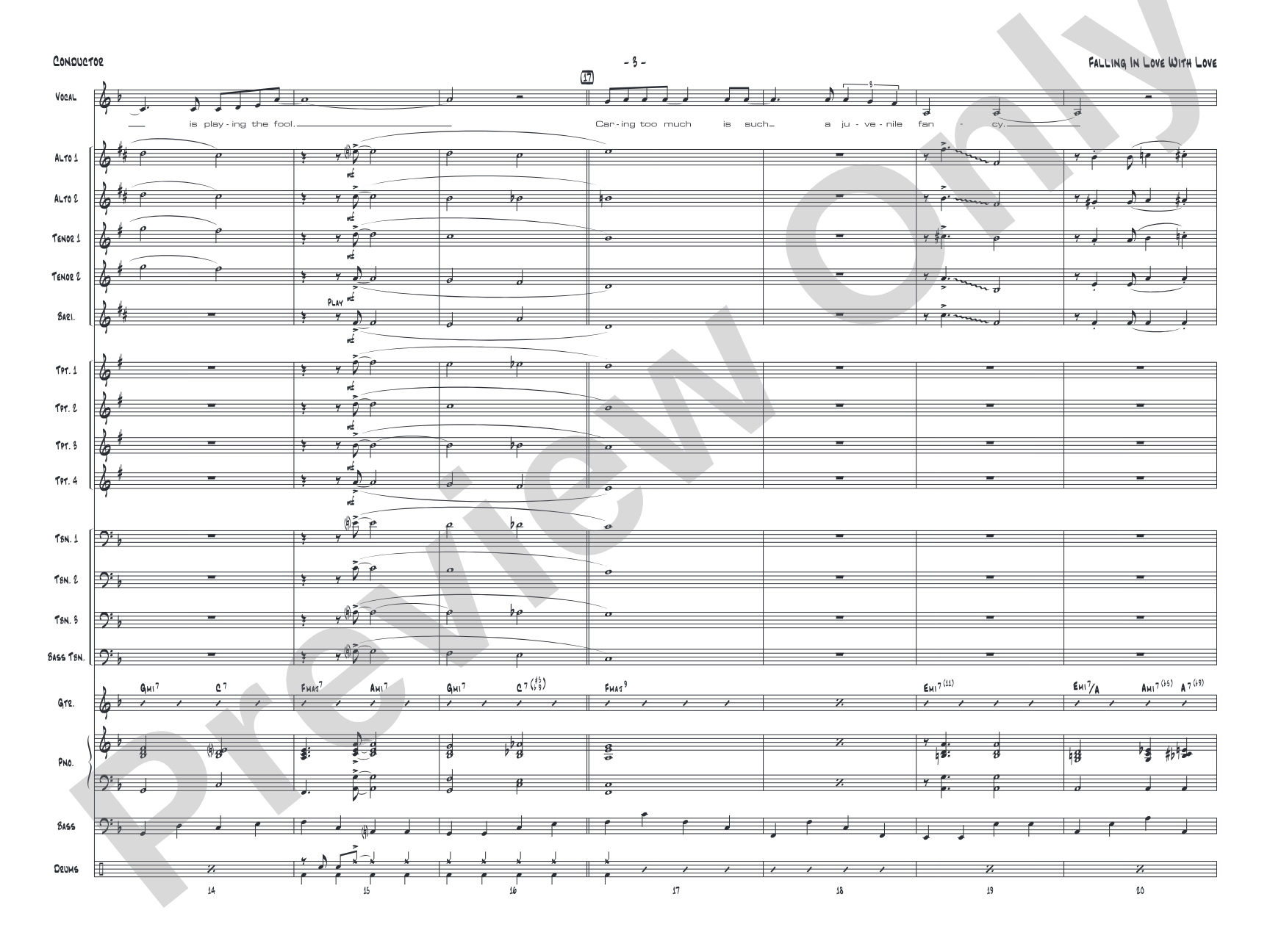
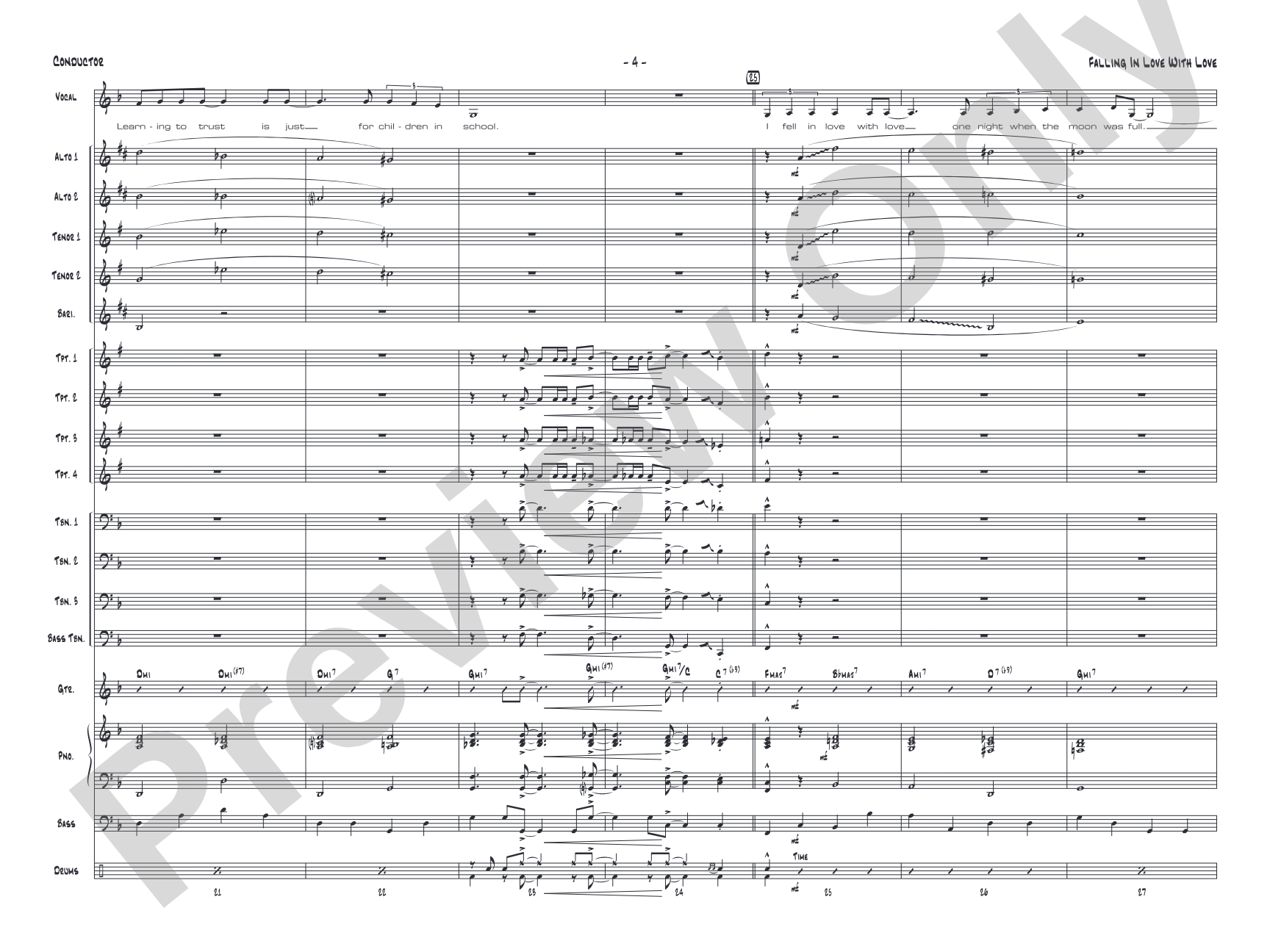
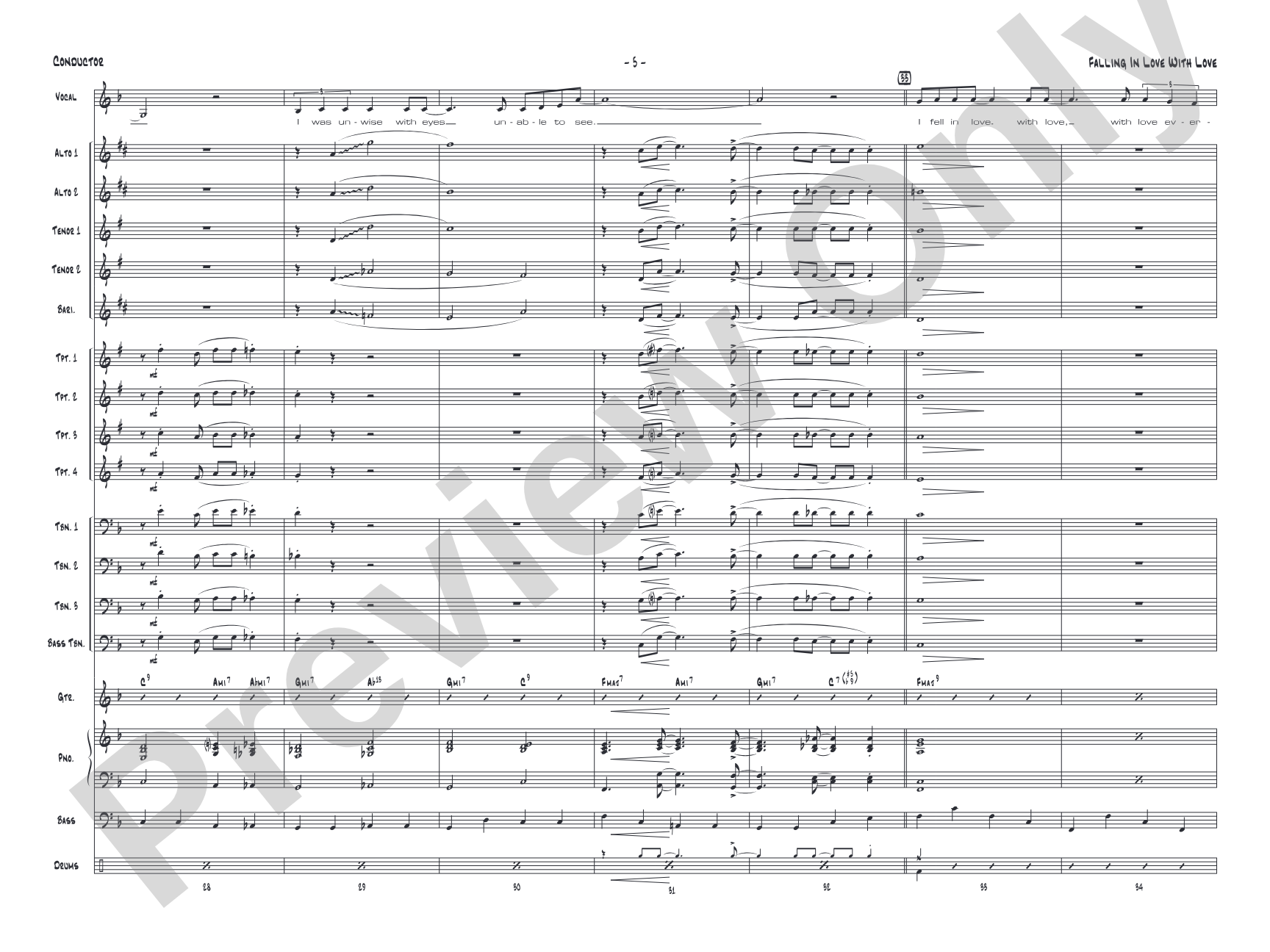
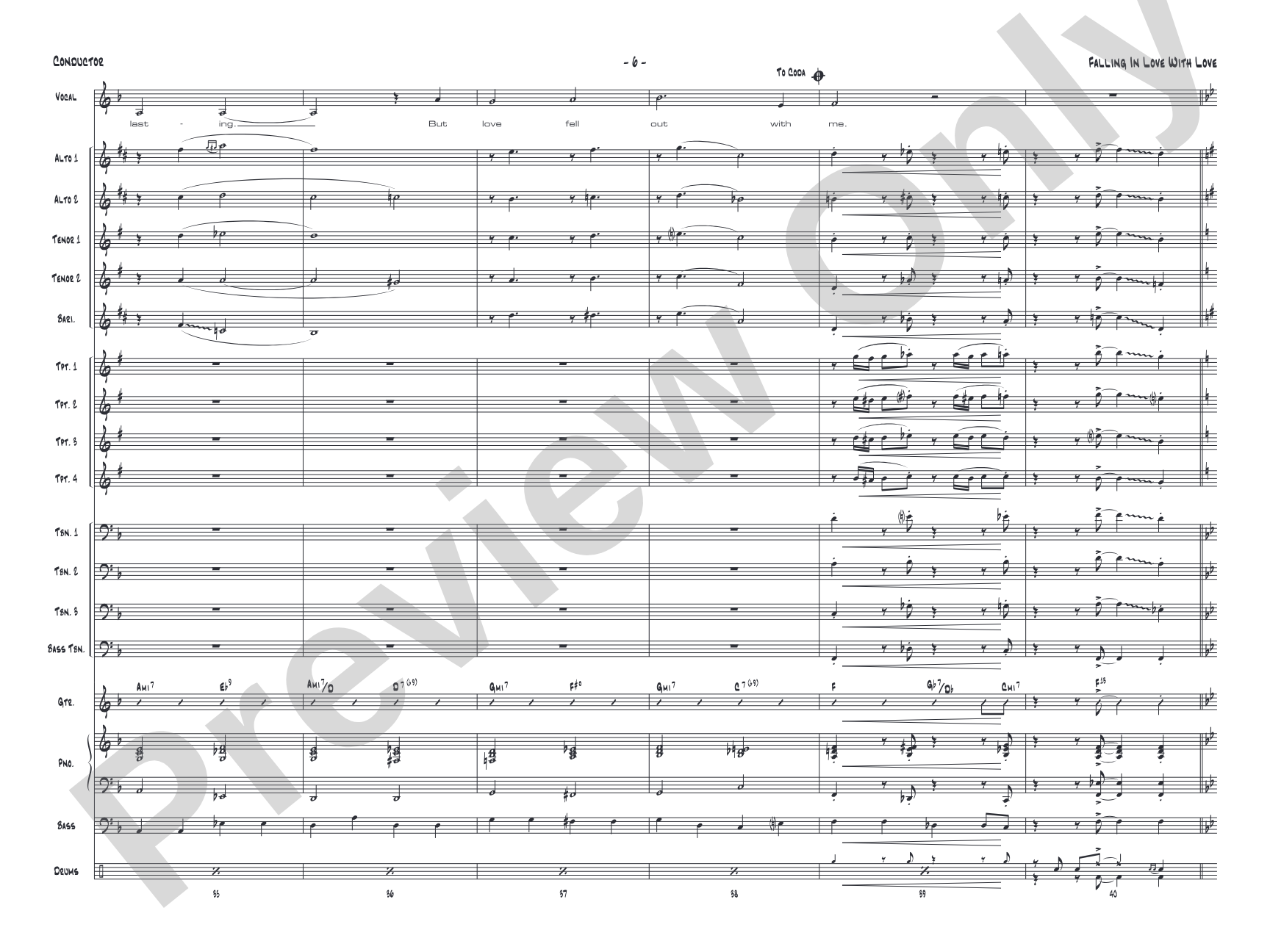
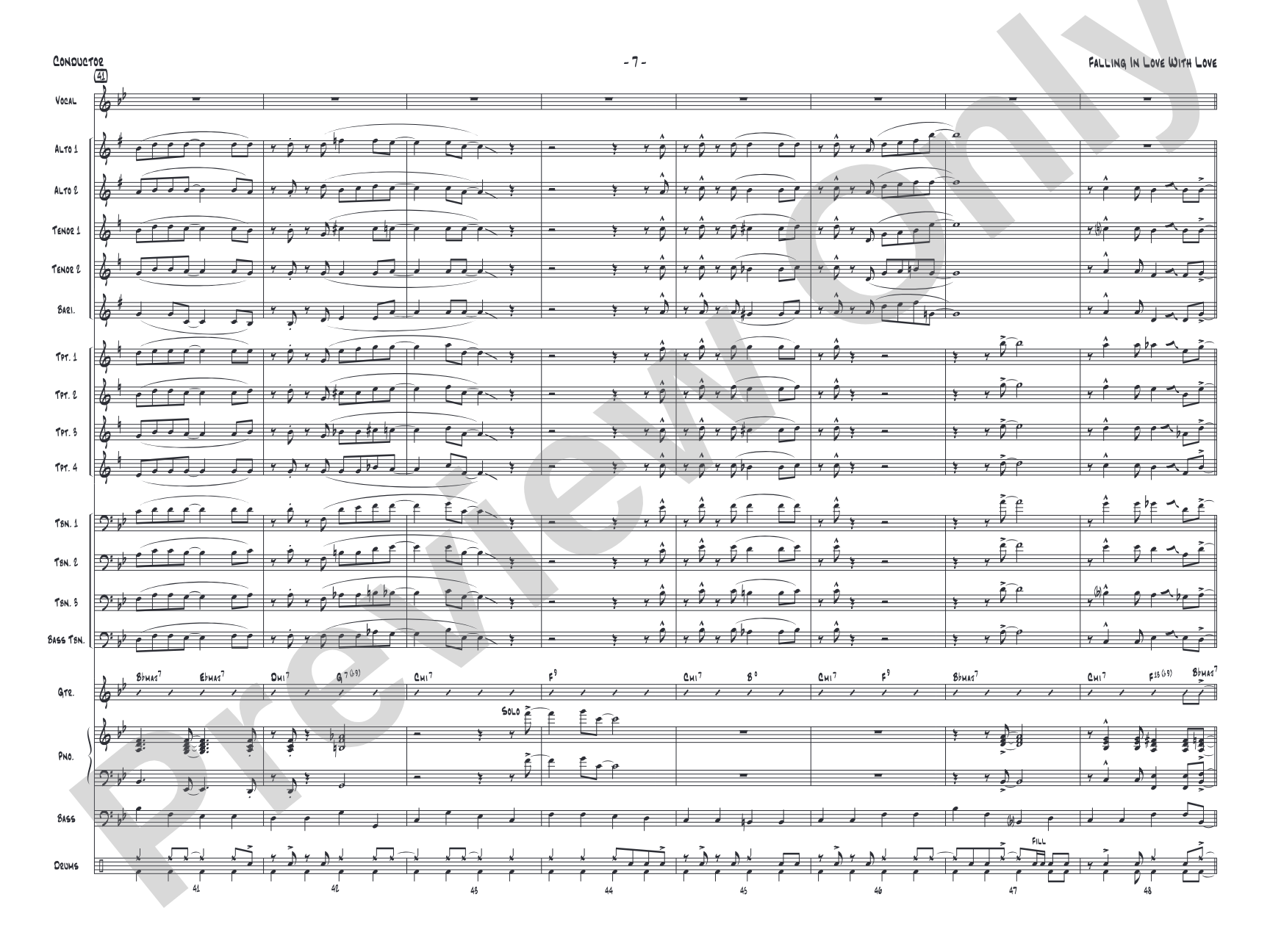
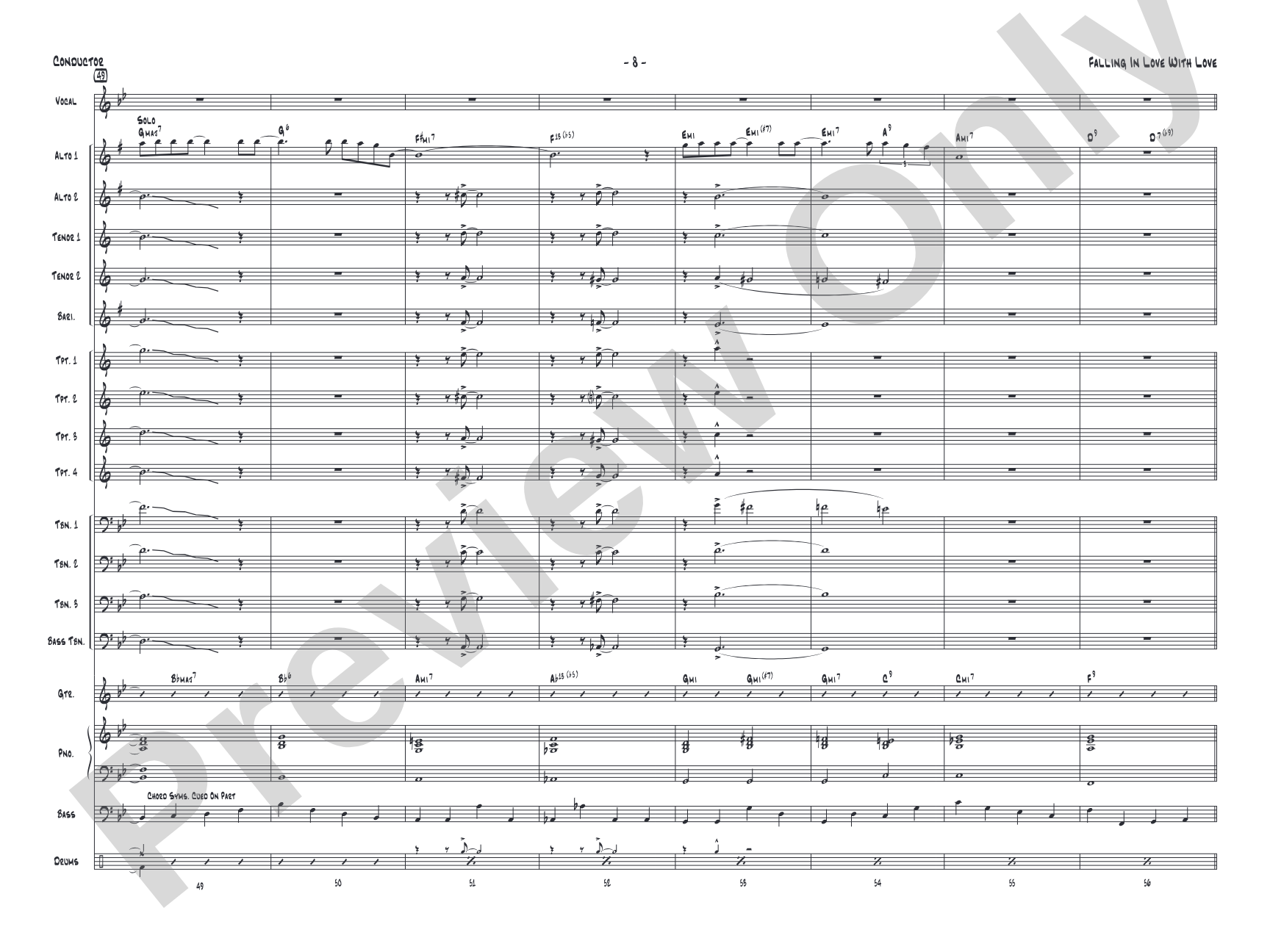
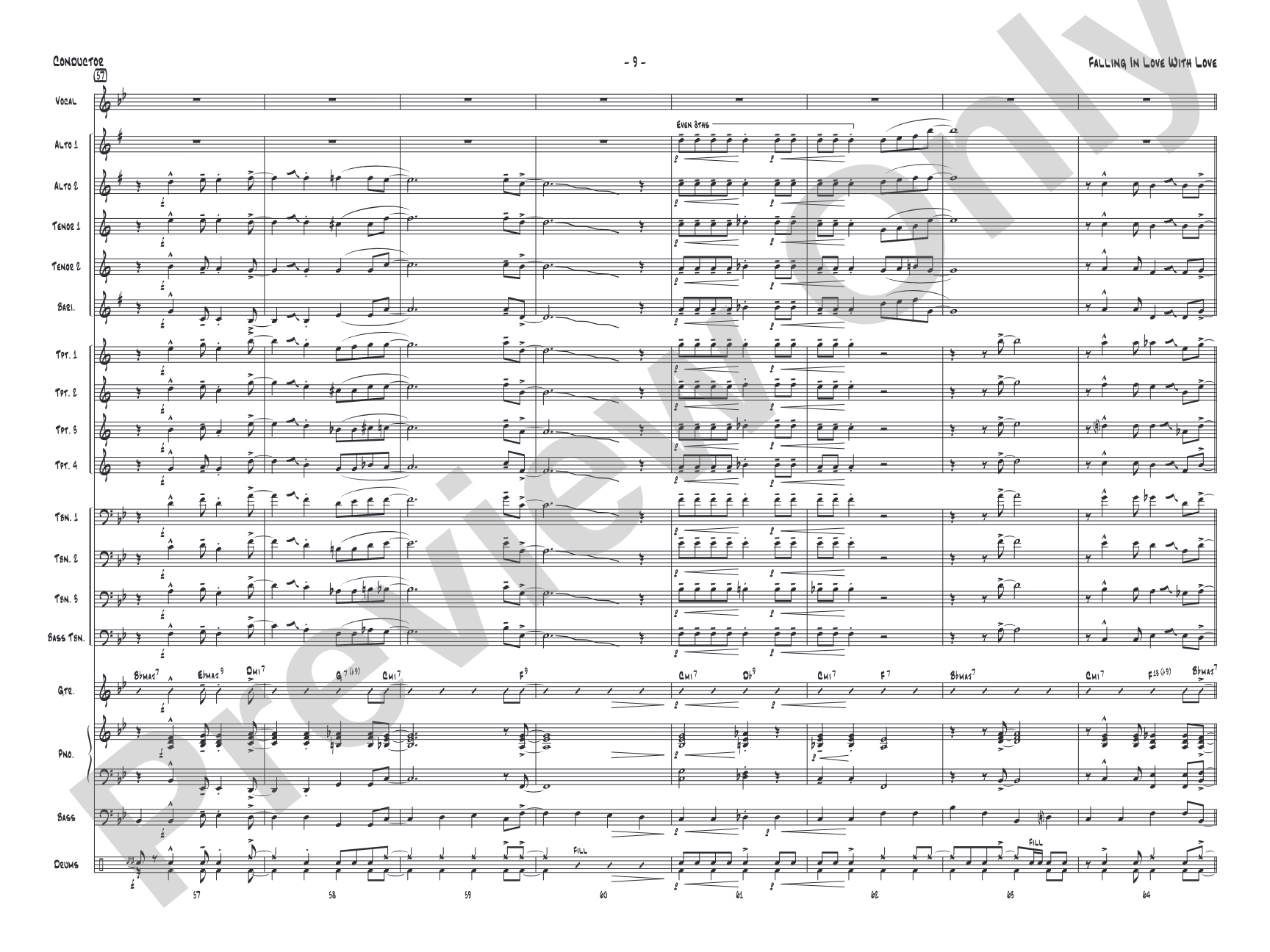
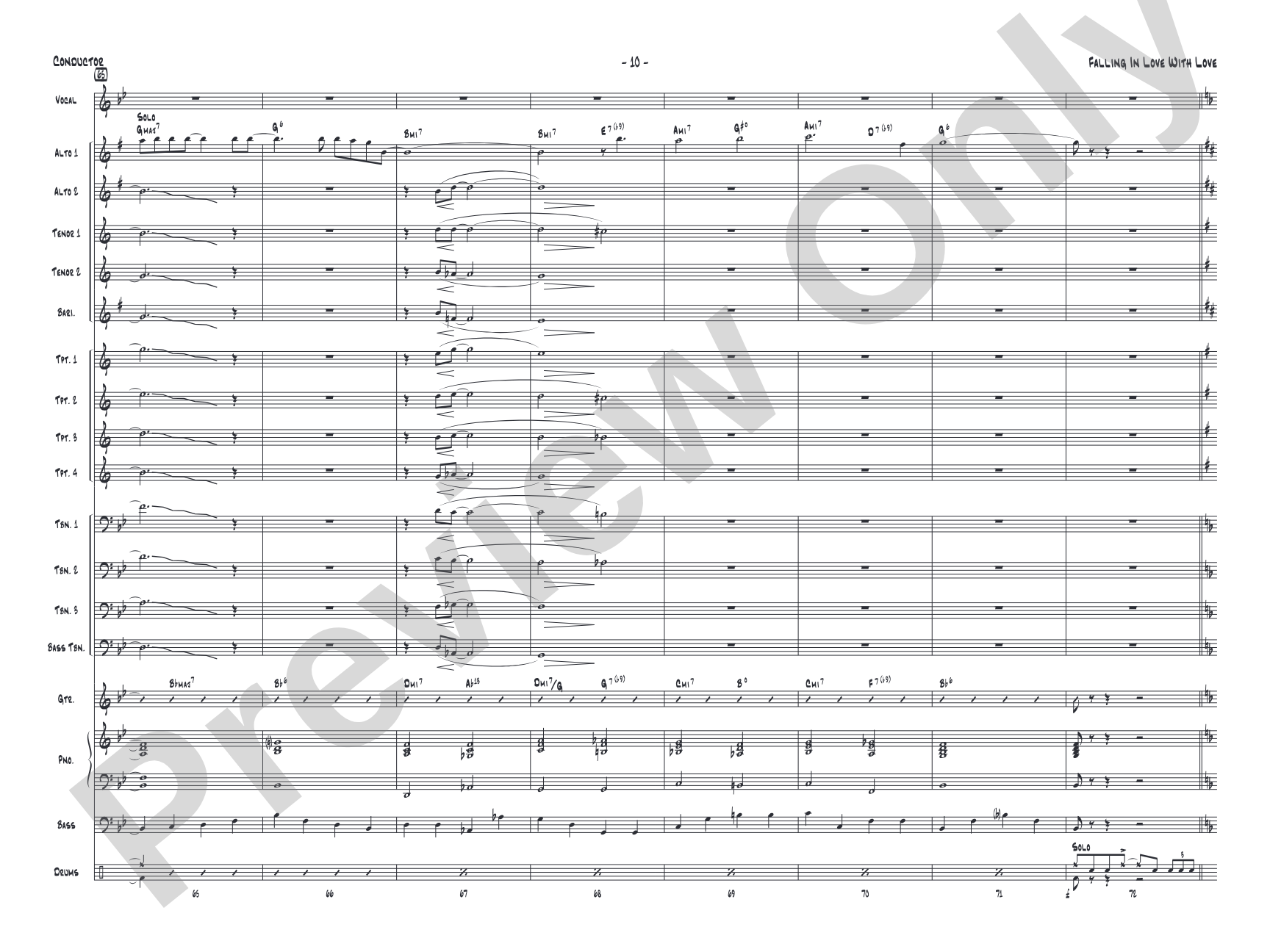
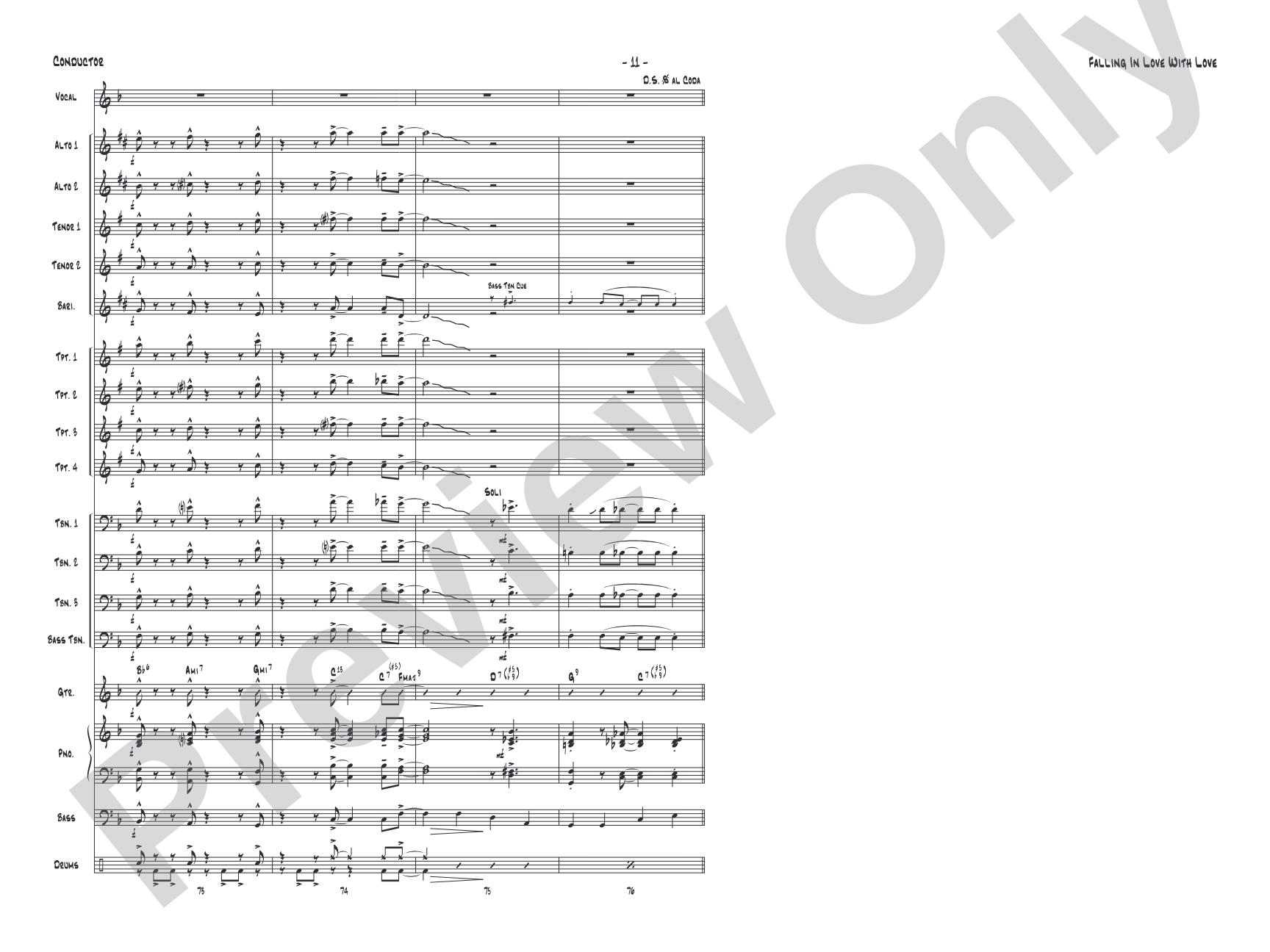
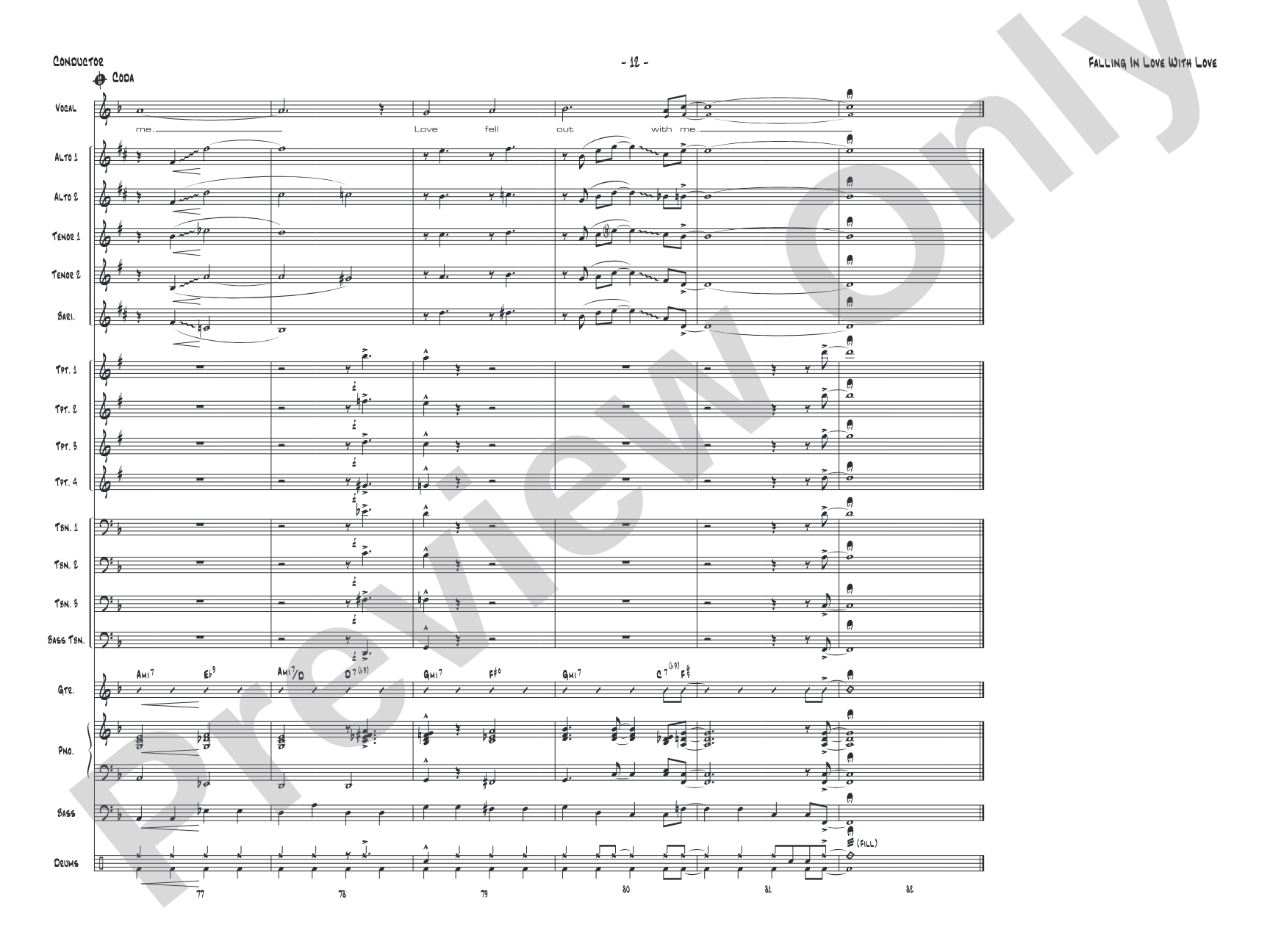
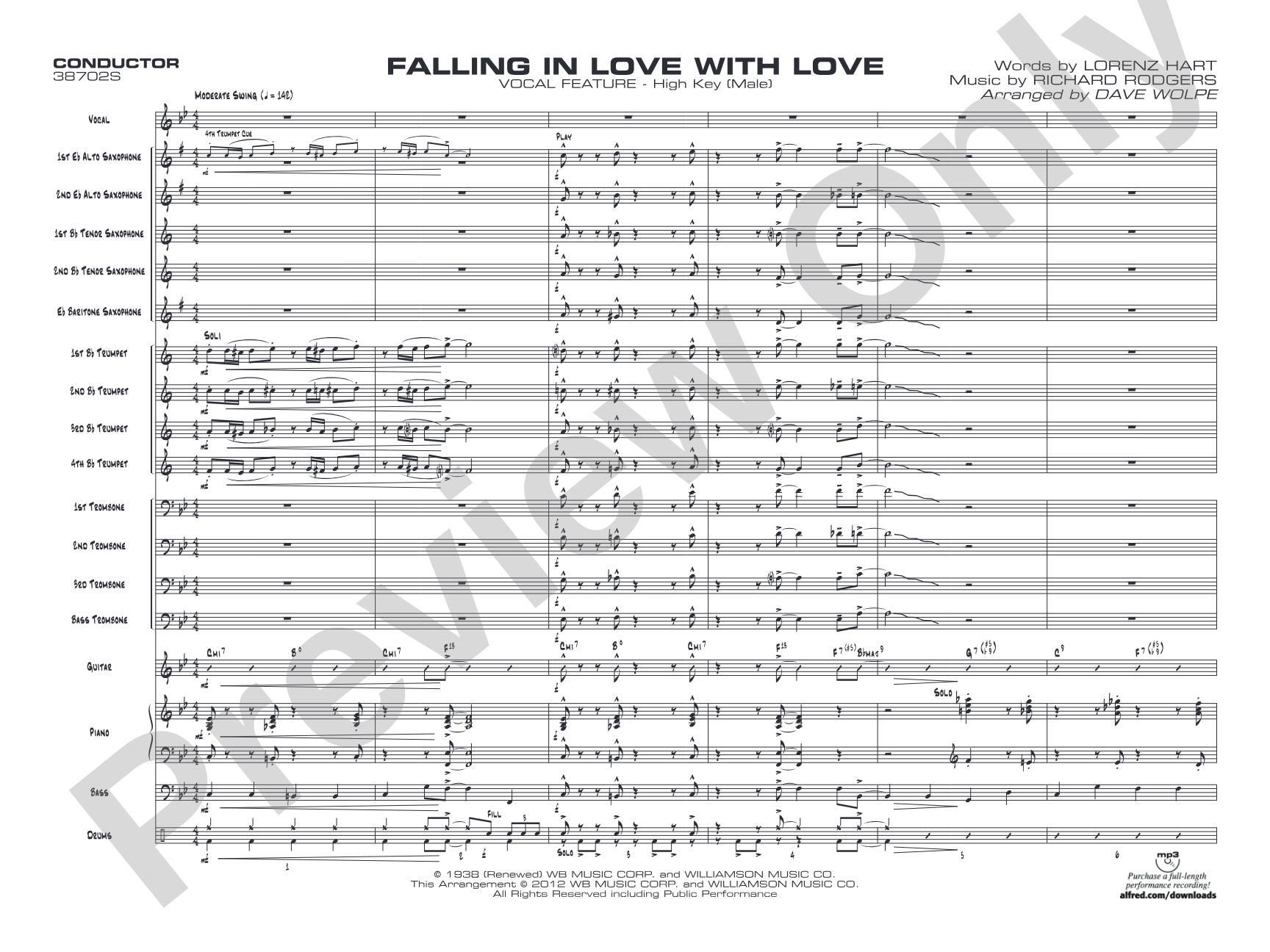
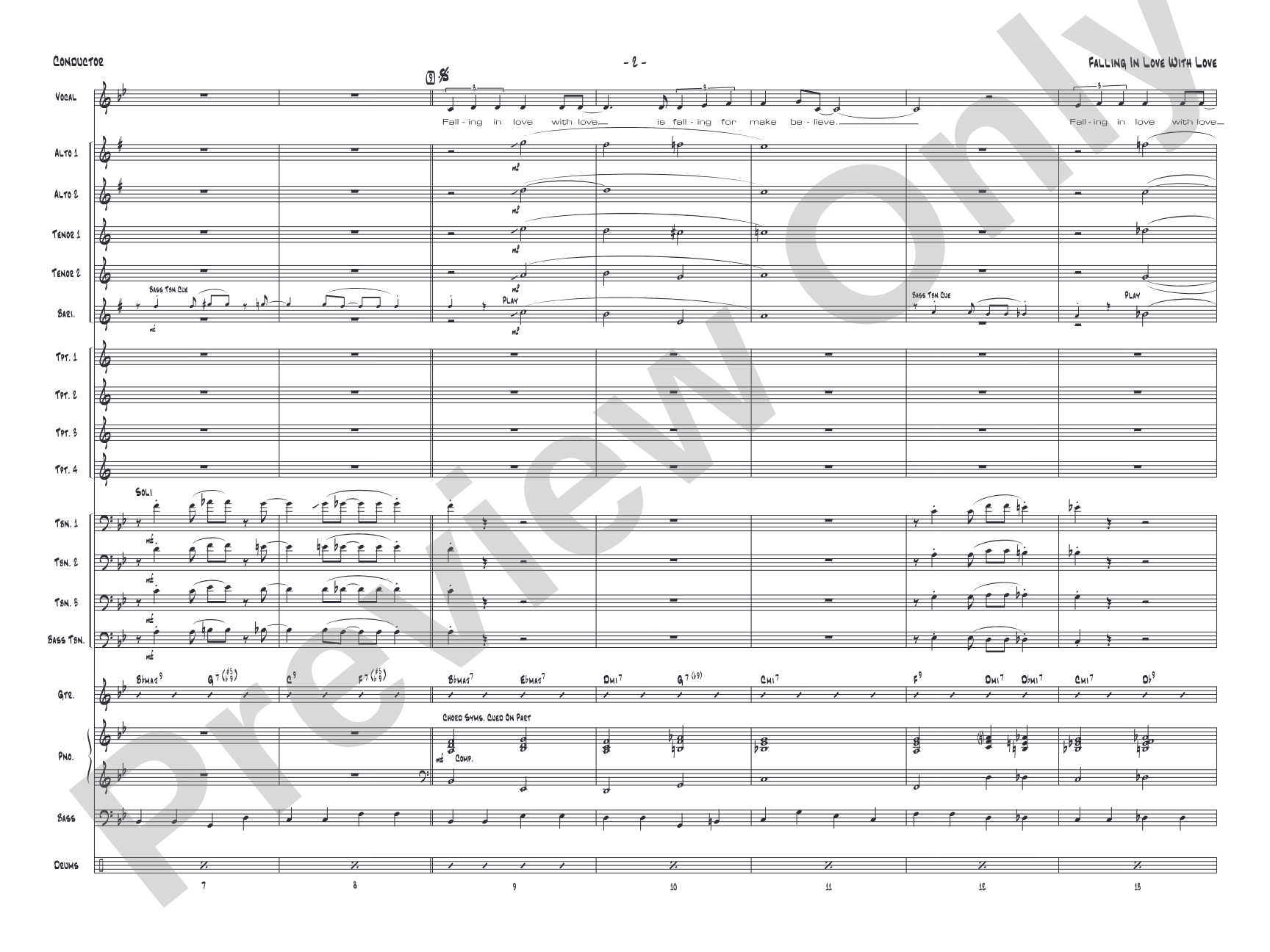
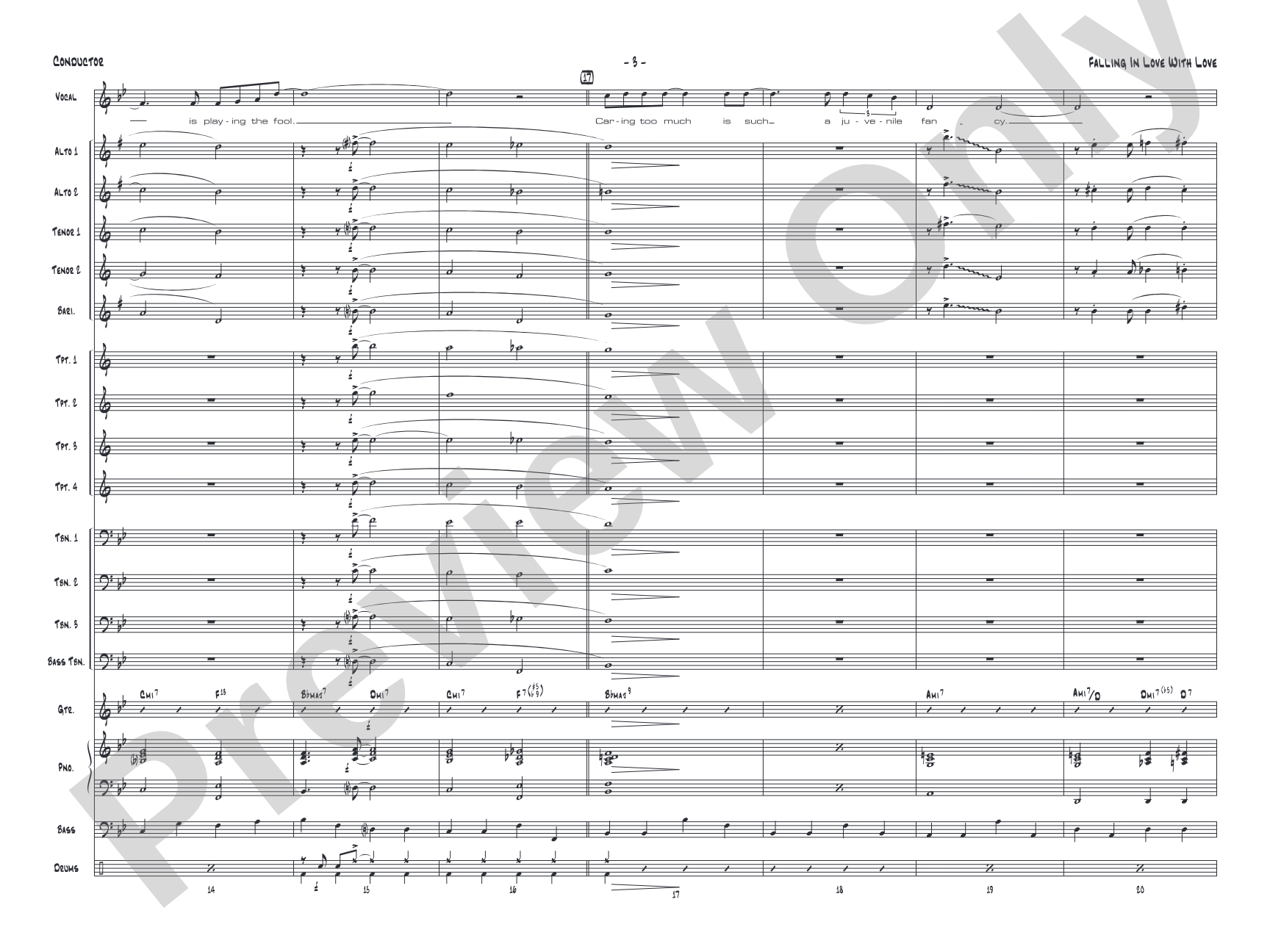
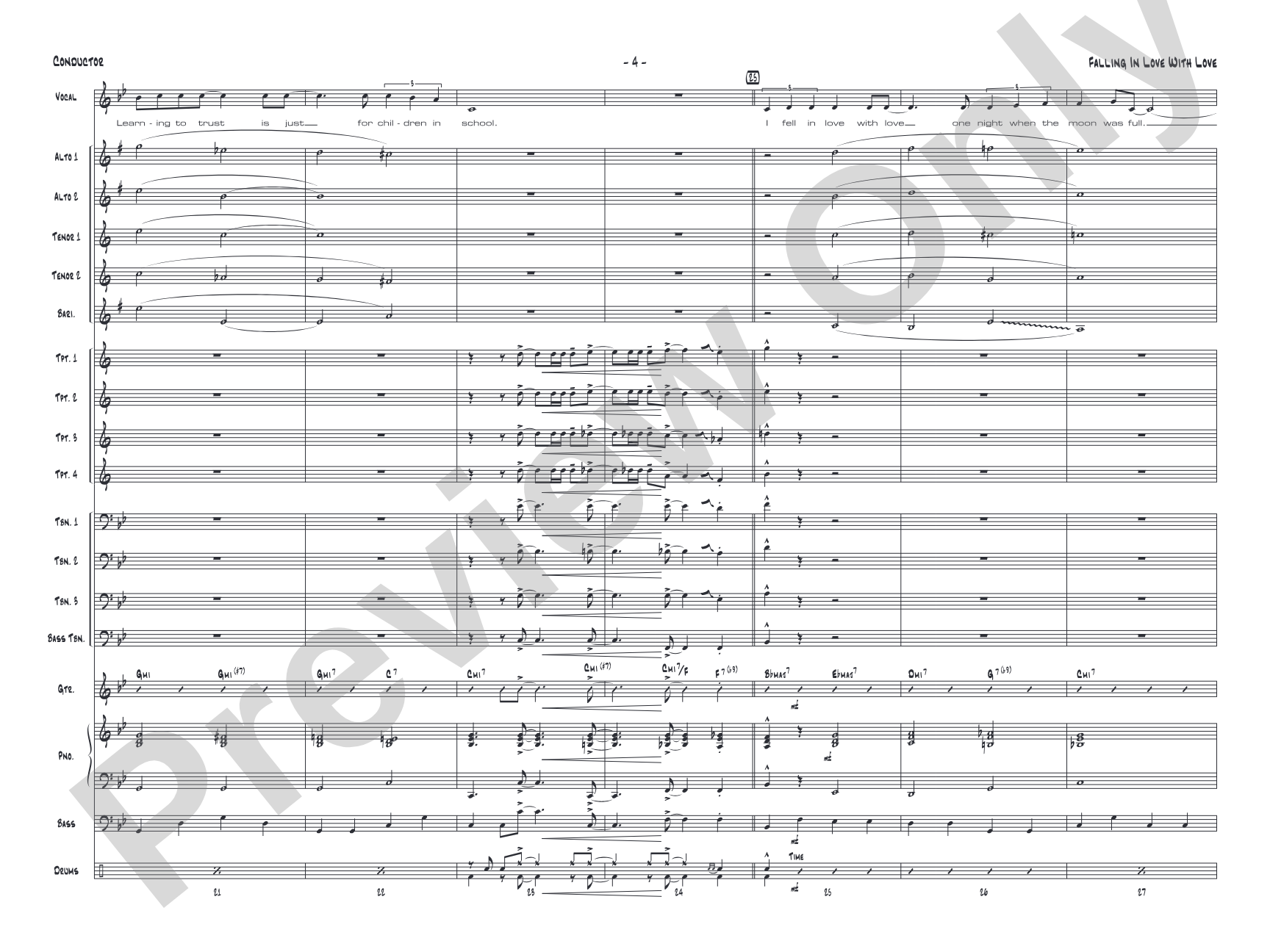
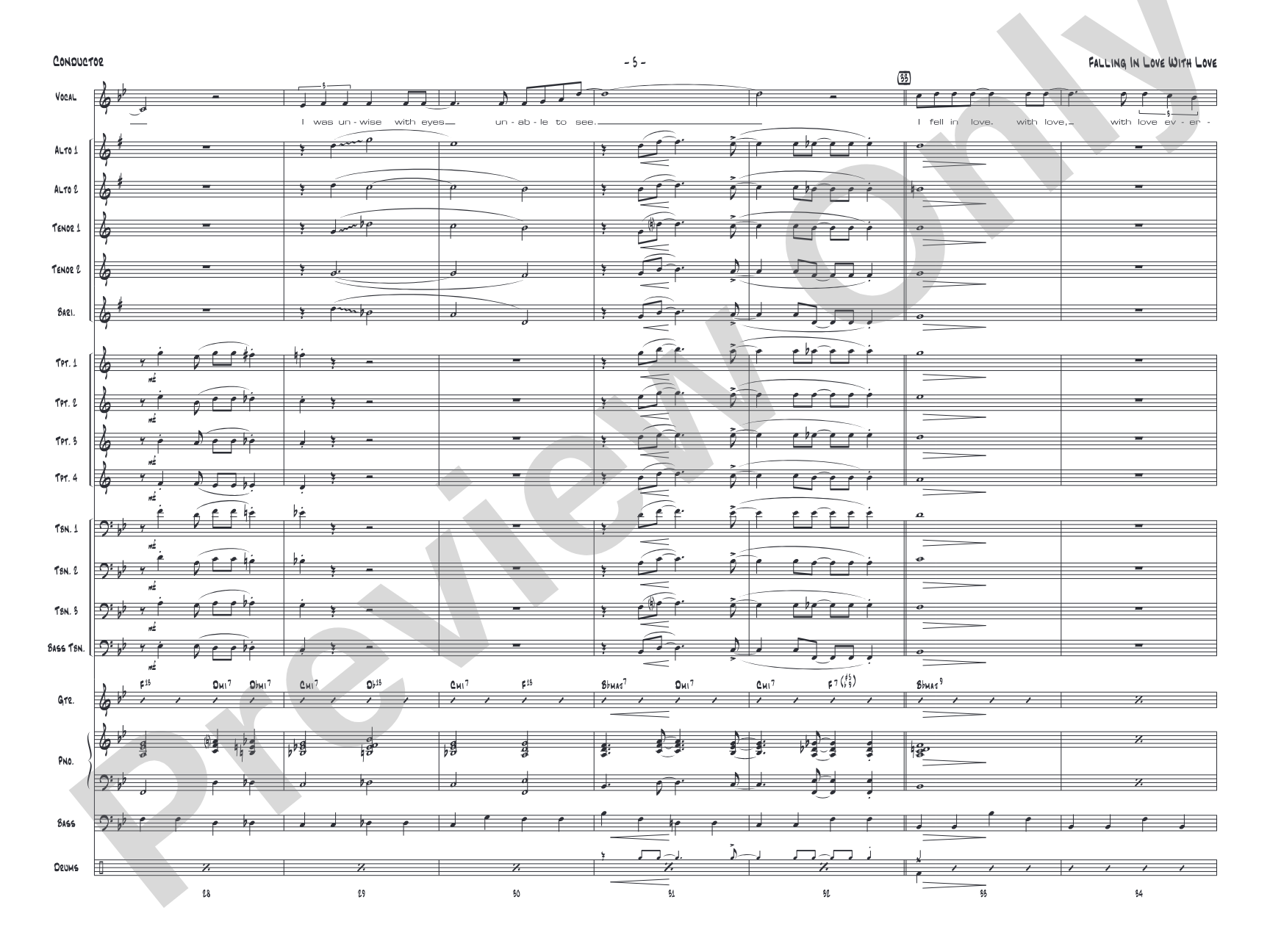
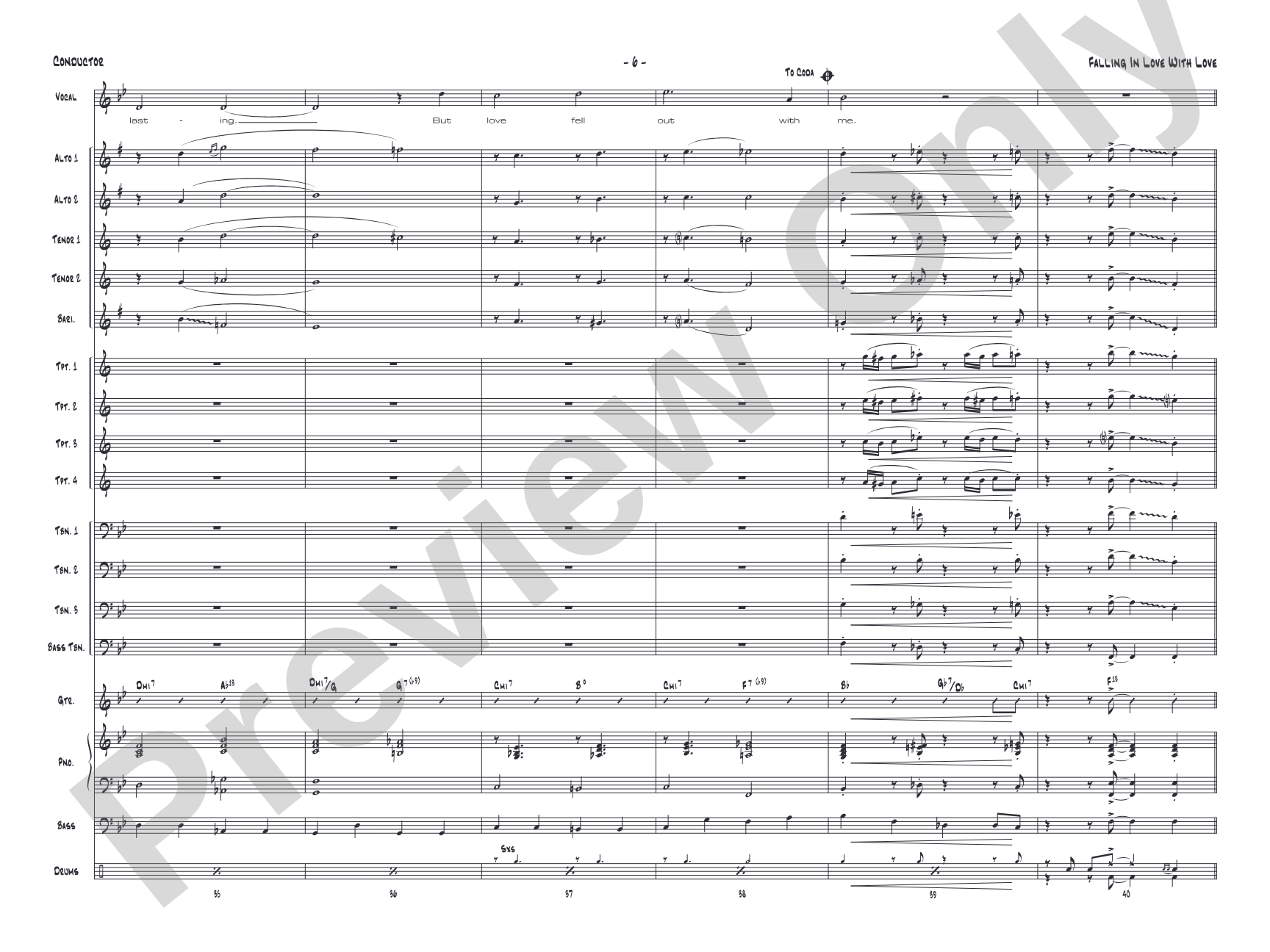
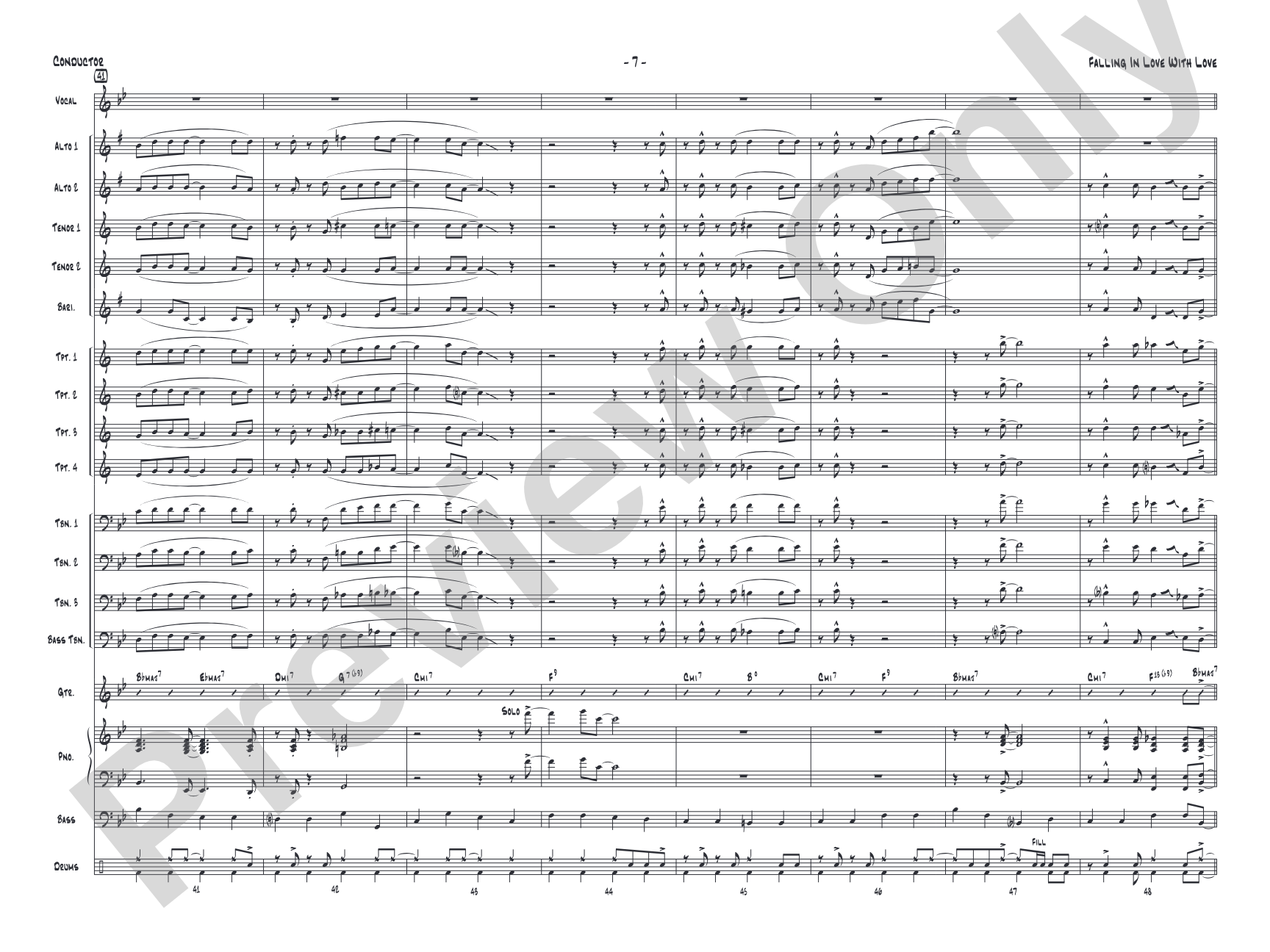
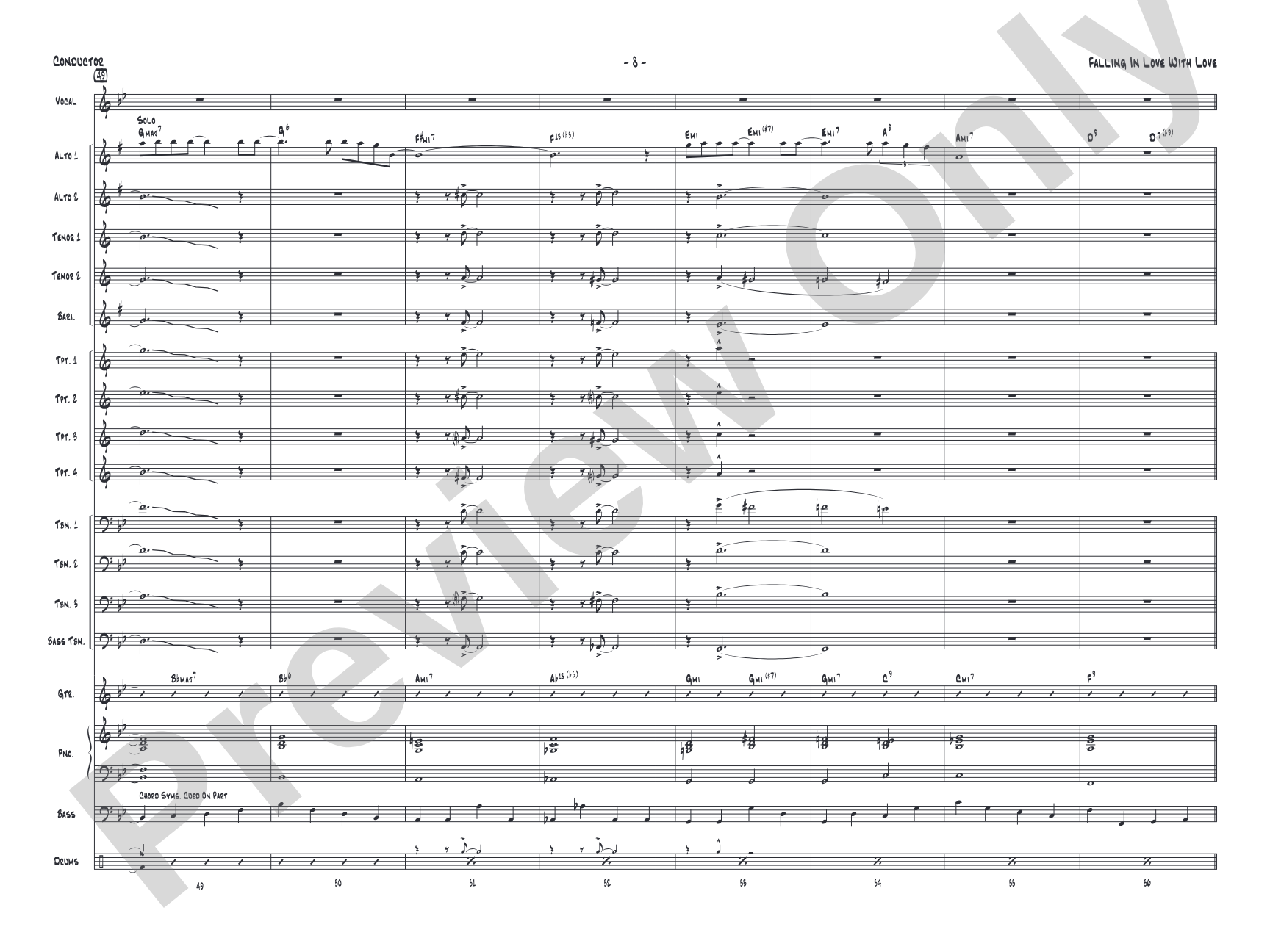
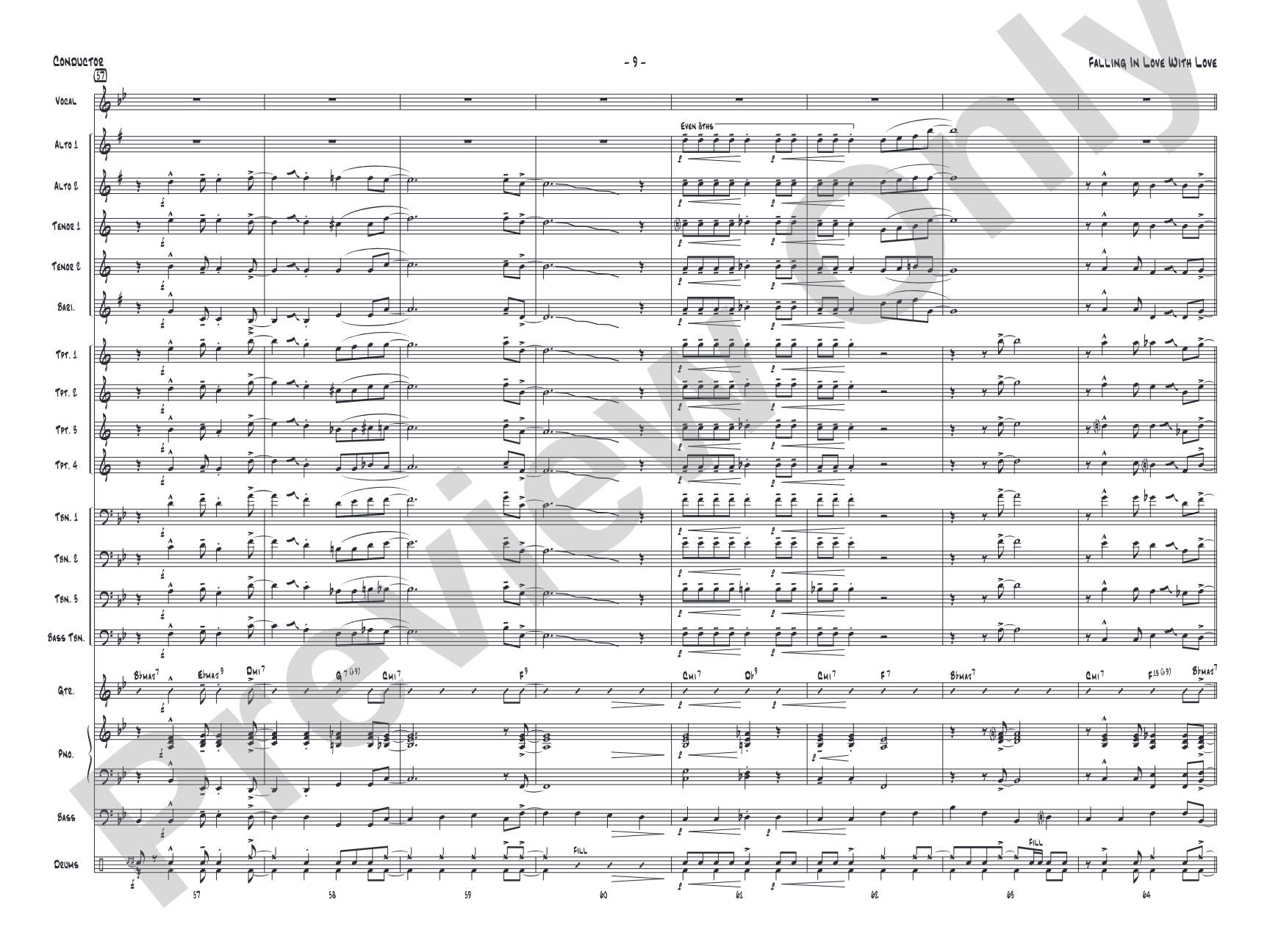
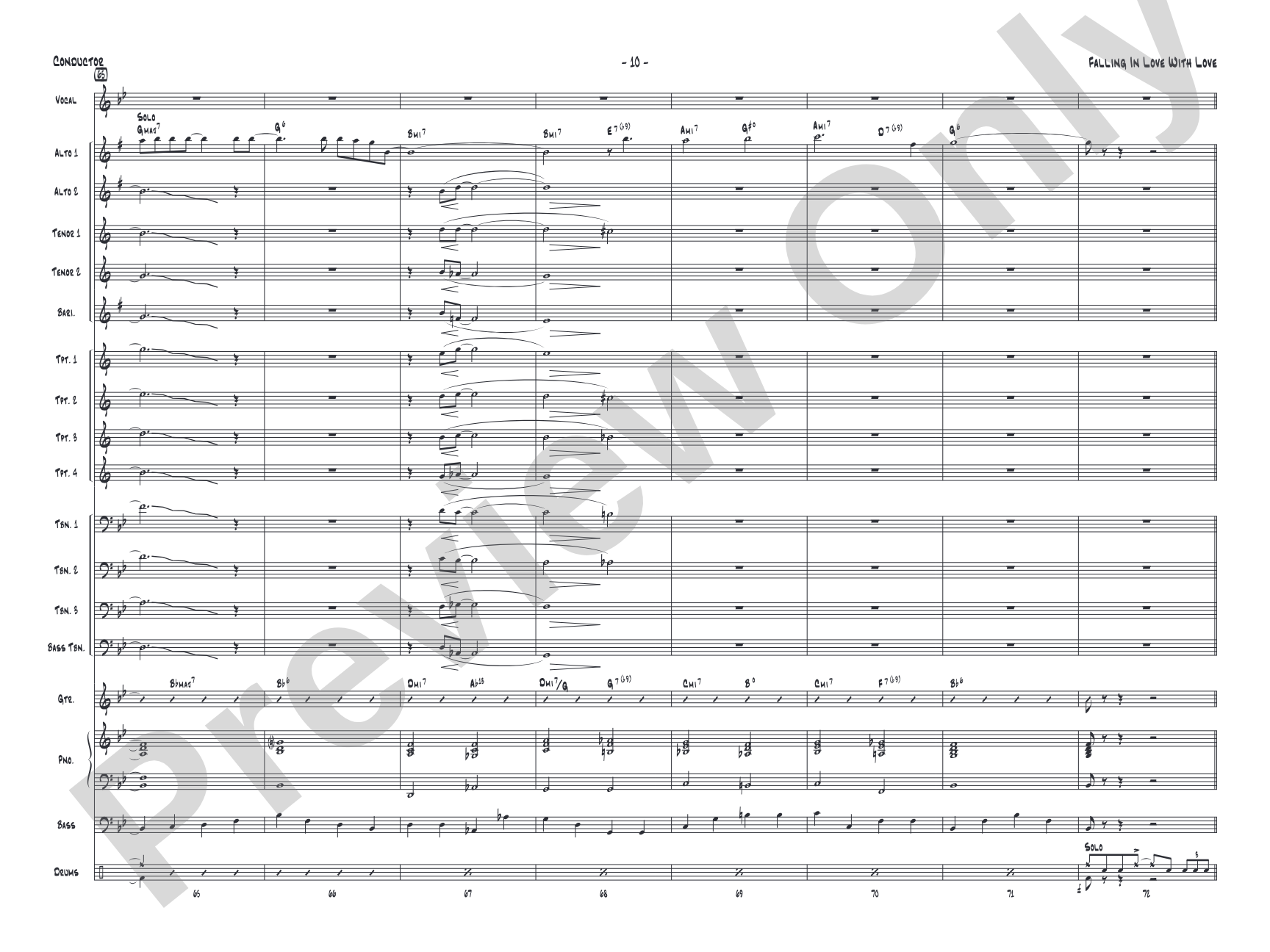
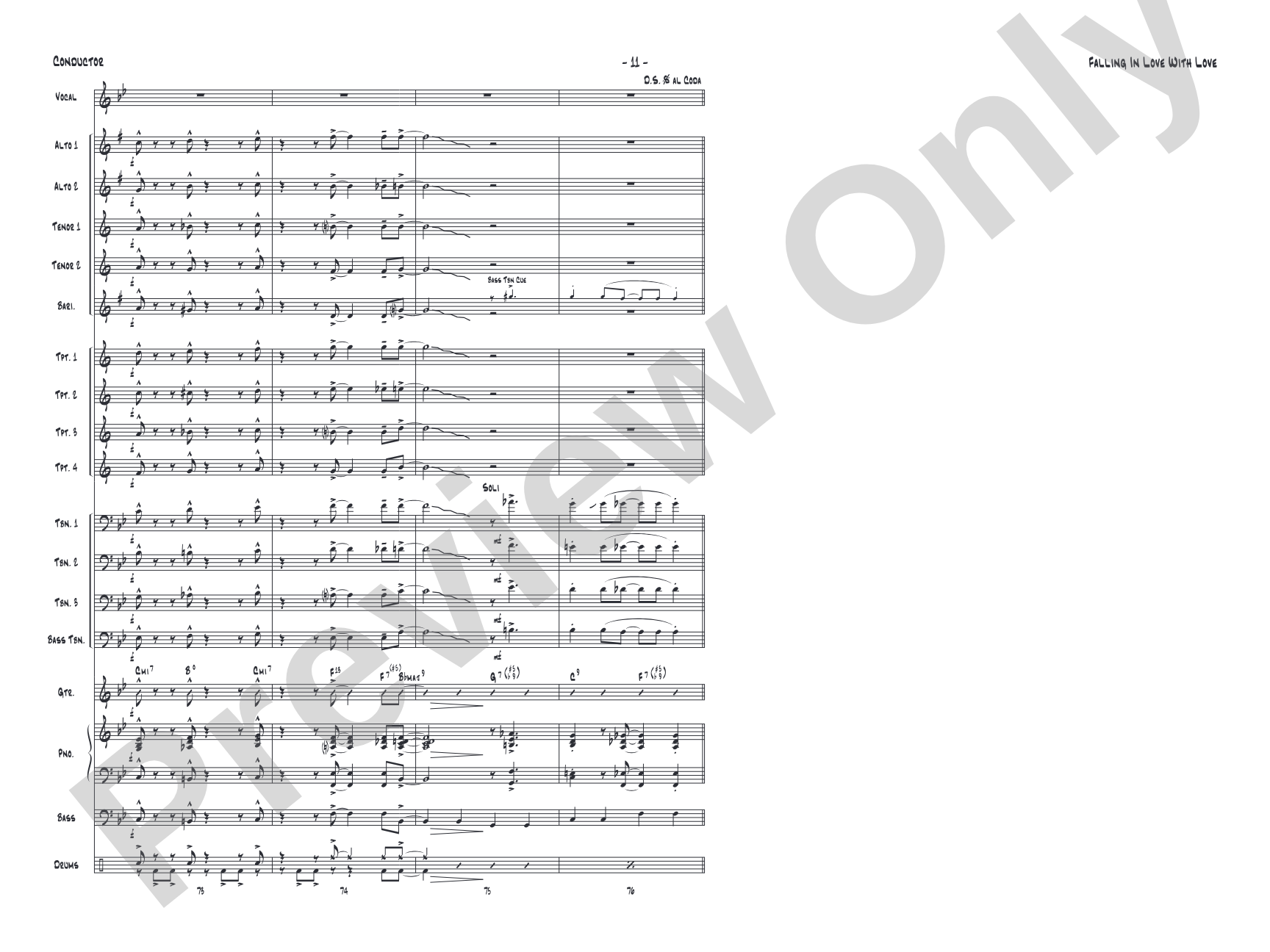
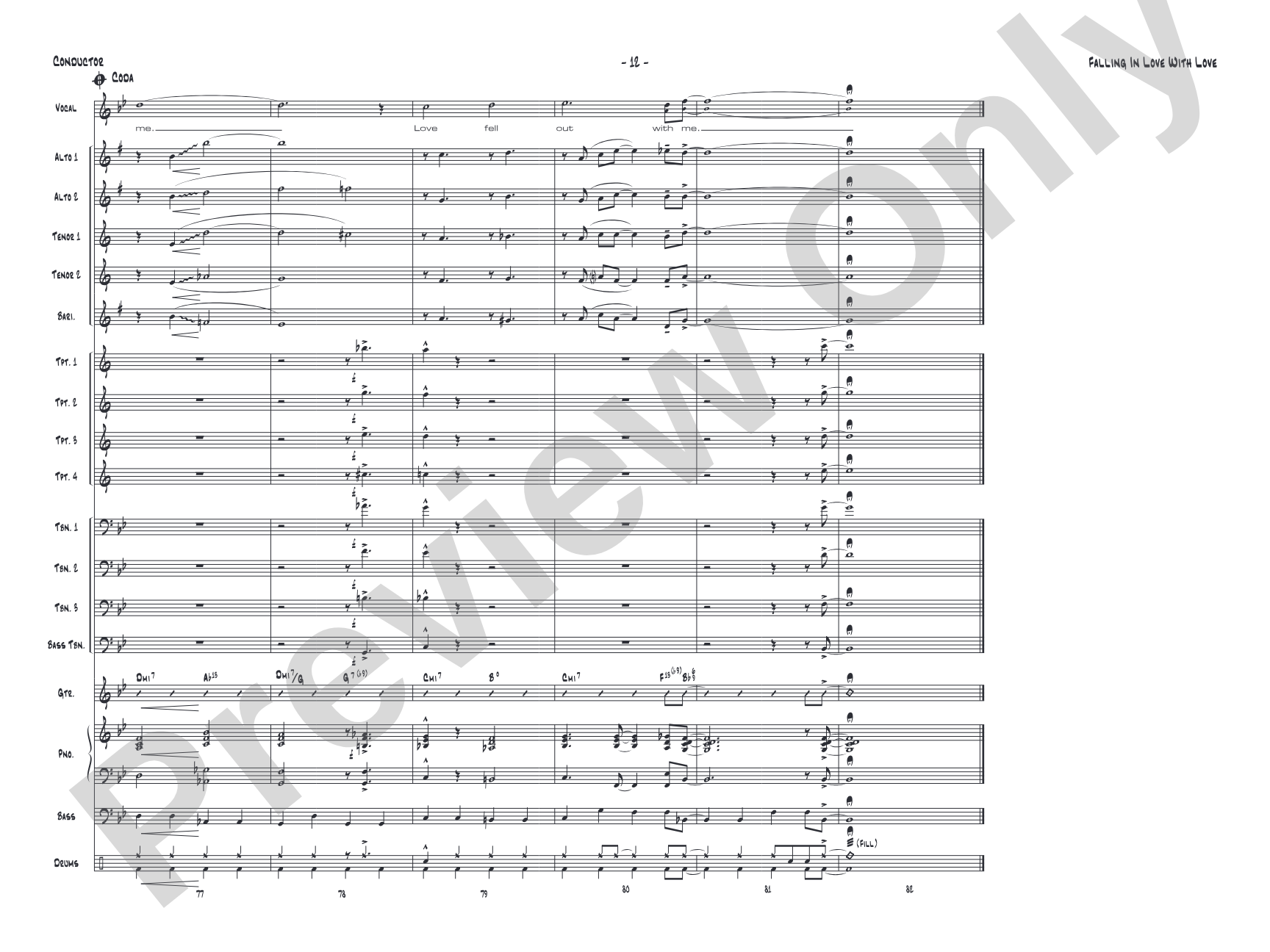

Falling in Love with Love: Vocal Solo with Jazz Ensemble Conductor Score & Parts
Words by Lorenz Hart, music by Richard Rodgers / arr. Dave Wolpe
Grade: 3 (Medium)
Item: 00-PK-0006985

$62.00
Pickup currently not available
Buy Extra Parts (Digital PDF Download)
Parts Added to Cart!
Description
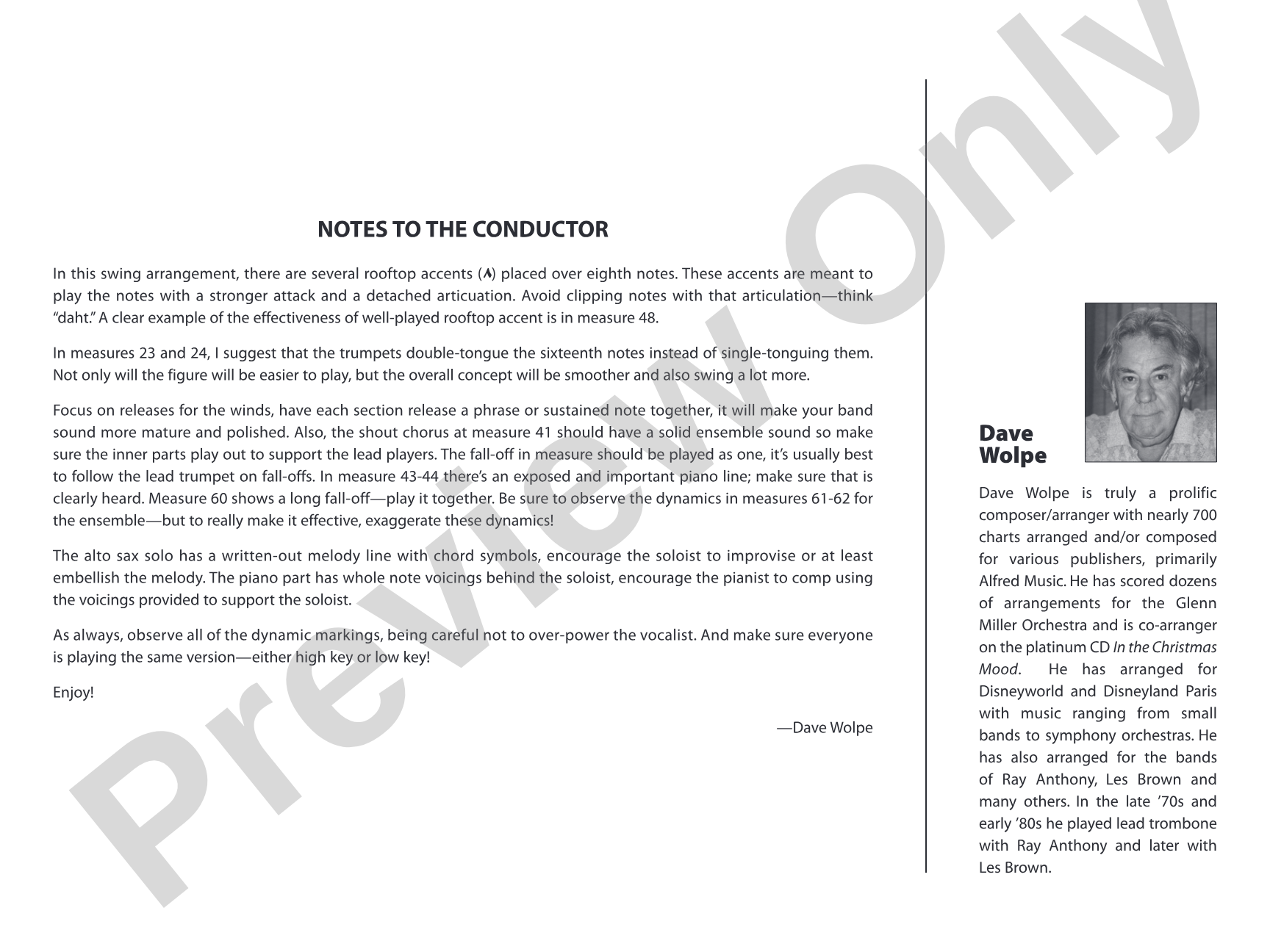
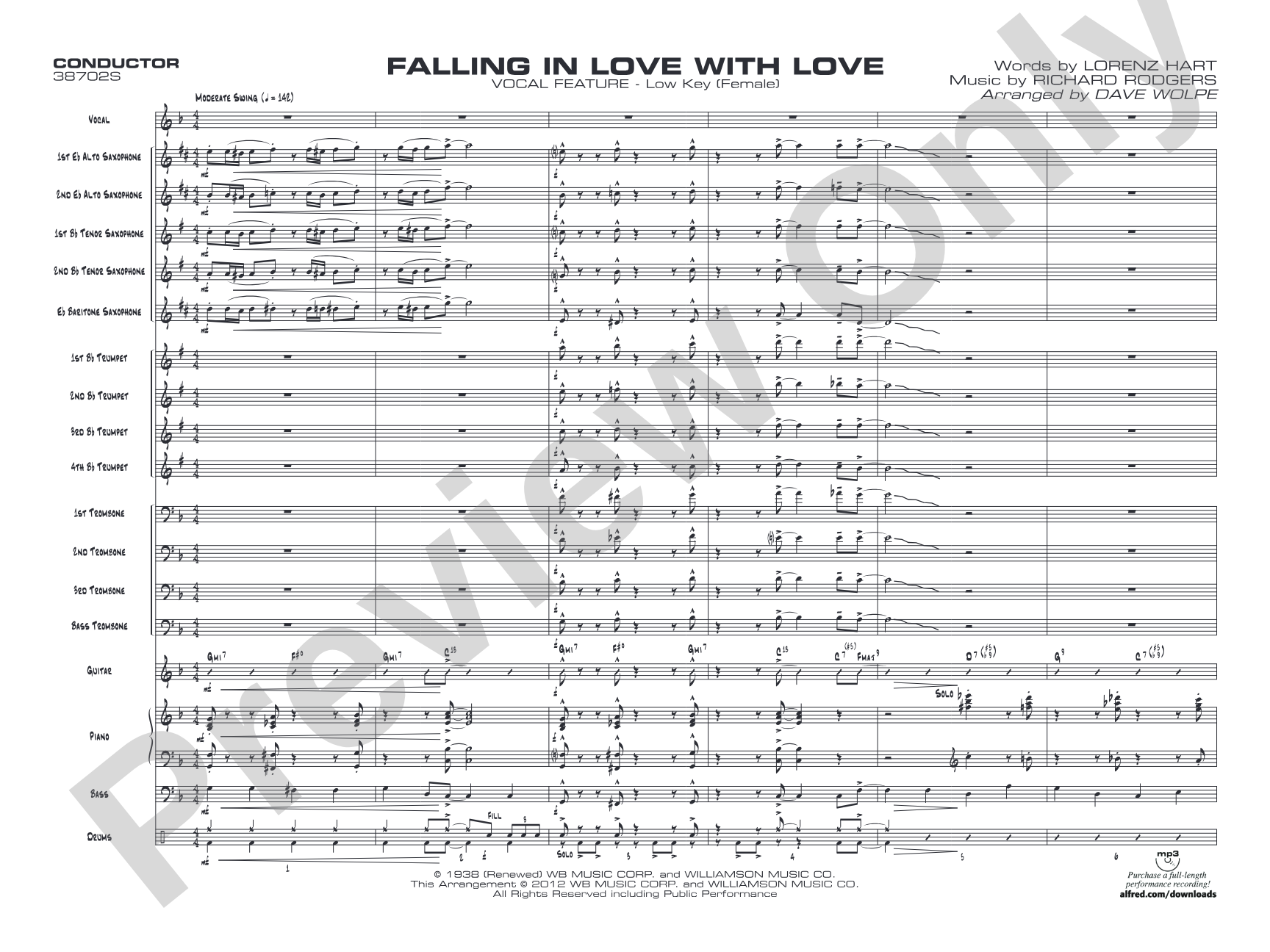
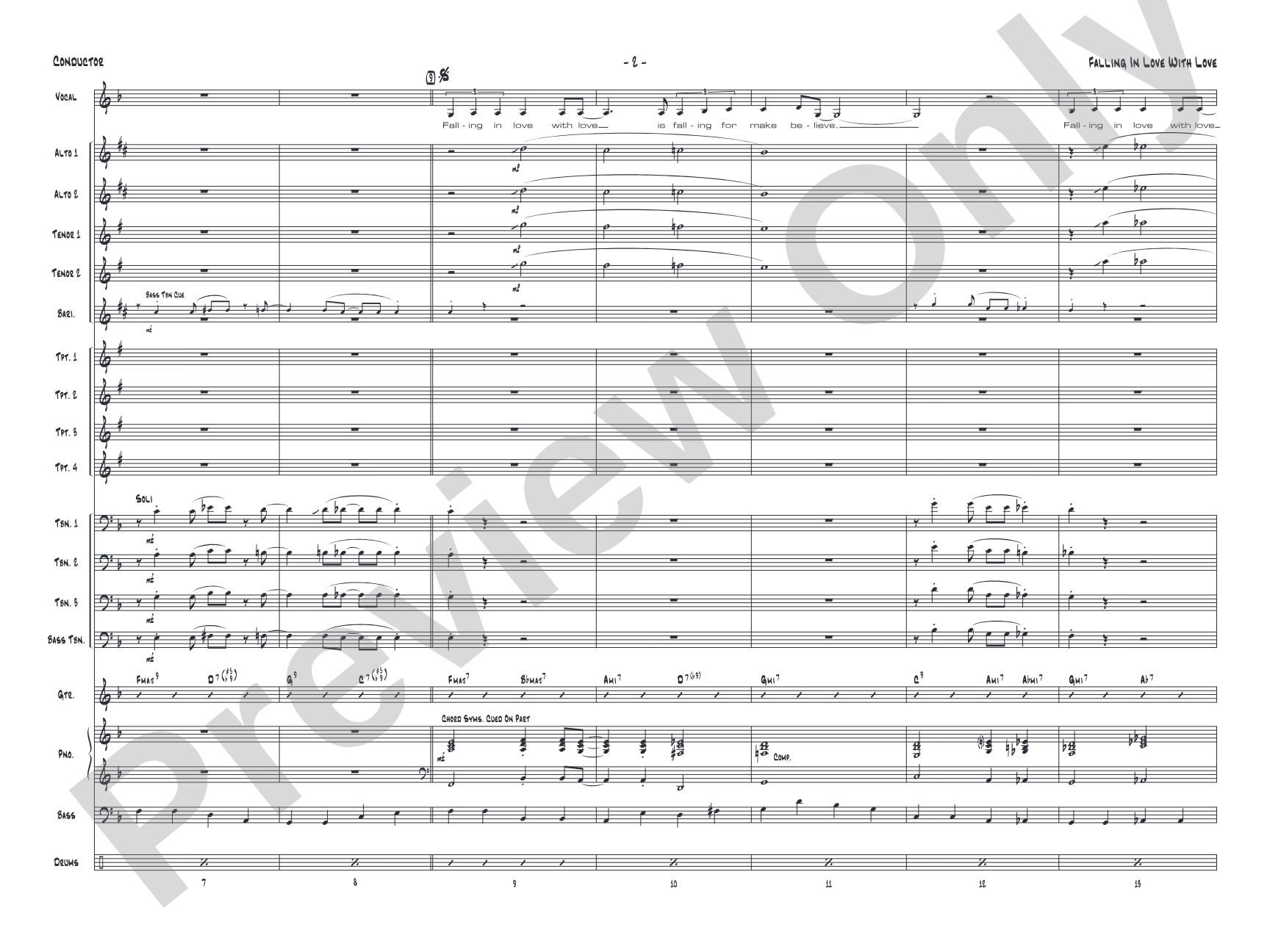
A swing vocal chart on a great standard that includes plenty of space for the singer to be heard. Arranged in two keys for flexibility, the low key is F with vocal range from G below middle C to 3rd line B-flat, and the high key is B-flat, with vocal range from middle C to top space E-flat. Lead trumpet range to written high D. Includes a written-out alto sax solo and a substitute tenor sax melody part in lieu of the vocal.


Don't just read it, hear it, play along with it, and watch your students grow with it. In MakeMusic Cloud, Falling in Love with Love: Vocal Solo with Jazz Ensemble Conductor Score & Parts comes alive with professional accompaniment, adjustable tempo, and built-in practice tools that turn solo practice into real progress.
Open in the Player
Jump straight in and assign it today.
Start Your Free Trial
Open this title and explore the full library in minutes.
Sample Audio
1
Audio File
--:--
0:00
0:00
Sample Video
Additional Details
Series:
Jazz Vocal Series
Publisher:
Alfred Music
Page Count:
82
SKU:
00-PK-0006985
More about this title
About the Composer: Richard Rodgers
Richard Rodgers (1902-1979) shaped American musical theater across five decades, creating some of the most performed standards in jazz and popular music. His melodies became the foundation of jazz repertoire, recorded by countless vocalists and instrumentalists who found in his work both harmonic sophistication and singability.
Why we love this
Dave Wolpe's arrangement respects the song's melodic integrity while giving your ensemble genuine swing voice. The dual-key setup means you can cast the piece authentically regardless of your soloist's range, and the alto sax solo plus tenor substitute part offer flexibility for whatever reeds you have available.
What to expect
Sophisticated, warm, and playful. The melody floats over a swinging foundation with just enough harmonic color to remind you why this standard endures. It's intimate enough for a vocalist to connect directly with the audience, yet ensemble-focused enough that nobody in the band feels like accompaniment.
Who it's for
Jazz ensemble directors and educators looking for a vocal feature that neither overwhelms the band nor diminishes the soloist. Jazz vocalists preparing audition or recital material who want the full ensemble experience rather than just a rhythm section.
How to get the most out of it
- Balance the vocal prominently in the first choruses; the arrangement provides clear space, so use it to let your singer breathe without drowning in the ensemble.
- Shape the alto sax solo with intention. It's a written statement, not filler, so work it as carefully as you would any brass solo.
- Lock the rhythm section (piano, bass, drums) early and often. A relaxed, swinging pocket makes everything above it sound better.
- Consider the key choice strategically. If your vocalist has a particularly warm or cutting tone, the F key may sit better; the B-flat key opens up brighter possibilities.
How to use it
Anchor a jazz concert set with this as your vocal feature, ideally early enough that the audience settles in. It pairs well before or after a blazing up-tempo instrumental chart, or program it as the closing number of a first set if you're building toward higher-energy material.
Skills your students will build
- Swing articulation and phrasing in a standard jazz idiom
- Balancing a featured soloist within full ensemble texture
- Interpreting a written-out solo with stylistic control (alto sax)
- Transposing and adapting parts (tenor sax substitution)
- Collective listening and dynamic control in a rhythm section context