
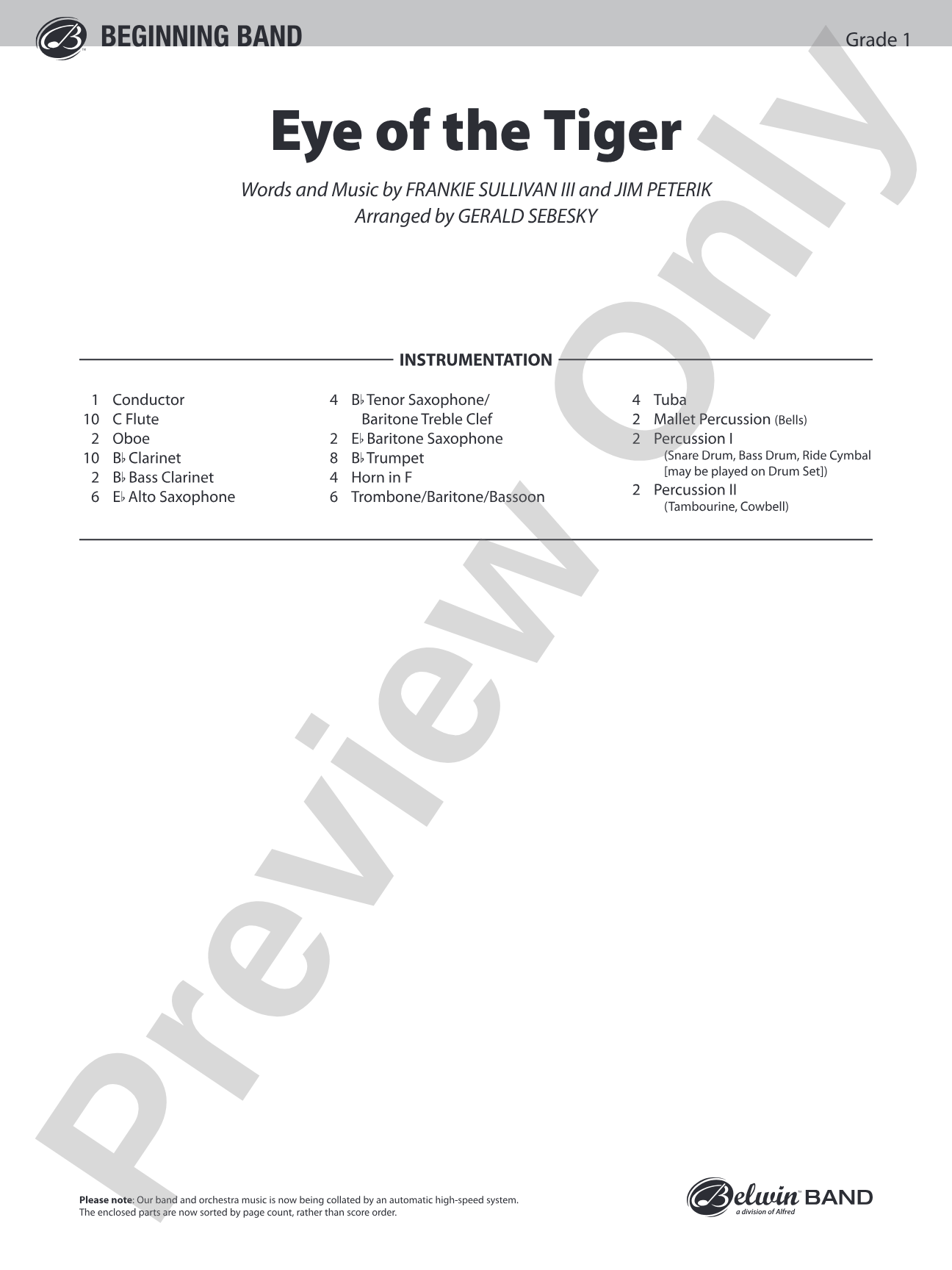

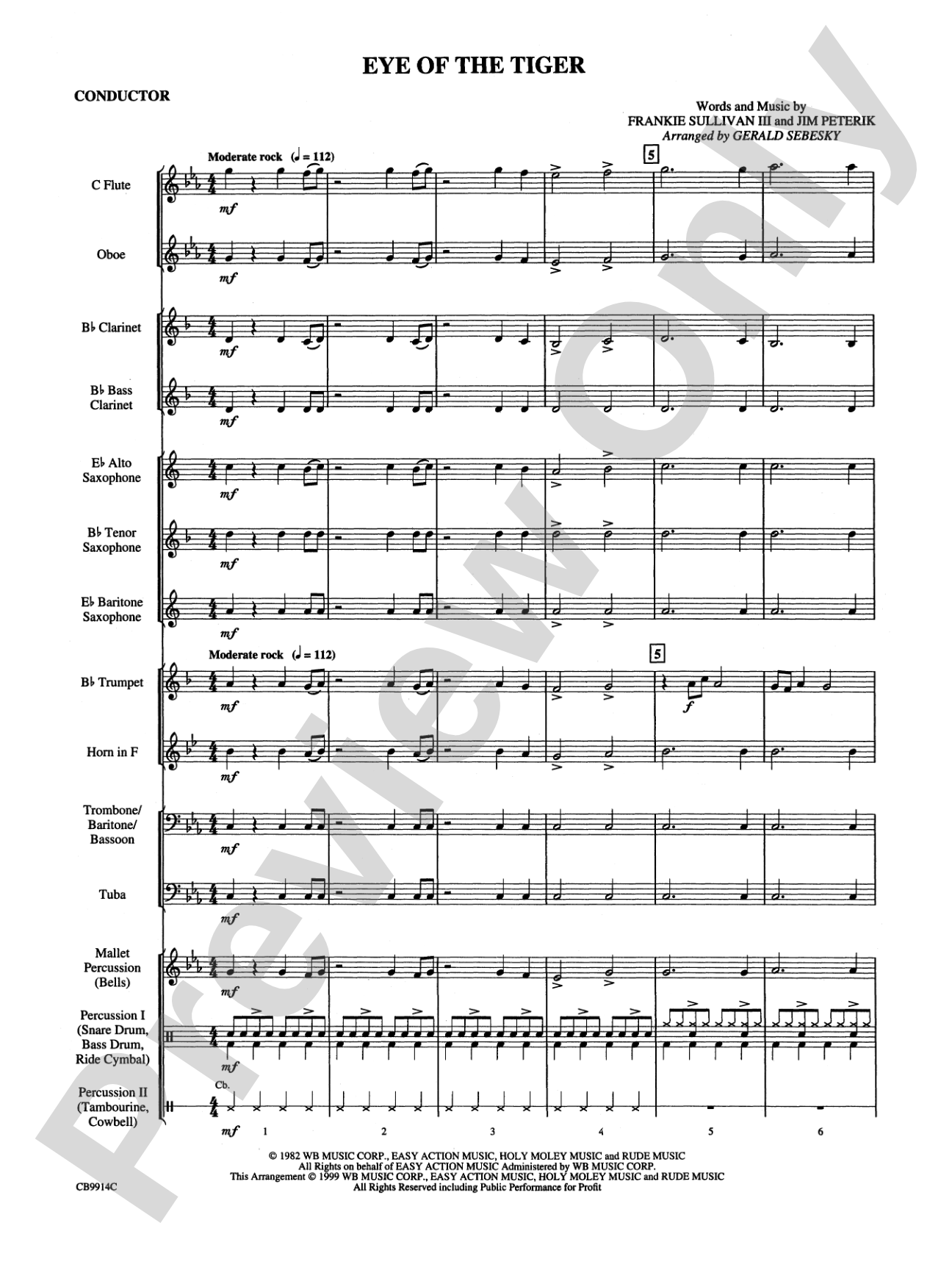
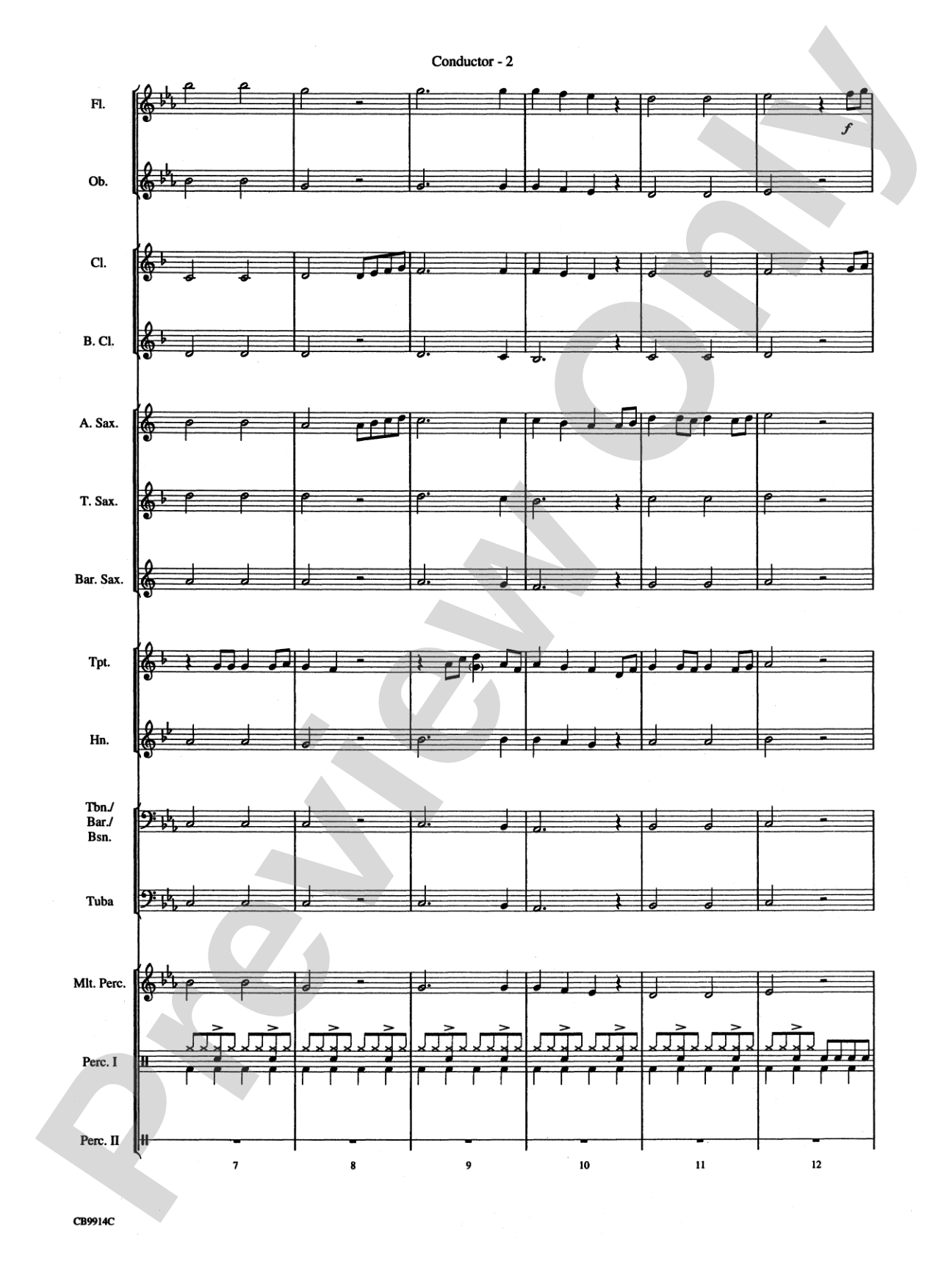
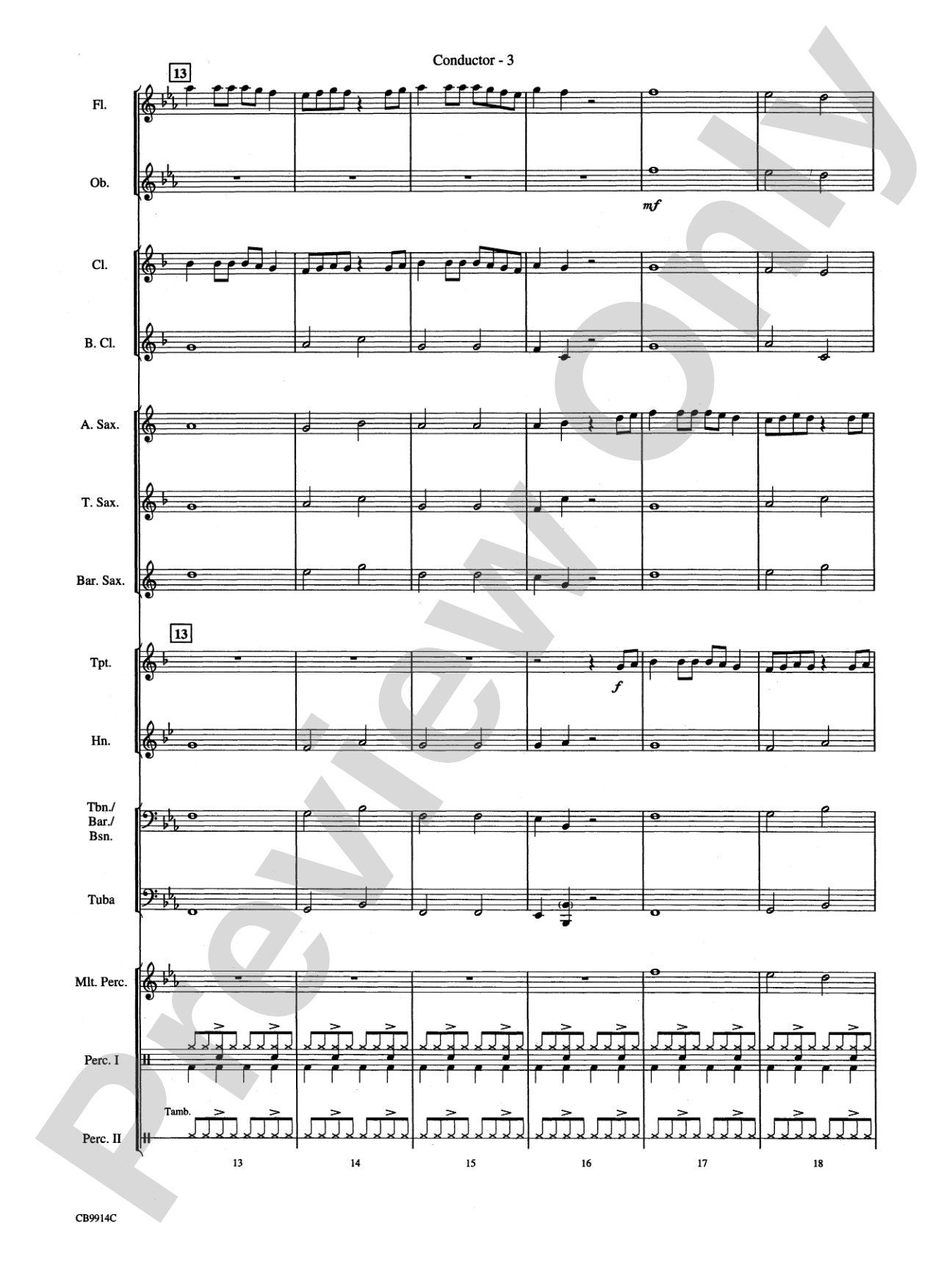
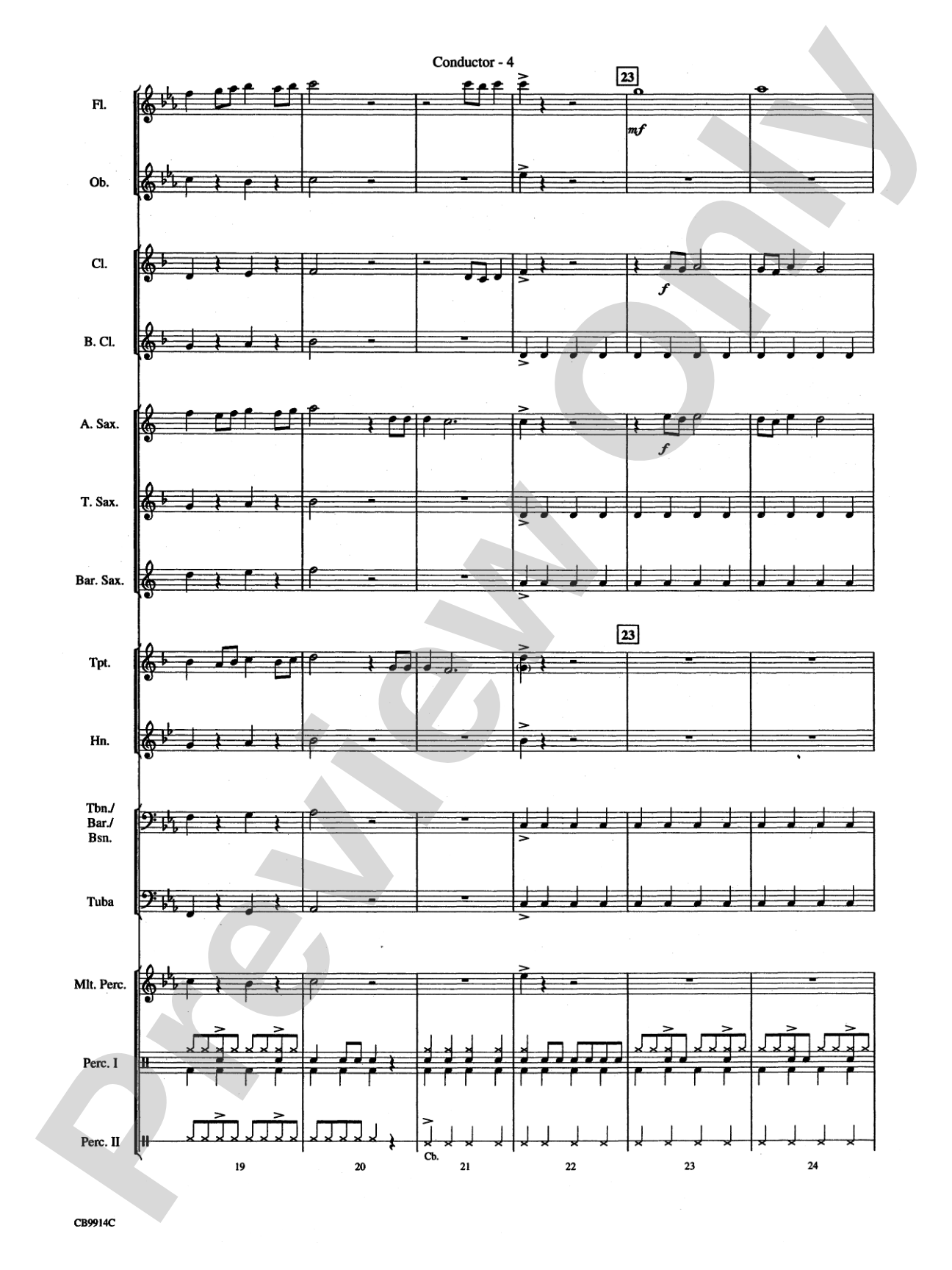
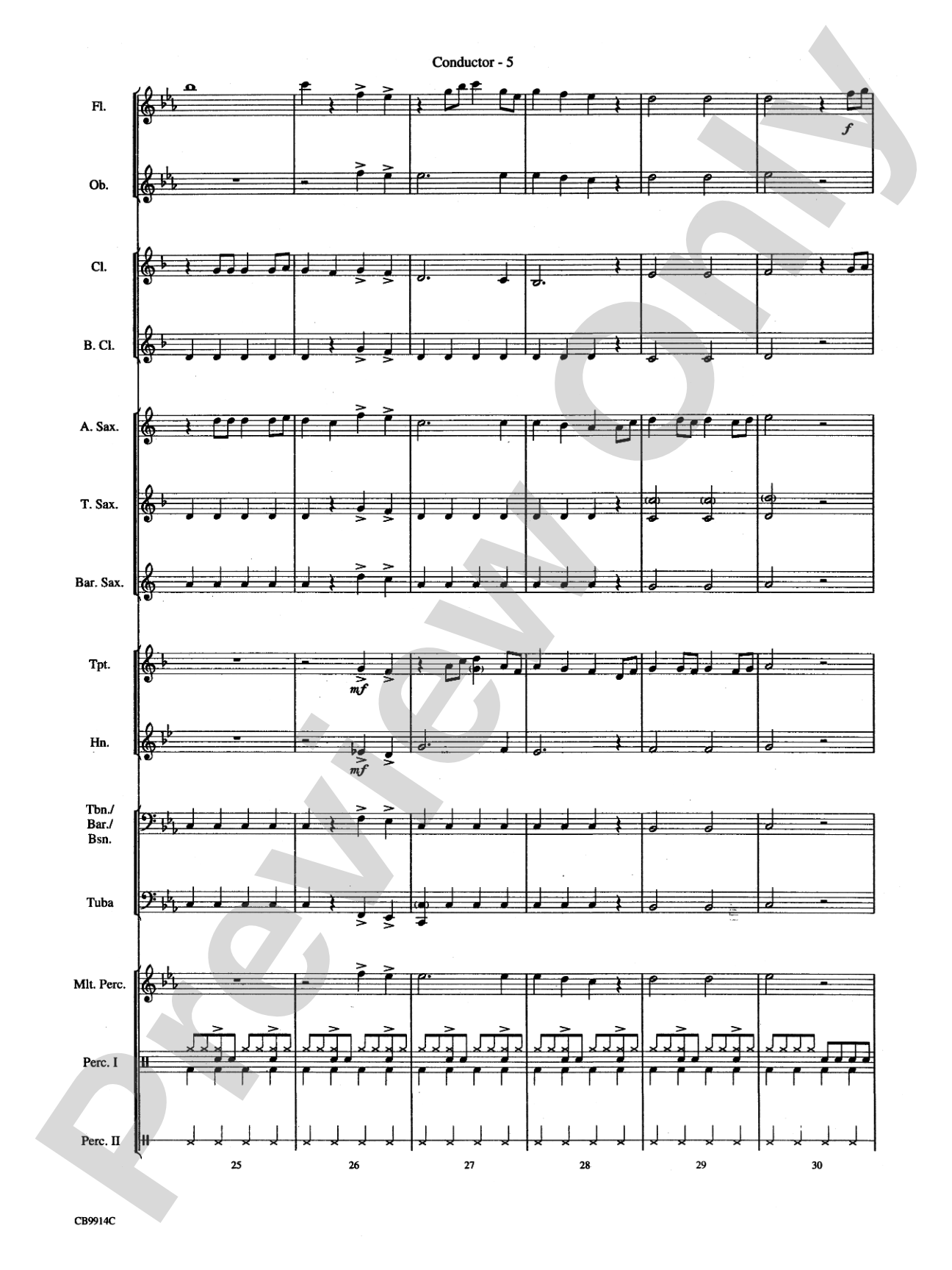
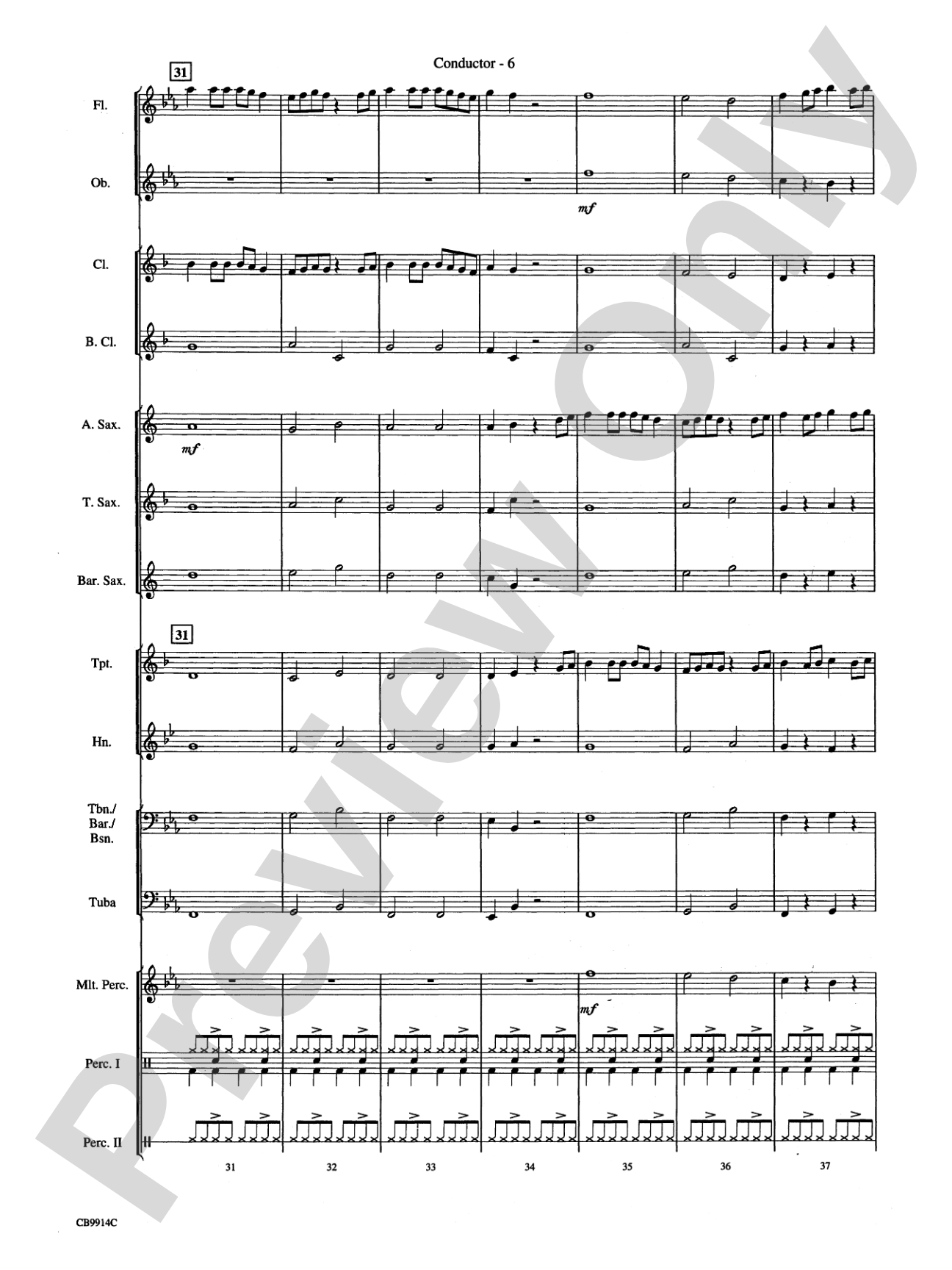
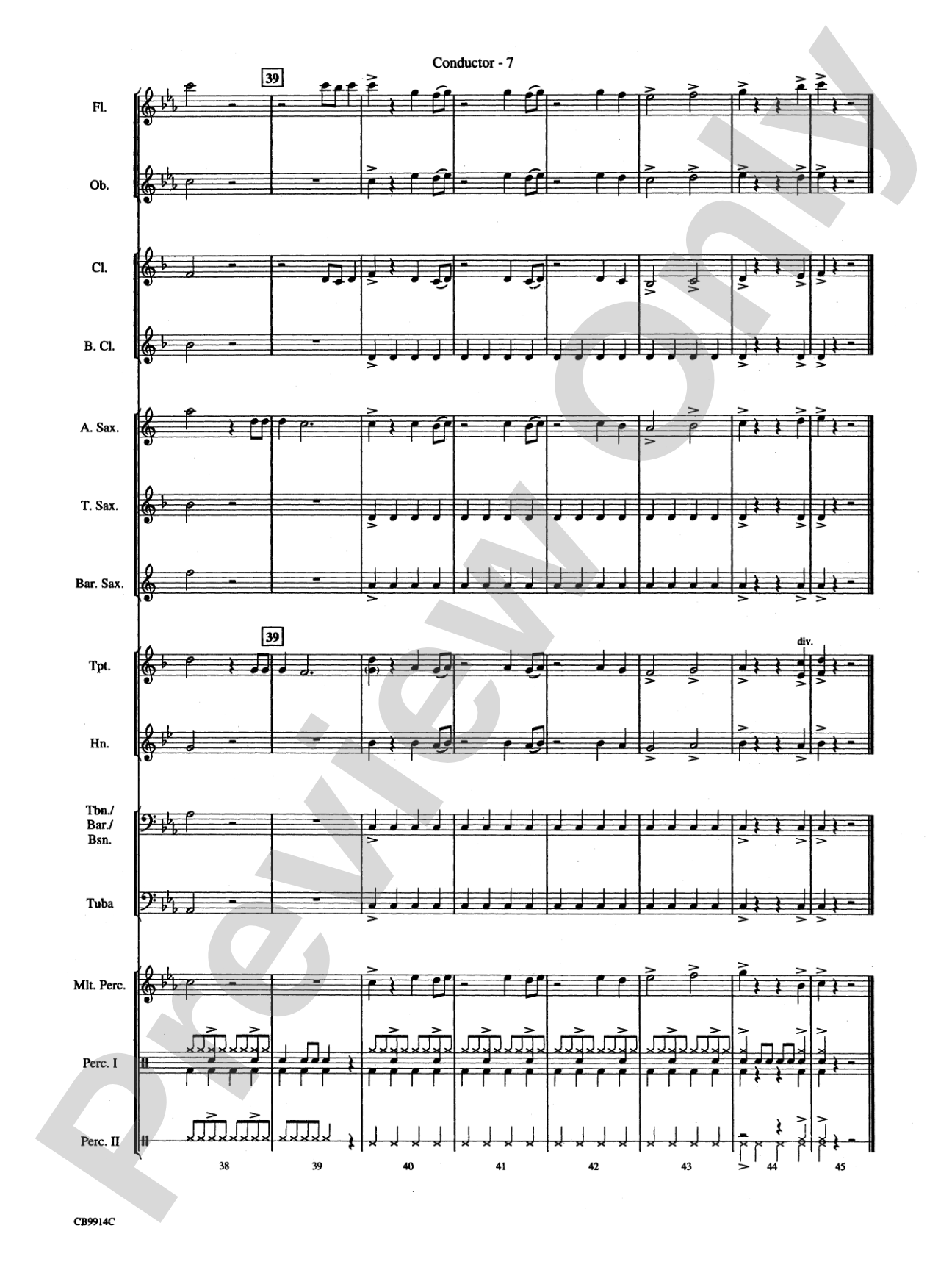




Eye of the Tiger: Concert Band Conductor Score & Parts
Words and music by Frankie Sullivan III and Jim Peterik / arr. Gerald Sebesky
Grade: 1 (Very Easy)
Item: 00-PK-0002337

$60.00
Pickup currently not available
Buy Extra Parts (Digital PDF Download)
| Product | Price | Quantity |
|---|---|---|
| Eye of the Tiger: Score | $10.00 | |
| Eye of the Tiger: Flute | $3.00 | |
| Eye of the Tiger: Oboe | $3.00 | |
| Eye of the Tiger: 1st B-flat Clarinet | $3.00 | |
| Eye of the Tiger: B-flat Bass Clarinet | $3.00 | |
| Eye of the Tiger: E-flat Alto Saxophone | $3.00 | |
| Eye of the Tiger: B-flat Tenor Saxophone | $3.00 | |
| Eye of the Tiger: E-flat Baritone Saxophone | $3.00 | |
| Eye of the Tiger: 1st B-flat Trumpet | $3.00 | |
| Eye of the Tiger: 1st F Horn | $3.00 | |
| Eye of the Tiger: 1st Trombone | $3.00 | |
| Eye of the Tiger: Tuba | $3.00 | |
| Eye of the Tiger: Mallets | $3.00 | |
| Eye of the Tiger: 1st Percussion | $3.00 | |
| Eye of the Tiger: 2nd Percussion | $3.00 |
Parts Added to Cart!
Description
The sound of the ringside bell announces yet another showing of one of the great Rocky films. Here is the theme music from Rocky III, originally recorded by the group Survivor and recognized worldwide. Here is an arrangement for your youngest ensemble that will not create problems with technique, allowing for pure enjoyment of music made famous in the movies! (1:32) Very Easy


Don't just read it, hear it, play along with it, and watch your students grow with it. In MakeMusic Cloud, Eye of the Tiger: Concert Band Conductor Score & Parts comes alive with professional accompaniment, adjustable tempo, and built-in practice tools that turn solo practice into real progress.
Open in the Player
Jump straight in and assign it today.
Start Your Free Trial
Open this title and explore the full library in minutes.
Sample Audio
1
Audio File
--:--
0:00
0:00
Sample Video
Additional Details
Series:
Pop Beginning Band
Publisher:
Alfred Music
Page Count:
132
SKU:
00-PK-0002337
More about this title
About the Arranger: Gerald Sebesky
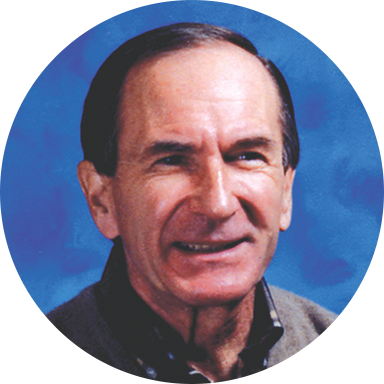
Gerald Sebesky holds degrees from the Manhattan School of Music (B.M. and M.M.), Columbia University (M.A.), and Kean University (M.S. in psychology). His career spans public school teaching through university instruction, along with active work as a composer, conductor, and lecturer across the United States, Canada, and England.
With more than 350 publications for concert band, stage band, orchestra, and chorus, Sebesky has earned recognition including a New Jersey Council of the Arts Fellowship. His film work includes excerpt music for the 1990 motion picture Waiting for the Light, demonstrating his ability to adapt popular and cinematic material for ensemble performance.
Why we love this
Sebesky's Grade 1 arrangement captures everything that makes this iconic theme unforgettable without overwhelming a young ensemble. The orchestration respects the original groove while keeping technical demands minimal, so your students experience the satisfaction of playing a genuine crowd-pleaser from day one.
What to expect
The familiar opening bell cut through the room, followed by that unforgettable bass line that made the whole ensemble sit up straighter. Energy and momentum carry the piece from start to finish, with a groove so infectious that even the youngest players feel like they're performing something important.
Who it's for
Beginning band students who thrive on recognizable music and immediate musical gratification. This arrangement proves to young players that concert band repertoire can be both accessible and genuinely cool, making it ideal for recruitment concerts, holiday programs, or any event where you need genuine audience engagement.
How to get the most out of it
- Keep the opening bell sound crisp and clear; it sets the entire rhythmic foundation for what follows.
- Lock in the half-note pulse that drives the main riff; young ensembles sometimes rush this groove when they're excited about the melody.
- Balance the bass line so the low voices anchor the sound; this arrangement relies on a solid foundation to let the melody shine above it.
- Maintain steady dynamics through the repetitive sections; resist the urge to crescendo unless marked, which preserves the propulsive energy of the original.
How to use it
Program this in your fall concert as a statement piece that shows your beginning ensemble's range and relevance. It works especially well alongside other pop or film-based arrangements, or as a high-energy closer when you want the audience leaving with a smile and a beat in their step.
Skills your students will build
- Maintaining steady pulse in a groove-based context
- Reading and executing repeated rhythmic patterns with precision
- Balancing melody and supporting harmonic lines at grade 1 level
- Playing with stylistic awareness (rock/pop idiom versus classical concert band traditions)