
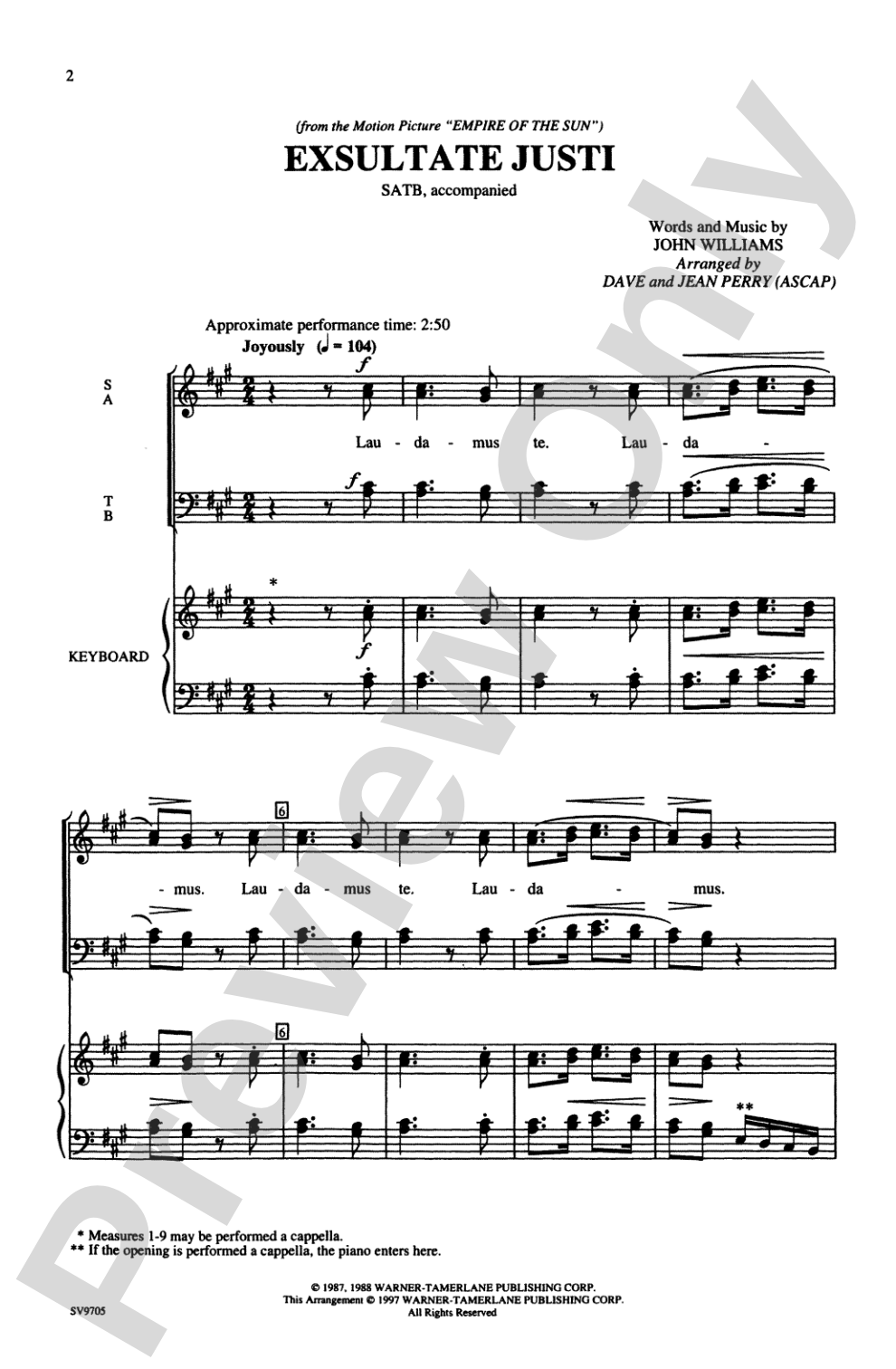
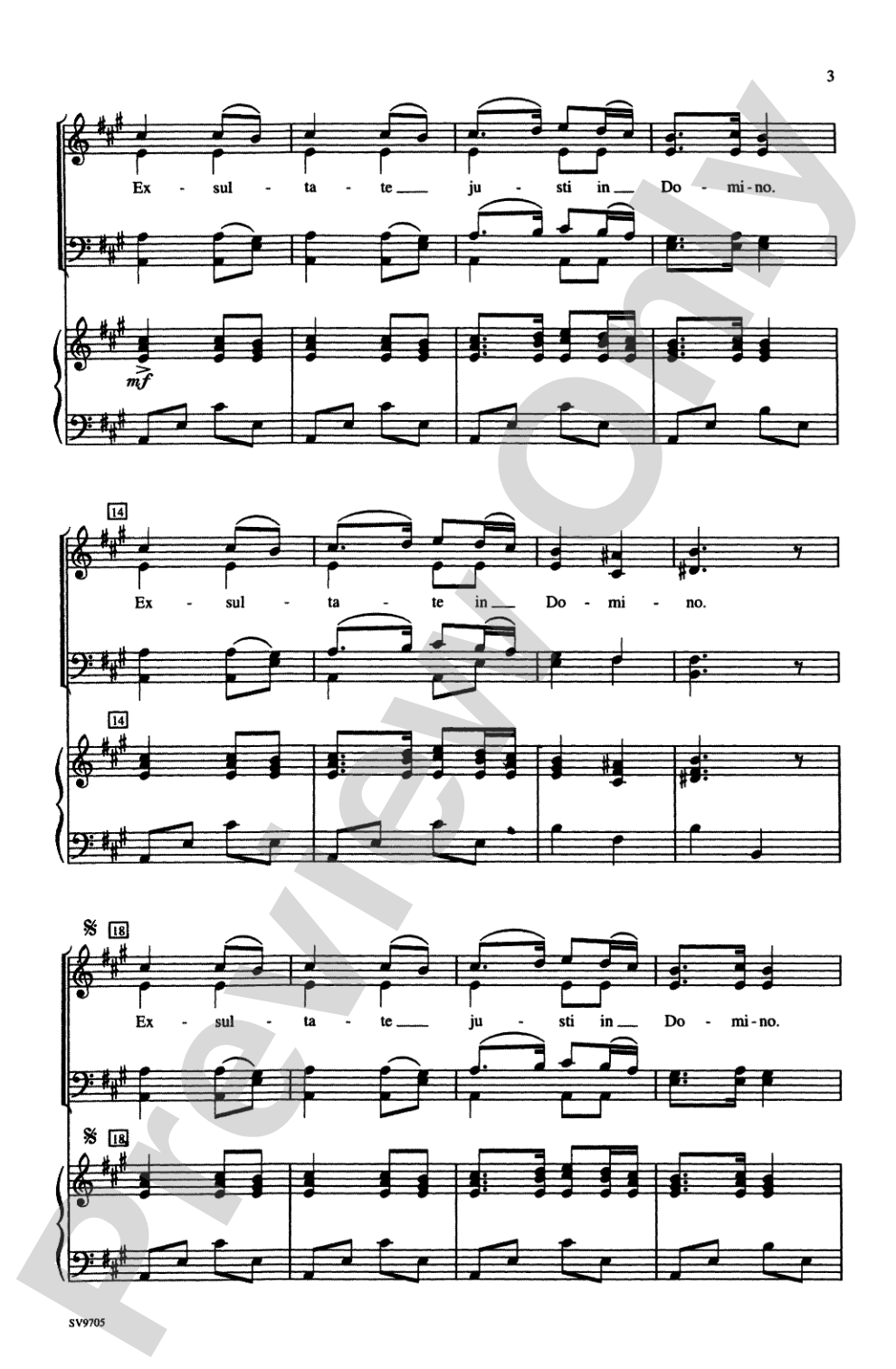

Exsultate Justi: SATB Choral Octavo
Words and music by John Williams / arr. Dave and Jean Perry
Item: 00-PO-0003546

$2.05
Minimum order quantity: 20 copies
Pickup currently not available
Related Items
Exsultate Justi: SAB Choral Octavo |
$2.25
|
View | |
Exsultate Justi: 2-Part Choral Octavo |
$2.25
|
View | |
Exsultate Justi: Choral Instrumental Parts |
$15.00
|
View | |
Exsultate Justi: SATB Choral Octavo |
$2.05
|
View | |
Exsultate Justi: SAB Choral Octavo |
$2.25
|
View | |
Exsultate Justi: 2-Part Choral Octavo |
$2.25
|
View | |
Exsultate Justi: Choral Instrumental Parts |
$15.00
|
View |
Description
Originally featured in the motion picture Empire of the Sun, this John Williams original is simply a wonderful choral work. Every choir should strive to perform this rich addition to the choral repertoire. Dave and Jean Perry have not only captured the original intent of the Williams score, but have enhanced the choral sound for choirs of all levels.


Don't just read it, hear it, play along with it, and watch your students grow with it. In MakeMusic Cloud, Exsultate Justi: SATB Choral Octavo comes alive with professional accompaniment, adjustable tempo, and built-in practice tools that turn solo practice into real progress.
Open in the Player
Jump straight in and assign it today.
Start Your Free Trial
Open this title and explore the full library in minutes.
Sample Audio
No sample audio found.
Sample Video
No sample videos found.
Additional Details
Publisher:
Alfred Music
Page Count:
12
SKU:
00-PO-0003546
More about this title
About the Composer: John Williams
John Williams stands as one of the most prolific and celebrated film composers of our time. His career spans more than six decades, during which he has crafted some of cinema's most iconic musical moments, earning five Academy Awards and numerous Grammy Awards. Beyond his film work, Williams has composed extensively for concert hall and stage, demonstrating a masterful command of orchestration and harmonic language that draws from the classical tradition.
Why we love this
This arrangement brings the cinematic majesty of Williams' original to the choral stage in a way that feels earned rather than shoehorned. The Perrys have preserved the emotional core of the film score while tailoring the writing specifically for choral voices, making it a piece that sounds genuinely composed for singers rather than adapted from instrumental forces. Choirs across skill levels can access the music without compromise to its dignity or sophistication.
What to expect
Exsultate Justi unfolds with the grandeur and lyrical warmth characteristic of Williams' writing. The harmonic language is rich and accessible, moving with orchestral sophistication while remaining rooted in the voice-friendly textures that allow singers to feel the beauty of their own sound. There's a buoyant, almost celebratory quality beneath moments of introspection, creating emotional depth that rewrites itself with each rehearsal.
Who it's for
This octavo serves choirs looking to add substantial, concert-worthy repertoire without requiring advanced musicianship across all voice parts. Directors seeking music that engages audiences familiar with Williams' film work will find immediate resonance here; the piece carries the emotional weight of its cinematic origin while standing firmly on choral merit.
How to get the most out of it
- Shape the phrases with the care a string section would receive; lean into the long lines and resist the urge to chop up melodic phrases at breath marks.
- Balance the blend between voice parts by having soloists or small groups shadow the melody in rehearsal, then gradually blend the full section underneath.
- Use the available instrumental parts to reinforce harmonic clarity during early rehearsals, then gradually reduce reliance on accompaniment as independence grows.
- Pay attention to vowel consistency across the choir, especially in moments of sustained harmony where registration differences become audible.
How to use it
Program this as a centerpiece of a concert exploring sacred or concert choral works, where its cinematic elegance complements both traditional liturgical repertoire and contemporary concert pieces. It works equally well as a standalone feature or paired with contrasting shorter works; the 12-page score gives it substantive weight without dominating a program.
Skills your students will build
- Sustaining long, connected lines across multiple breath opportunities
- Singing sustained harmony with precise intonation in close voicing
- Balancing solo passages with ensemble support
- Responding to dynamic and expressive shaping in lyrical writing
- Tracking independent voice parts in rich harmonic contexts