
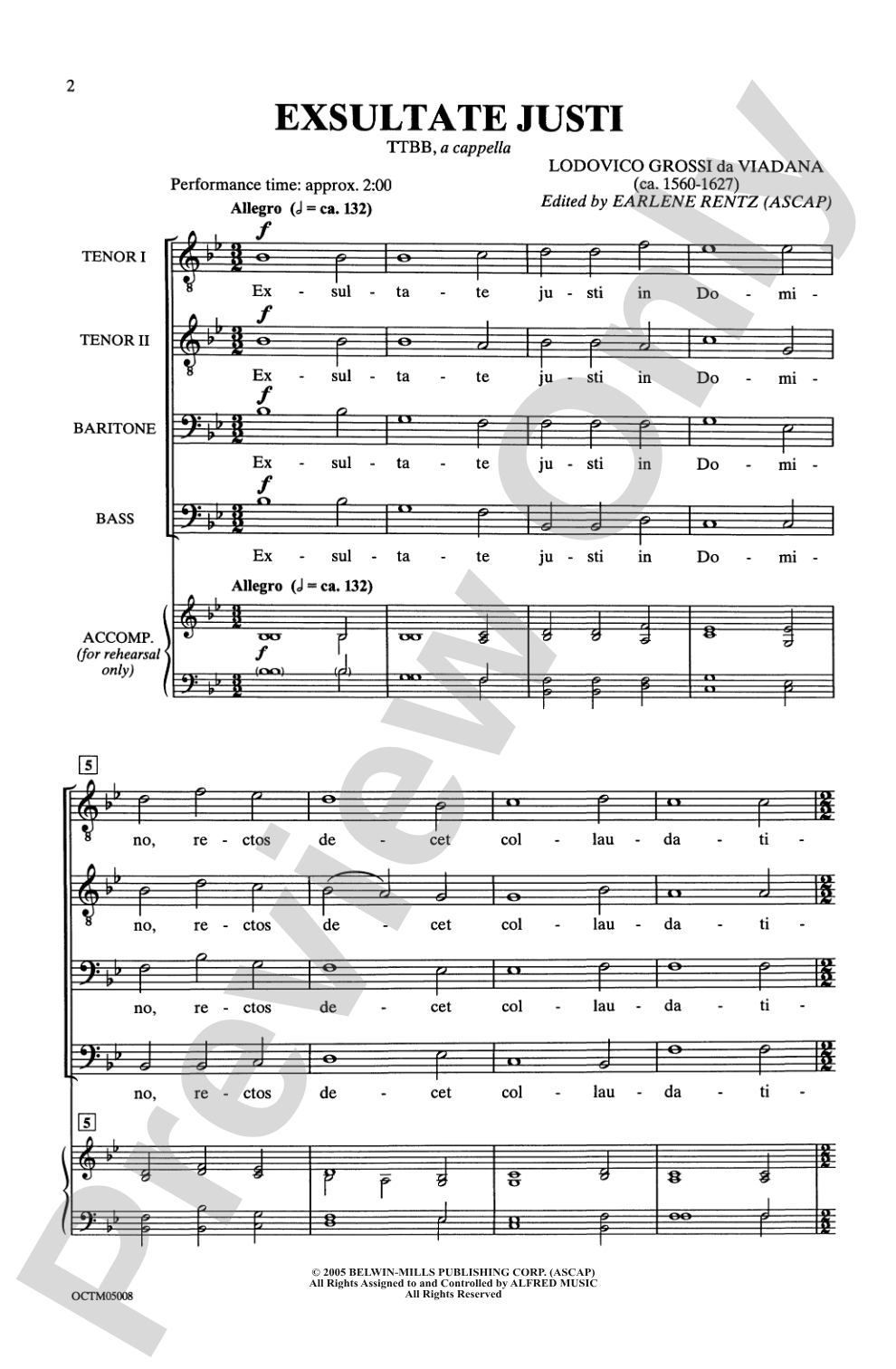
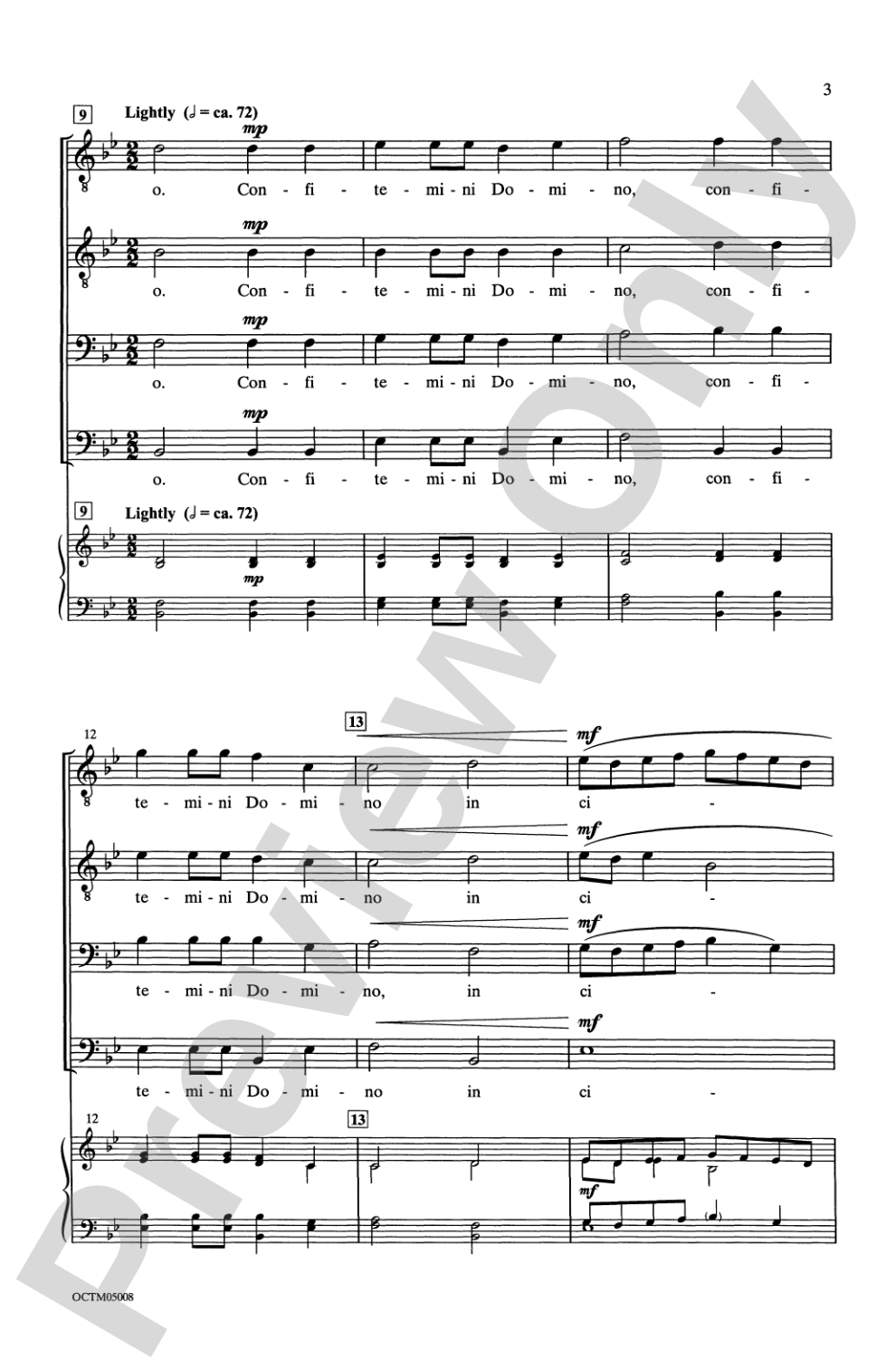
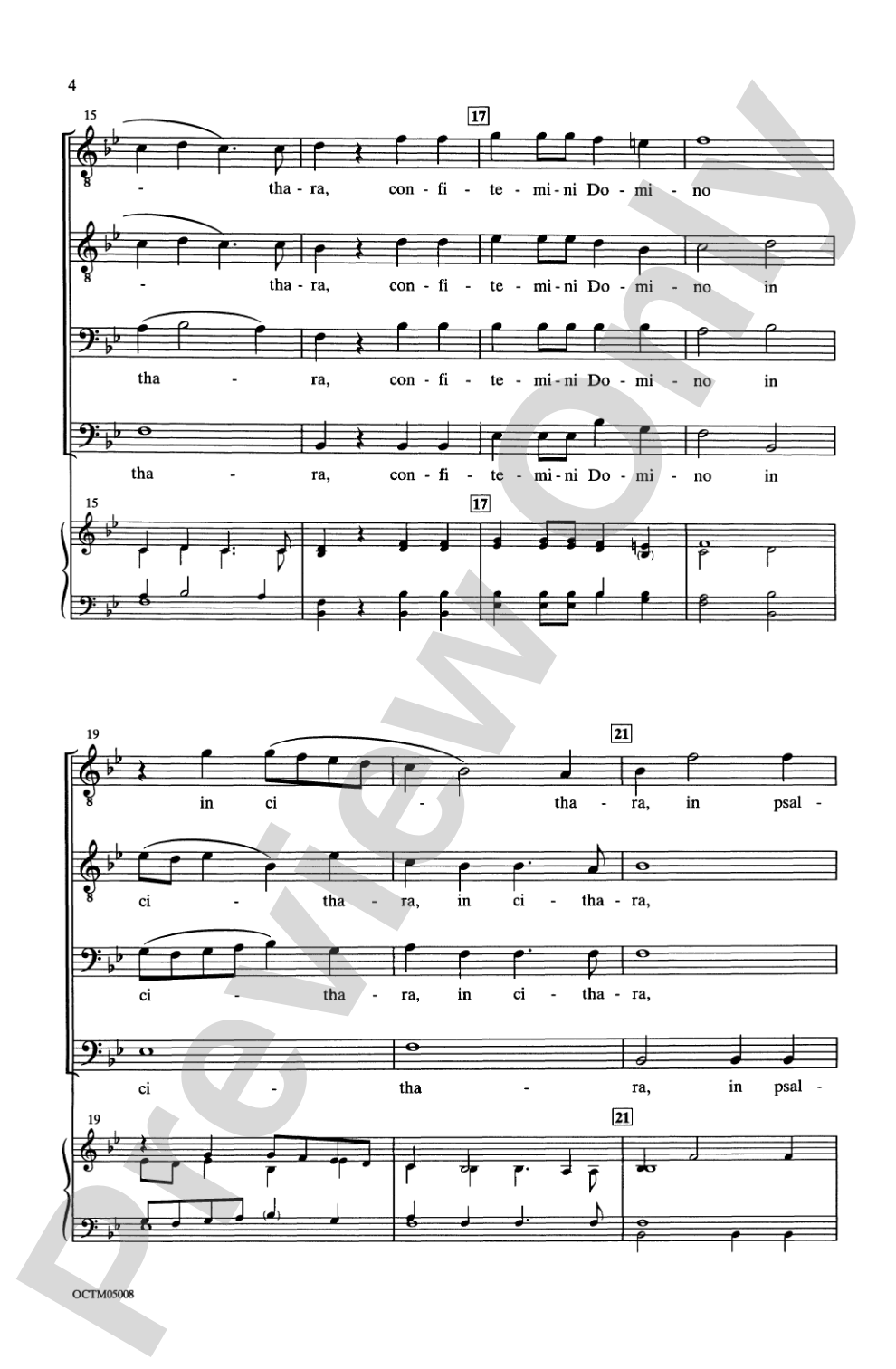

Exsultate Justi: TTBB, a cappella Choral Octavo
By Lodovico da Viadana / ed. Earlene Rentz
Level: Moderately Difficult
Item: 00-PO-0002717
$2.25
Minimum order quantity: 20 copies
Pickup currently not available
Description
Sixteenth century composer Lodovico Viadana created this wonderful work that is now a choral performance classic, performed regularly by choirs throughout the world. Earlene presents this new setting that will give either your men (TTBB) or your women (SSAA) a chance to shine.


Exsultate Justi: TTBB, a cappella Choral Octavo isn't in MakeMusic Cloud just yet...but it could be. Let us know you'd like to see it, and you'll help shape what comes next. In the meantime, start a free trial and dive into thousands of interactive titles your students can play along with today.
Request This Title
Tell us you want it.
Start Your Free Trial
Explore everything that's ready to play right now.
Sample Audio
1
Audio File
--:--
0:00
0:00
Sample Video
No sample videos found.
Additional Details
Series:
Alfred Archive Edition: Belwin Festival Series
Publisher:
Alfred Music
Page Count:
12
SKU:
00-PO-0002717
More about this title
About the Composer: Lodovico da Viadana
Lodovico da Viadana (1560-1627) was an Italian priest, composer, and organist who bridged the Renaissance and early Baroque periods. A prolific composer of sacred music, he is remembered for his polyphonic motets and his contributions to the development of the concertato style, which blended voices and instruments in new ways. His choral works remain standards in the repertoire because they balance musical sophistication with singability.
Why we love this
This setting captures the joy and energy of the original while sitting perfectly in the men's voice range, making it an ideal choice for TTBB ensembles seeking substantive repertoire that doesn't demand an enormous vocal range. The piece works equally well in a concert or contest setting, and it never feels heavy or dated despite its Renaissance roots. Singers consistently enjoy the part writing, which rewards good blend and intonation without requiring extensive solo passage work.
What to expect
This jubilant setting radiates brightness and conviction; the text pairs with music that feels both reverent and celebratory. Singers experience the satisfaction of resonant four-part harmony, and audiences hear the clarity and directness that comes from Renaissance compositional technique performed with care.
Who it's for
TTBB choirs at the high school, college, or community level who want to perform a substantial Renaissance masterwork without overwhelming their singers. This work suits ensembles that have moved beyond beginning repertoire and are ready to tackle four-part writing that demands focused listening and blend. It also works well for choirs preparing for festival or competition seasons.
How to get the most out of it
- Shape phrases with breath and dynamic lift rather than relying on tempo changes; the a cappella texture demands that singers create forward motion through musicality.
- Balance the tenor lines carefully, as they often carry both harmonic and melodic responsibility—neither line should dominate.
- Approach the work with clean articulation and precise cutoffs, especially important in a cappella writing where any muddiness or lag becomes immediately apparent.
- Lock in unison or near-unison passages first before adding layered sections; this builds confidence and clarity in the overall ensemble sound.
How to use it
Pair this with other sacred a cappella works from the Renaissance or early Baroque to create a thematic concert segment, or program it as a showcase moment in a mixed-repertoire concert where it will stand out for its textural clarity and historical weight. It also serves well as a contest or festival selection where musicianship and blend matter as much as technical display.
Skills your students will build
- Singing Renaissance polyphonic writing with accurate intonation in four independent parts
- Balancing multiple melodic lines and understanding harmonic function within a cappella texture
- Breath management and phrase shaping without instrumental support
- Performing liturgical Latin text with stylistically appropriate diction and emphasis