

Exsultate in Seven: SATB Choral Octavo
Words and music by Andy Beck
Item: 00-PO-0006959
$2.05
Minimum order quantity: 20 copies
Pickup currently not available
Related Items
Exsultate in Seven: PianoTrax Digital Audio Download |
$9.99
|
View | |
Exsultate in Seven: SAB Choral Octavo |
$2.05
|
View | |
Exsultate in Seven: 2-Part Choral Octavo |
$2.05
|
View | |
Exsultate in Seven: SATB Choral Octavo |
$2.05
|
View | |
Exsultate in Seven: SAB Choral Octavo |
$2.05
|
View | |
Exsultate in Seven: 2-Part Choral Octavo |
$2.05
|
View |
Description
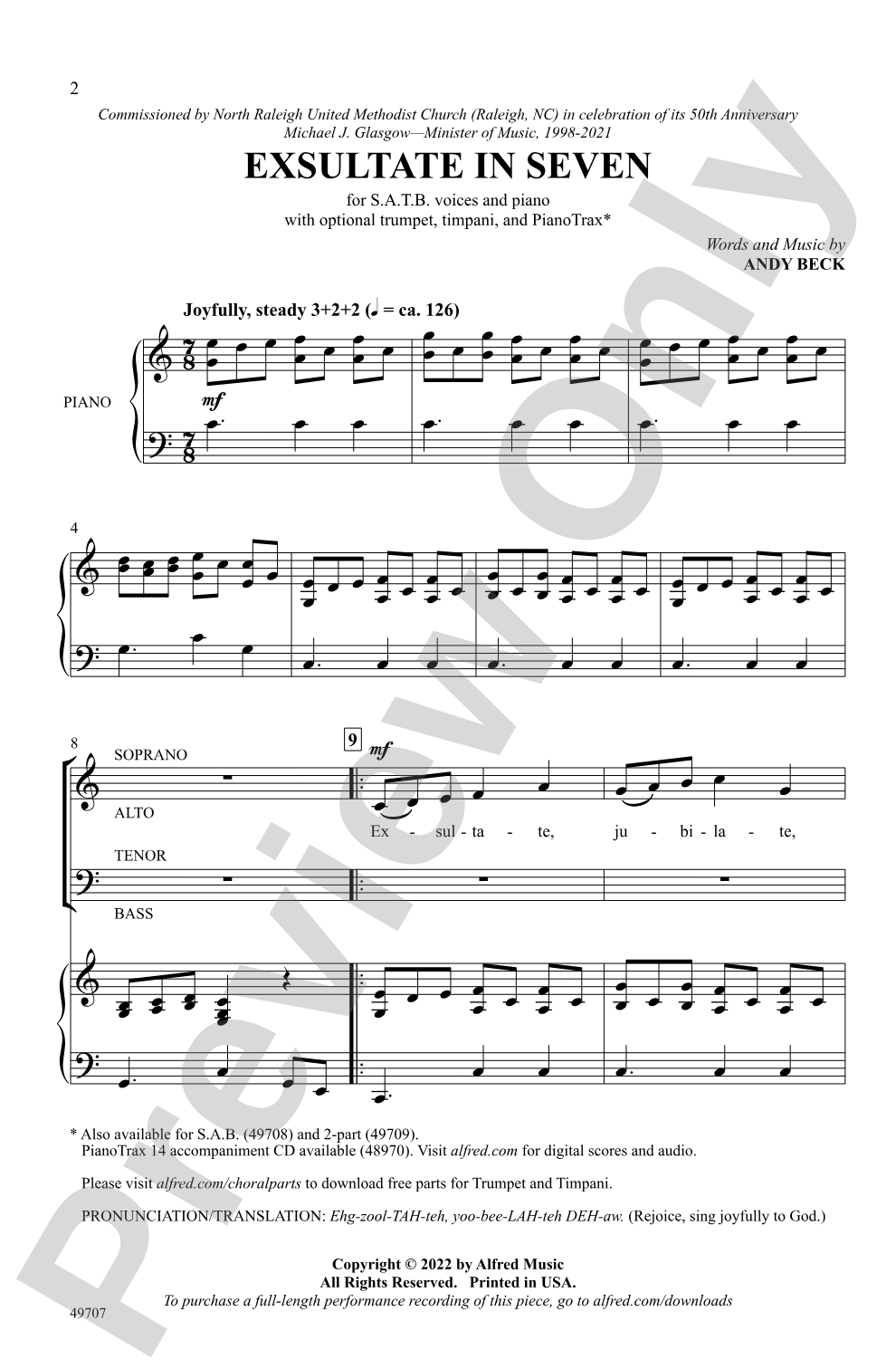
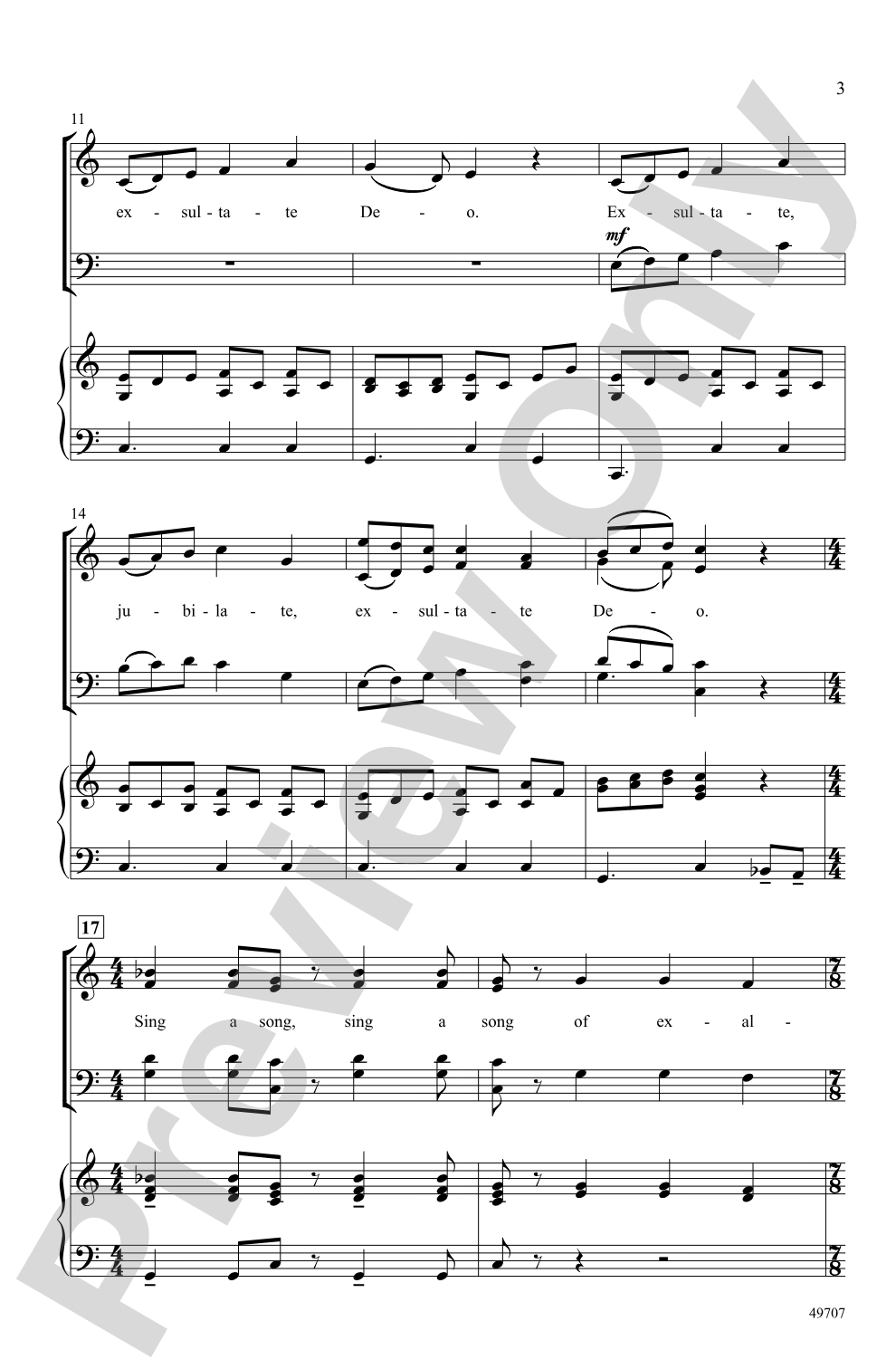
This jubilant song of exaltation is designed to make mixed and changing meters intuitive, familiar, easy. Organized in 3 + 2 + 2, the dance-like main theme is quickly mastered. A small number of familiar Latin words and some English text combine into an exuberant concert/contest selection. Listen for the glorious soprano descant, optional trumpet fanfare, and rhythmic timpani part that add majesty, while anchoring the meter.


Exsultate in Seven: SATB Choral Octavo isn't in MakeMusic Cloud just yet...but it could be. Let us know you'd like to see it, and you'll help shape what comes next. In the meantime, start a free trial and dive into thousands of interactive titles your students can play along with today.
Request This Title
Tell us you want it.
Start Your Free Trial
Explore everything that's ready to play right now.
Sample Audio
1
Audio File
--:--
0:00
0:00
Sample Video
1 / 2
Additional Details
Series:
Alfred Choral Designs
Publisher:
Alfred Music
Page Count:
8
SKU:
00-PO-0006959
More about this title
About the Composer: Andy Beck

Andy Beck leads the Choral Publications department at Alfred Music, where he has cultivated a catalog of distinction while maintaining his own prolific output as a composer and arranger. With more than 450 choral works in print alongside his widely-used vocal resources and educational musicals, Beck has established himself as a trusted voice in choral pedagogy and artistry.
Beyond the page, Beck is recognized internationally as a guest conductor, adjudicator, and clinician. He has served as commissioned composer and conductor for honor choirs throughout the Southeast and holds degrees in Music Education from Ithaca College and Northwest Missouri State University. A trained tenor with performance experience in musical theatre and chamber choirs, Beck channels his dual commitment to music literacy and artistic excellence into every project he undertakes.
Why we love this
Beck has engineered the mixed meter experience to feel natural rather than notated, using a 3 + 2 + 2 grouping that singers grasp instinctively through the dance-like main theme. The optional soprano descant, instrumental parts, and recorded accompaniment give you flexible staging options, whether you're opening a concert, entering a festival, or building a contest program.
What to expect
Jubilant and rhythmically alive, this piece invites singers into a celebratory dance rather than a complex metric puzzle. The combination of Latin and English text, layered with optional instrumental and descant elements, creates a sense of gathering momentum and shared triumph.
Who it's for
This octavo works for SATB choirs at the middle school through adult level who are ready to tackle mixed meters with confidence. It's ideal for ensembles preparing for festival or contest settings, or for any director seeking an opener that lands with exuberance rather than uncertainty.
How to get the most out of it
- Let the rhythmic timpani part anchor the meter changes for your singers. That percussive pulse makes the 3 + 2 + 2 structure feel inevitable rather than awkward.
- If you're adding the optional trumpet fanfare, balance it so it brightens the choral sound without drowning out text. The fanfare should feel like a flourish, not the focal point.
- Bring out the soprano descant as a soaring counterline, not an isolated melody. Rehearse it with the full SATB voicing so descant singers hear their role within the texture.
- Use the recorded accompaniment to establish the dance-like groove early in sectional rehearsals. Once the meter feels intuitive, your singers will perform with the buoyancy this piece demands.
How to use it
Open your concert with this piece to set an energetic, joyful tone from the first moments. Its contest-ready polish and optional instrumentation make it equally at home in a festival performance or as a showstopper in a themed program exploring rhythm, sacred/secular contrasts, or multicultural celebration.
Skills your students will build
- Reading and performing mixed meter (3/4 and 2/4 in organized groupings)
- Layering independent melodic lines (descant writing)
- Ensemble responsiveness to percussion as a metric anchor
- Clear diction in Latin and English text
- Balancing choral blend with optional instrumental doubling and descant parts