
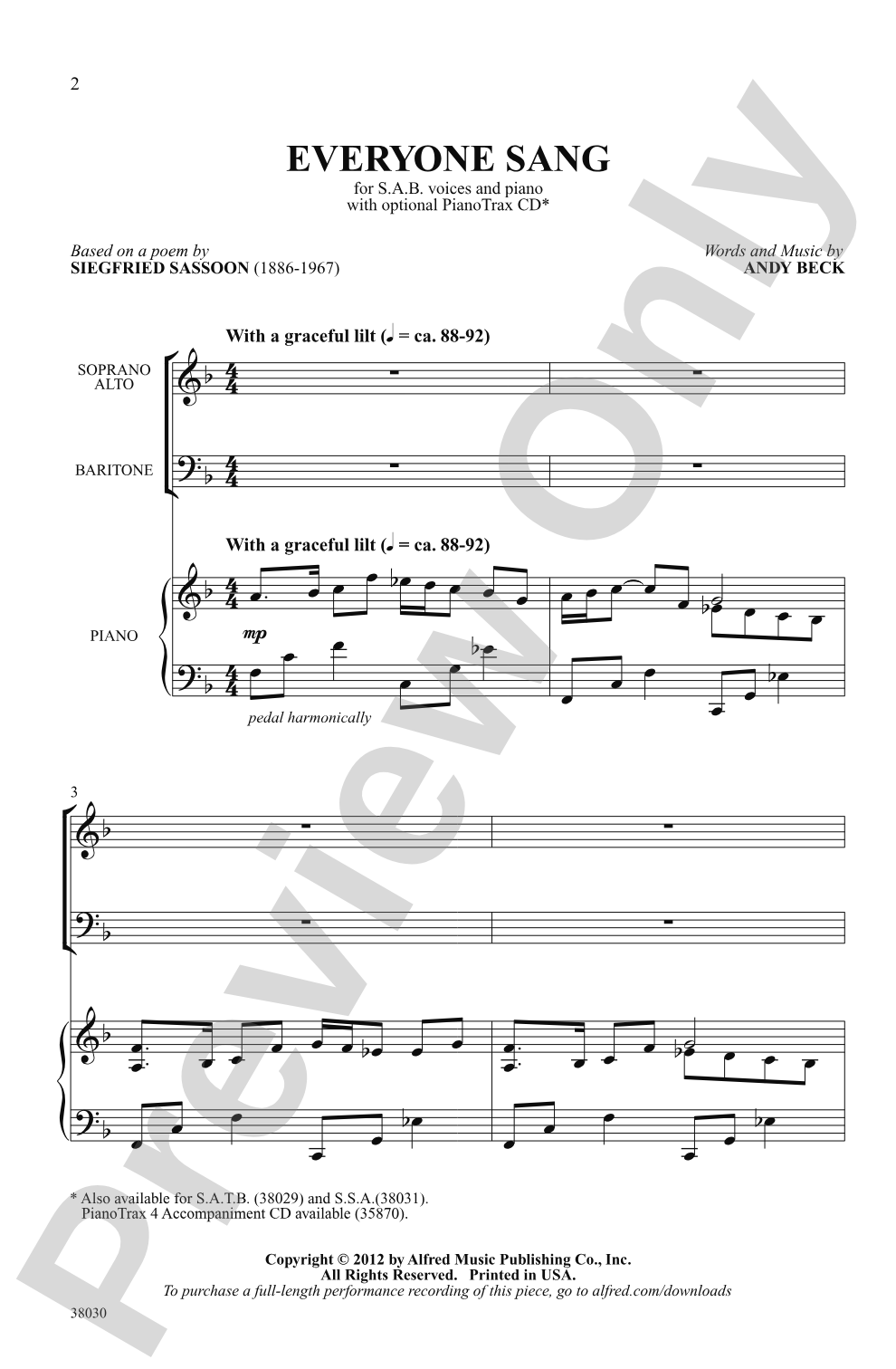
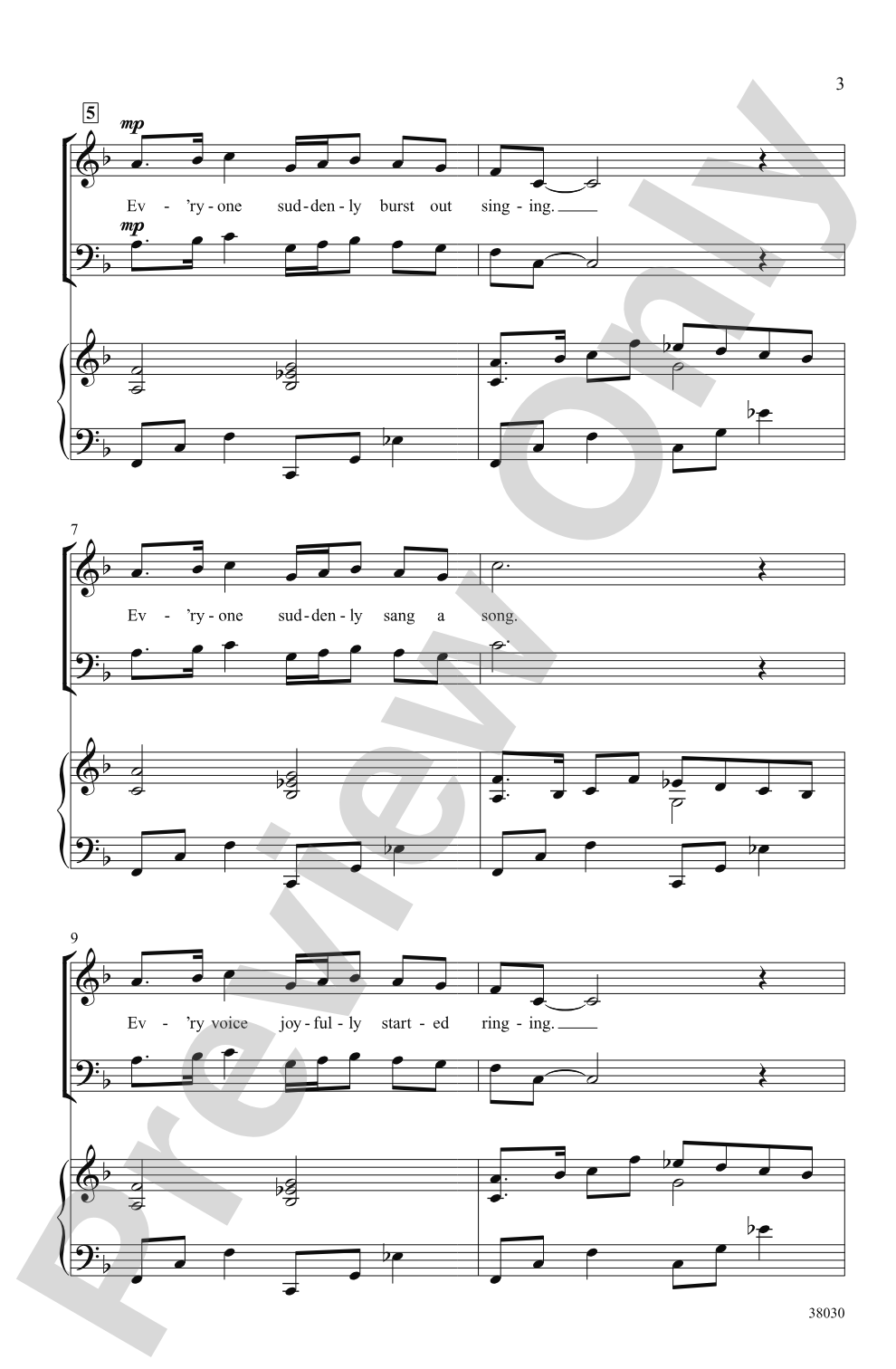
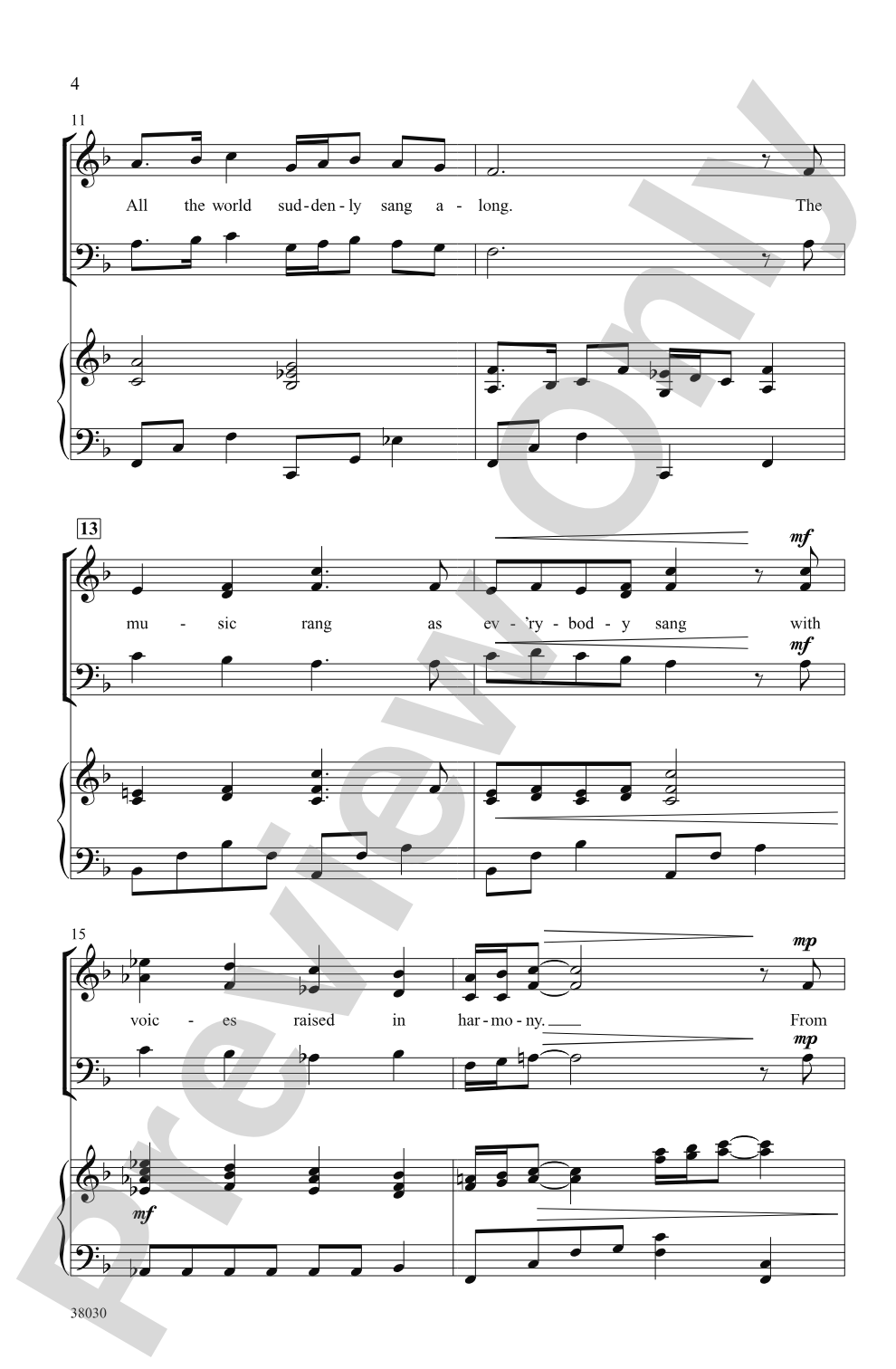

Everyone Sang: SAB Choral Octavo
Words and music by Andy Beck
Item: 00-PO-0001344
$1.95
Minimum order quantity: 20 copies
Pickup currently not available
Description
The vivid musical text of this beautiful concert work introduces "birds . . . stars . . . the gentle breeze . . . the rolling river . . . and waves upon the shore" one at a time "as they join the joyful song." What begins as a graceful, lilting unison develops into resounding polyphony. Accompaniment available on PianoTrax 4 CD (00-35870).


Everyone Sang: SAB Choral Octavo isn't in MakeMusic Cloud just yet...but it could be. Let us know you'd like to see it, and you'll help shape what comes next. In the meantime, start a free trial and dive into thousands of interactive titles your students can play along with today.
Request This Title
Tell us you want it.
Start Your Free Trial
Explore everything that's ready to play right now.
Sample Audio
1
Audio File
--:--
0:00
0:00
Sample Video
No sample videos found.
Additional Details
Series:
Alfred Choral Designs
Publisher:
Alfred Music
Page Count:
16
SKU:
00-PO-0001344
More about this title
About the Composer: Andy Beck

Andy Beck serves as Director of Choral Publications at Alfred Music, where he shapes the company's choral catalog while maintaining an active composing and arranging career. With more than 450 published choral works, vocal resources, and children's musicals to his name, Beck has established himself as a significant voice in contemporary choral music. His educational resources—including Sing at First Sight, Foundations in Choral Sight Singing, and Vocalize! 45 Vocal Warm-Ups That Teach Technique—are widely adopted in school music programs across the country.
Beyond publishing, Beck is an accomplished conductor, clinician, and guest composer for honor choirs and all-state groups, particularly throughout the Southeast. He holds a Bachelor's degree in Music Education from Ithaca College and a Master's degree in Music Education from Northwest Missouri State University. A trained tenor, Beck remains active as a performer with the North Carolina Master Chorale Chamber Choir and has contributed as a studio singer for Alfred Music since 1992. His dual commitment to composing meaningful choral literature and advancing music literacy in schools informs every project he undertakes.
Why we love this
Beck's text painting here is understated but effective; he resists overselling the imagery while the music gradually unfolds it through texture. The piece builds naturally from unison to full harmony, which gives your singers real work to do without overwhelming them. Programs that balance concert pieces with sing-along selections benefit from this kind of sophisticated-yet-accessible writing.
What to expect
The music opens with a sense of discovery, unfolding images like watercolor washes. As harmonies accumulate, the piece evolves into something luminous and celebratory, with all three voices eventually joining what Beck describes as a joyful song. The overall effect is contemplative rather than bombastic, inviting listeners into a quiet moment before the final buildup.
Who it's for
SAB choirs seeking accessible repertoire that doesn't shy away from part-writing will find this piece rewarding. It works well for developing middle school or early high school ensembles that have solid unison skills but are building confidence in three-part textures. The gentle subject matter and manageable range make it suitable for spring concerts or nature-themed programming.
How to get the most out of it
- Maintain the graceful lilt of the opening unison phrase across your SAB sections; this melody is the anchor that will make the later polyphony coherent.
- Shape each nature image (birds, stars, breeze, river, waves) as a discrete phrase so the progression from isolation to community feels earned rather than rushed.
- Balance the rise in dynamic complexity with careful attention to blend in the SAB voicings; denser harmony at lower volumes often reads better than forced volume growth.
- If using PianoTrax accompaniment, rehearse without it first to establish ensemble independence, then layer the recording in only during final run-throughs.
How to use it
Place this piece in a concert section that contrasts with heavier, dramatic works. Its lyricism pairs naturally with other art songs or reflective selections, or program it as a transition between thematic sections. The modest page count makes it a useful addition to concert programs that need varied pacing without lengthy solo features.
Skills your students will build
- Transitioning from unison singing to three-part SAB harmony
- Part independence and blend in homophonic passages
- Textual expression through dynamic and rhythmic nuance
- Following a gradual textural build within a single piece