
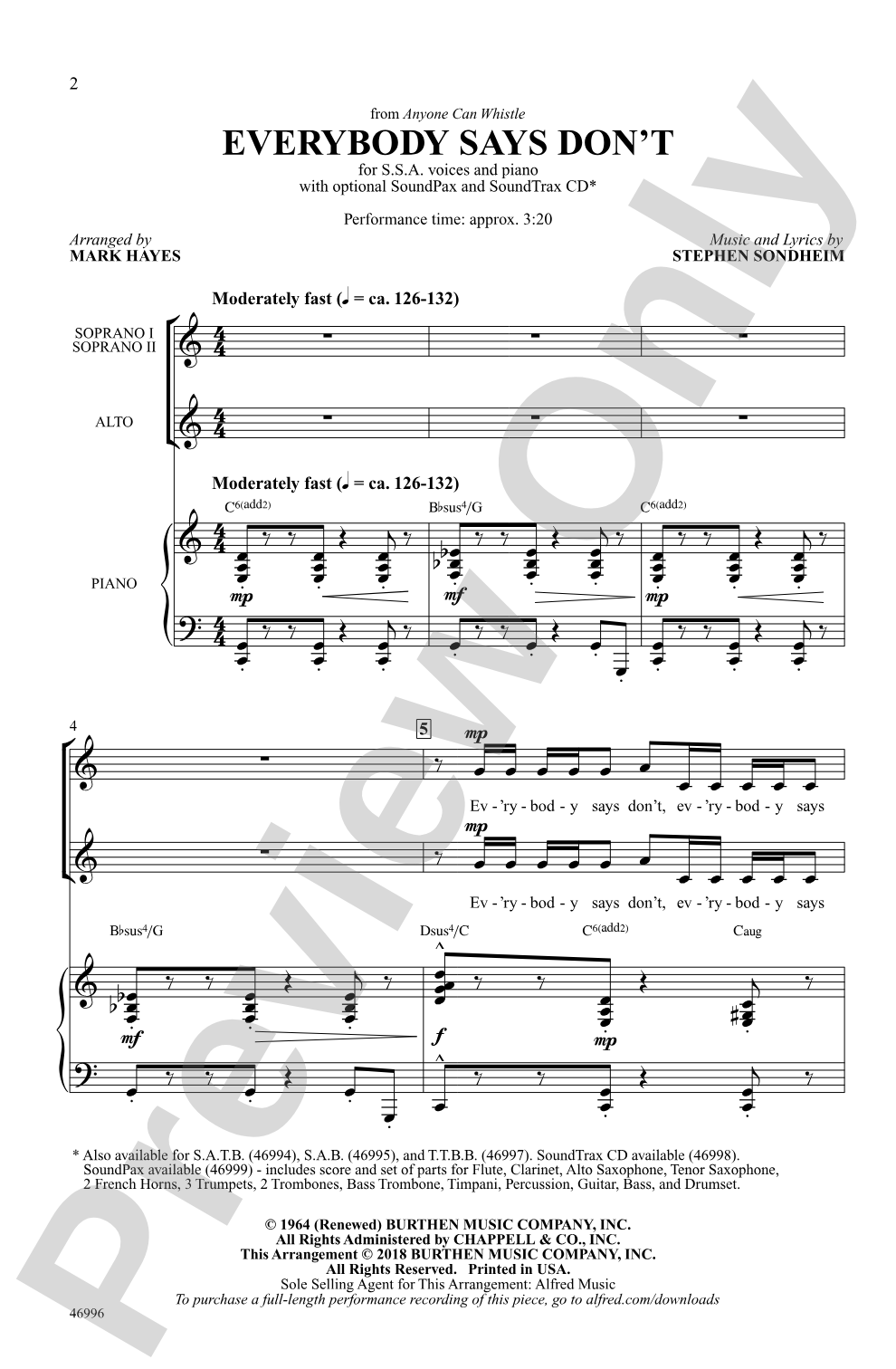

Everybody Says Don't: SSA Choral Octavo
from Anyone Can Whistle
Music and lyrics by Stephen Sondheim / arr. Mark Hayes
Item: 00-PO-0005852
$2.25
Minimum order quantity: 20 copies
One moment…
Related Items
Everybody Says Don't: SoundTrax Digital Audio Download |
$29.99
|
View | |
Everybody Says Don't: SATB Choral Octavo |
$2.25
|
View | |
Everybody Says Don't: SAB Choral Octavo |
$2.25
|
View | |
Everybody Says Don't: TTBB Choral Octavo |
$2.25
|
View | |
Everybody Says Don't: Choral SoundPax |
$60.00
|
View | |
Everybody Says Don't: SATB Choral Octavo |
$2.25
|
View | |
Everybody Says Don't: SAB Choral Octavo |
$2.25
|
View | |
Everybody Says Don't: SSA Choral Octavo |
$2.25
|
View | |
Everybody Says Don't: TTBB Choral Octavo |
$2.25
|
View | |
Everybody Says Don't: Choral Octavo SoundTrax CD |
$29.99
|
View | |
Everybody Says Don't: Choral SoundPax |
$60.00
|
View |
Description
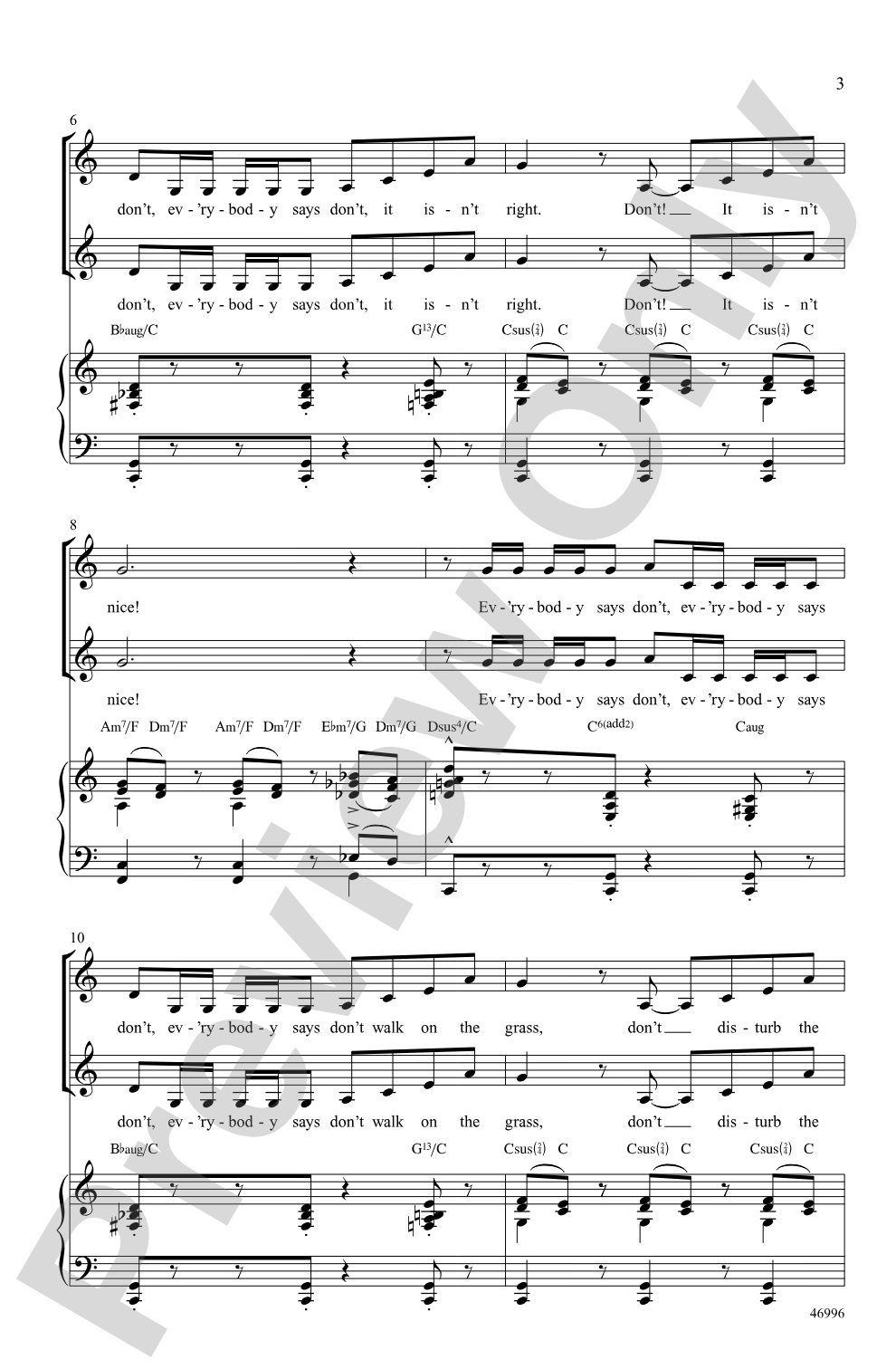
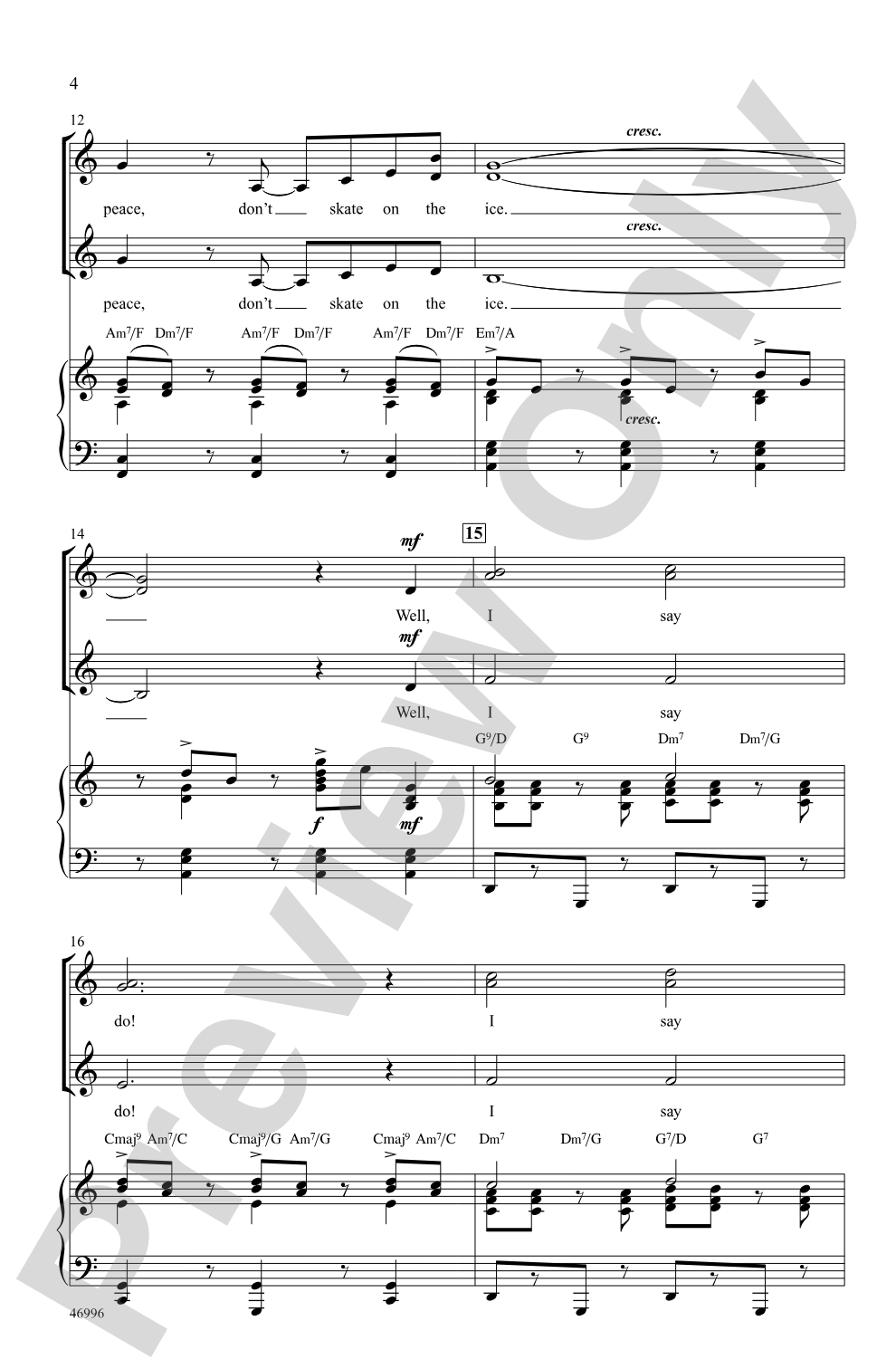
This Sondheim standard is all about being positive, not taking "no" for an answer. And this awesome Mark Hayes arrangement is truly outstanding! Alternating between rapid and rhythmic unison patter and full choral harmony, the driving rhythms of the accompaniment generate a sense of urgency throughout. Exciting!


Everybody Says Don't: SSA Choral Octavo isn't in MakeMusic Cloud just yet...but it could be. Let us know you'd like to see it, and you'll help shape what comes next. In the meantime, start a free trial and dive into thousands of interactive titles your students can play along with today.
Request This Title
Tell us you want it.
Start Your Free Trial
Explore everything that's ready to play right now.
Sample Audio
1
Audio File
--:--
0:00
0:00
Sample Video
No sample videos found.
Additional Details
Series:
Alfred Pop Choral Series
Publisher:
Alfred Music
Page Count:
16
SKU:
00-PO-0005852
More about this title
About the Composer: Stephen Sondheim
Stephen Sondheim (1930-2021) revolutionized musical theater through lyrics and music that challenged audiences to think deeper about character and consequence. His work spans five decades of Broadway innovation, from West Side Story and A Funny Thing Happened on the Way to the Forum to Sweeney Todd and Sunday in the Park with George. Sondheim's influence on music education extends beyond performance; his intricate rhyme schemes, sophisticated harmonic language, and psychological depth in storytelling have become essential study for understanding how music serves narrative.
Why we love this
Mark Hayes captures the relentless energy and conversational wit of this Sondheim number in an arrangement that keeps SSA voices moving and engaged. The alternating sections of rhythmic unison patter and lush harmony create natural dynamics without requiring a huge vocal range, making it accessible for developing choirs while maintaining the sophistication audiences expect from Sondheim. This arrangement proves that Broadway standards don't require a massive ensemble to land with impact.
What to expect
Infectious, propulsive, conversational. The song pulses with optimism and determination, driven by accompaniment rhythms that create forward momentum even in quieter moments. There's a theatrical brightness here, with the urgency of someone making a case and refusing to accept defeat.
Who it's for
SSA choirs with solid rhythmic skills and the ability to handle rapid text delivery will thrive with this arrangement. The piece works for advanced middle school and high school choirs, community ensembles, and adult singers looking for engaging Broadway repertoire. Directors seeking a Sondheim selection that doesn't require an extended vocal range or male voice parts will find this especially practical.
How to get the most out of it
- Keep the unison patter sections crisp and articulate; the rapid rhythms drive the song forward, so clarity matters more than volume.
- Balance the full harmony sections carefully so the chords sing through without drowning out the text. Sondheim's lyrics are essential to the song's meaning.
- Use the recorded accompaniment to lock the ensemble onto the driving rhythms, especially during meter changes or rhythmic pivots.
- Shape the arc toward moments of full harmonic texture; these arrivals feel earned after the leaner unison passages.
How to use it
Program this as an opener or midpoint energy boost, where its unrelenting rhythmic drive can reset audience attention. It pairs well on a concert of contemporary choral music or as a lighter moment on a program mixing classical and Broadway selections. The piece also works as a welcome addition to a full Sondheim concert or a spring pops show.
Skills your students will build
- Reading and executing rapid rhythmic patterns in unison
- Managing text clarity at tempo
- Balancing solo/ensemble textures and shifting from patter to harmonic singing
- Understanding how accompaniment rhythm shapes vocal phrasing in theater music