

Every Night When the Sun Goes In: 2-Part Choral Octavo
Appalachain Folk Song / arr. David Waggoner
Item: 00-PO-0001277
$2.05
Minimum order quantity: 20 copies
Pickup currently not available
Related Items
Every Night When the Sun Goes In: SoundTrax Digital Audio Download |
$27.99
|
View | |
Every Night When the Sun Goes In: SATB Choral Octavo |
$1.80
|
View | |
Every Night When the Sun Goes In: SAB Choral Octavo |
$1.80
|
View | |
Every Night When the Sun Goes In: SATB Choral Octavo |
$1.80
|
View | |
Every Night When the Sun Goes In: SAB Choral Octavo |
$1.80
|
View | |
Every Night When the Sun Goes In: 2-Part Choral Octavo |
$2.05
|
View | |
Every Night When the Sun Goes In: Choral Octavo SoundTrax CD |
$27.99
|
View |
Description
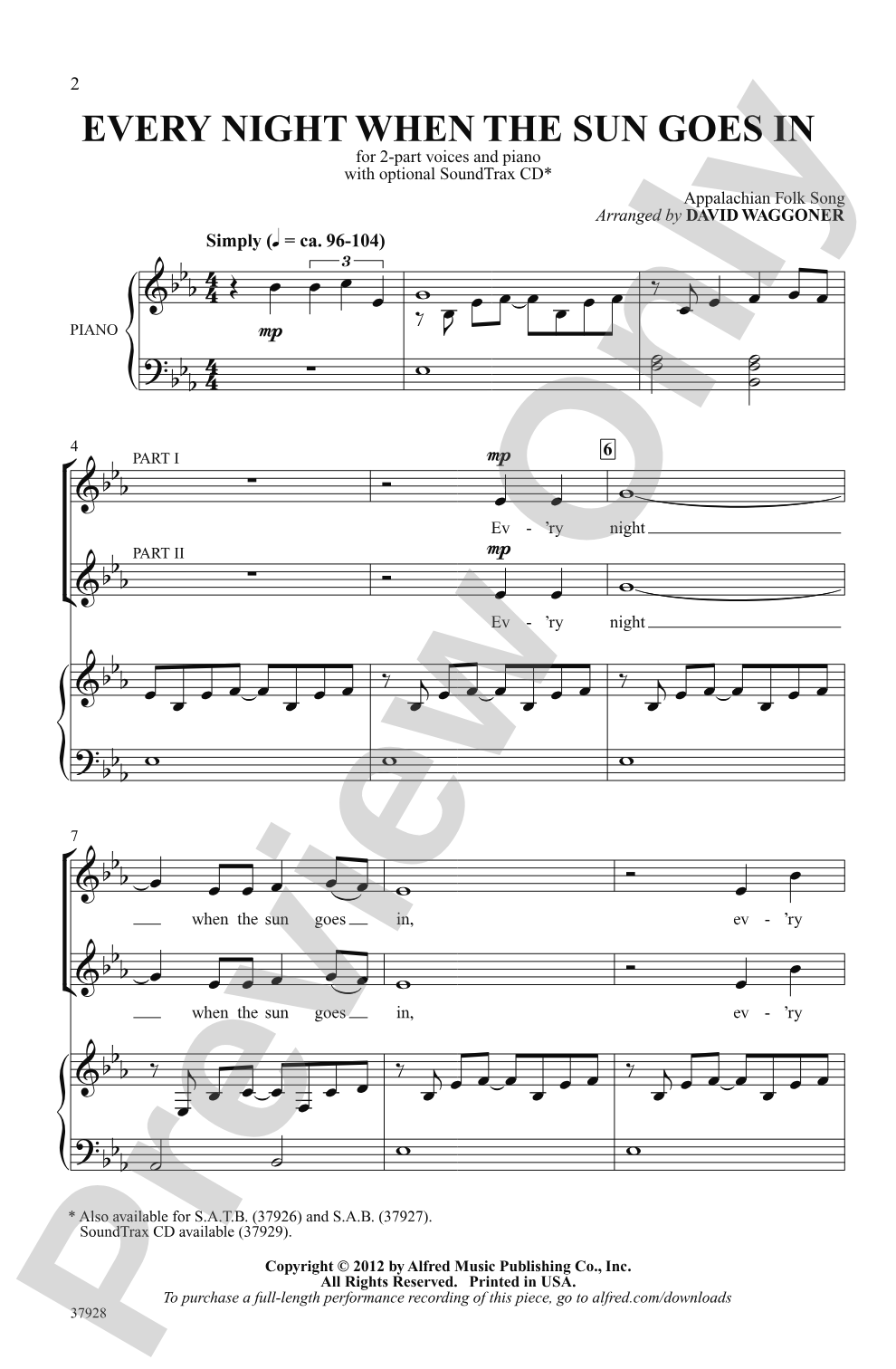
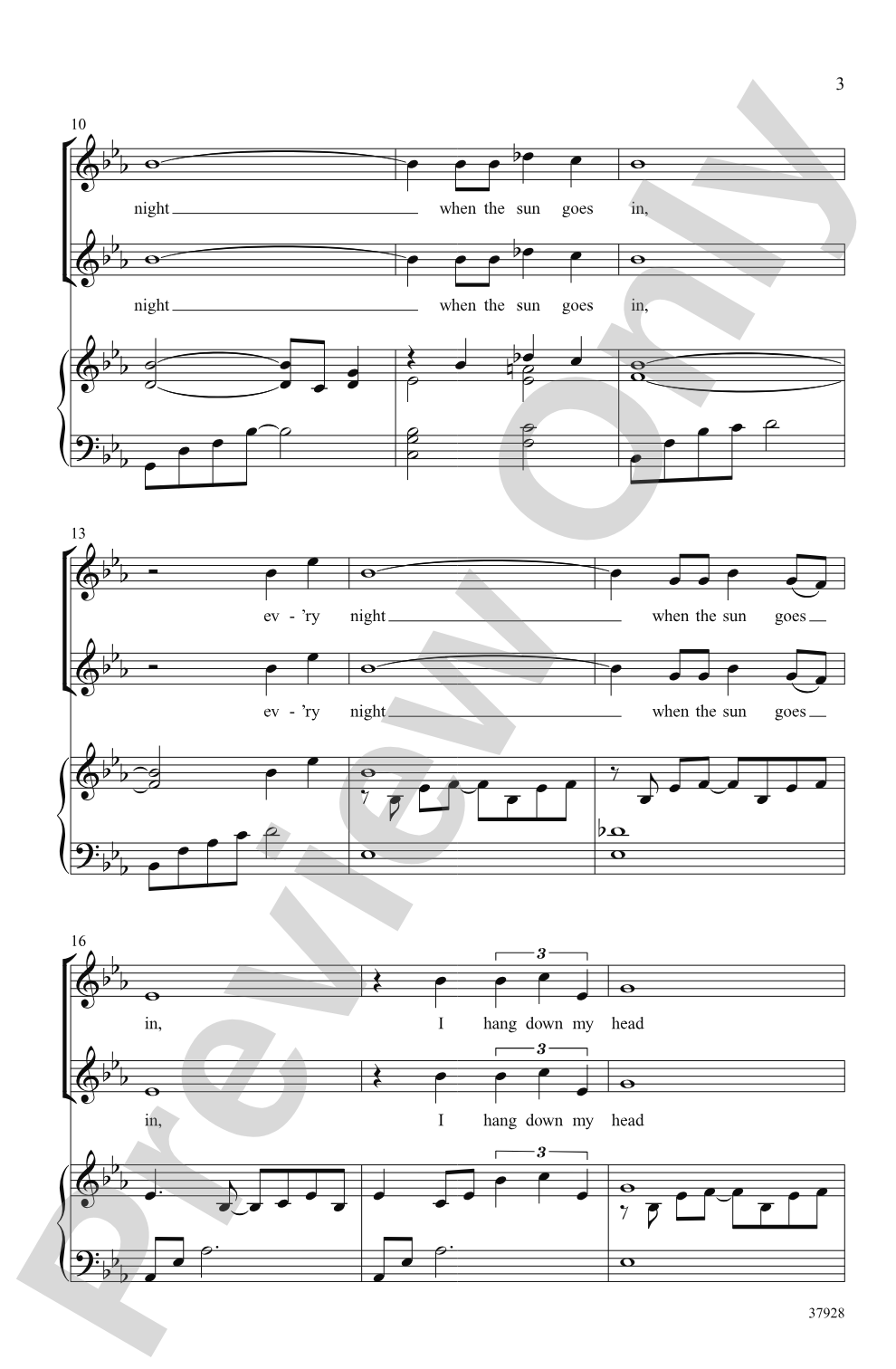
A winsome Appalachian folk melody, tastefully arranged for choirs at any level. First in unison, then in rhythmic canon, and finally developing into full choral harmonies, this setting achieves beauty from simplicity.


Every Night When the Sun Goes In: 2-Part Choral Octavo isn't in MakeMusic Cloud just yet...but it could be. Let us know you'd like to see it, and you'll help shape what comes next. In the meantime, start a free trial and dive into thousands of interactive titles your students can play along with today.
Request This Title
Tell us you want it.
Start Your Free Trial
Explore everything that's ready to play right now.
Sample Audio
1
Audio File
--:--
0:00
0:00
Sample Video
No sample videos found.
Additional Details
Series:
Alfred Choral Designs
Publisher:
Alfred Music
Page Count:
8
SKU:
00-PO-0001277
More about this title
About the Arranger: David Waggoner

David Waggoner holds degrees from the University of Michigan School of Music and a master's degree from Eastern Michigan University. He has built a career composing and arranging for multiple ensembles, with particular strength in choral and handbell writing.
Waggoner teaches elementary music in Woodhaven, MI, and serves as Director of Music at First United Methodist Church in Wyandotte, MI. His arrangements balance accessibility with musical substance, making them valuable resources for music educators working across skill levels.
Why we love this
Waggoner's treatment of this Appalachian melody unfolds logically without overselling itself. The progression from unison into canon and then into fuller harmonies gives singers real work to do while keeping the arrangement vocally grateful and musically coherent throughout. Choirs at any level gain immediate success with material that feels both genuine and carefully shaped.
What to expect
The piece carries the unhurried warmth of a folk melody sung around a fire, unadorned yet deeply satisfying. Its gradual harmonic unfolding creates intimacy rather than spectacle, allowing singers to feel the beauty of their own voices coming together.
Who it's for
This arrangement serves new choral directors, elementary and middle school choirs, and adult community ensembles seeking material that respects singers' developing skills. The 2-part voicing and progressive structural design make it equally valuable for singers with limited ensemble experience and those building toward more complex repertoire.
How to get the most out of it
- Let the unison section establish the melody's character first. Singers need to own the tune before canon enters, so resist rushing through the opening even though it sounds simple.
- Bring out the rhythmic vitality of the canon section. These overlapping phrases create forward motion only when each voice maintains its own line with precision and independence.
- Balance the fuller harmonies in the final section so the melody remains audible. With only two parts, every voice carries both melodic and harmonic responsibility.
- Use the recorded accompaniment to lock ensemble rhythm during sectional rehearsals, then remove it gradually as confidence builds.
How to use it
Program this early in a concert to build audience connection and singer confidence. The folk roots and accessible arrangement also work well for community events, family concerts, or programs celebrating American musical traditions. Its eight pages and moderate rehearsal demands make it a natural choice for spring concerts when preparation time is limited.
Skills your students will build
- Singing melody in unison with secure intonation
- Maintaining an independent vocal line while hearing others sing different material (canon)
- Blending voices in two-part harmony while preserving individual line clarity
- Reading and executing simple rhythmic patterns across multiple measures