
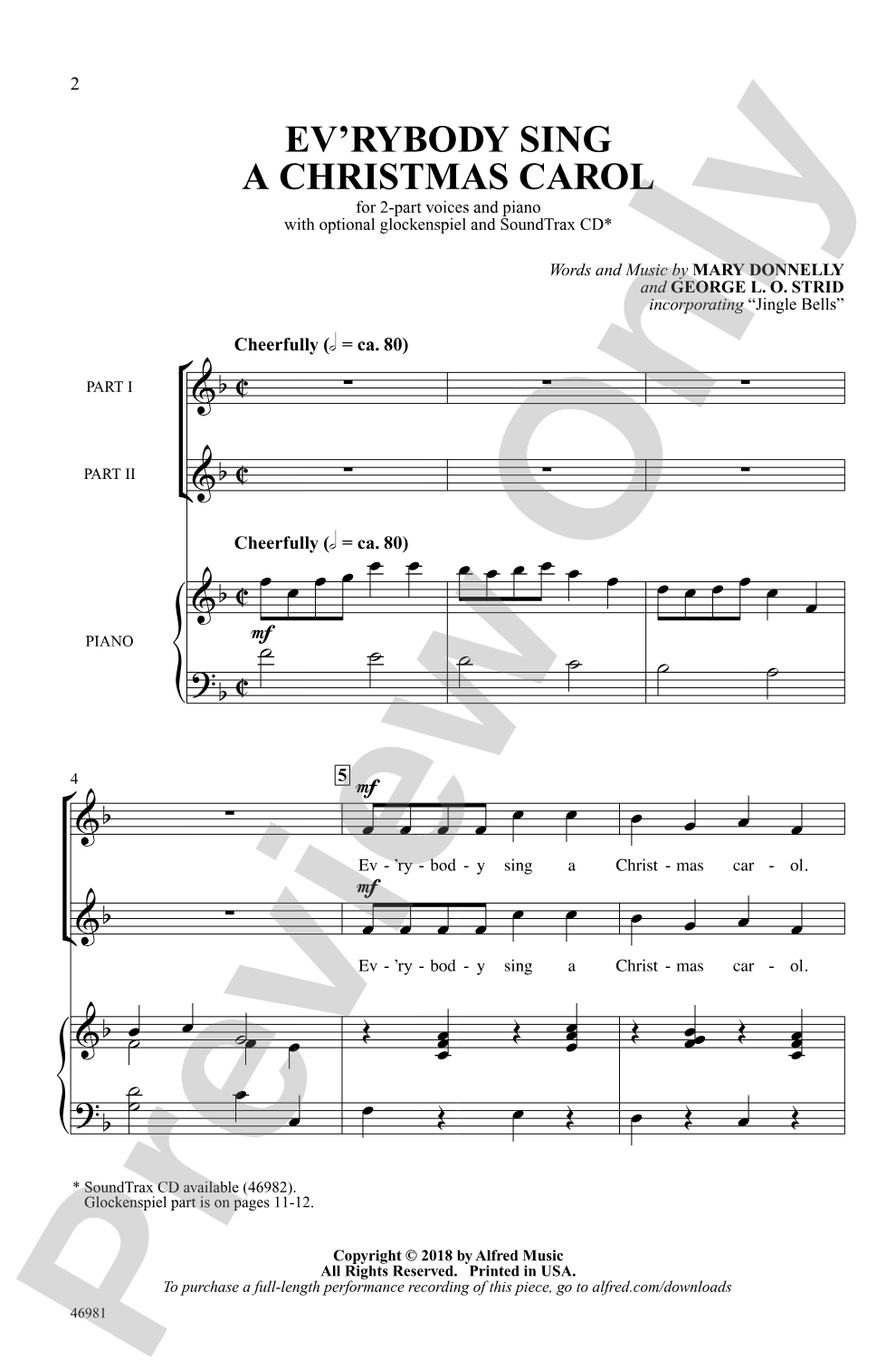
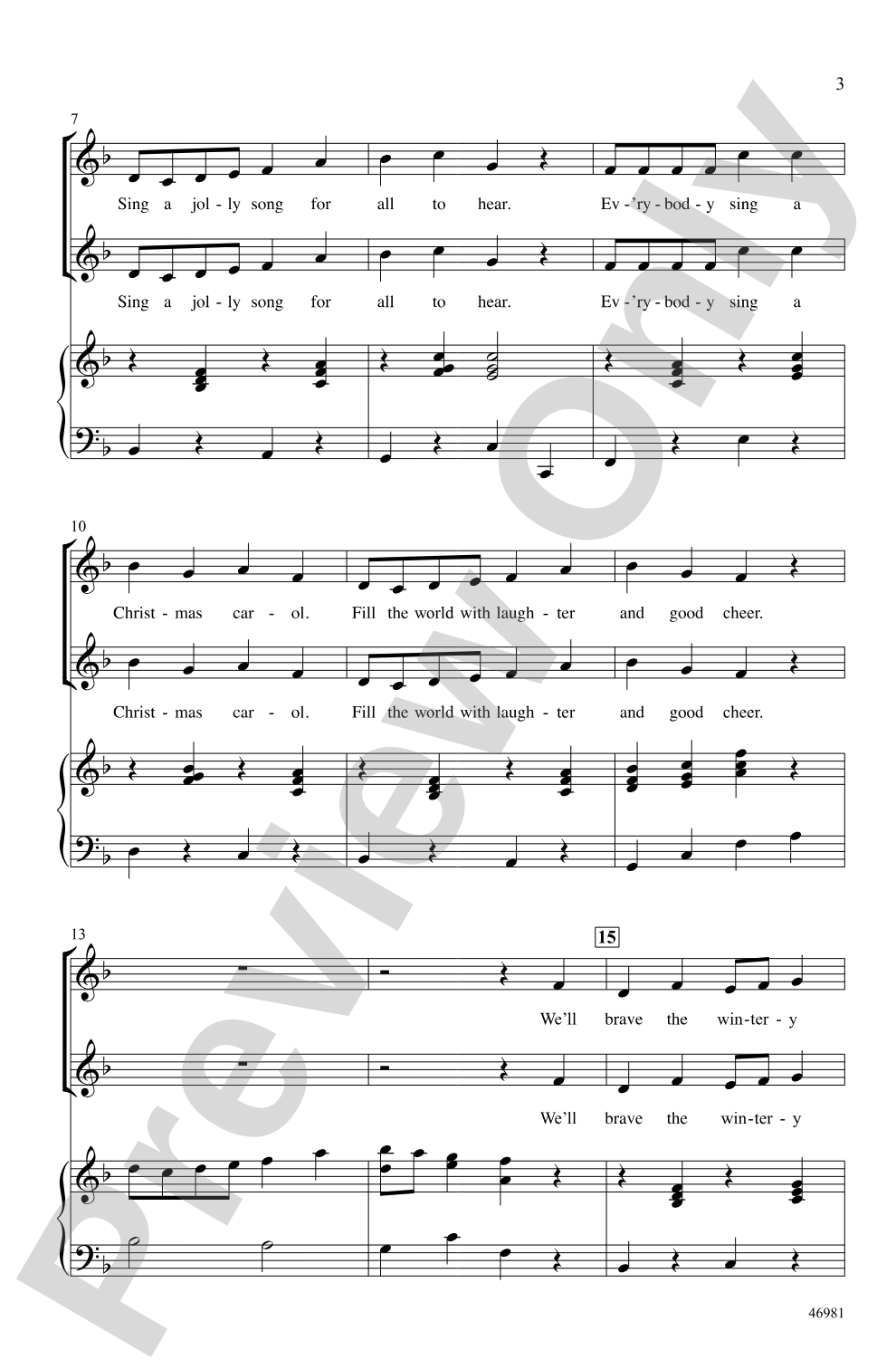
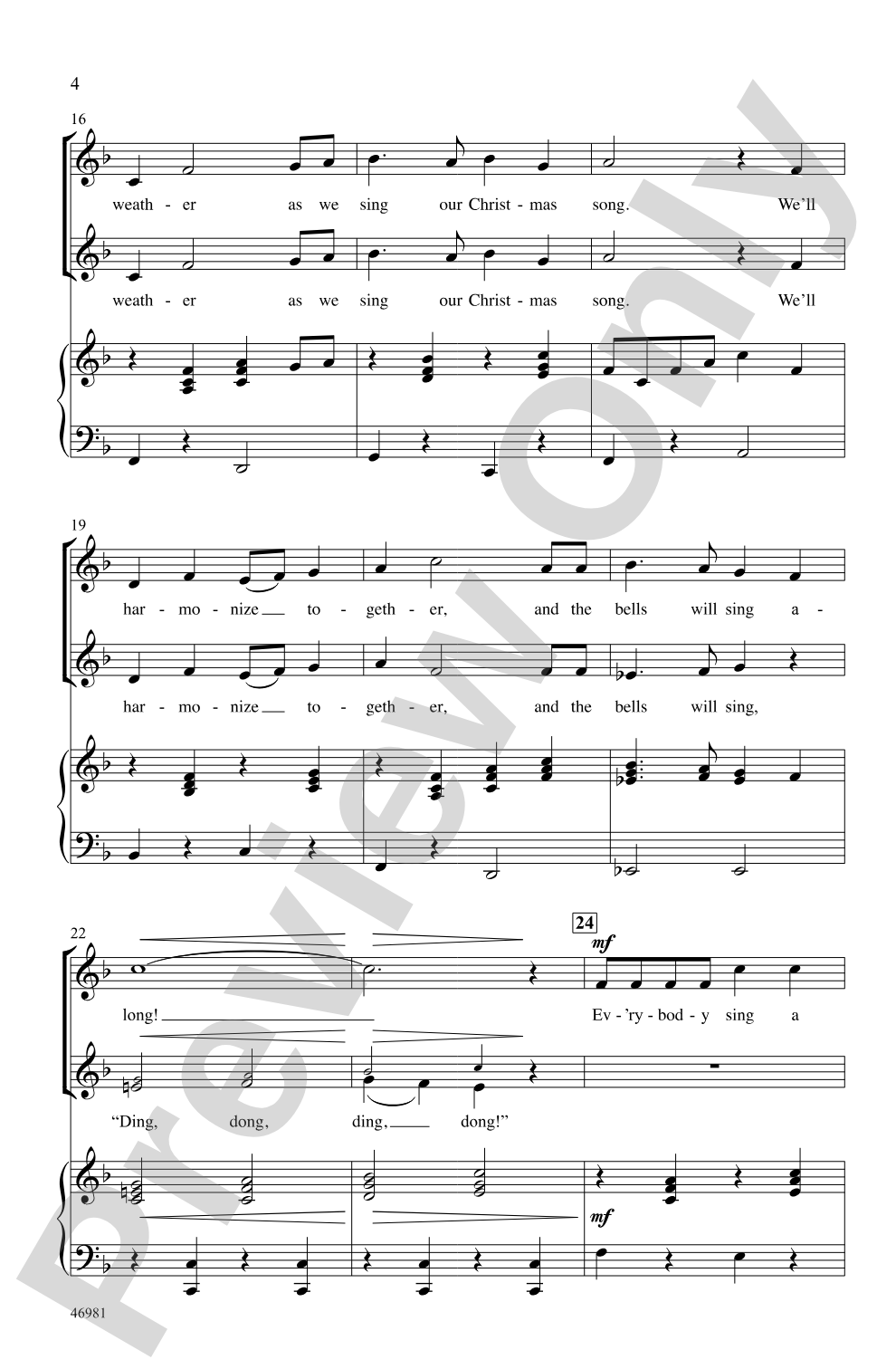

Ev'rybody Sing a Christmas Carol: 2-Part Choral Octavo
Incorporating "Jingle Bells"
Words and music by Mary Donnelly and George L. O. Strid
Item: 00-PO-0005839
$2.05
Minimum order quantity: 20 copies
Pickup currently not available
Description
An optional glockenspiel part adds some extra holiday sparkle to this cheerful original that incorporates a jolly "Jingle Bells" excerpt in the middle. Imitative textures and independent vocal lines make this a solid choice for younger singers. Festive and fun!


Ev'rybody Sing a Christmas Carol: 2-Part Choral Octavo isn't in MakeMusic Cloud just yet...but it could be. Let us know you'd like to see it, and you'll help shape what comes next. In the meantime, start a free trial and dive into thousands of interactive titles your students can play along with today.
Request This Title
Tell us you want it.
Start Your Free Trial
Explore everything that's ready to play right now.
Sample Audio
1
Audio File
--:--
0:00
0:00
Sample Video
Additional Details
Series:
Alfred Choral Designs
Publisher:
Alfred Music
Page Count:
12
SKU:
00-PO-0005839
Instrumentation:
Opt. Glockenspiel
More about this title
About the Composer: Mary Donnelly

Mary Donnelly grew up in Reno, Nevada, and studied English and French at the University of Nevada, Reno. While still an undergraduate, she discovered her passion for youth choral music by helping establish two children's choruses. This experience led her back to graduate school, where she earned a Master's Degree in Education from Lesley College in Cambridge, Massachusetts, with coursework focused on integrating the arts across the curriculum.
Donnelly spent thirty years teaching general music and choir in elementary and middle schools throughout Washoe County (Reno, Nevada) before retiring. In 1985, she began a creative partnership with George Strid when their principal asked them to compose a musical for Reading Week. That first collaboration, The Million Dollar Mystery, launched a prolific writing team that has since created over two hundred songs and twenty-five musicals. She holds memberships in ACDA, NEA, and ASCAP.
Why we love this
Donnelly and Strid understand how to build energy and independence in young singers without overwhelming them. The imitative textures give every voice something satisfying to sing, while the "Jingle Bells" quotation provides instant recognition and joy. Adding an optional glockenspiel part means you can layer in color without doubling voices, keeping the two-part texture clean and playable.
What to expect
Bright and spirited, with the warmth of a community sing-along. The original melody feels both fresh and familiar, especially when the beloved "Jingle Bells" emerges midway through, creating a moment of recognition and delight that audiences recognize instantly.
Who it's for
This octavo suits younger choirs in grades 2-6 who are developing ensemble skills and musicianship. Singers need basic part independence and secure pitch-finding ability, but the accessible melody and singable ranges make it achievable for most developing ensembles.
How to get the most out of it
- Clarify the imitative sections in rehearsal by having one part hold a syllable (like "loo") while the other enters with the melody. This trains singers to hear both parts as independent lines rather than doubling.
- If you're using the glockenspiel part, have that player run through it alongside the full choir several times before the performance. The shimmer works best when the part sits slightly above the vocal blend rather than buried in it.
- Lean into the tempo for the "Jingle Bells" moment to lift the energy. That section is where the fun lives, so resist the urge to hold back.
How to use it
Slot this into a holiday concert as a high-energy opener or closer that engages the audience immediately. Its cheerful character and manageable length (12 pages) make it a strong anchor for a concert section of newer Christmas repertoire, or pair it with one more polished piece to bookend your seasonal programming.
Skills your students will build
- Singing in two independent parts with imitative entrances
- Maintaining their line while listening to another part
- Recognizing and performing a familiar melodic quotation within a larger work
- Building ensemble blend and balance across two vocal lines