

Et In Terra Pax: 3-Part Mixed Choral Octavo
Music by Greg Gilpin
Item: 00-PO-0007742
$1.65
Minimum order quantity: 20 copies
Pickup currently not available
Related Items
Et In Terra Pax: SATB Choral Octavo |
$1.65
|
View | |
Et In Terra Pax: 2-Part Choral Octavo |
$1.65
|
View | |
Et In Terra Pax: SATB Choral Octavo |
$1.65
|
View | |
Et In Terra Pax: 3-Part Mixed Choral Octavo |
$1.65
|
View | |
Et In Terra Pax: SSA Choral Octavo |
$1.65
|
View | |
Et In Terra Pax: 2-Part Choral Octavo |
$1.65
|
View | |
Et In Terra Pax: Choral Octavo SoundTrax CD |
$27.99
|
View |
Description
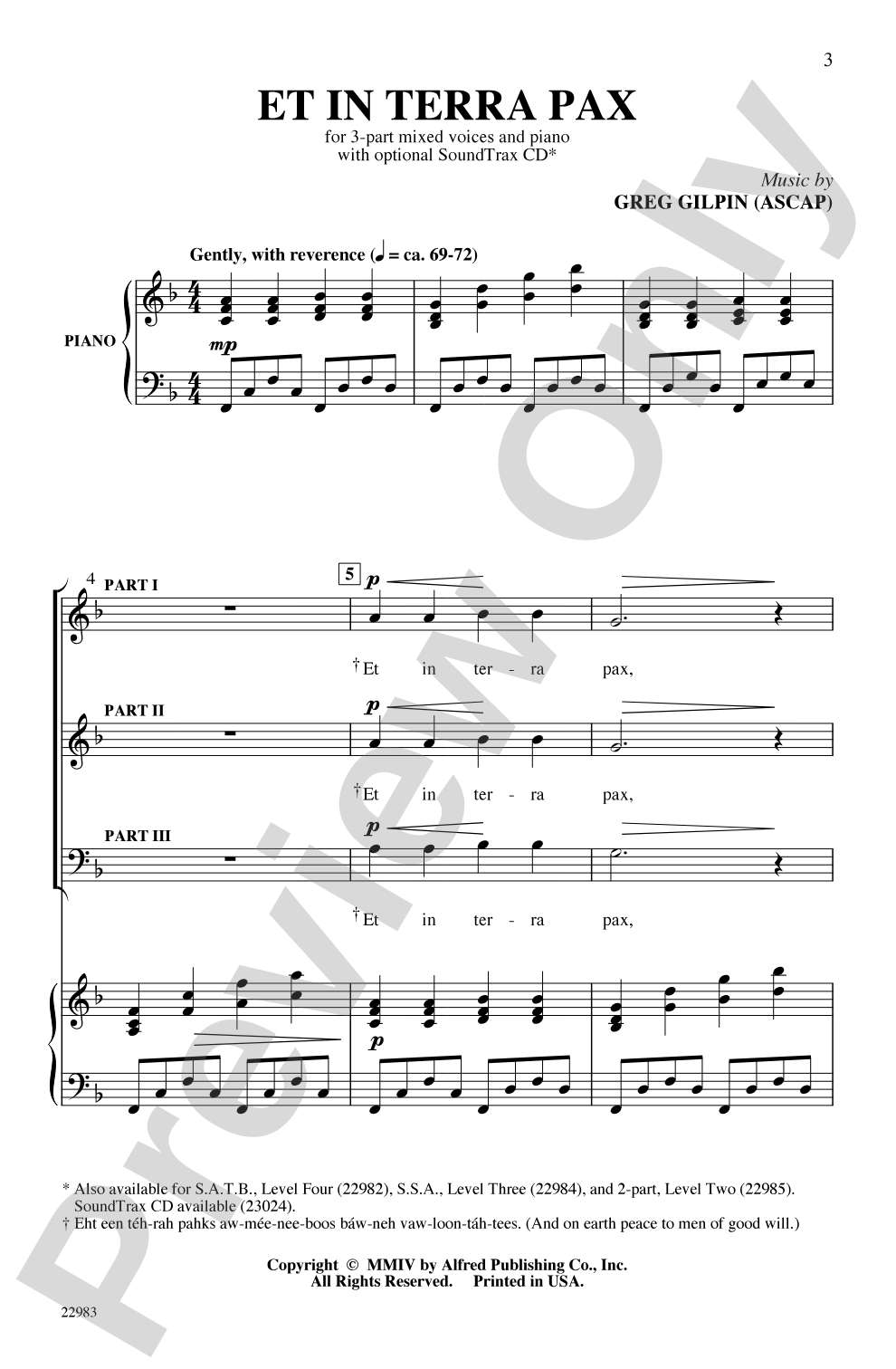
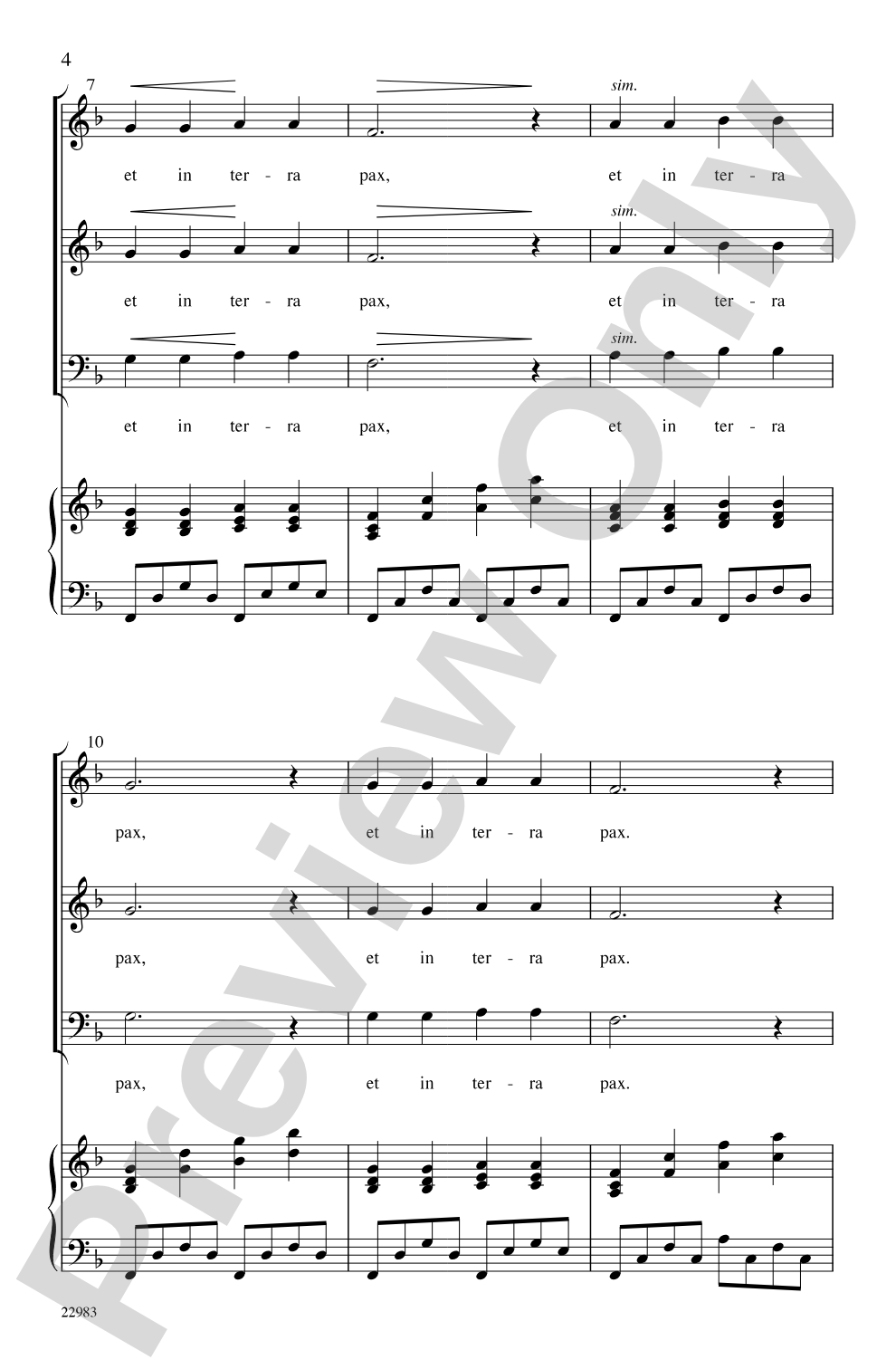
Uncomplicated, homophonic vocal writing provides the foundation of this unique, well-crafted work for concerts, festivals, contests, and adjudications. Perfect for choirs that are just starting to sing in two, three, or four parts. A helpful translation/pronunciation guide makes it easy to learn the Latin text, and Greg Gilpin's excellent voice leading and use of occasional unison and welcomed repetition insure that your group will sound its best without any trouble. An optional SoundTrax CD will allow the director to be away from the piano in rehearsal and performance.


Et In Terra Pax: 3-Part Mixed Choral Octavo isn't in MakeMusic Cloud just yet...but it could be. Let us know you'd like to see it, and you'll help shape what comes next. In the meantime, start a free trial and dive into thousands of interactive titles your students can play along with today.
Request This Title
Tell us you want it.
Start Your Free Trial
Explore everything that's ready to play right now.
Sample Audio
1
Audio File
--:--
0:00
0:00
Sample Video
No sample videos found.
Additional Details
Series:
Alfred Choral Designs
Publisher:
Alfred Music
Page Count:
12
SKU:
00-PO-0007742
More about this title
About the Composer: Greg Gilpin

Greg Gilpin has shaped American choral music as both a composer and conductor, earning ASCAP recognition for his contributions to the field. His conducting experience spans some of the country's most prestigious venues, Carnegie Hall, Lincoln Center, and Ryman Auditorium, as well as international stages including the Sydney Opera House and Royal Festival Hall in London. Beyond the concert hall, Gilpin directs educational choral publications for Shawnee Press and continues to expand his creative reach through film scoring and collaborative projects with renowned artists.
A versatile professional, Gilpin's career reflects the adaptability expected in modern music education. He holds leadership roles in ACDA and NAfME, contributes to the recording industry as a producer and musician, and has branched into professional organizing through his company Maestro Organizing. His 2021 film score for "Rosie's Rescue" earned Best Score honors, and his arrangements, including a world premiere collaboration with opera singer Angela Brown, demonstrate his commitment to reimagining familiar repertoire.
Why we love this
Gilpin's writing here strips away complications without sacrificing musical integrity. The homophonic texture and strategic use of unison give developing singers immediate success, while his voice leading ensures the work sounds polished even in first rehearsals. This is the rare piece that genuinely serves choirs at the three-part threshold while holding up musically for adjudicated settings.
What to expect
The piece carries the contemplative weight of its Latin text while remaining luminous and approachable. There's a sense of clarity throughout, each voice part breathes independently but always in service of the whole, creating music that feels both grounded and graceful.
Who it's for
Developing choirs making their first steps into genuine three-part singing will find this piece both accessible and musically satisfying. Directors of middle school ensembles, high school beginning choirs, and community groups new to part-singing benefit from text that supports learning without talking down to singers.
How to get the most out of it
- Work through the pronunciation guide before rehearsal so students can focus on musicality rather than stumbling over Latin vowels during initial run-throughs.
- Let the optional SoundTrax accompaniment free you to conduct from the podium and give your singers real eye contact, this changes the dynamic of rehearsal dramatically.
- Emphasize the unison sections as moments of unity and strength; they're written intentionally to create contrast and should feel deliberate, not like a step backward in complexity.
How to use it
Open a concert with this piece to establish an accessible, reverent tone, or position it mid-program as a confident transition before tackling more demanding repertoire. Its modest accompaniment requirements and Latin text make it equally effective in festival and contest settings, where it allows developing singers to shine without requiring elaborate production.
Skills your students will build
- Reading and singing three-part harmony in homophonic texture
- Latin text pronunciation and interpretation
- Blend and balance across three voices
- Independence from unison passages to part-singing
- Sustaining ensemble focus in concert and adjudication contexts