

Et in Terra Pax: SSA Choral Octavo
By Sally K. Albrecht
Item: 00-PO-0001834
$1.85
Minimum order quantity: 20 copies
Pickup currently not available
Description
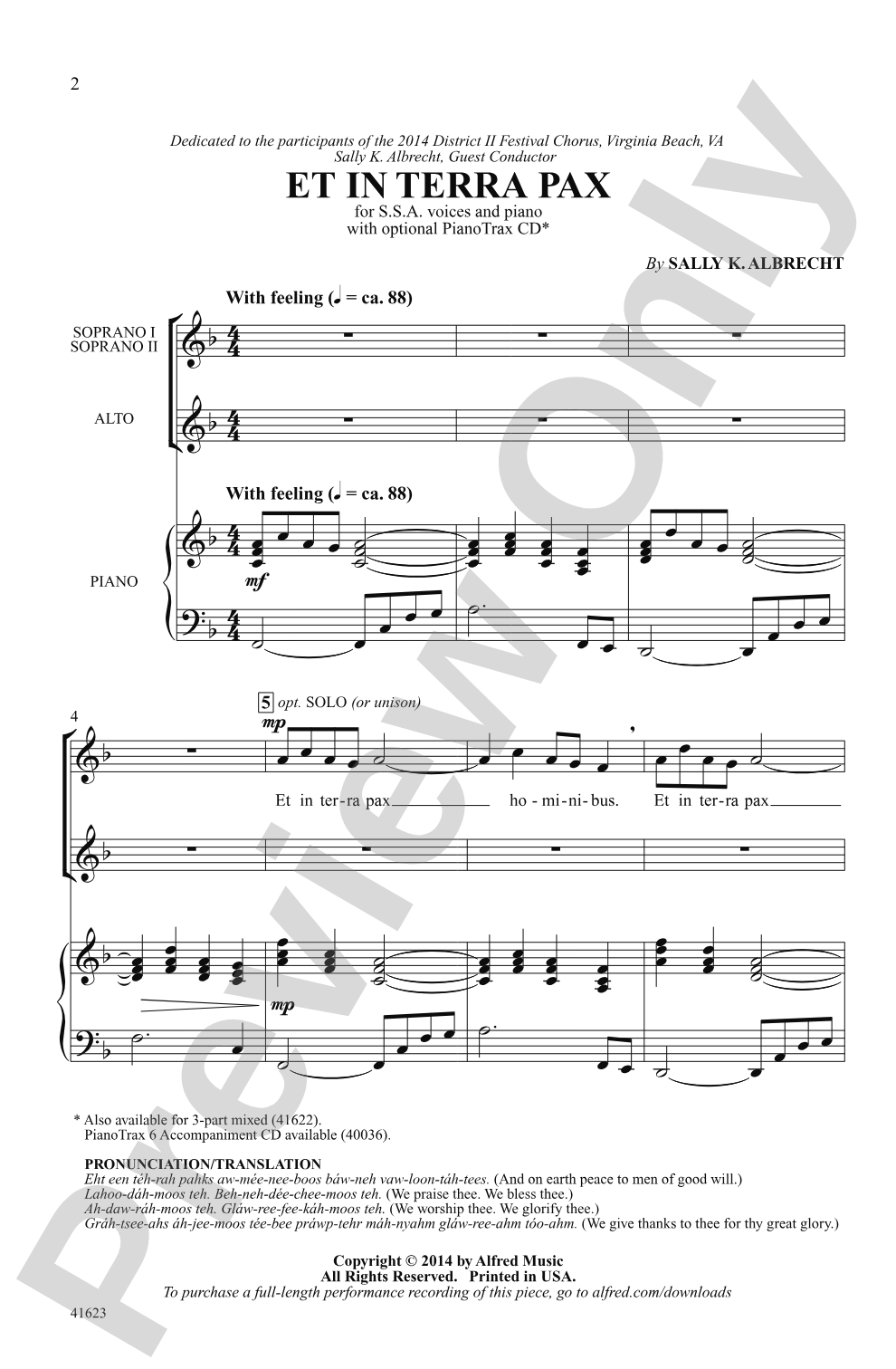
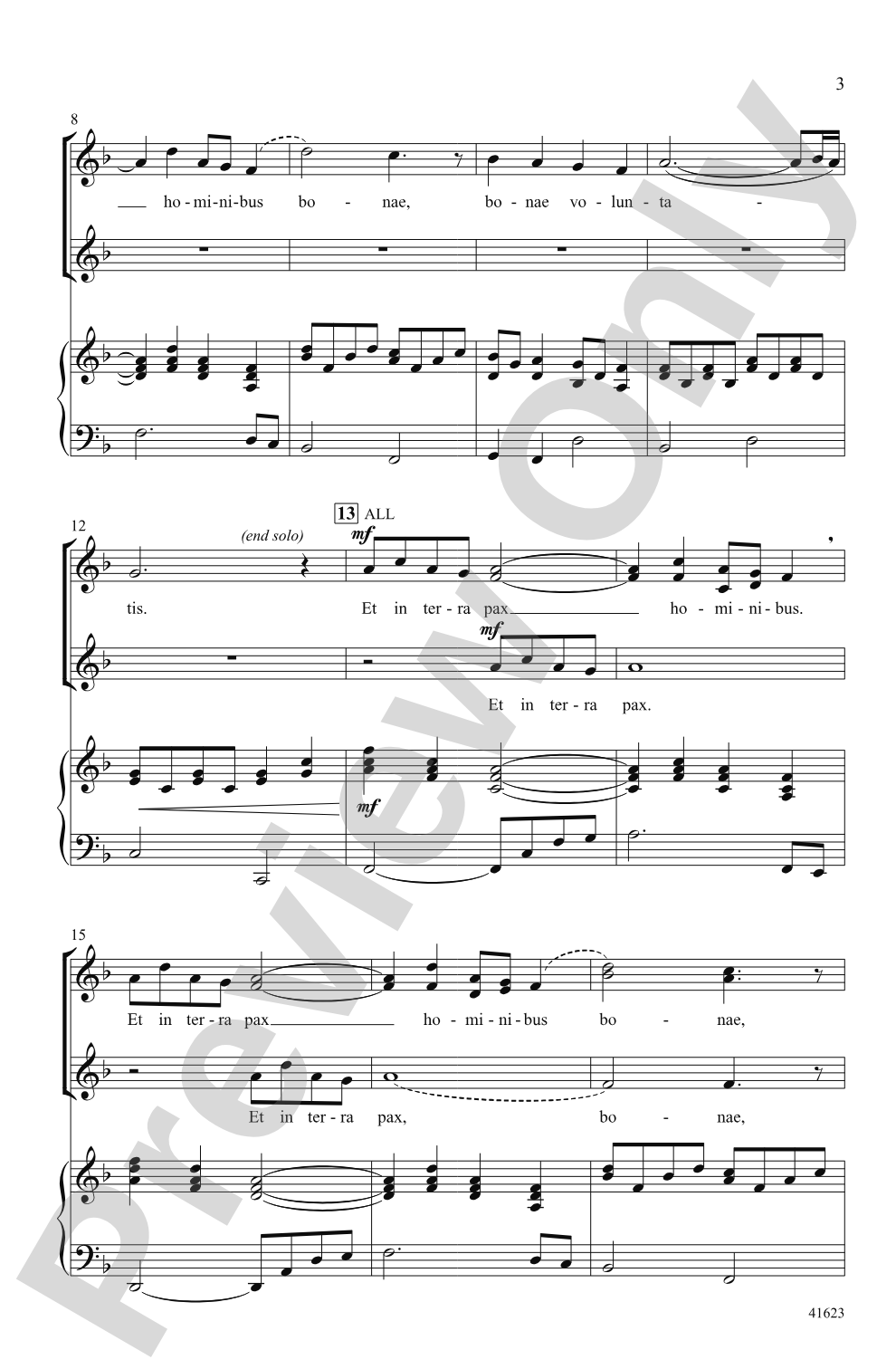
This reflective Latin setting works well for three-part mixed or treble groups. A beautiful melodic motive is echoed through the piece, which seamlessly transitions to modal, chant-like passages. Peaceful and pensive.


Et in Terra Pax: SSA Choral Octavo isn't in MakeMusic Cloud just yet...but it could be. Let us know you'd like to see it, and you'll help shape what comes next. In the meantime, start a free trial and dive into thousands of interactive titles your students can play along with today.
Request This Title
Tell us you want it.
Start Your Free Trial
Explore everything that's ready to play right now.
Sample Audio
1
Audio File
--:--
0:00
0:00
Sample Video
No sample videos found.
Additional Details
Series:
Alfred Choral Designs
Publisher:
Alfred Music
Page Count:
8
SKU:
00-PO-0001834
More about this title
About the Composer: Sally K. Albrecht

Sally K. Albrecht has shaped choral music education for over three decades, serving as Director of School Choral, Vocal, and Elementary Publications at major educational publishers including Alfred Music. A conductor and clinician recognized for her innovative integration of movement into choral performance, she has led honor choirs at prestigious venues including Lincoln Center, Carnegie Hall, and The Kennedy Center. Her catalog spans more than 600 published choral works alongside 75 full-length musicals and songbooks.
As a consistent ASCAP Special Music Award recipient since 1987, Albrecht brings both compositional craft and pedagogical insight to her writing. She earned degrees from Rollins College (B.A. in Music and Theater), the University of Miami (M.A. in Drama and M.M. in Accompanying), and has taught at Oakland University, Jersey City State College, and Meredith College. In 2021, she received the Distinguished Alumna Award from both the University of Miami Frost School of Music and Rollins College, where she serves on the Board of Trustees.
Why we love this
Albrecht's approach to Latin text is meditative rather than grand, creating space for genuine reflection without demanding virtuosity. The interplay between melodic development and modal, chant-inspired passages gives singers meaningful interpretive choices at every section. This piece rewards careful attention to text clarity and phrase shaping while remaining accessible to developing SSA ensembles.
What to expect
Quiet and introspective, with a sense of gentle inevitability. The melodic phrase circles gently through the ensemble like voices in a small chapel, while the shift to modal writing feels like stepping into candlelit silence. There is tenderness here, not drama; the piece breathes rather than soars.
Who it's for
SSA and SSAA choirs seeking repertoire that honors sacred Latin text without requiring advanced technical demands. Directors working with mixed treble voices or three-part women's ensembles will find this piece functions equally well in either configuration. This octavo suits programs that value contemplative, prayerful material as a contrast to more energetic or festive selections.
How to get the most out of it
- Shape the melodic motive with intentional breathing between echoes; treat each restatement as a new thought rather than a repetition.
- Approach the modal passages with a slower harmonic rhythm than your natural instinct; let silence become part of the texture.
- Balance the upper voices in the opening to establish the motive clearly, then allow it to float among the parts as it recurs.
- Sustain vowel unity throughout the Latin text, especially where the voices separate into the chant-like sections.
How to use it
Use this as a centering moment in a concert program, particularly effective as a transition between contrasting sections or as the emotional anchor of a sacred music set. The 8-page length allows it to anchor a winter or spring concert without consuming excessive rehearsal time relative to its impact. Consider pairing it with other Latin works or positioning it near the program's close, where its reflective quality can linger with the audience.
Skills your students will build
- Latin diction and sustained vowel clarity across phrase lines
- Modal melody reading and harmonic awareness (contrast with diatonic writing)
- Ensemble balance and blend, particularly in divided passages
- Interpretive shaping of recurring melodic motives through varied voicing
- Legit singing technique with attention to breath control in longer sustained passages