
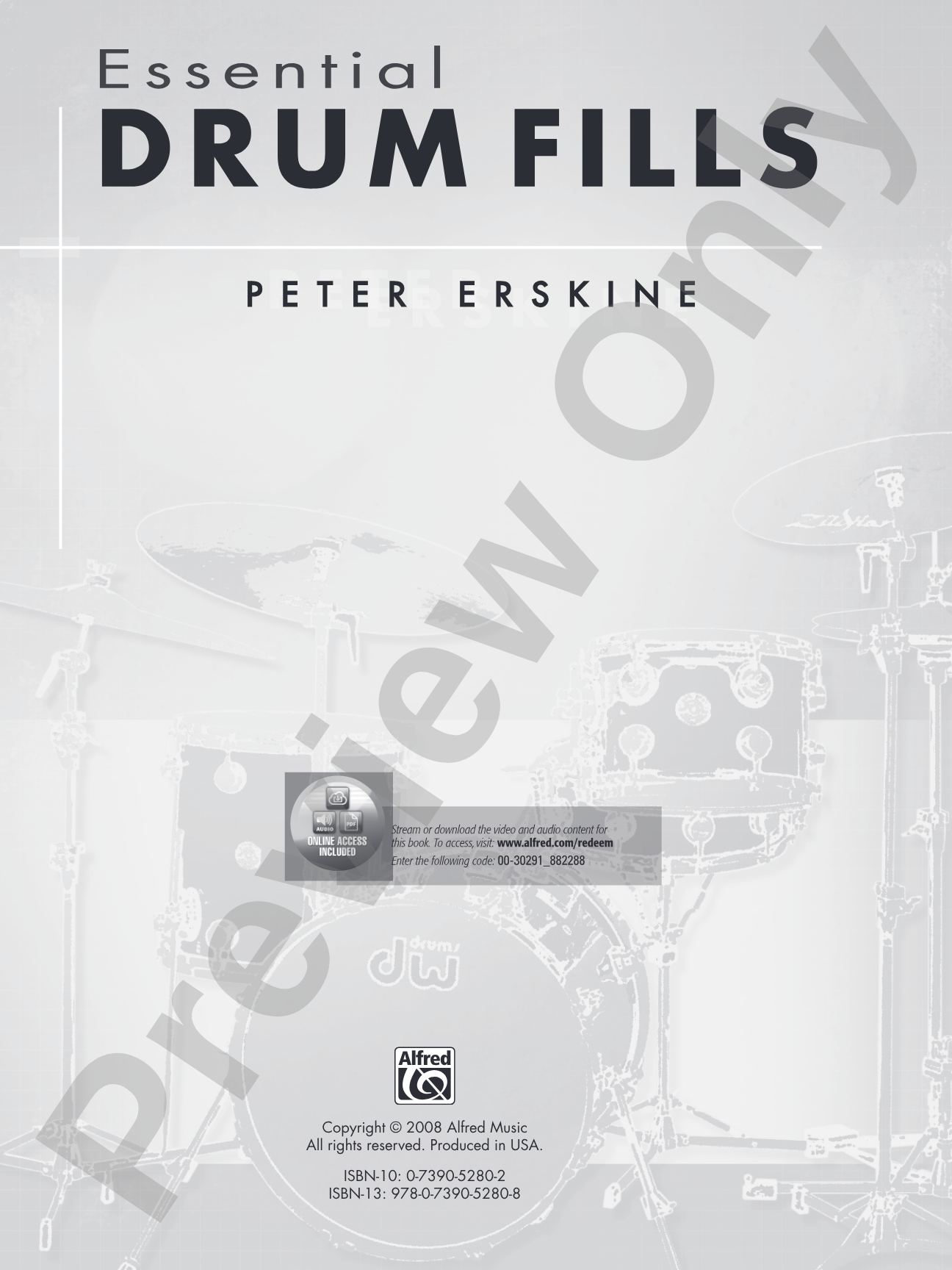
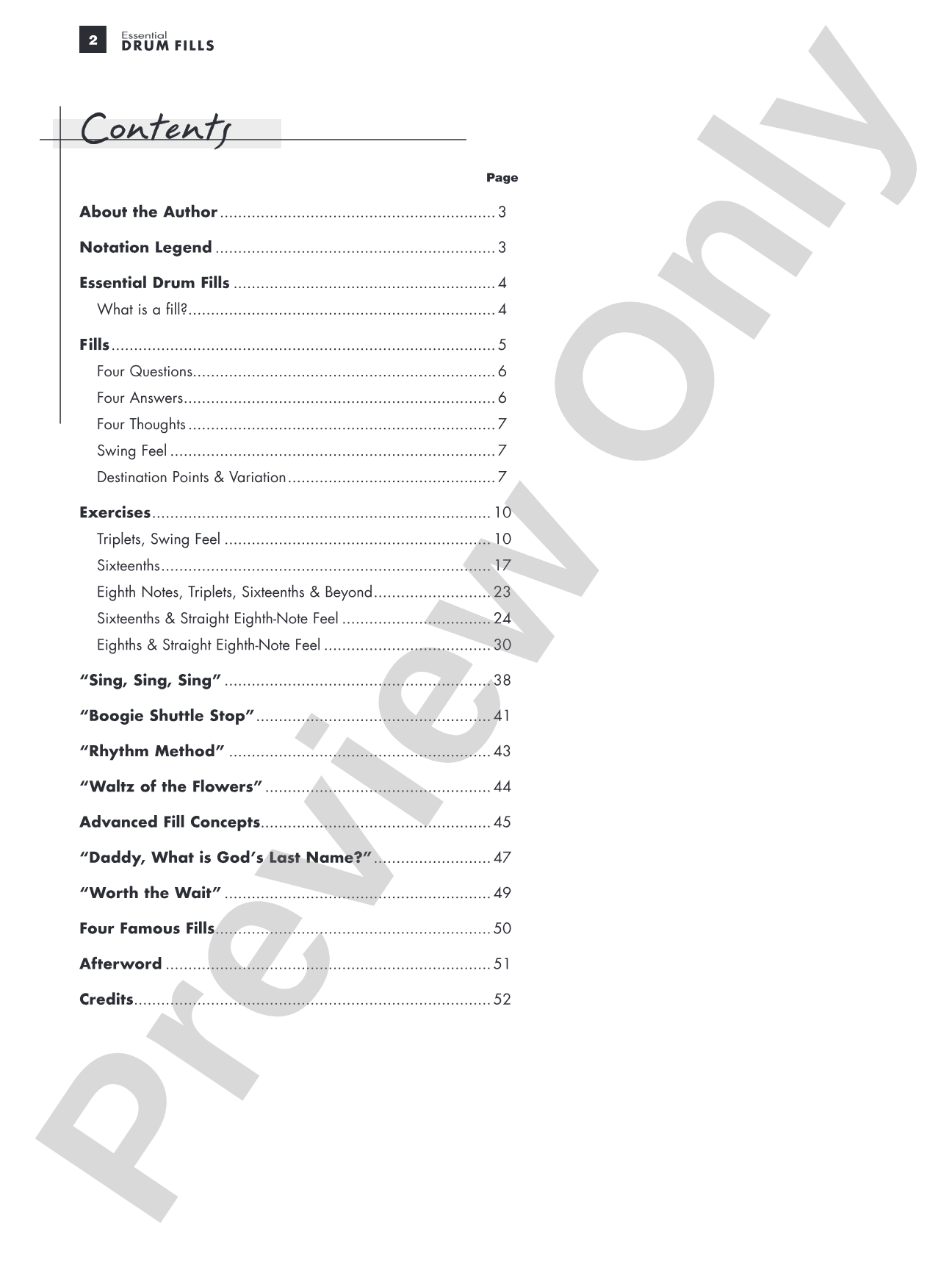

Essential Drum Fills
By Peter Erskine
Item: 00-PB-0001820
$15.99
Pickup currently not available
Related Items
Essential Drum Fills: Drumset Book & Online Audio/PDF |
$15.99
|
View |
Description
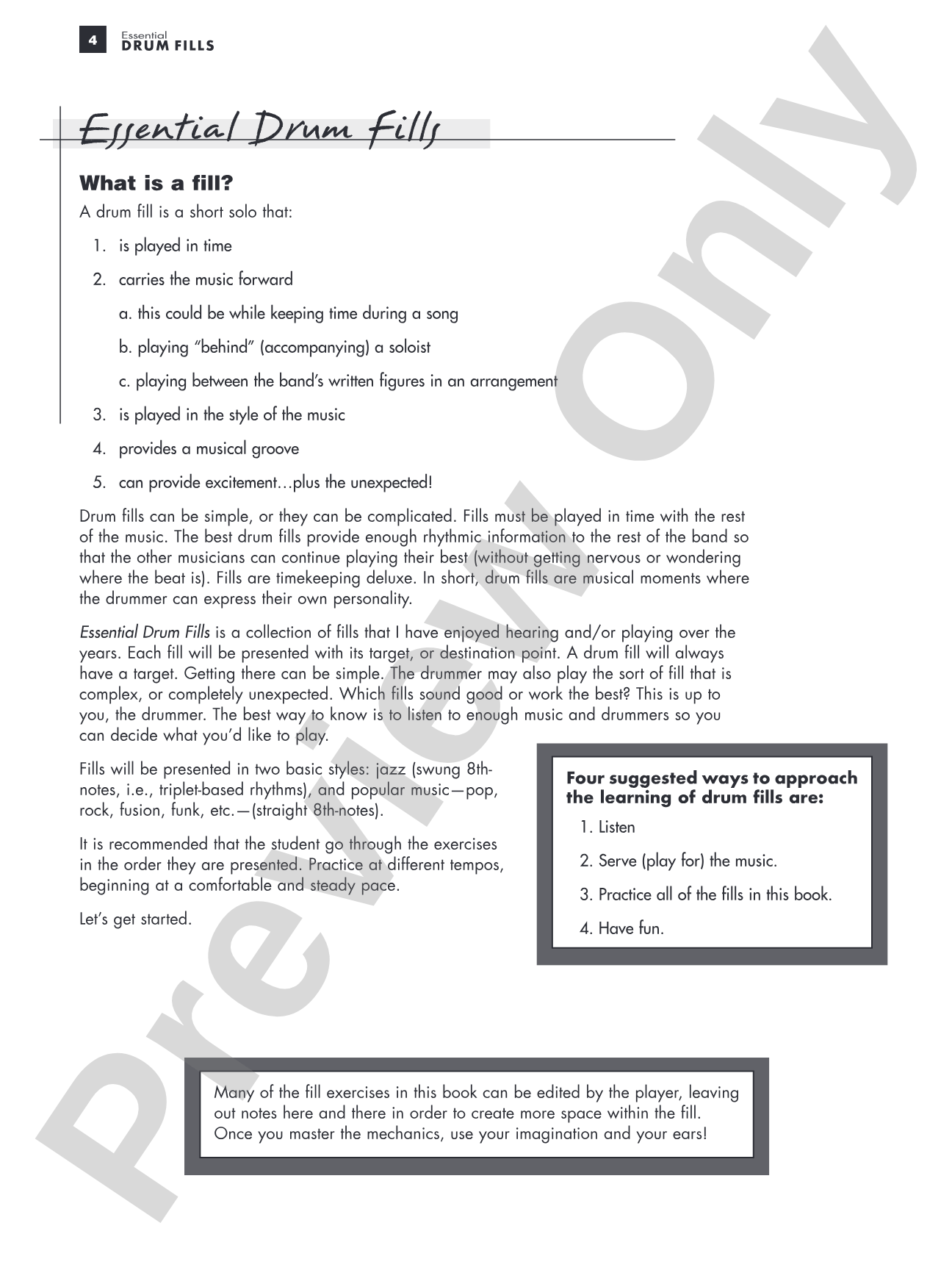
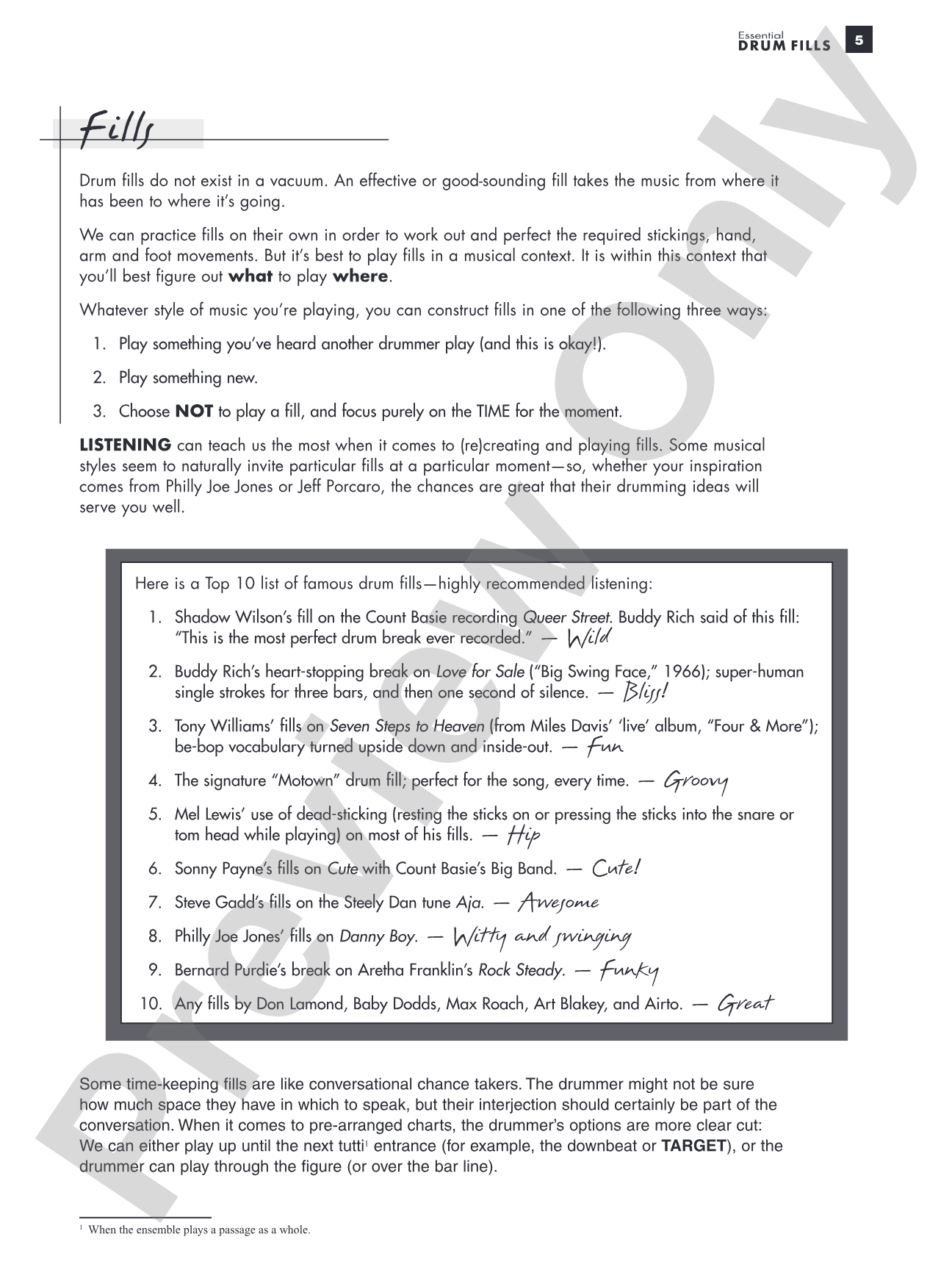
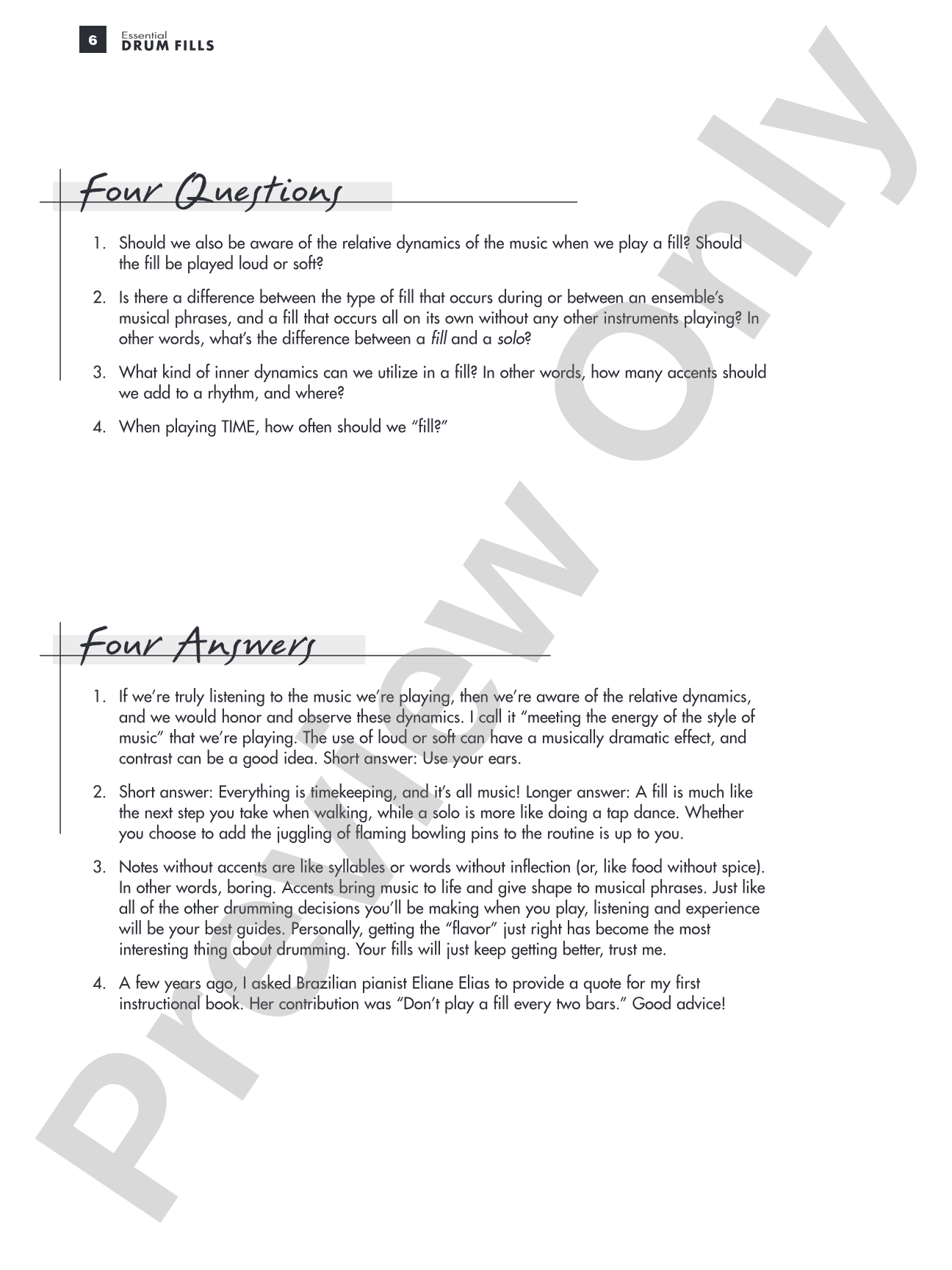
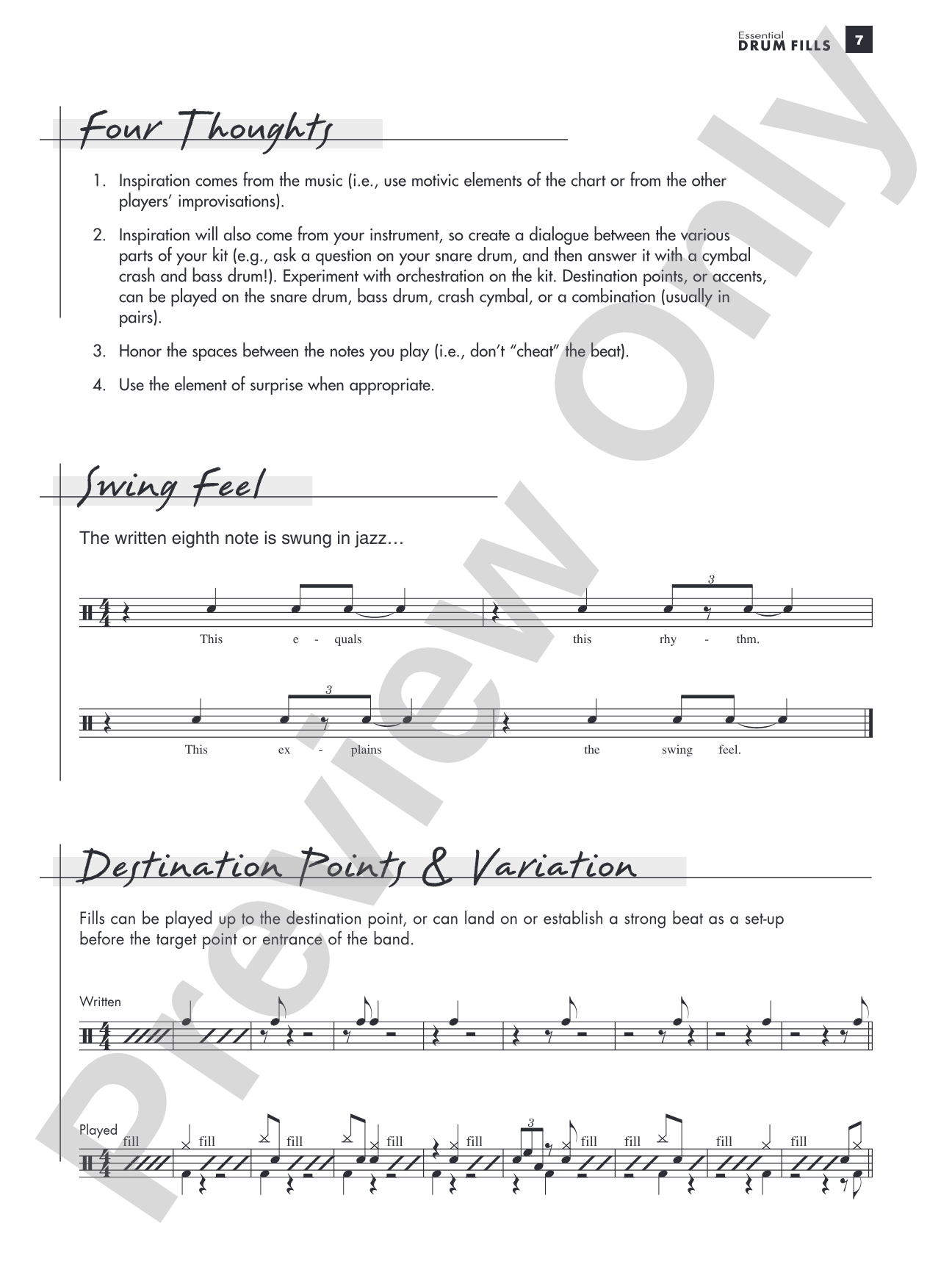
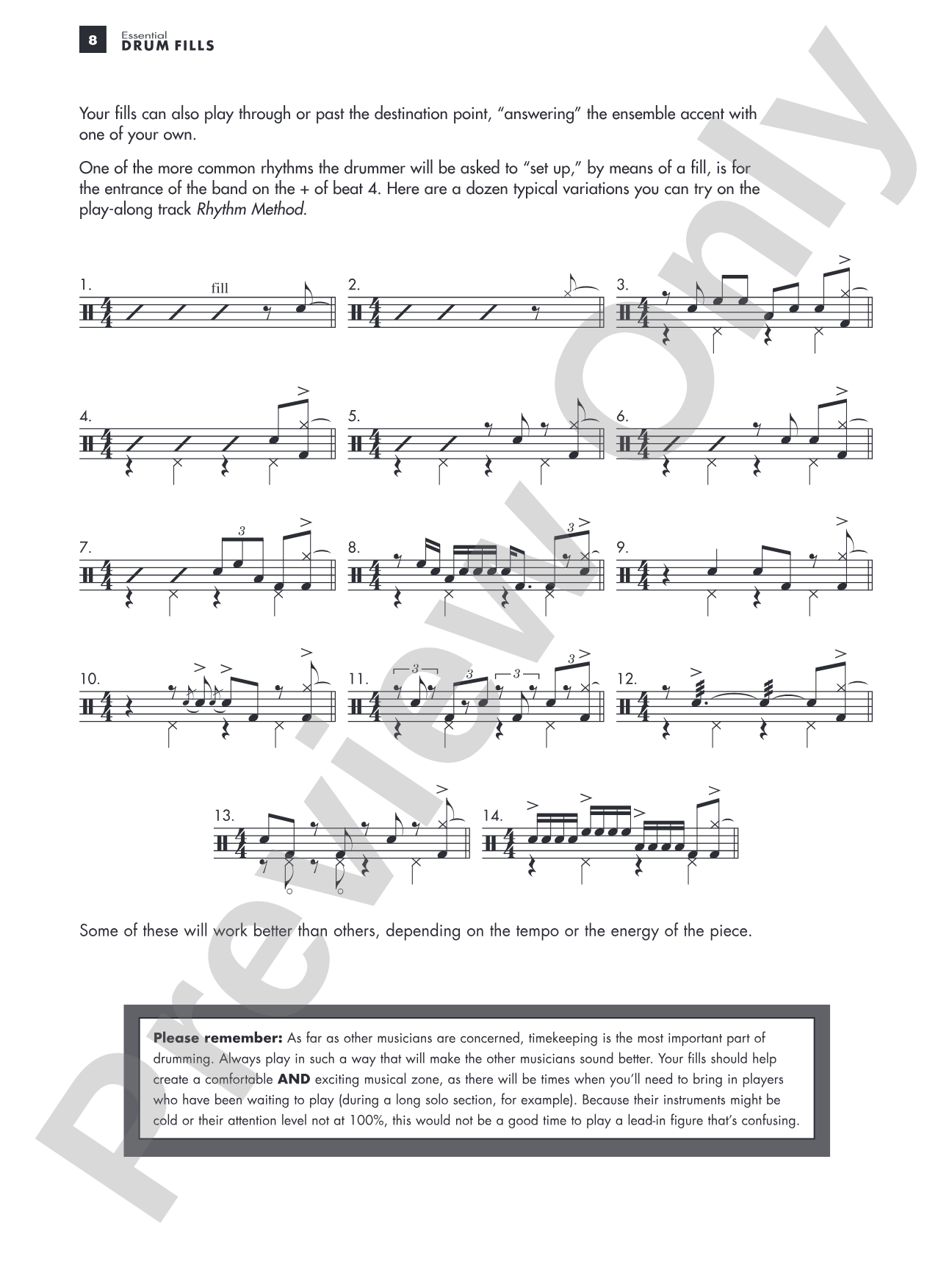
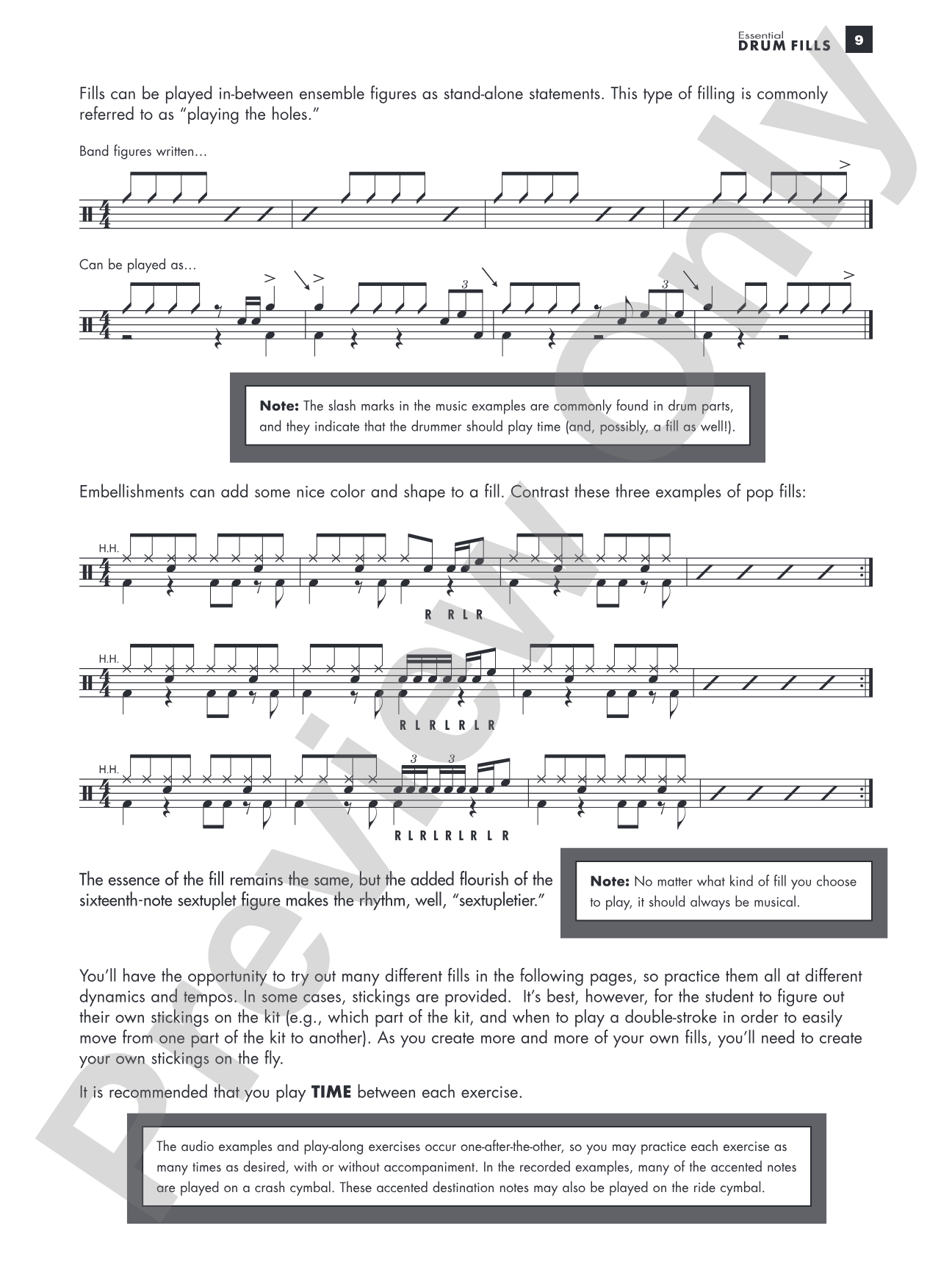
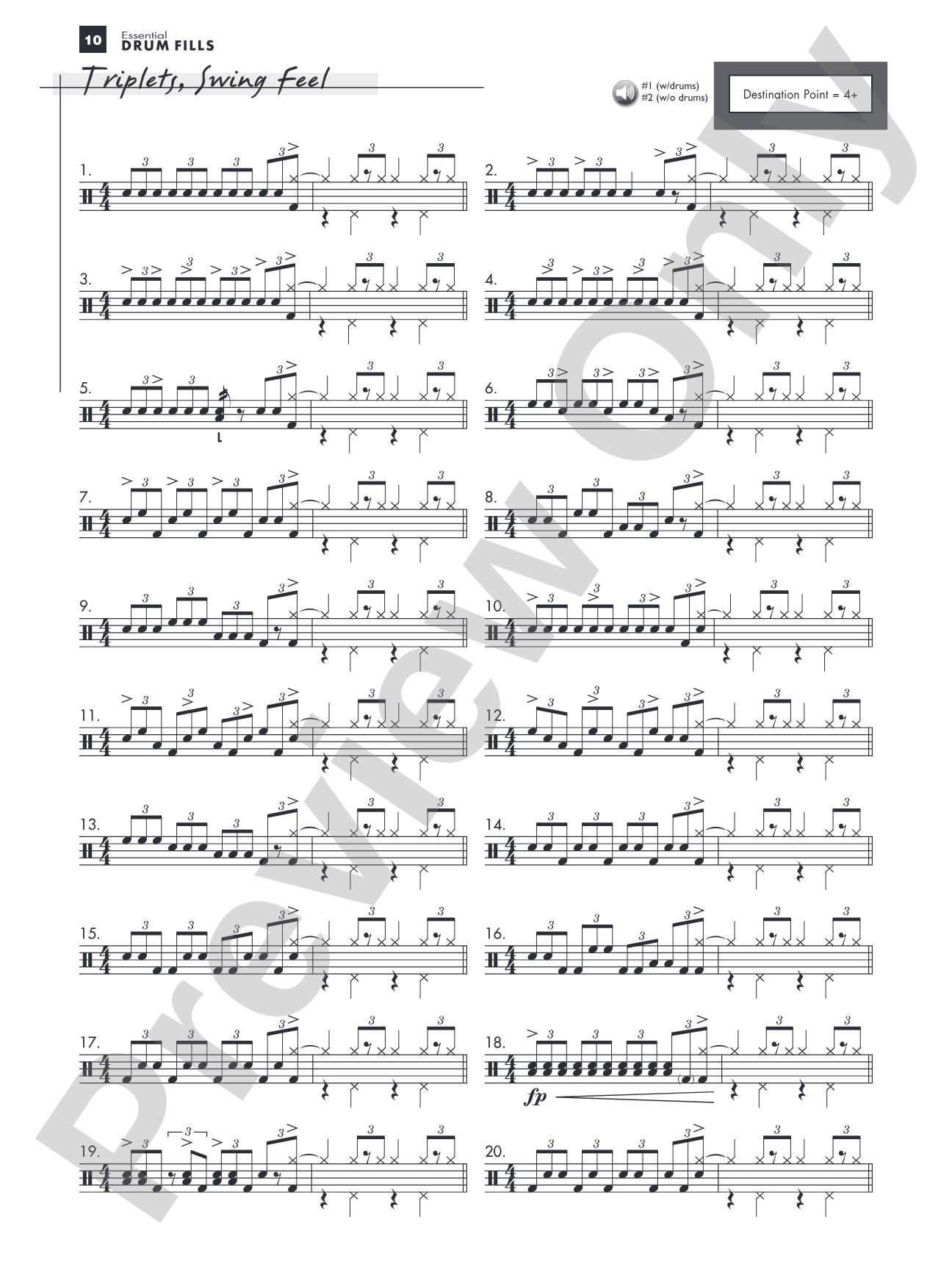
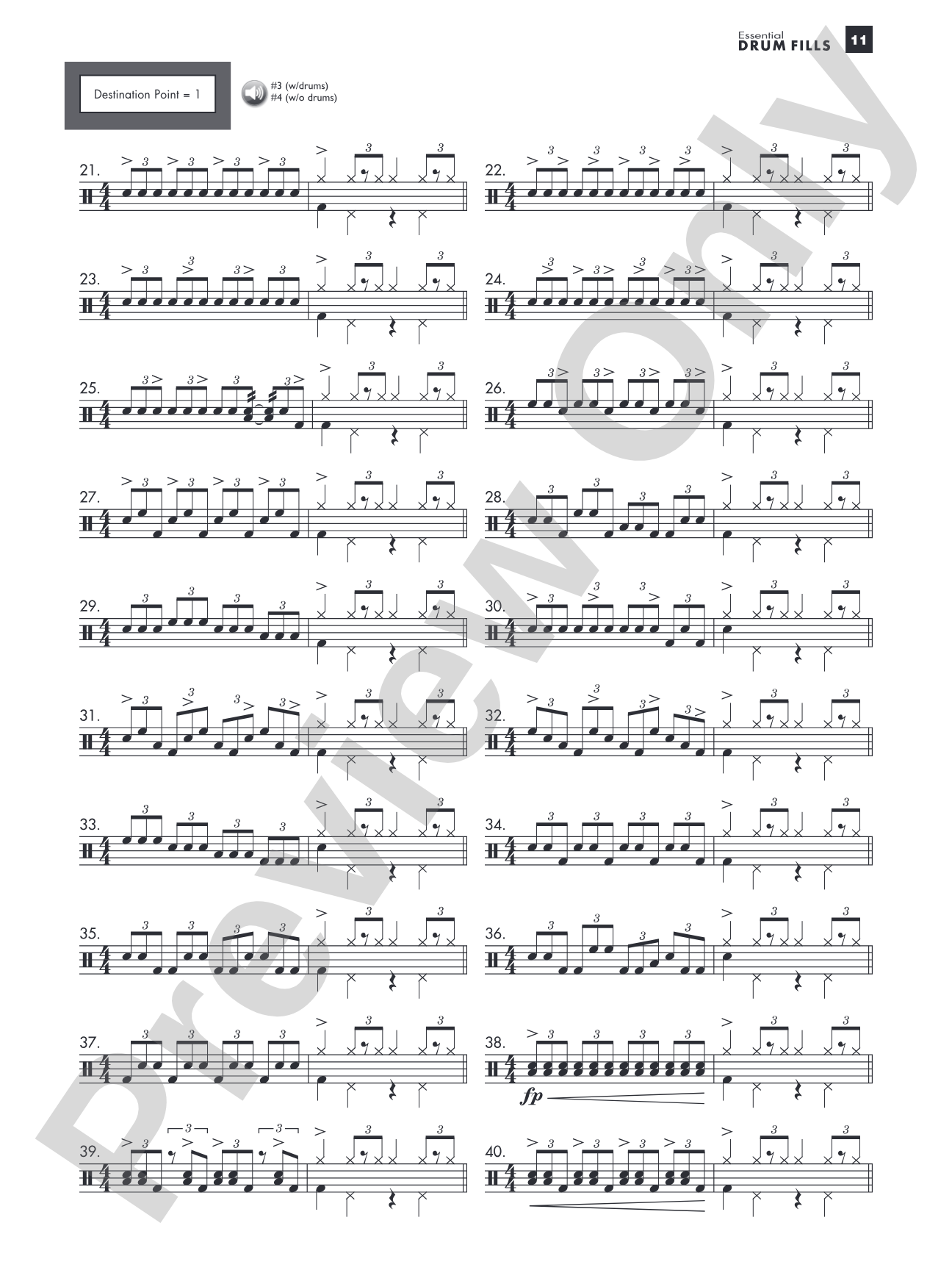
Essential Drum Fills is a collection of fills that Peter Erskine has enjoyed hearing and /or playing over the years. The book includes over 500 drum fills in a variety of styles and ensembles, as well as multiple examples, transcriptions and drum charts. Comes with online audio demonstrations and play-alongs. Music PDF files are also included.


Essential Drum Fills isn't in MakeMusic Cloud just yet...but it could be. Let us know you'd like to see it, and you'll help shape what comes next. In the meantime, start a free trial and dive into thousands of interactive titles your students can play along with today.
Request This Title
Tell us you want it.
Start Your Free Trial
Explore everything that's ready to play right now.
Sample Audio
1
Jazz Sixteenth Swing
--:--
2
Rhythm Method
--:--
Jazz Sixteenth Swing
0:00
0:00
Sample Video
No sample videos found.
Additional Details
Publisher:
Alfred Music
Page Count:
52
SKU:
00-PB-0001820
More about this title
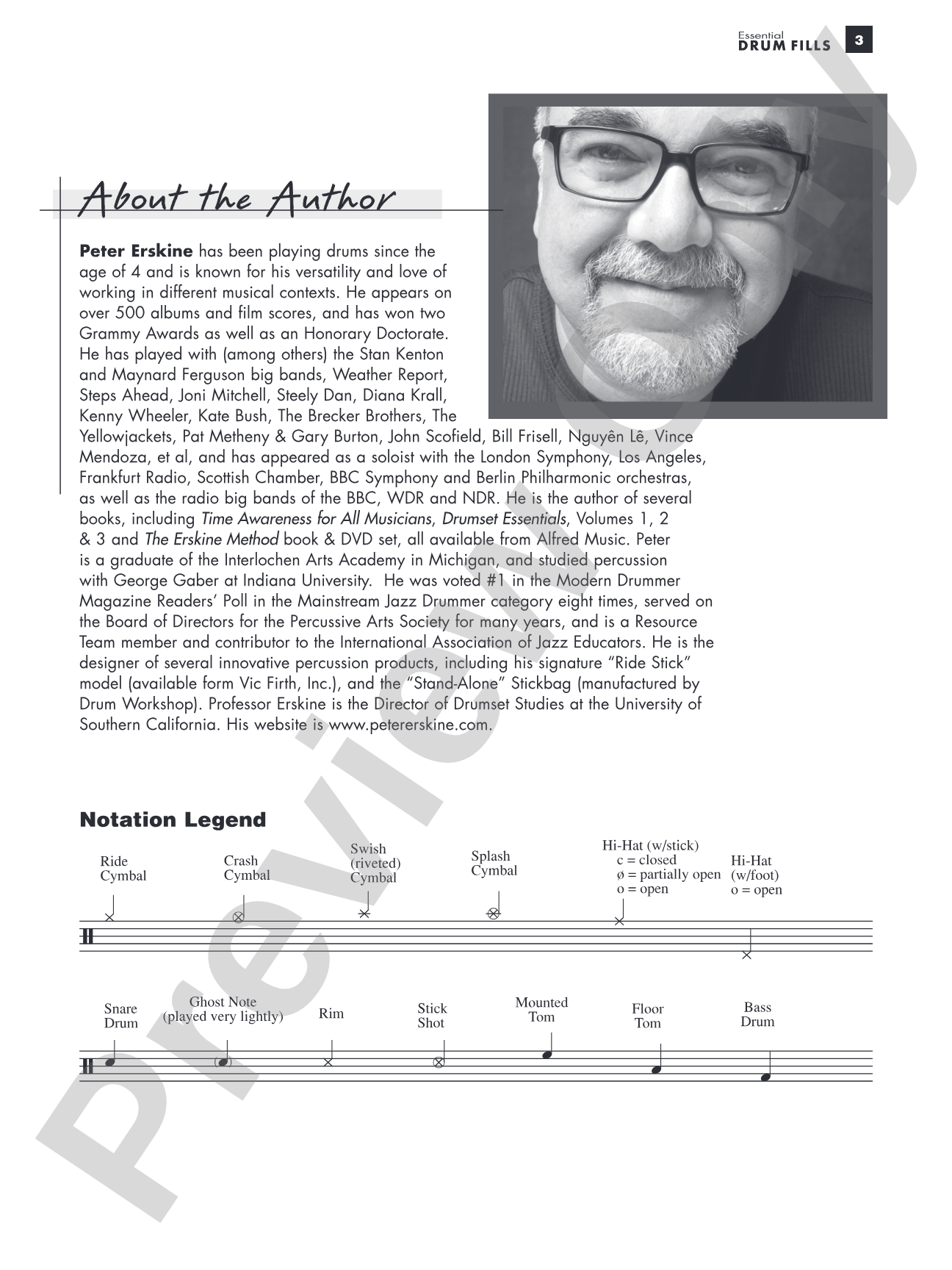
About the Composer: Peter Erskine

Peter Erskine began his percussion studies at age 4 and has built a career defined by musical versatility across jazz, classical, and contemporary contexts. His discography spans over 700 albums and film scores, including work with Weather Report, Steely Dan, the Yellowjackets, and collaborations with everyone from Chick Corea to Diana Krall. He has performed as a soloist with major orchestras worldwide and taught at USC for more than two decades.
Eskine's influence extends beyond the bandstand. He has won two Grammy Awards, been nominated nine times, and earned induction into the Percussive Arts Society Hall of Fame in 2022. His clinics and masterclasses have shaped drummers globally, and his commitment to exploring music across multiple styles informs everything he creates.
Why we love this
This collection reflects the accumulated wisdom of a drummer who has played in virtually every musical setting that matters. Rather than presenting fills as isolated technical exercises, Erskine organizes them by style and context, so students see how fills function within real musical situations. The inclusion of audio demonstrations and play-alongs means students hear exactly how these patterns sit in an ensemble, not just how they feel under the hands.
What to expect
Practical and inventive, with the sensibility of a player who has listened deeply across decades of music. These fills breathe; they're designed to serve the song, not overshadow it. The collection feels like sitting in a practice room with someone who has played every style and can show you what actually works.
Who it's for
Intermediate to advanced drummers serious about expanding their fill vocabulary beyond basic patterns. Drum teachers who want a comprehensive reference to draw from across lessons. Any drummer working in jazz, fusion, or contemporary styles who needs to understand how fills serve the music rather than distract from it.
How to get the most out of it
- Start with the play-alongs at slower tempos to anchor the fills in grooves before attempting them at performance speed.
- Study the transcriptions alongside the audio to understand how notation translates to the actual sound and feel Erskine achieves.
- Focus on fills that match your current ensemble's style first; this grounds the material in immediate musical relevance.
- Record yourself playing these fills with a click and compare your phrasing to the demonstrations; the details of swing, rush, and space matter enormously.
How to use it
Use this as a semester-long reference for ensemble drummers, assigning fills week by week based on the styles your band is performing. Pull transcriptions of fills that match upcoming arrangements and work them into your rehearsal rotation so students hear them in context immediately. For independent study, students can track their progress through the book by mastering fills across different styles and tempos, building both technical facility and musical judgment.
Skills your students will build
- Stylistic flexibility across jazz, funk, rock, Latin, and fusion contexts
- Phrasing and dynamic control within fill figures
- Reading drum notation and translating it to the drums
- Listening for ensemble interaction and musical placement of fills
- Developing a personal fill vocabulary based on established models
- Understanding fill construction across different time signatures and tempos