
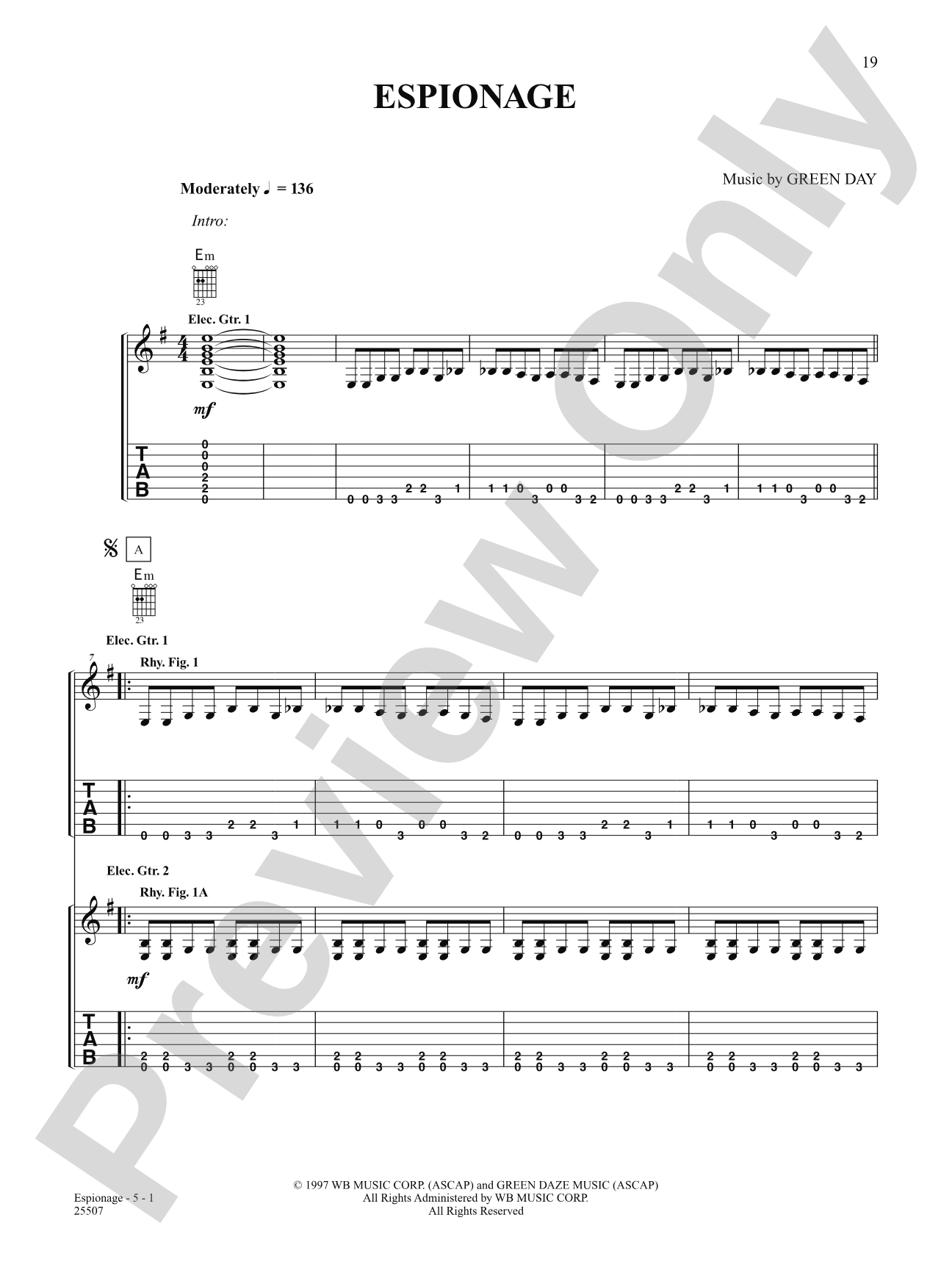

Espionage: Easy Guitar
20 Greatest Hits
Green Day
Item: 00-PS-0000113
$4.99
One moment…
Related Items
Nice Guys Finish Last: Easy Guitar |
$4.99
|
View | |
Hitchin' a Ride: Easy Guitar |
$4.99
|
View | |
Good Riddance (Time of Your Life): Easy Guitar |
$4.99
|
View | |
Waiting: Easy Guitar |
$4.99
|
View | |
Minority: Easy Guitar |
$4.99
|
View | |
Macy's Day Parade: Easy Guitar |
$4.99
|
View | |
Longview: Easy Guitar |
$4.99
|
View | |
Basket Case: Easy Guitar |
$4.99
|
View | |
When I Come Around: Easy Guitar |
$4.99
|
View | |
Stuck With Me: Easy Guitar |
$4.99
|
View | |
Brain Stew: Easy Guitar |
$4.99
|
View | |
Jaded: Easy Guitar |
$4.99
|
View | |
American Idiot: Easy Guitar |
$4.99
|
View | |
Holiday: Easy Guitar |
$4.99
|
View | |
Wake Me Up When September Ends: Easy Guitar |
$4.99
|
View | |
Boulevard of Broken Dreams: Easy Guitar |
$4.99
|
View |
Description
Twenty of Green Day's greatest hits, arranged to be easily playable. With tablature and guitar chord grids throughout. Titles are: American Idiot * Basket Case * Boulevard of Broken Dreams * Brain Stew * Espionage * Good Riddance (Time of Your Life) * Hitchin' a Ride * Holiday * Jaded * Longview * Macy's Day Parade * Minority * Nice Guys Finish Last * Stuck with Me * Waiting * Wake Me Up When September Ends * Walking Contradiction * Warning * Welcome to Paradise * When I Come Around.


Espionage: Easy Guitar isn't in MakeMusic Cloud just yet...but it could be. Let us know you'd like to see it, and you'll help shape what comes next. In the meantime, start a free trial and dive into thousands of interactive titles your students can play along with today.
Request This Title
Tell us you want it.
Start Your Free Trial
Explore everything that's ready to play right now.
Sample Audio
No sample audio found.
Sample Video
No sample videos found.
Additional Details
Series:
Easy Guitar Anthology
Publisher:
Alfred Music
Page Count:
72
SKU:
00-PS-0000113
More about this title
About the Composer: Green Day
Green Day emerged from the Berkeley, California punk scene in the late 1980s and became one of rock's defining bands of the 1990s and 2000s. Frontman Billie Joe Armstrong, alongside bassist Mike Dirnt and drummer Tré Cool, built a catalog of anthemic songs that blend punk energy with memorable melodies and sharp social commentary. Their 1994 album Dookie established them as leaders of the pop-punk movement, while later releases like American Idiot cemented their status as generational voices for disaffected youth and political critique.
Why we love this
These arrangements capture what makes Green Day's songwriting so effective in the first place: earworm melodies, punchy rhythms, and emotional directness. Students recognize nearly every song on this list, which means they'll stay motivated through the learning process rather than slogging through unfamiliar material. The tablature and chord grids make these songs genuinely accessible without dumbing down the guitar parts.
What to expect
Playing these songs feels like plugging into the emotional core of 1990s and 2000s rock. The melodies stay with you, the chord progressions are satisfying without being overcomplicated, and the rhythms push you to lock in with precision. There's urgency in the fast songs and genuine vulnerability in the ballads.
Who it's for
This book serves guitarists who want immediate access to songs they actually want to play. Whether you're teaching beginners who need rock credibility or intermediate players building repertoire for recitals and band settings, these accessible arrangements prove that current music and serious guitar study aren't mutually exclusive. Solo guitarists and ensemble performers alike will find material that fits their level.
How to get the most out of it
- Lock into the rhythm section feel first. Green Day's power comes from tight, driving rhythms; nail the kick drum and bass lines before worrying about lead details.
- Use the chord grids to develop muscle memory in common voicings. These shapes appear across multiple songs, so each new tune reinforces patterns students have already started building.
- Lean into the attitude. These songs demand energy and attitude rather than technical precision. Play them like you mean them.
- Pay attention to the dynamics marked in the tab. The contrast between quiet verses and explosive choruses is central to how these songs hit.
How to use it
Open a rock ensemble or guitar class with one of the slower tracks like "Good Riddance (Time of Your Life)" or "Wake Me Up When September Ends" to show the range of Green Day's catalog. Use the uptempo songs like "Basket Case" or "When I Come Around" as mid-program energy boosters. These songs also work well as individual recital pieces or as part of a contemporary music showcase.
Skills your students will build
- Reading guitar tablature fluently across single and multiple strings
- Identifying and playing chord voicings from grid diagrams
- Developing rhythm accuracy in punk and pop-punk time feels
- Building stamina and consistency in repetitive rhythmic patterns
- Balancing clean lead playing with chord accuracy in ensemble contexts
- Recognizing power chord patterns and their harmonic function