
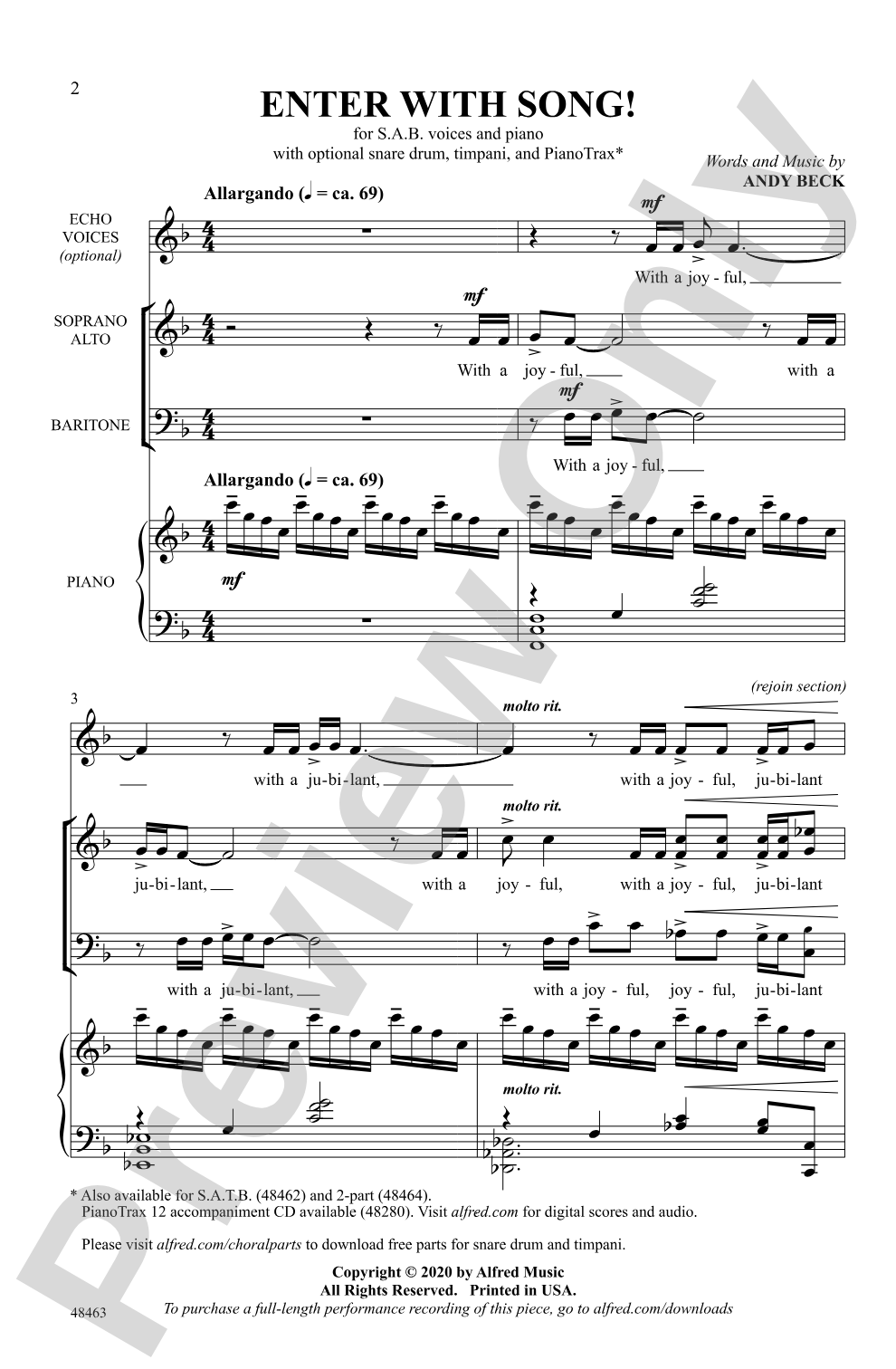
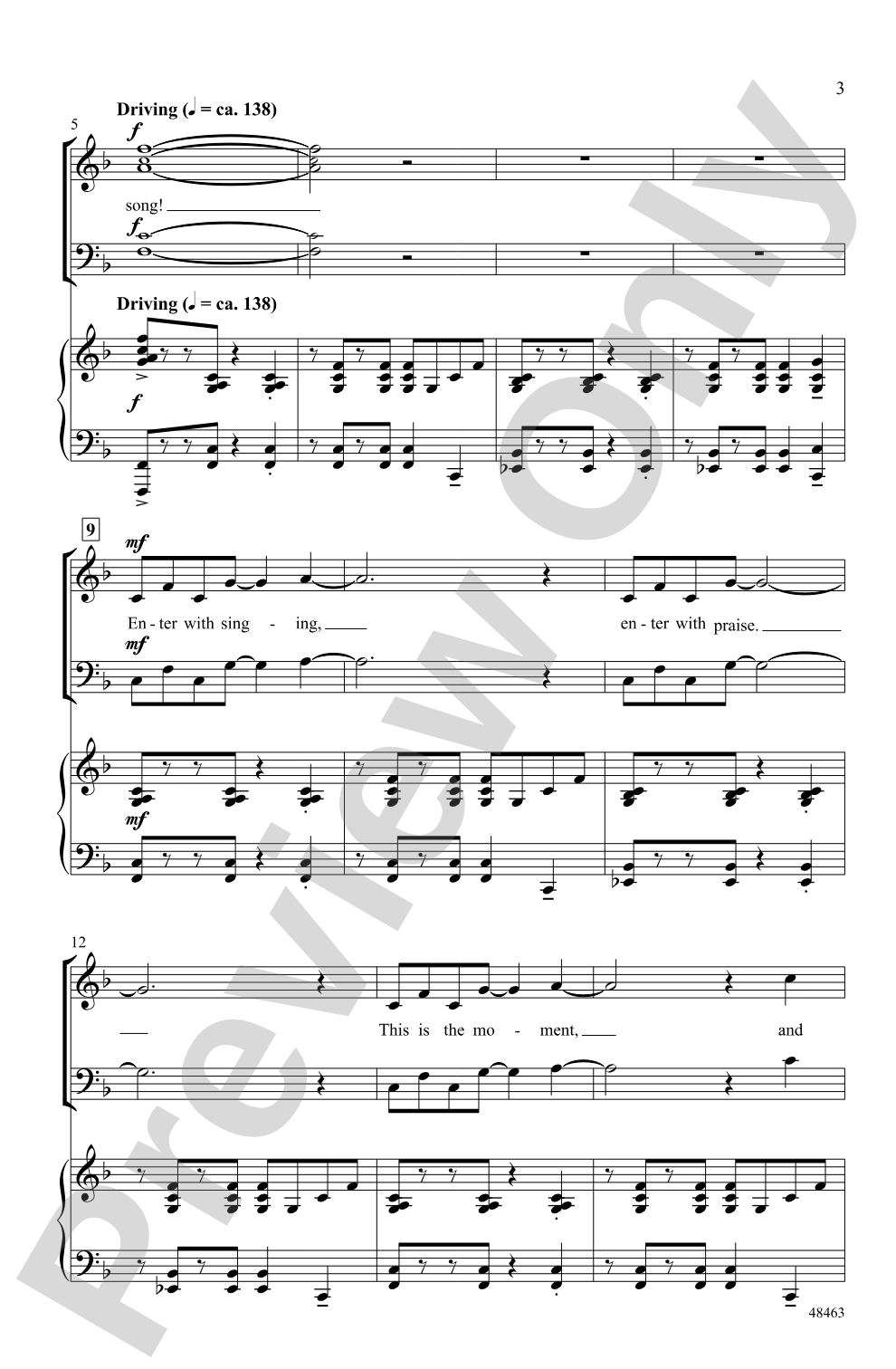
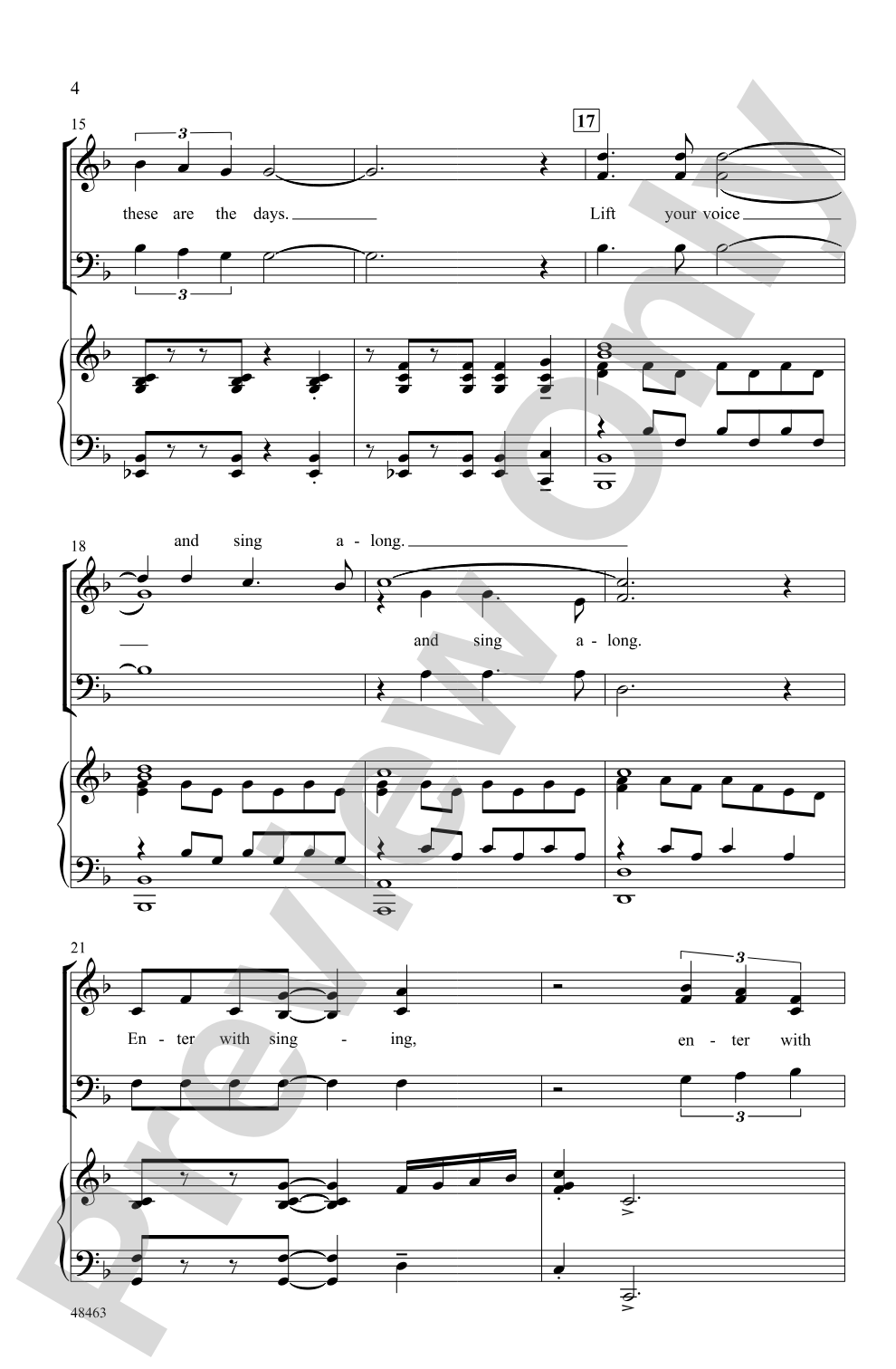

Enter with Song!: SAB Choral Octavo
Words and music by Andy Beck
Item: 00-PO-0006387

$2.05
Minimum order quantity: 20 copies
Pickup currently not available
Related Items
Enter with Song!: PianoTrax Digital Audio Download |
$9.99
|
View | |
Enter with Song!: SATB Choral Octavo |
$2.05
|
View | |
Enter with Song!: 2-Part Choral Octavo |
$2.05
|
View | |
Enter with Song!: SATB Choral Octavo |
$2.05
|
View | |
Enter with Song!: SAB Choral Octavo |
$2.05
|
View | |
Enter with Song!: 2-Part Choral Octavo |
$2.05
|
View |
Description
A jubilant antiphonal exposition extends an invitation to music-making, before erupting into a truly fresh concert and contest opener! Exploring a wide variety of choral sounds and textures including unison, call-and-response, and buoyant counterpoint, this piece invites artistry and engagement in every phrase. Add the optional timpani and snare drum parts to heighten the experience.


Don't just read it, hear it, play along with it, and watch your students grow with it. In MakeMusic Cloud, Enter with Song!: SAB Choral Octavo comes alive with professional accompaniment, adjustable tempo, and built-in practice tools that turn solo practice into real progress.
Open in the Player
Jump straight in and assign it today.
Start Your Free Trial
Open this title and explore the full library in minutes.
Sample Audio
1
Audio File
--:--
0:00
0:00
Sample Video
No sample videos found.
Additional Details
Series:
Alfred Choral Designs
Publisher:
Alfred Music
Page Count:
12
SKU:
00-PO-0006387
More about this title
About the Composer: Andy Beck

Andy Beck leads choral publications at Alfred Music and has composed and arranged more than 450 choral works now in circulation. His output spans secular and sacred repertoire, vocal pedagogical resources including Sing at First Sight and Vocalize! 45 Vocal Warm-Ups That Technique, and children's musicals performed across the globe. A tenor himself, he remains active as a guest conductor, clinician, and adjudicator, with recent commissions and conducting engagements from honor choirs and all-state ensembles across the Southeast.
Beck holds degrees in Music Education from Ithaca College and Northwest Missouri State University. His dual commitment to both music-making and music literacy runs through every publication he curates for Alfred, whether as composer, arranger, or editor. He sings with the North Carolina Master Chorale Chamber Choir and brings extensive musical theatre and studio recording experience to his compositional voice.
Why we love this
Beck delivers a genuine concert opener that earns its excitement through textural variety and clarity of voice leading rather than artificial uplift. The antiphonal opening sets an intelligent frame for what follows, and the call-and-response and counterpoint sections give singers real musical problem-solving without sacrificing singability. Directors will appreciate how effectively this piece uses a smaller ensemble size (SAB) to create surprising depth.
What to expect
Immediate and welcoming, as if the ensemble is inviting the audience into something together. The piece bubbles with rhythmic vitality and vocal color, moving seamlessly between moments of unified warmth and playful musical conversation. There's brightness without shrillness, and the counterpoint sections feel more joyful than complicated.
Who it's for
SAB choirs seeking an opener with genuine musical substance and concert appeal. This works equally well for developing mixed choirs that need confidence-building material and for more experienced groups who value Beck's compositional craft. Suitable for festival and contest contexts where freshness and engagement matter.
How to get the most out of it
- Prepare the unison sections with particular attention to vowel matching and breath placement. The jubilant character depends on voices locking together with clarity and confidence.
- Emphasize the textural contrast between sections. Each shift from unison to call-and-response to counterpoint should feel like a distinct musical idea, not a variation on the same material.
- If adding the optional timpani and snare drum parts, rehearse them early and separately. The percussion should enhance energy without overwhelming the choral lines, especially in the call-and-response passages.
- Use the recorded accompaniment strategically during early rehearsals to establish tempos and harmonic context. Once singers own their parts, pull back the recording to let the ensemble's own blend take center stage.
How to use it
Position this as your opening number to set an energetic, accessible tone for a concert. The jubilant character and textural variety make it an ideal first impression, and its modest page count (12 pages) means rehearsal time spent here builds technique that transfers to more demanding pieces in the same program. Works exceptionally well before pieces in related keys or with complementary harmonic language.
Skills your students will build
- Blending unison lines with consistent vowel shape and tone
- Executing antiphonal and call-and-response patterns with precision and rhythm
- Reading and performing independent melodic lines in three-part counterpoint
- Responding to textural shifts and matching tempos across multiple vocal configurations
- Balancing dynamic contrast between sections while maintaining legit choral sound