
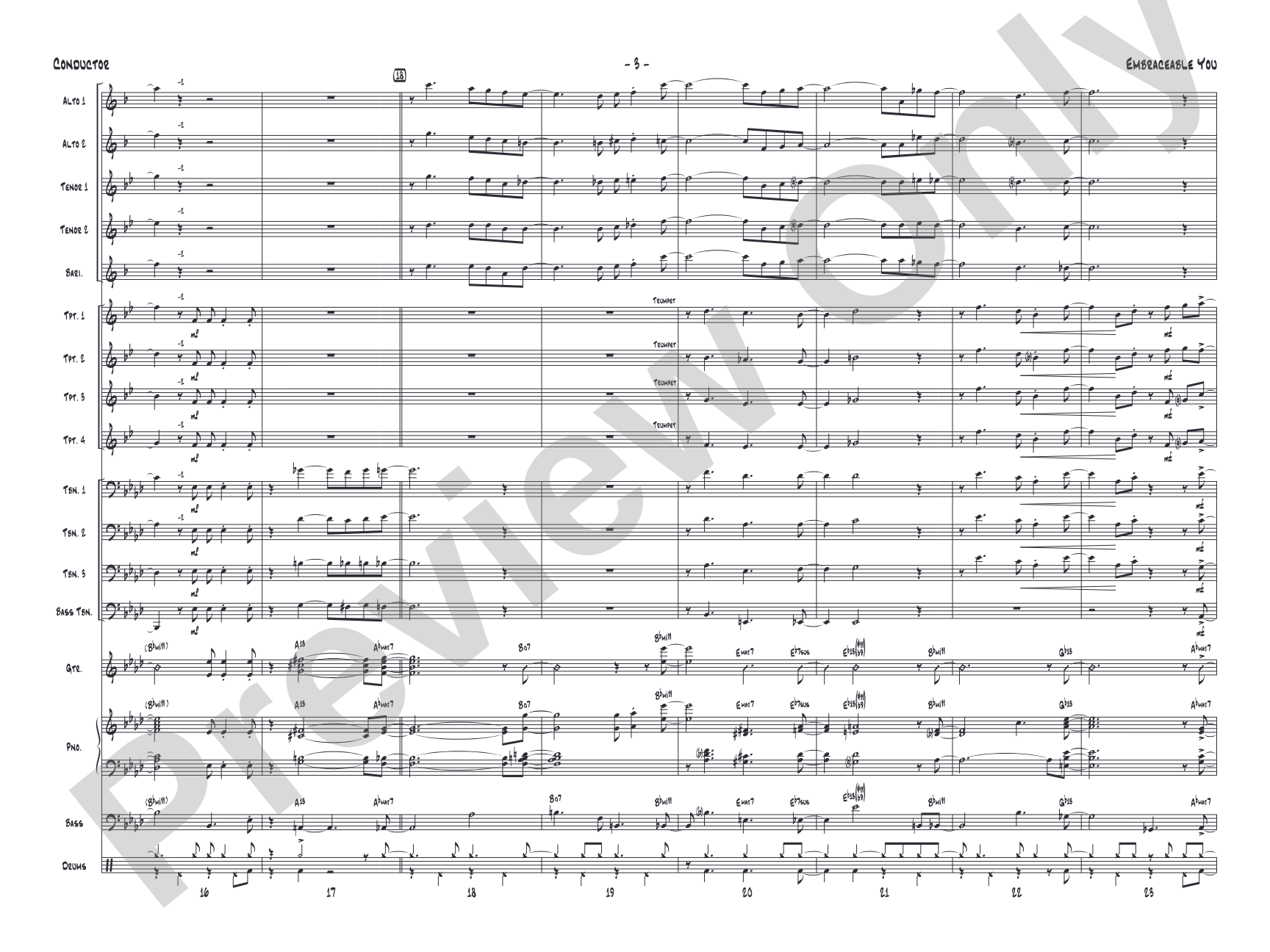
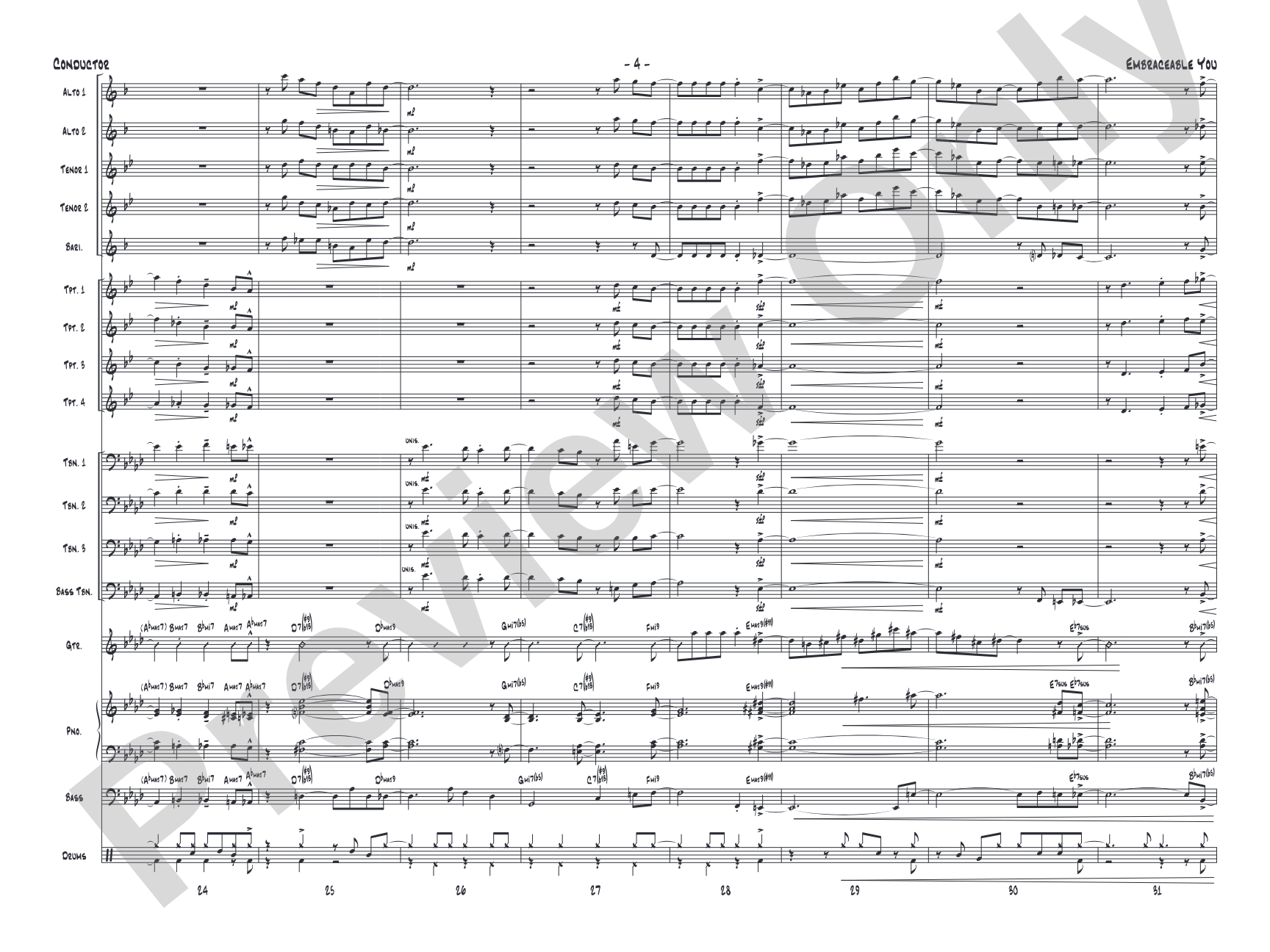
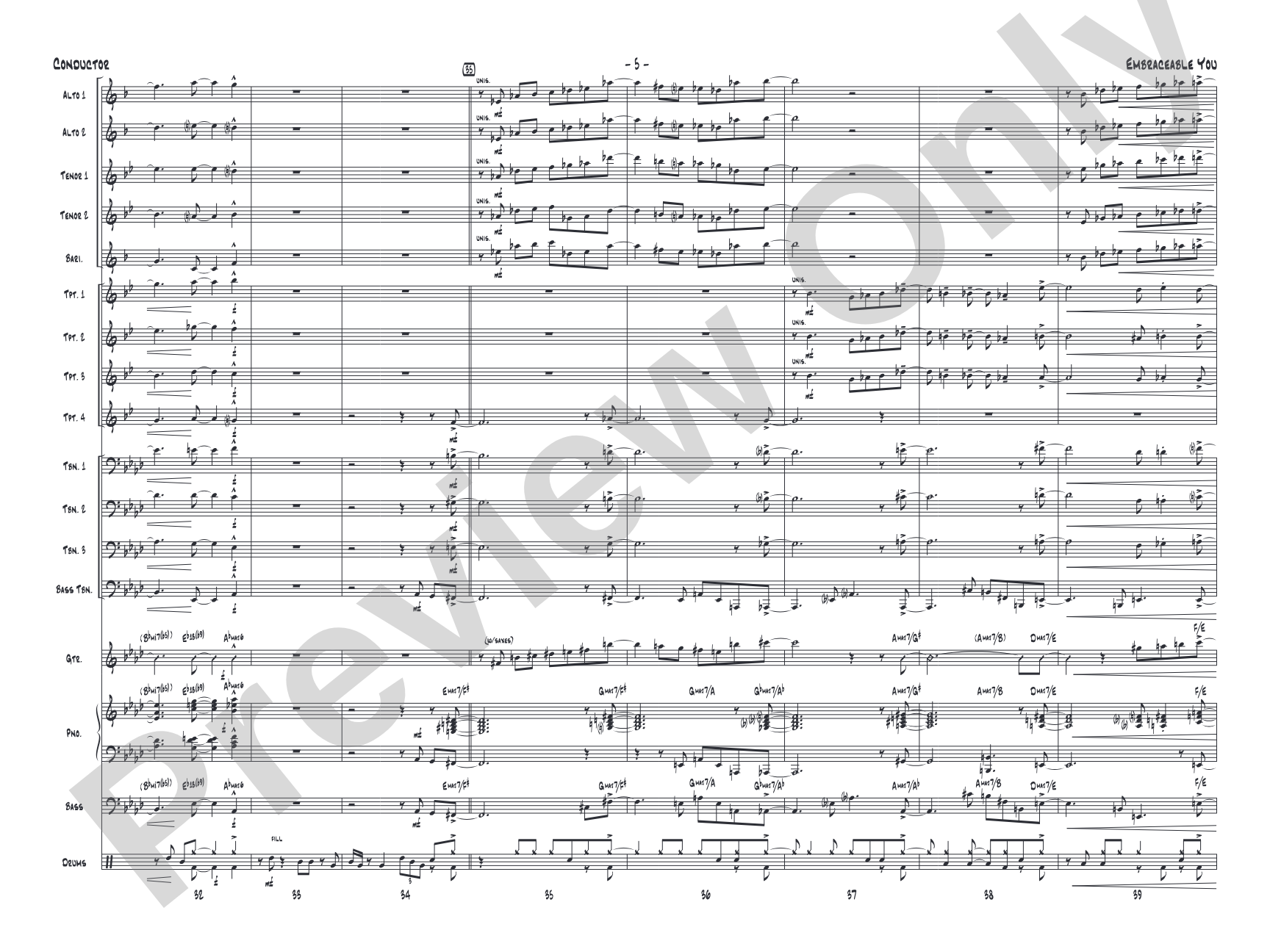
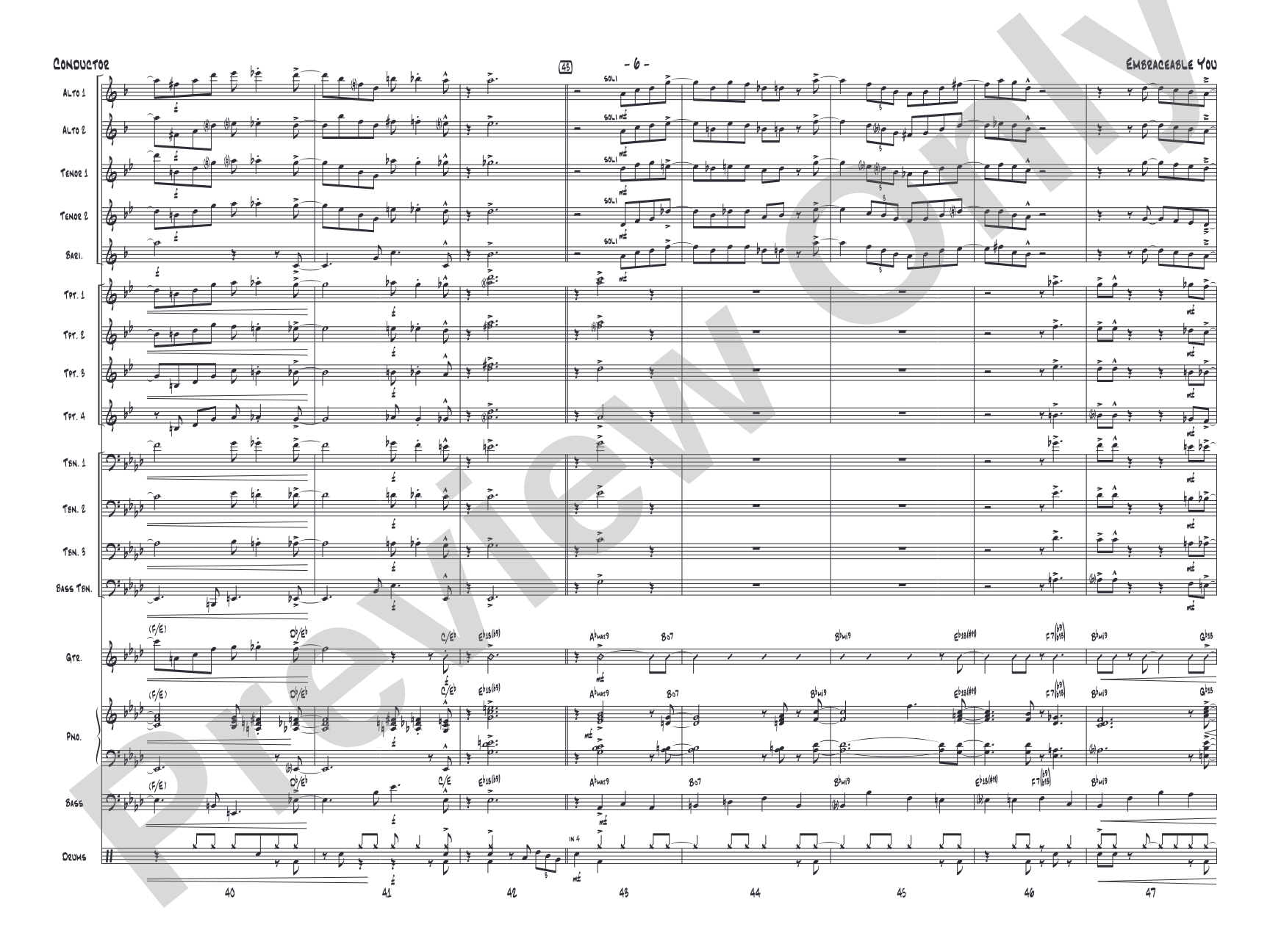
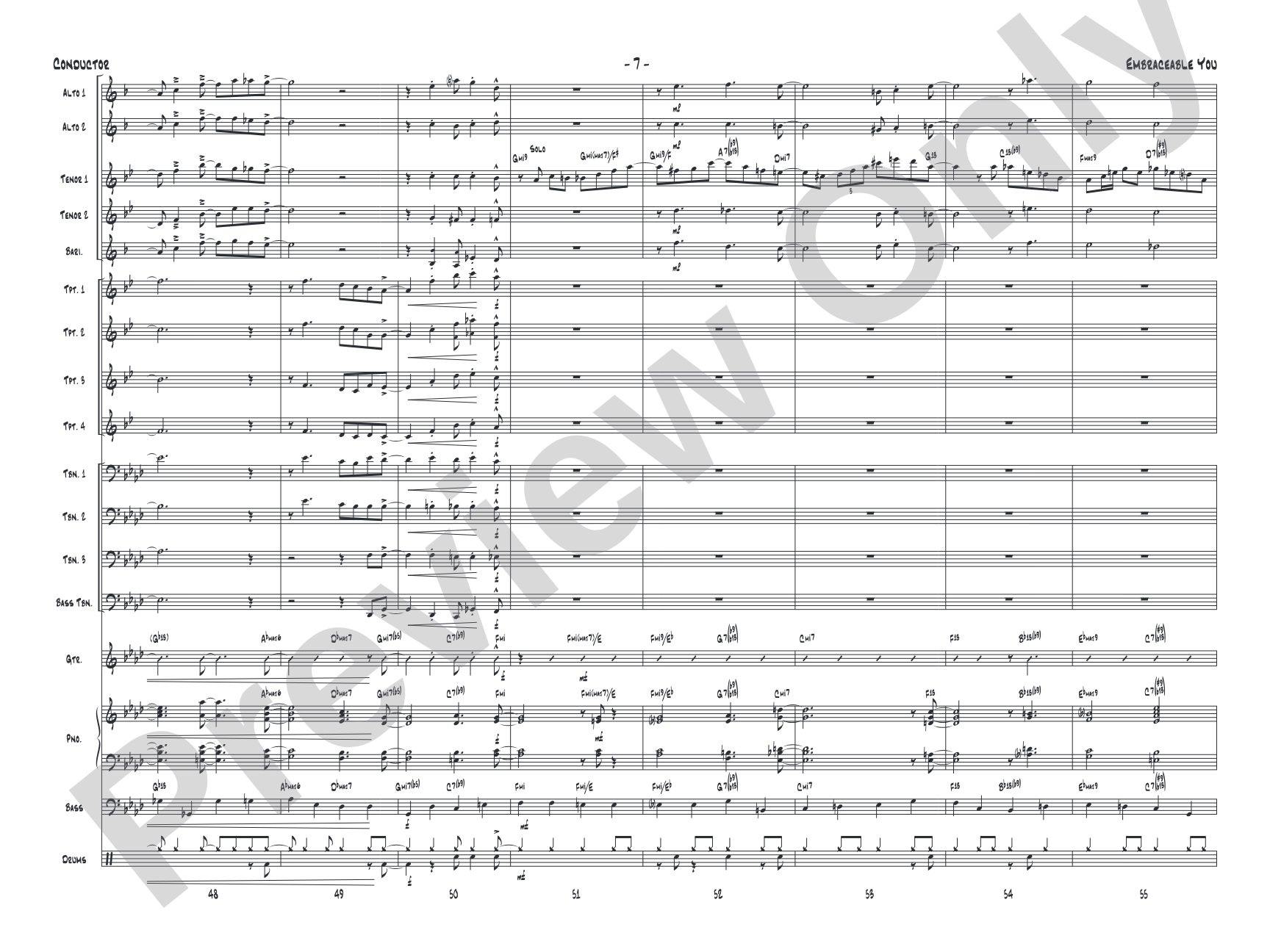
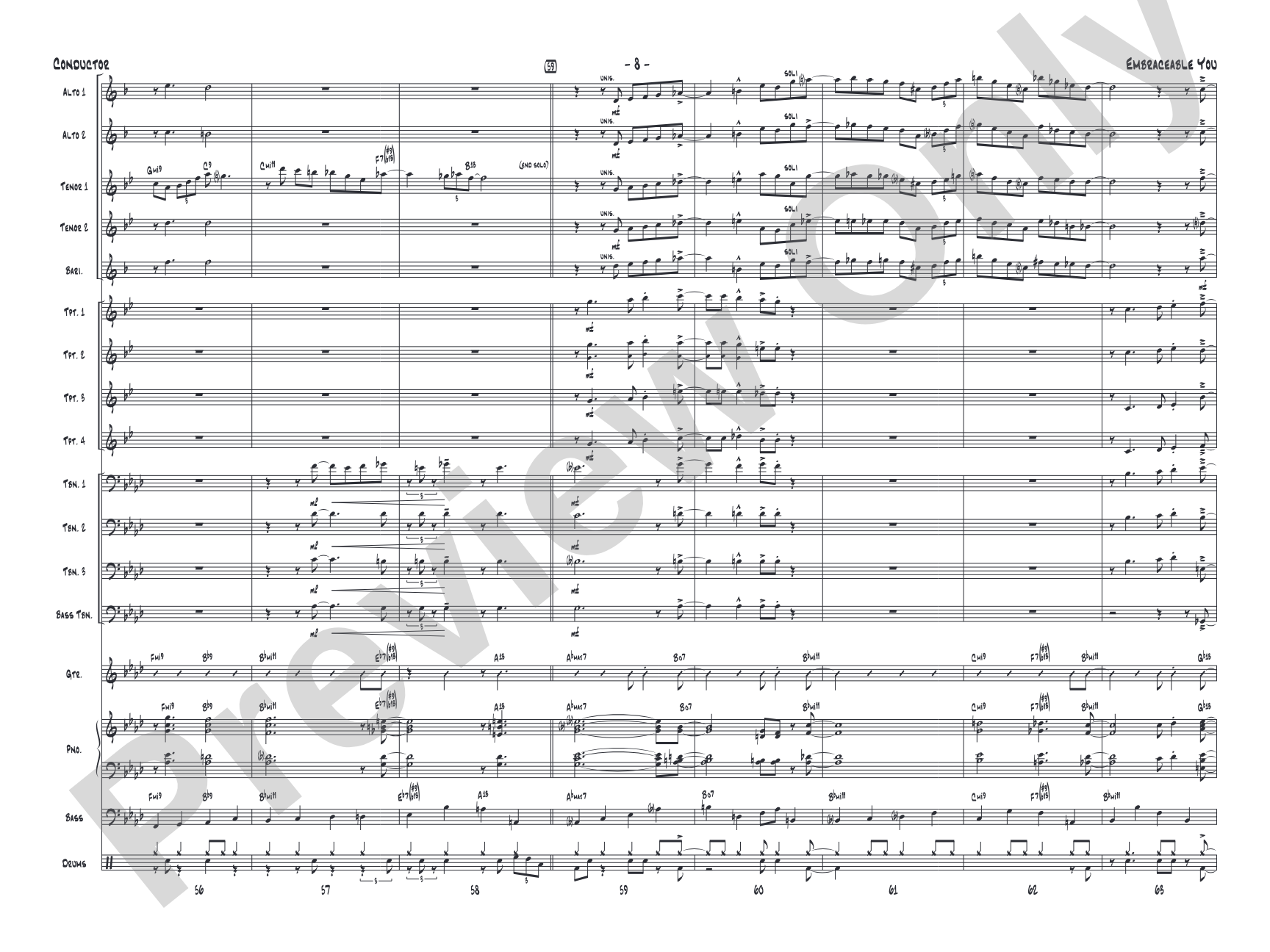
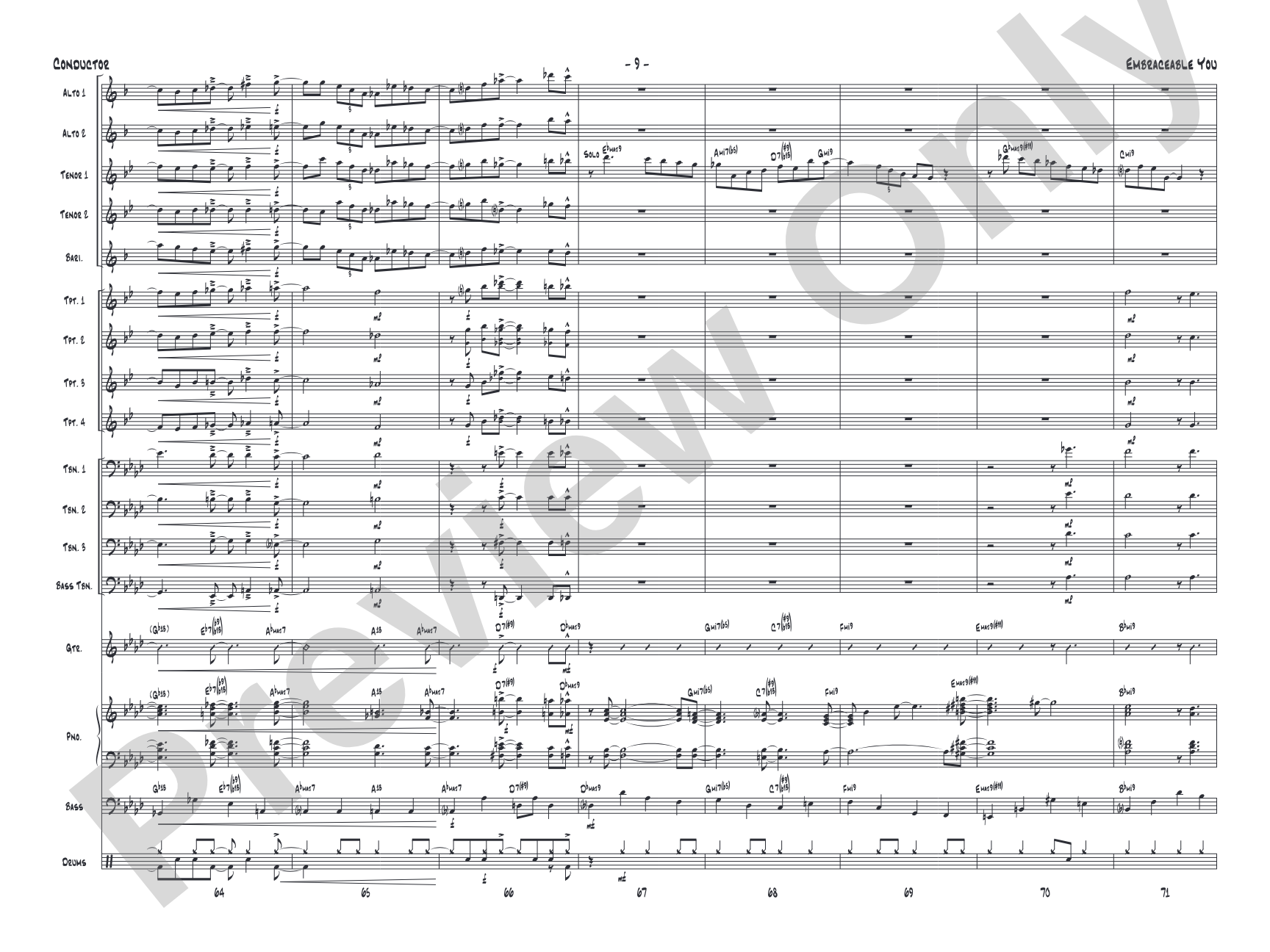
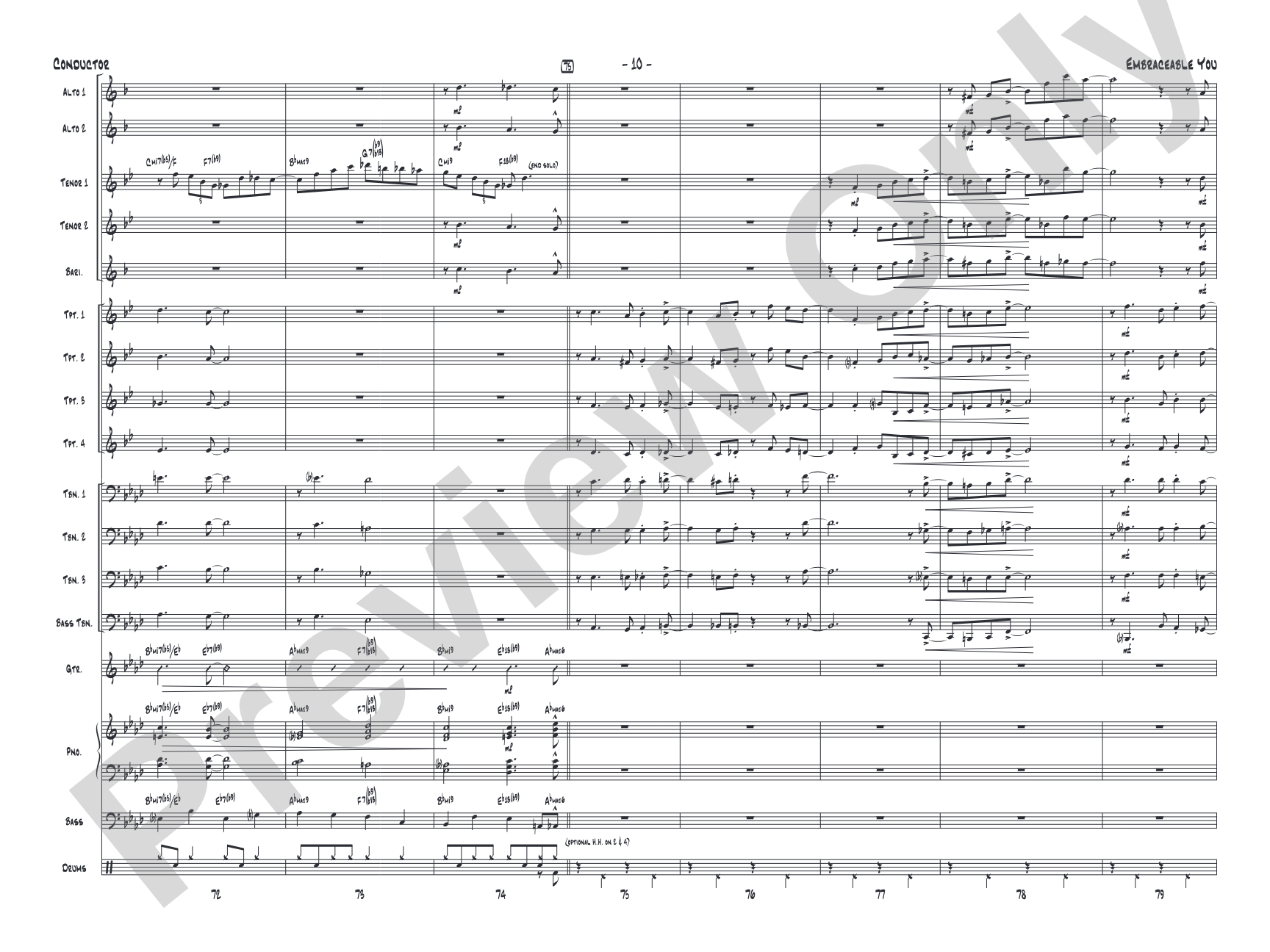
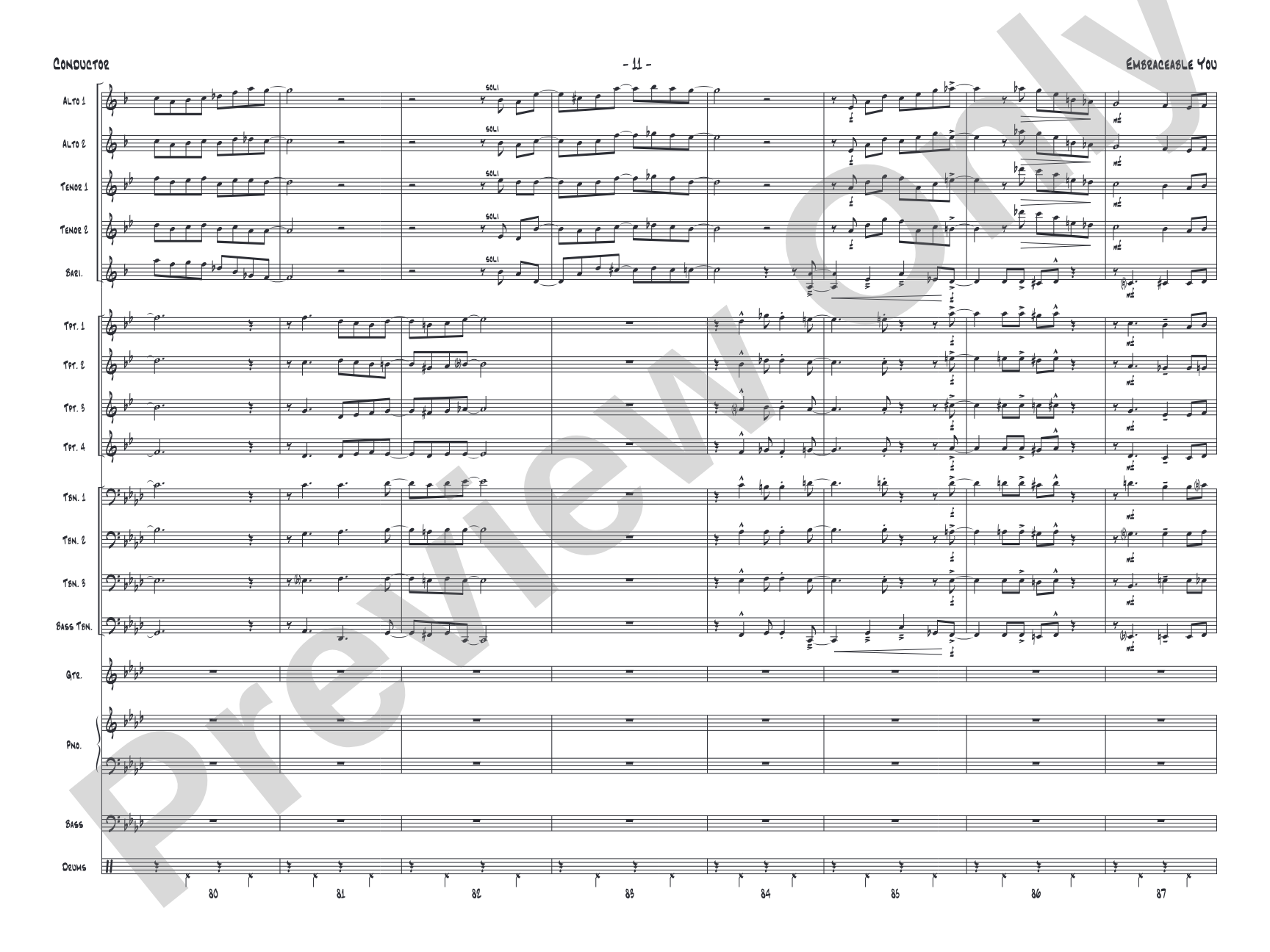
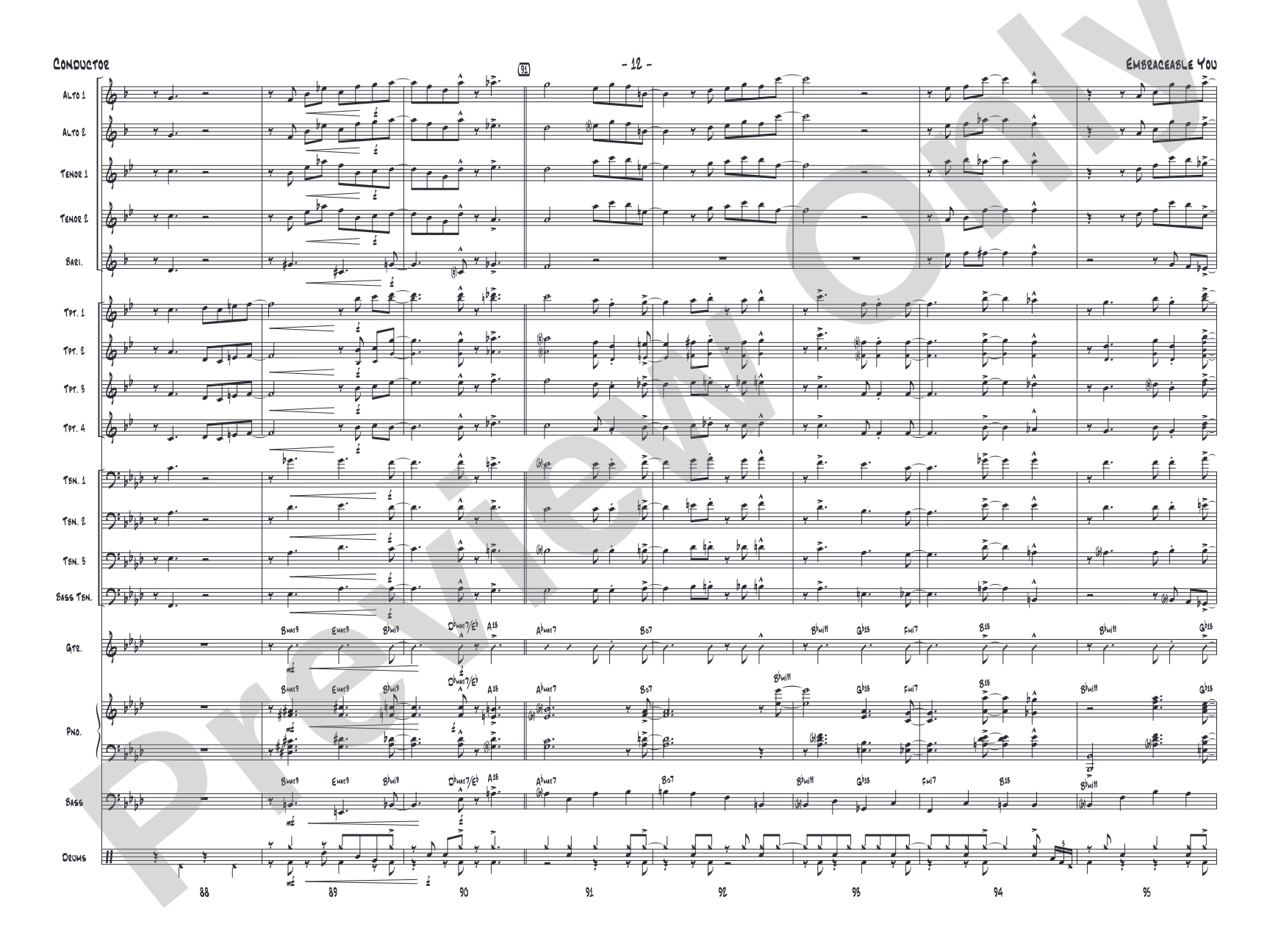
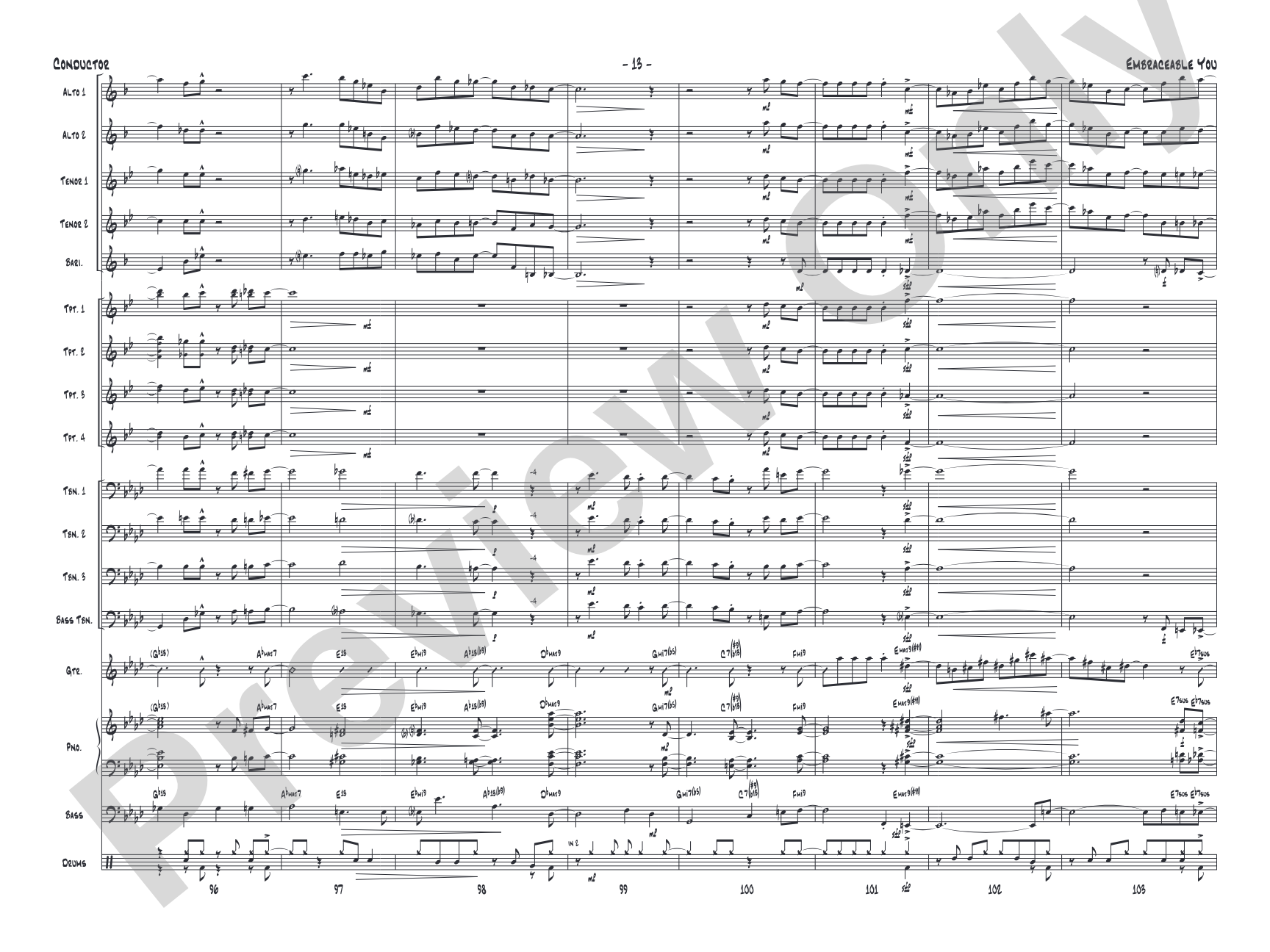
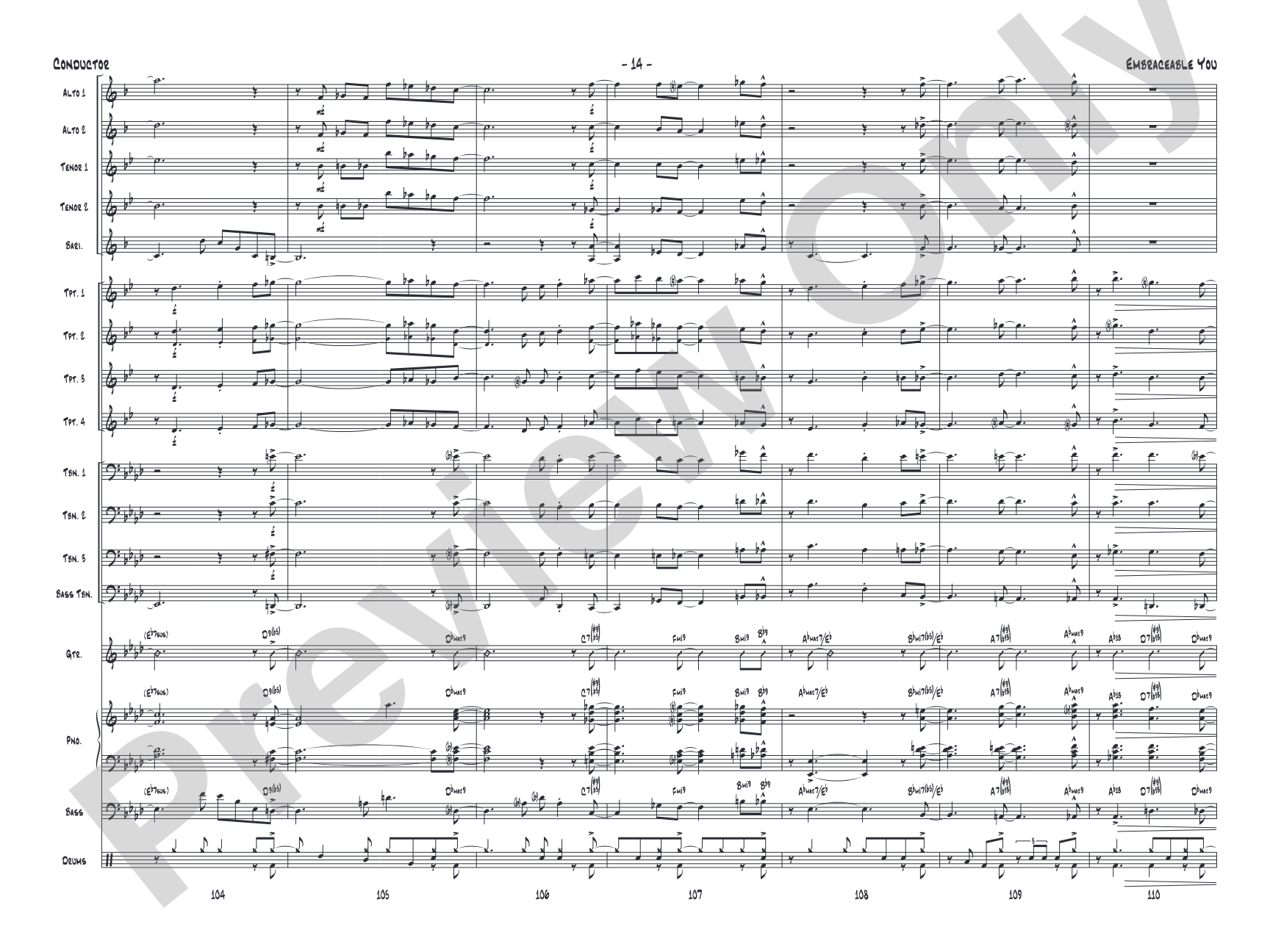
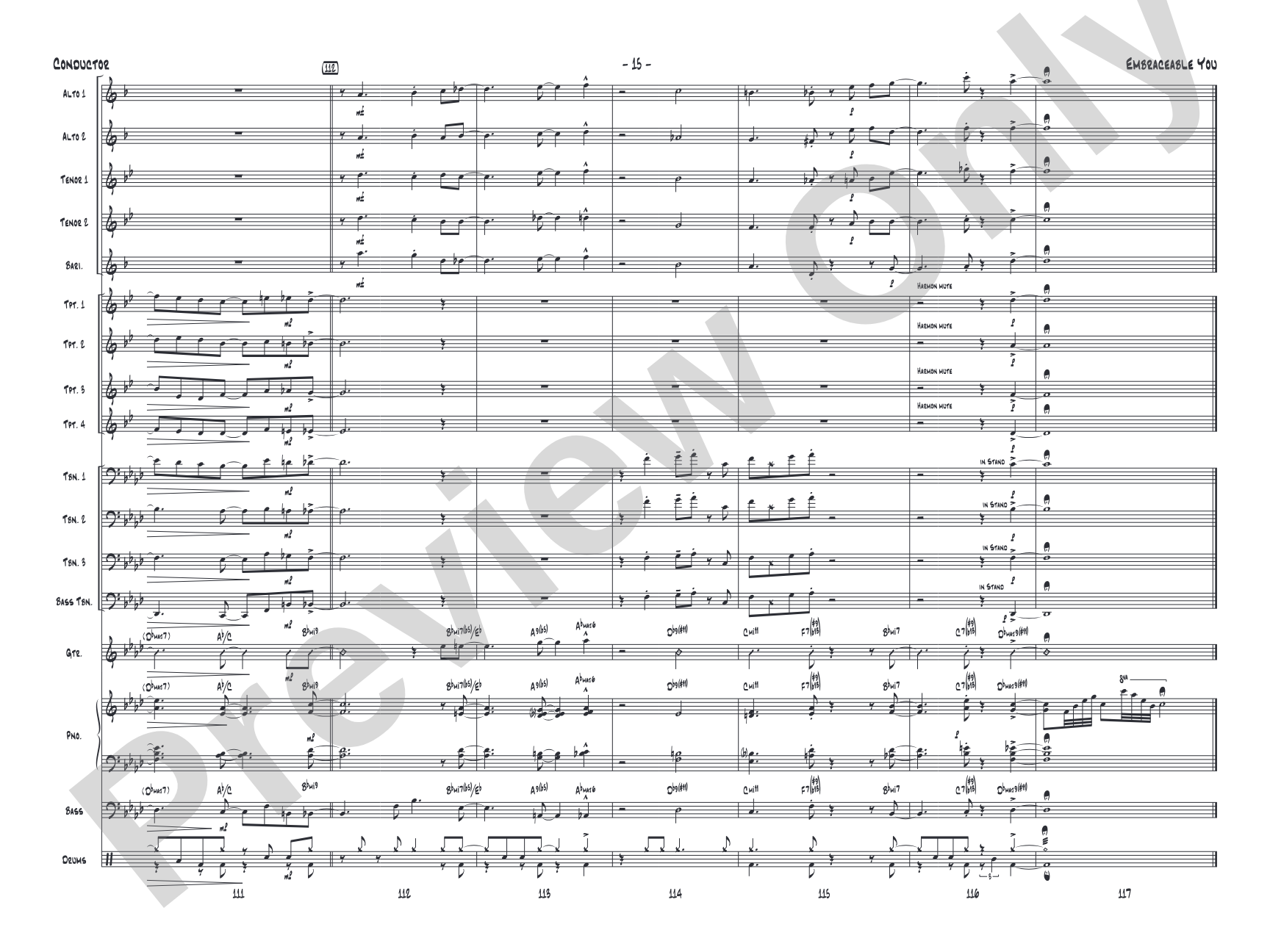

Embraceable You: Jazz Ensemble Conductor Score & Parts
Music and lyrics by George Gershwin and Ira Gershwin / arr. Darmon Meader
Grade: 3.5 (Medium)
Item: 00-PK-0006030

$52.00
Pickup currently not available
Buy Extra Parts (Digital PDF Download)
Parts Added to Cart!
Description
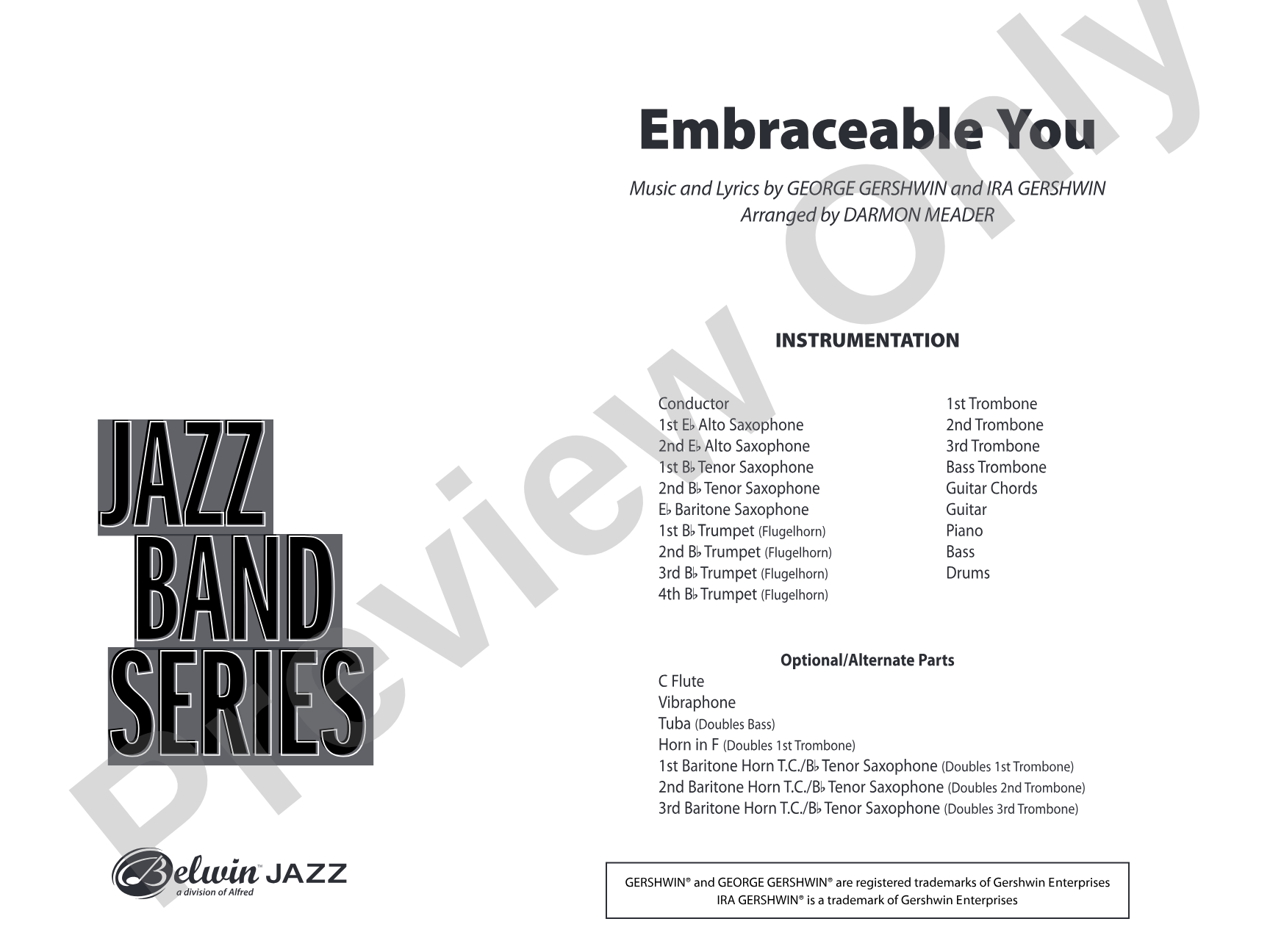
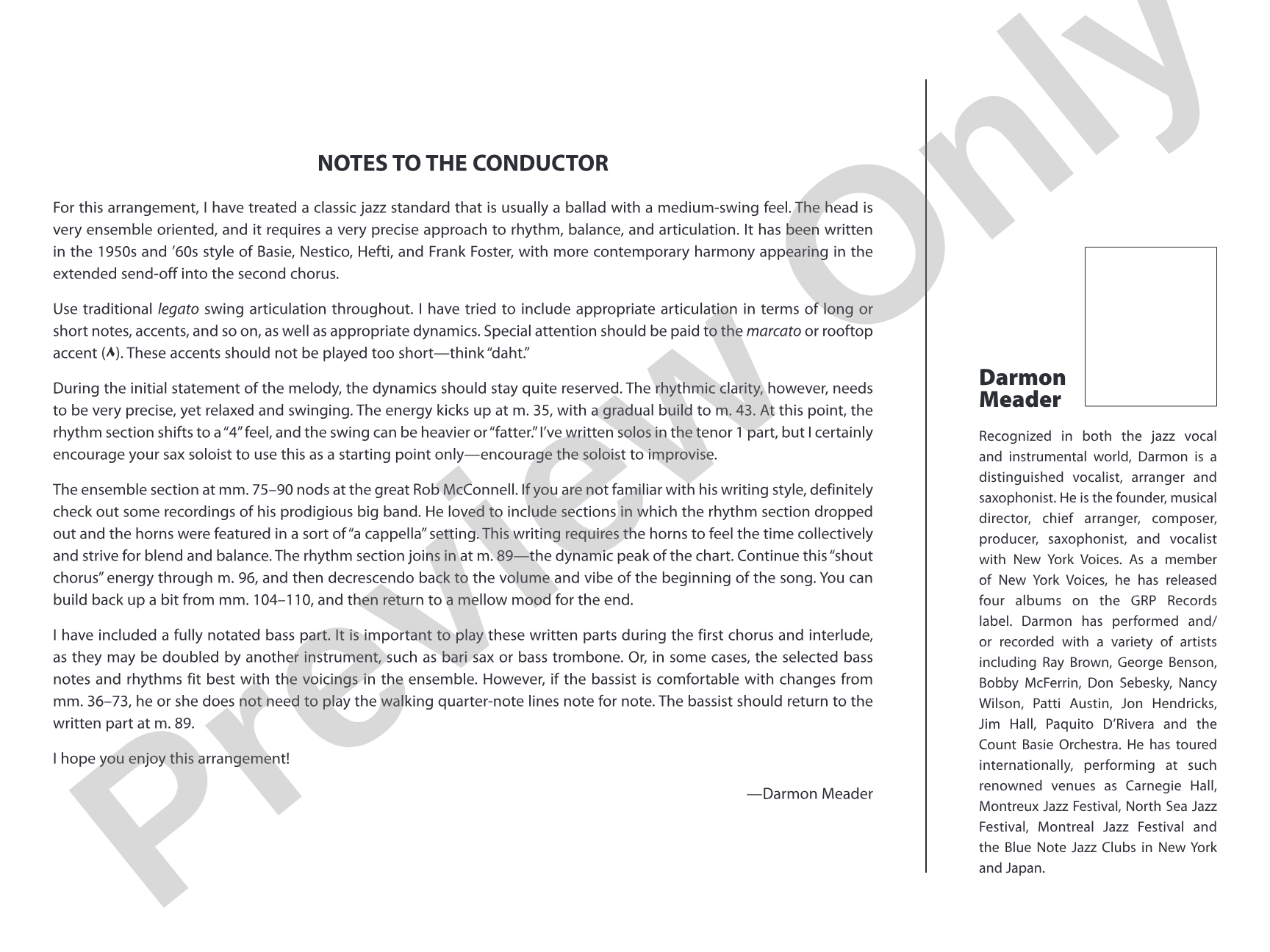
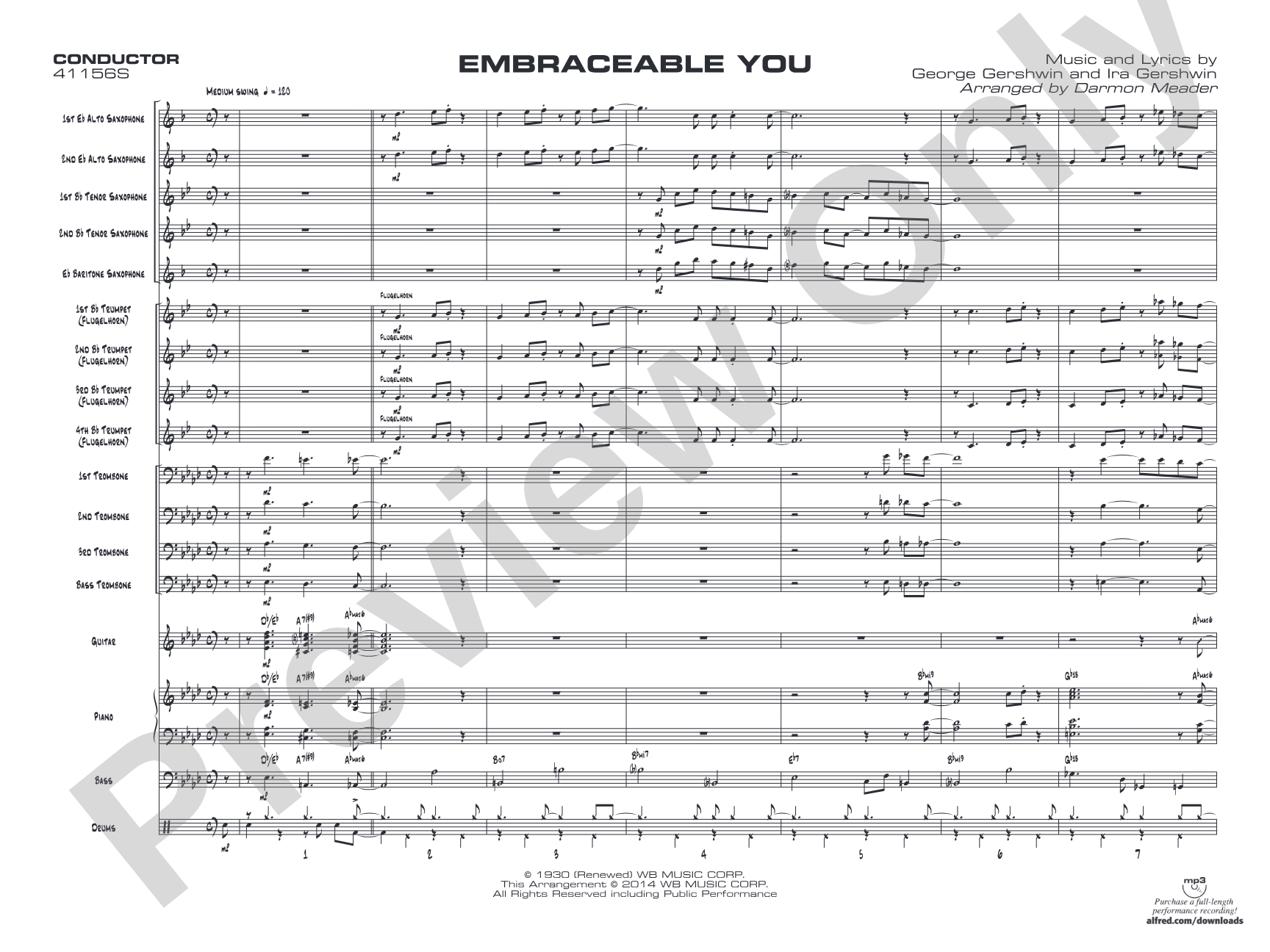
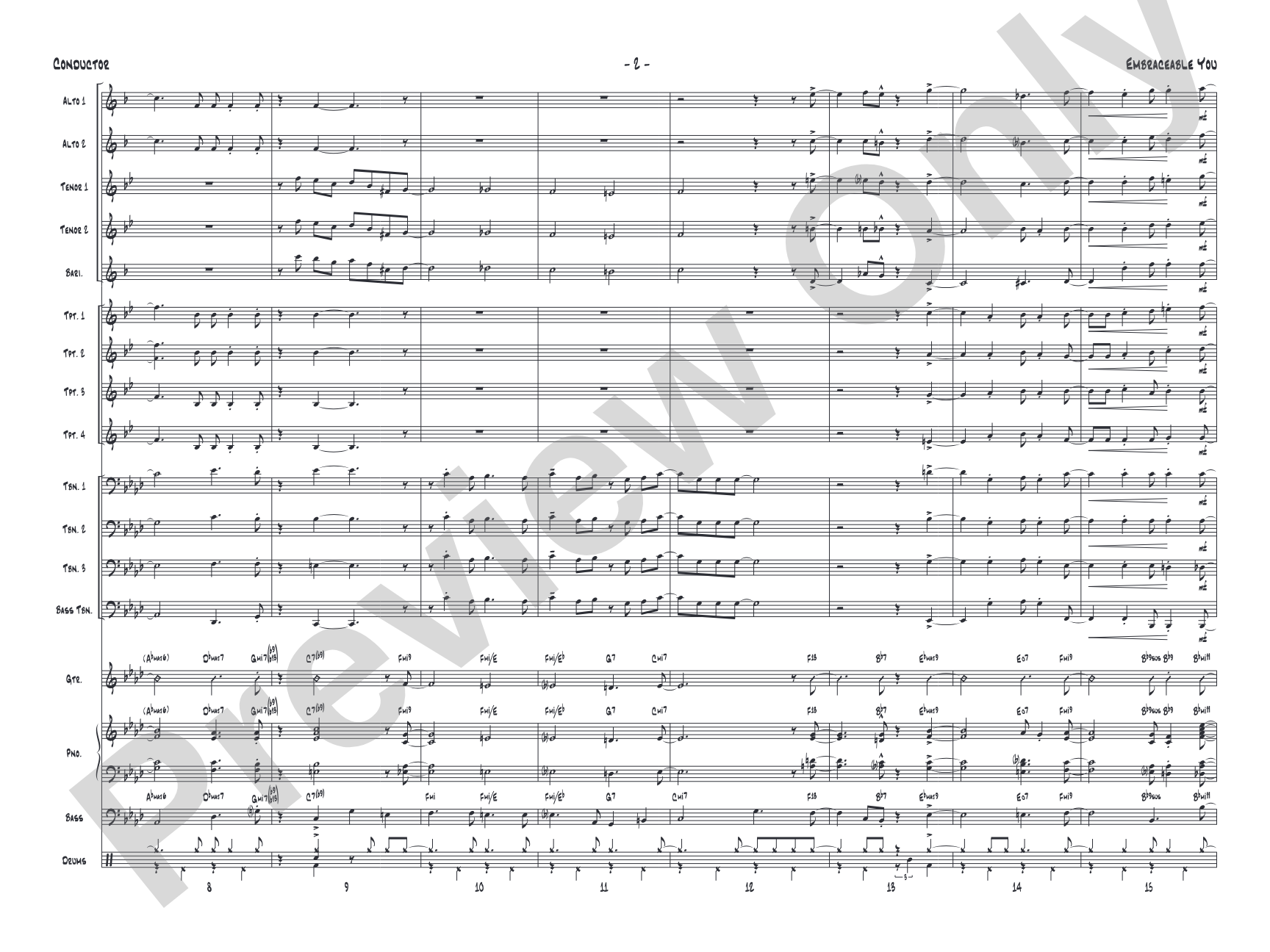
A tasty chart with a medium swing feel at 120 BPM. Optional flugelhorns add to the rich textures, a written solo is provided for tenor sax, and lead trumpet range is to written high C. It will be a pleasure to play this chart. (4:03) This title is available in MakeMusic Cloud.


Don't just read it, hear it, play along with it, and watch your students grow with it. In MakeMusic Cloud, Embraceable You: Jazz Ensemble Conductor Score & Parts comes alive with professional accompaniment, adjustable tempo, and built-in practice tools that turn solo practice into real progress.
Open in the Player
Jump straight in and assign it today.
Start Your Free Trial
Open this title and explore the full library in minutes.
Sample Audio
1
Audio File
--:--
0:00
0:00
Sample Video
No sample videos found.
Additional Details
Series:
Jazz Band Series
Publisher:
Alfred Music
Page Count:
98
SKU:
00-PK-0006030
More about this title
About the Composer: George Gershwin
George Gershwin (1898, 1937) bridged classical and popular music in ways that still define American composition. His melodies are instantly recognizable, his harmonies sophisticated, and his sense of orchestration remarkably alive. For music educators, Gershwin's work offers students a direct gateway into understanding jazz idioms, popular song structure, and the possibilities of serious artistic ambition within accessible contexts.
Gershwin's legacy in the jazz ensemble repertoire is essential. His songs have become standards precisely because they reward careful listening and skillful interpretation. When students play Gershwin, they're learning from a composer who understood both the concert hall and the dance floor, making his music invaluable for building musicianship across genres.
Why we love this
Darmon Meader's arrangement captures the sophistication of Gershwin's original while fitting comfortably into a working jazz ensemble's capability at this level. The optional flugelhorn parts add textural depth without compromising accessibility, and the written tenor sax solo gives students a chance to explore the melody's inherent swing phrasing rather than improvising over changes.
What to expect
Warm and sophisticated, with the unmistakable Gershwin melodic gift shining through swing-inflected harmonies. The piece has an intimate quality despite its orchestral texture, inviting both performers and listeners into the romantic character of the original song.
Who it's for
Jazz ensemble directors working with students at the Grade 3-3.5 level who want a recognizable standard that doesn't sacrifice musicality for accessibility. This chart suits groups preparing for festival performance or concert programming that pairs well with other jazz repertoire.
How to get the most out of it
- Keep the swing feel grounded in a relaxed triplet feel; the 120 BPM tempo can tempt sections to rush, but the richness of the harmony depends on musicians settling into the pocket.
- Balance the lead trumpet's written high C passages by ensuring the section breathes together and doesn't press for volume in the upper register; control and tone matter more than force.
- Let the tenor sax solo breathe as a feature moment; it's written for a reason, so accompany it with restraint from the rhythm section and give the soloist space to interpret the phrasing.
- If using the optional flugelhorns, blend them carefully with the trumpet section during tutti passages so they enhance rather than muddy the overall color.
How to use it
Program this as a showpiece within a jazz concert alongside uptempo features and blues-based material; its medium tempo and lyrical quality provide effective programming contrast. It also works well as a contest or festival selection where its recognizable melody and professional arrangement earn strong adjudication scores.
Skills your students will build
- Swing feel articulation and subdivision at moderate tempo
- Balancing written melody with accompaniment texture
- Lead trumpet range extension (written to high C) with tonal control
- Ensemble cohesion during harmonic complexity
- Section-specific roles (sax solo interpretation, optional flugelhorn color blending)