

Élévation: String Orchestra Conductor Score & Parts
By Louise Farrenc / arr. Deborah Baker Monday
Grade: 2
Item: 00-PK-0009157
$55.00
Pickup currently not available
Buy Extra Parts (Digital PDF Download)
| Product | Price | Quantity |
|---|---|---|
| Élévation: Score | $10.00 | |
| Élévation: 1st Violin | $3.00 | |
| Élévation: 2nd Violin | $3.00 | |
| Élévation: 3rd Violin (Viola [TC]) | $3.00 | |
| Élévation: Viola | $3.00 | |
| Élévation: Cello | $3.00 | |
| Élévation: String Bass | $3.00 | |
| Élévation: Piano Accompaniment | $3.00 |
Parts Added to Cart!
Description
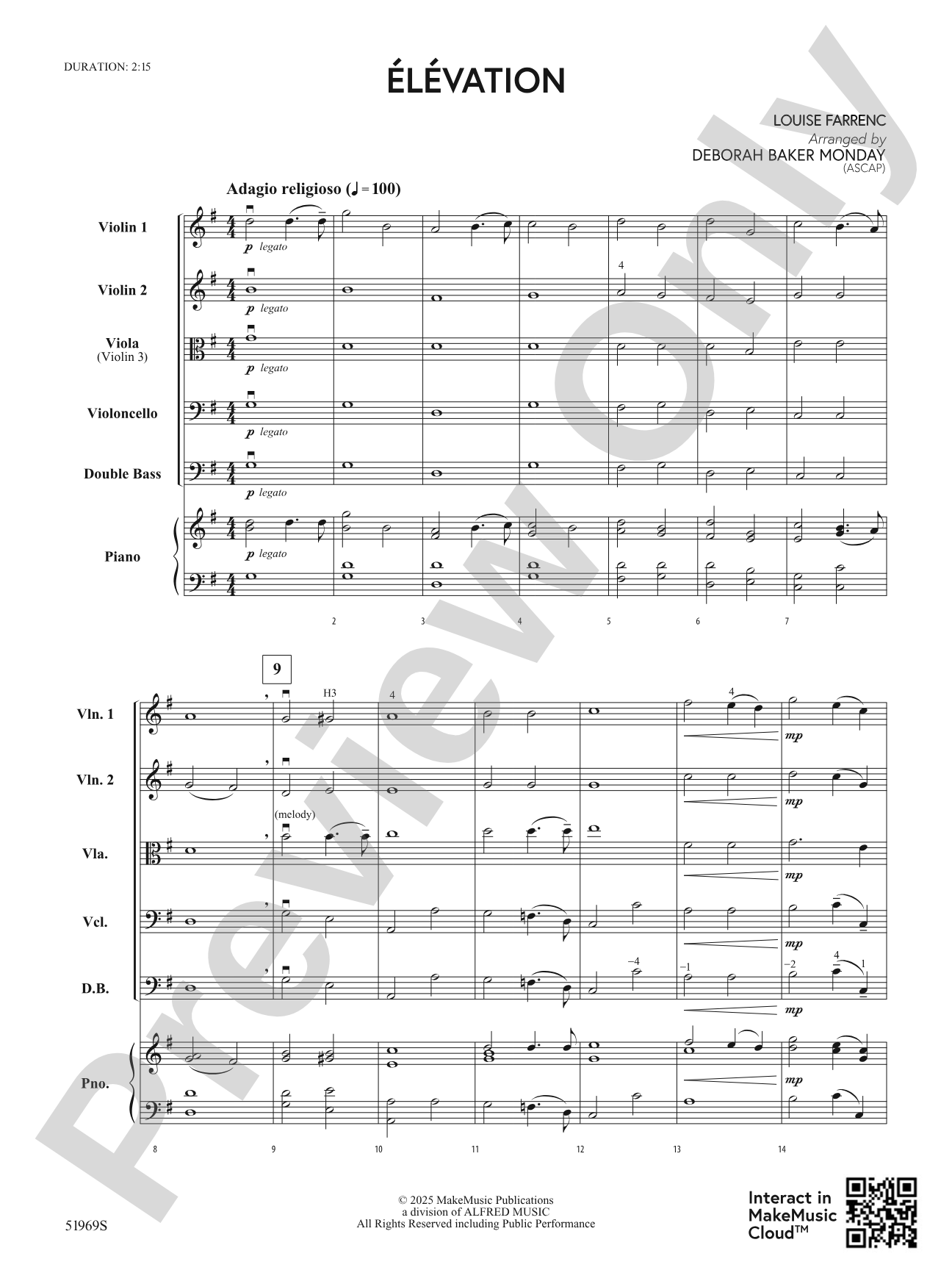
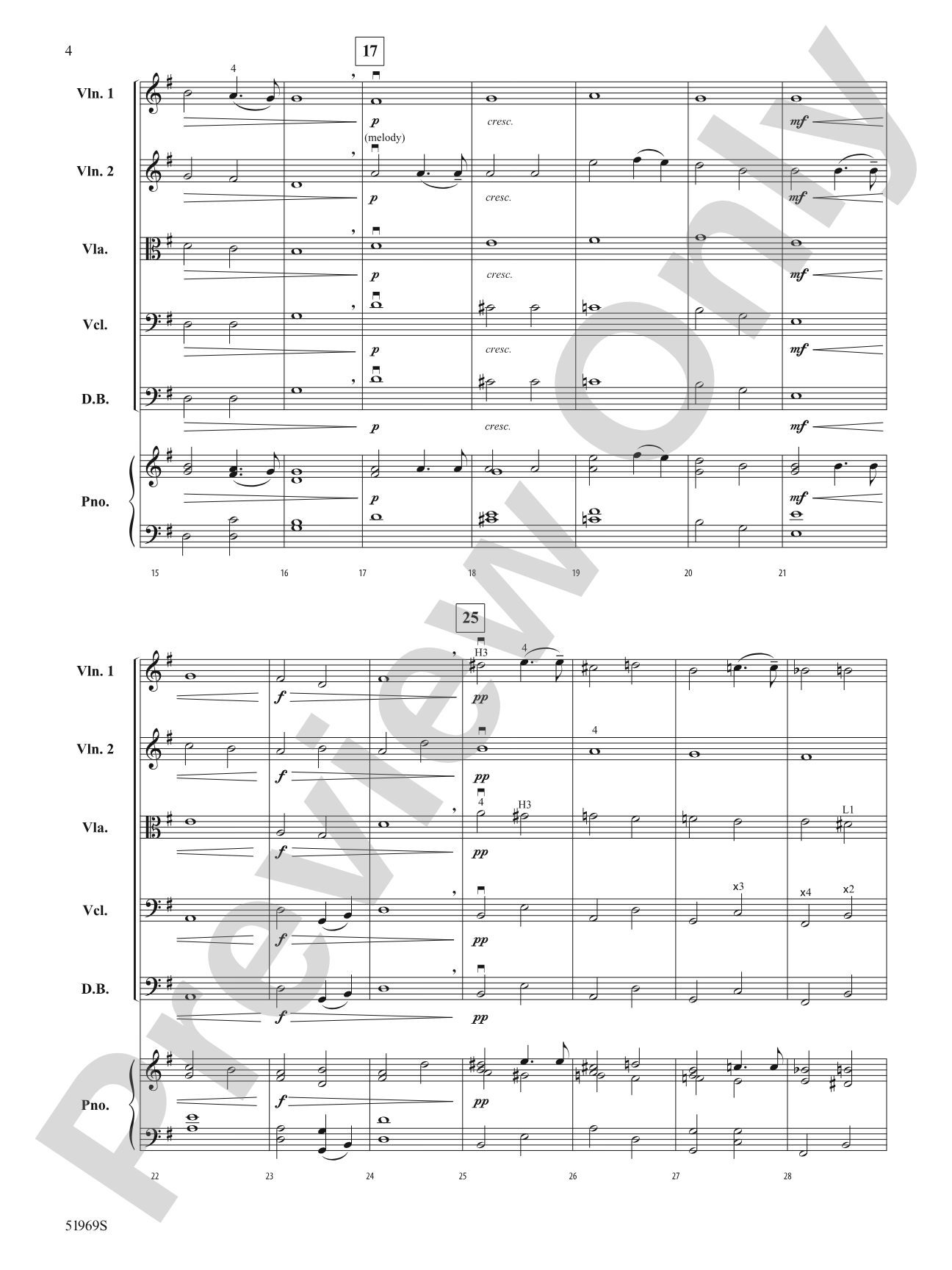
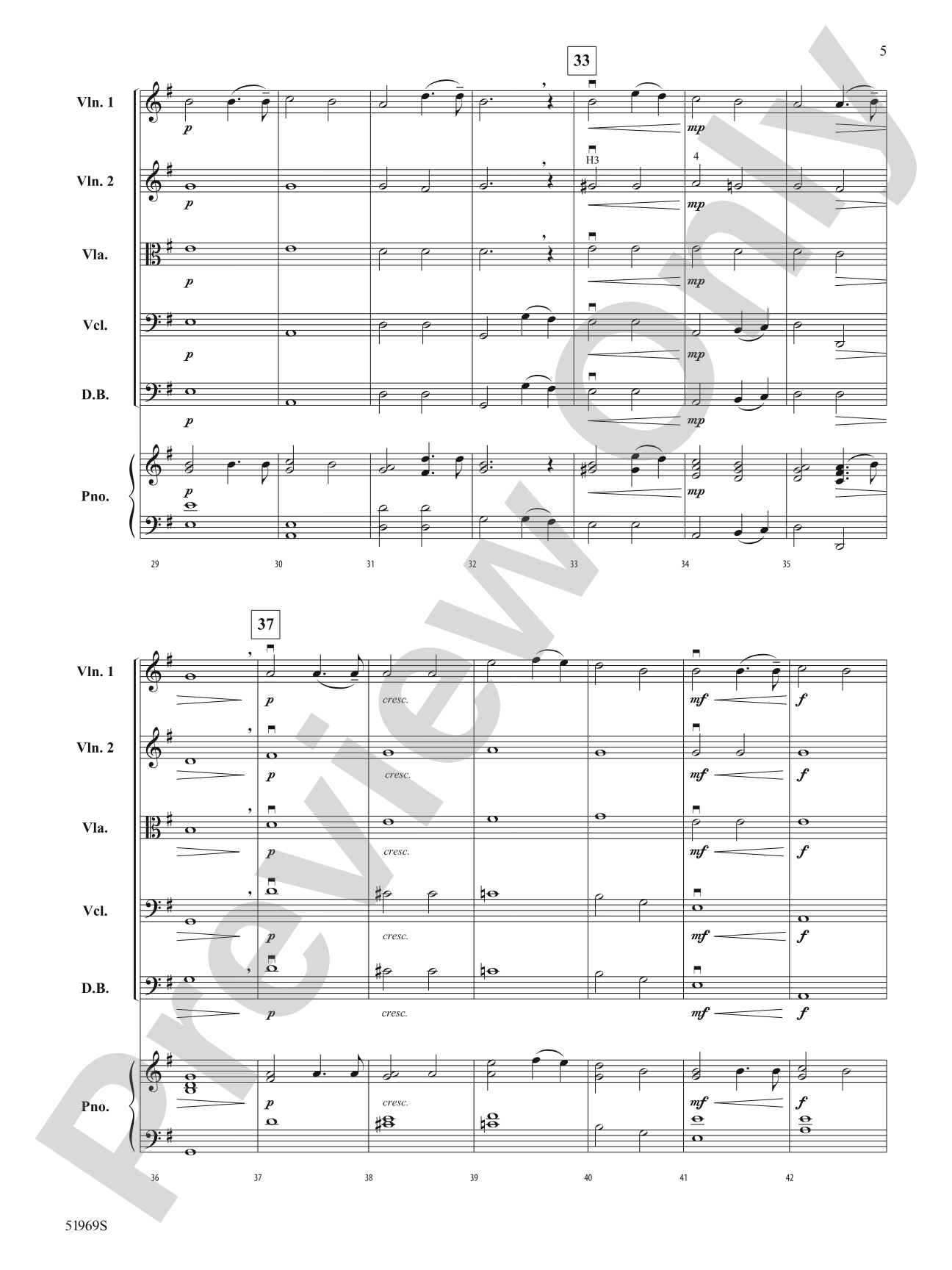
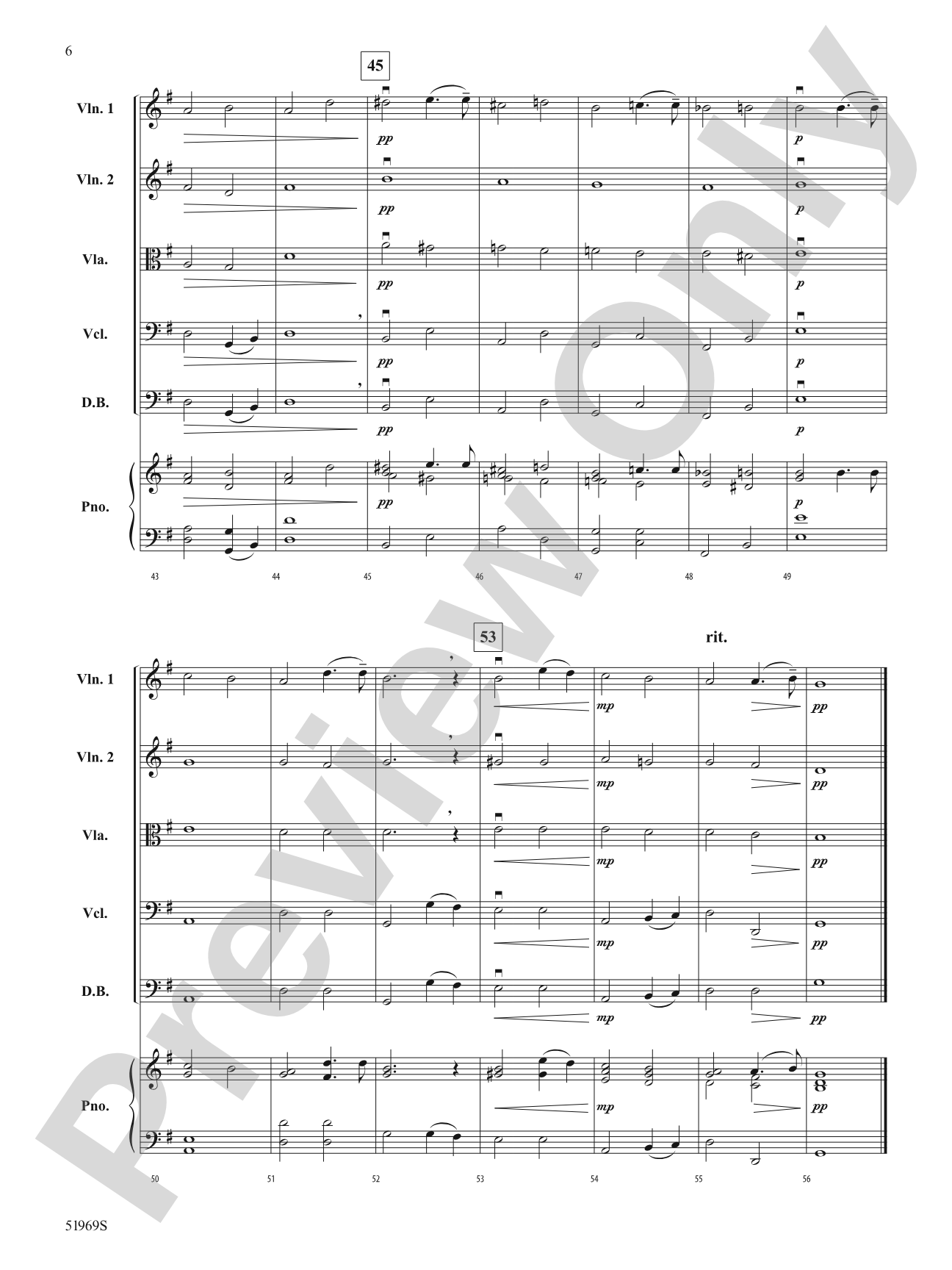
Feature the stunning music of Louise Dumont Farrenc, former professor at the Paris Conservatory. Taken from Farrenc's collection of 20 etudes, this arrangement of Élévation is expertly orchestrated by Deborah Baker Monday, who has kept the endearing musical sophistication of the original despite its technical simplicity. A wonderful addition to any program regardless of grade level. (2:15)


Élévation: String Orchestra Conductor Score & Parts isn't in MakeMusic Cloud just yet...but it could be. Let us know you'd like to see it, and you'll help shape what comes next. In the meantime, start a free trial and dive into thousands of interactive titles your students can play along with today.
Request This Title
Tell us you want it.
Start Your Free Trial
Explore everything that's ready to play right now.
Sample Audio
1
Audio File
--:--
0:00
0:00
Sample Video
Additional Details
Series:
MakeMusic Intermediate Strings
Publisher:
MakeMusic Publications
SKU:
00-PK-0009157
More about this title
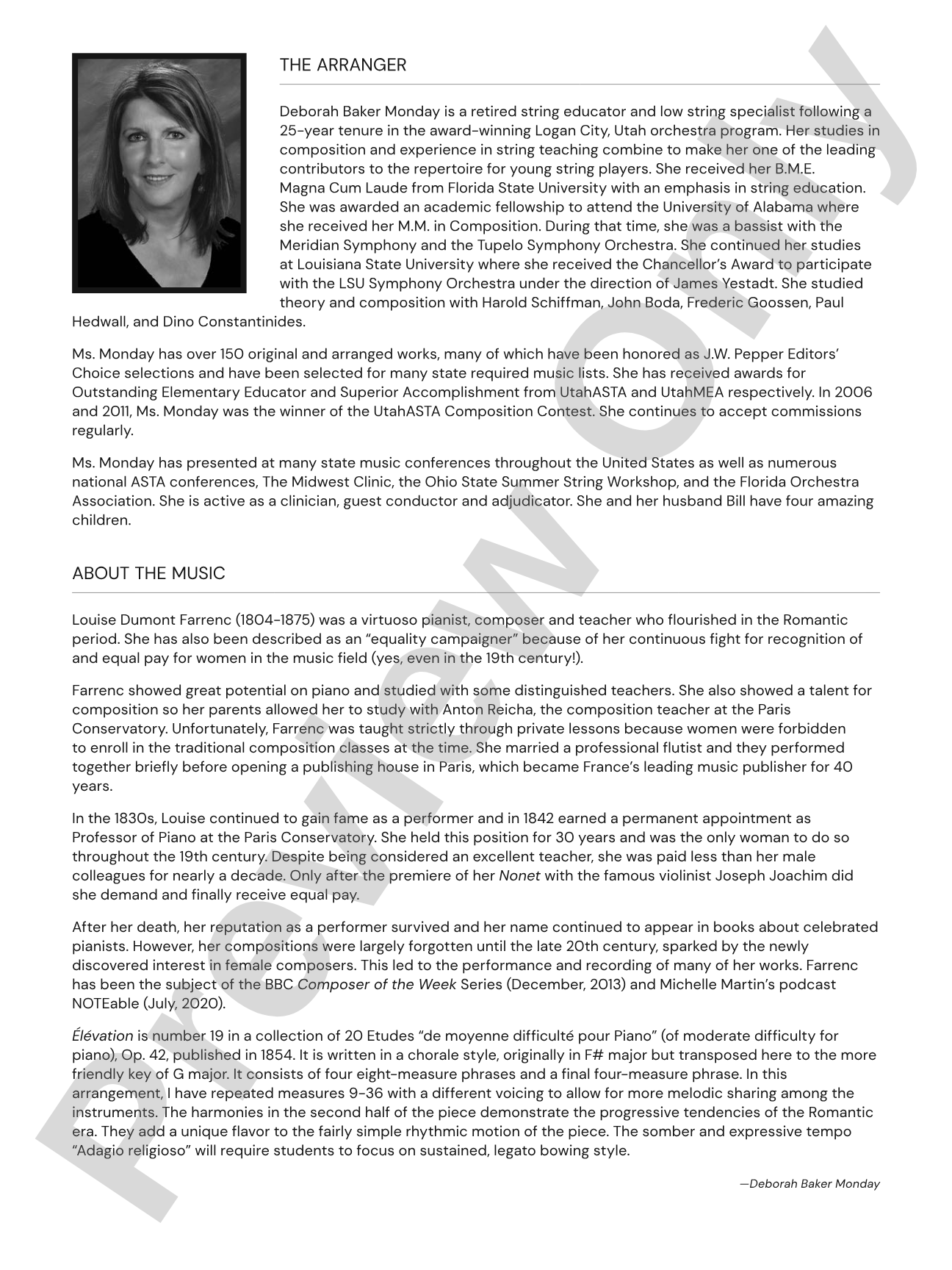
About the Composer: Louise Farrenc
Louise Farrenc (1804-1875) was a French pianist, composer, and pedagogue whose career spanned the height of the Romantic era. She served as professor of composition at the Paris Conservatory, one of the first women to hold such a position, and her teaching shaped an entire generation of musicians. Her compositional output includes symphonies, chamber works, and numerous etudes that combine technical rigor with genuine musical substance.
Why we love this
Deborah Baker Monday's orchestration unlocks the sophistication Farrenc embedded in this study without obscuring its pedagogical clarity. String orchestras at every level gain access to genuinely well-crafted music that sounds mature and polished rather than simplified or diluted. The piece proves that technical studies need not sacrifice artistry.
What to expect
Élévation unfolds with quiet dignity and introspective beauty, moving through gentle phrases that suggest rather than announce their harmonic richness. The orchestration allows each string section moments of independence while maintaining cohesive ensemble texture, creating a work that feels both intimate and complete.
Who it's for
String orchestra conductors seeking substantial repertoire that challenges students musically while remaining accessible technically. Programs that program Grade 2 literature but refuse to compromise on sophistication or orchestration quality. Ensembles preparing for concert seasons where a short, elegant work can serve as a palate-cleansing opener or a confident closer.
How to get the most out of it
- Emphasize the legato quality throughout; the piece's grace depends on singing phrasing rather than crisp articulation, even in the faster passagework.
- Balance the viola and cello lines carefully so they support rather than overpower the violins, keeping the texture transparent.
- Let the form breathe naturally without excessive tempo fluctuation; the elegance comes from proportion, not dramatic rubato.
- Use the two-minute-plus runtime to establish a generous sense of space; rushing flattens the piece's contemplative character.
How to use it
Place this early in a concert to establish a tone of musical refinement without overwhelming an audience. It pairs naturally with other Romantic-era chamber or orchestral works, or use it as a bridge between a more robust opening work and something larger in scope. Its modest length makes it ideal for school concerts where time is precious but artistic integrity must be preserved.
Skills your students will build
- Sustaining long melodic phrases with consistent tone quality
- Reading and executing transparent orchestral textures
- Ensemble balance and blend across string sections
- Recognizing and performing period-appropriate Romantic-era phrasing and expression