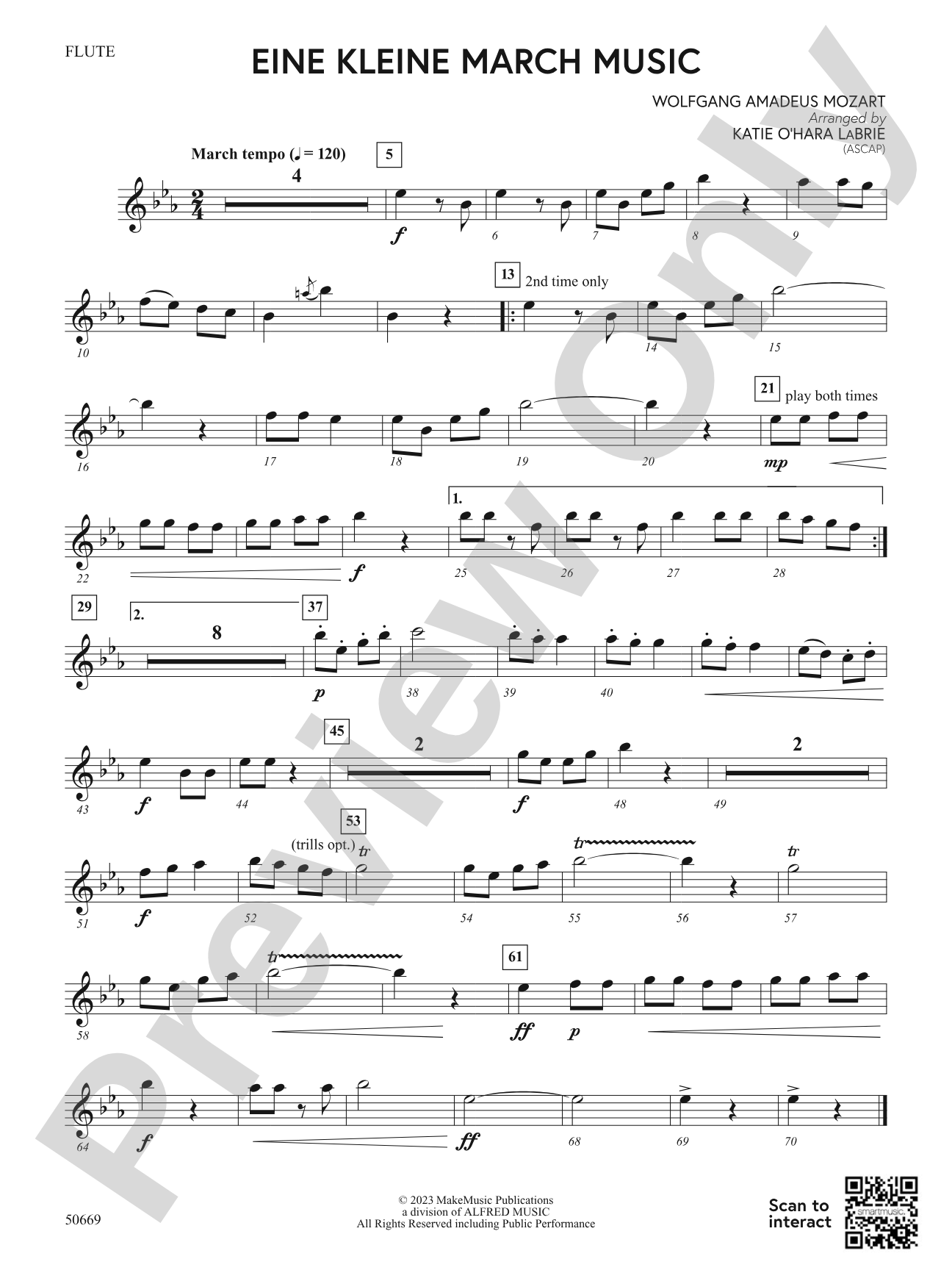
Wolfgang Amadeus Mozart (1756-1791) composed with such fluency and invention that he seemed to write music as naturally as others speak. Born in Salzburg, Austria, he became one of history's most prolific composers, working across every major genre: symphonies, concertos, operas, chamber music, and sacred works. His melodies are immediately singable, his forms are transparent yet sophisticated, and his harmonic language remains fresh centuries later. For music educators, Mozart represents the gold standard of musical clarity. His works teach students about phrase structure, orchestration, and the balance between simplicity and complexity.
Eine Kleine Nachtmusik stands among his most beloved compositions, a serenade originally written for strings that has become a gateway to understanding Classical-era chamber music. Its opening theme is instantly recognizable, making it ideal for arrangements that introduce students to how existing melodies can be reimagined across different styles and contexts.